Types of Orchid Plants and How to Grow Them
13 plant profiles · Learn how to choose and grow different orchid species, from indoor epiphytes like Cattleya to hardy terrestrial wild orchids.
Orchids belong to the family Orchidaceae and share a distinctive three-petaled flower structure featuring a specialized lower lip, known as a labellum. Members of this family fall into two primary growth habits: epiphytes that cling to trees using specialized velamen-covered aerial roots, and terrestrials that root directly into soil or leaf litter. Identifying an orchid species' natural habitat determines whether it requires coarse pine bark, spherical clay pellets, or a moisture-retentive ground mix.
Choosing the right species depends on your indoor temperature, ambient humidity, and available sunlight. High-light epiphytes like the Blue Vanda (Vanda coerulea) require 50–70% humidity and bright morning sun, while the Cattleya Orchid (Cattleya labiata) and Noble Dendrobium (Dendrobium nobile) thrive in filtered light on east- or south-facing windowsills. For growers seeking vining or terrestrial species, the Vanilla Orchid (Vanilla planifolia) produces long climbing vines, whereas the Four-Season Orchid (Cymbidium ensifolium) offers upright grassy foliage and cool-temperature tolerance down to 10 °C (50 °F).
Outdoor gardens in temperate regions accommodate cold-hardy terrestrial orchids that enter winter dormancy. The Queen Lady’s Slipper (Cypripedium reginae) survives freezing conditions in USDA hardiness zones 3 through 7, relying on moist, shaded ground and rich humus. Smaller meadow species like the Green-Winged Orchid (Anacamptis morio) require chalky, free-draining soil and cool spring moisture.

Blue Vanda
Vanda coerulea
☀️ Bright Indirect 💧 High

Cattleya Orchid
Cattleya labiata
☀️ Bright Indirect 💧 Low
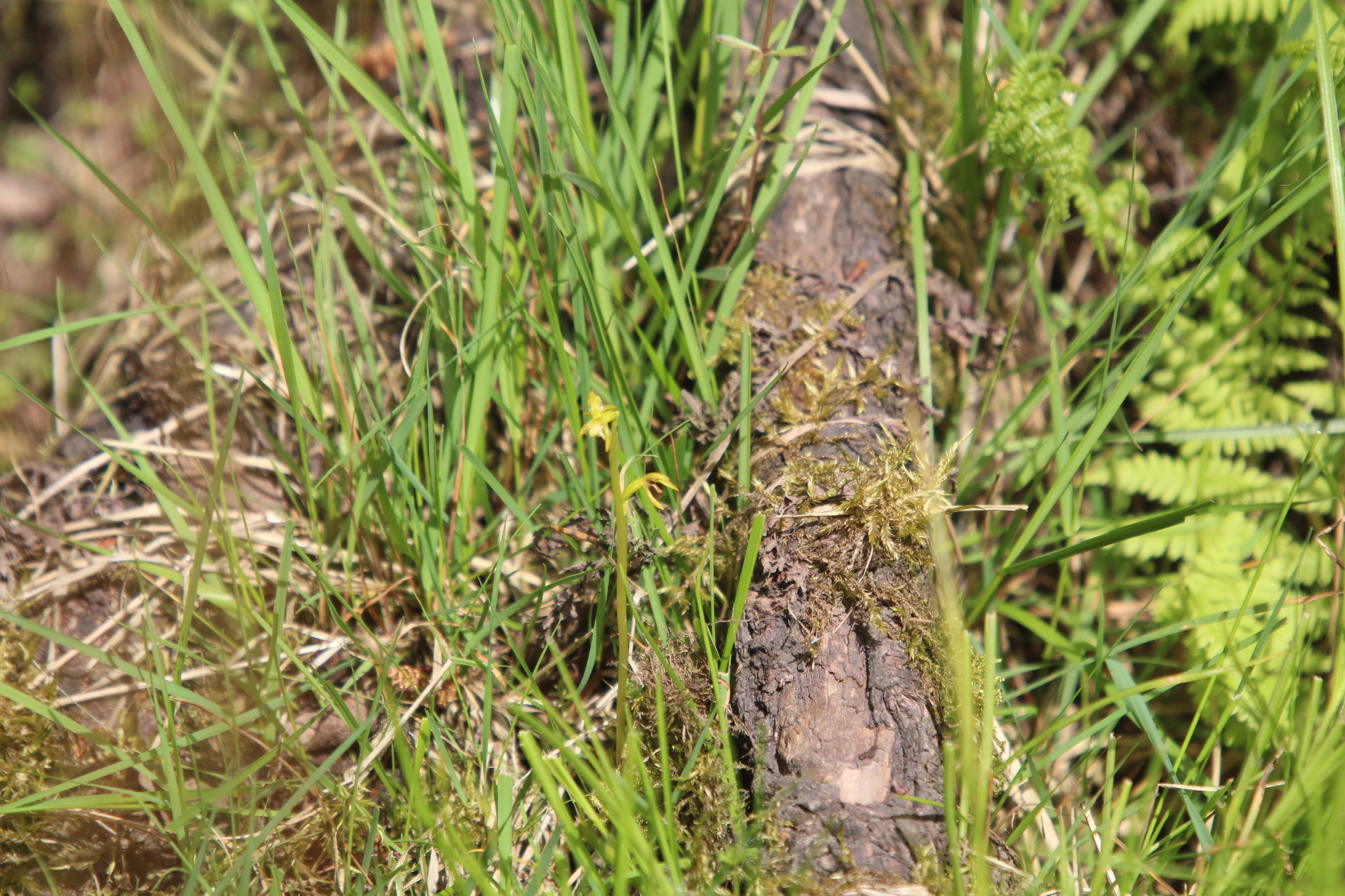
Coralroot Orchid
Corallorhiza trifida
☀️ Partial Shade 💧 High

Crucifix Orchid
Epidendrum radicans
☀️ Full Sun 💧 Moderate
Dancing Lady Orchid
Oncidium sphacelatum
☀️ Bright Indirect 💧 Moderate

Four-Season Orchid
Cymbidium ensifolium
☀️ Bright Indirect 💧 Moderate

Green-Winged Orchid
Anacamptis morio
☀️ Full Sun 💧 Low

Heartleaf Twayblade
Neottia cordata

Pyramidal Orchid
Anacamptis pyramidalis
☀️ Full Sun 💧 Low

Queen Lady’s Slipper
Cypripedium reginae
☀️ Partial Shade 💧 High

Slipper Orchid
Paphiopedilum insigne
☀️ Bright Indirect 💧 Moderate

Stream Orchid
Epipactis gigantea
☀️ Partial Shade 💧 High

Vanilla Orchid
Vanilla planifolia
☀️ Bright Indirect 💧 Moderate
Common Questions
How do you tell epiphytic orchids apart from terrestrial orchids?
Epiphytic orchids grow attached to trees with thick, silvery aerial roots coated in velamen, whereas terrestrial orchids root underground in soil, moss, or leaf litter using tubers or rhizomes.
What temperature range do tropical indoor orchids require?
Most tropical orchids thrive in daytime temperatures between 18–29 °C (65–85 °F) with a night drop of 5–8 °C (10–15 °F) to initiate flower buds.
Which orchids can be grown outdoors in freezing climates?
Hardy terrestrial species such as the Queen Lady’s Slipper (Cypripedium reginae) tolerate winter temperatures down to -30 °C (-22 °F) when planted in moist, shaded garden beds.
How often should indoor epiphytic orchids be watered?
Water indoor epiphytic orchids roughly once every 5 to 10 days when the bark medium dries out completely, depending on temperature and relative humidity.