Wildflower Identification and Growing Guide
245 plant profiles · Identify native and naturalized wildflowers. Learn site requirements, toxicity warnings, and growth habits for over 100 wild herbaceous species.
Wildflowers encompass uncultivated herbaceous flowering plants adapted to regional soils, climates, and native pollinator cycles. Rather than sharing a single botanical family, they share survival strategies suited to undisturbed or disturbed wild habitats, ranging from subalpine slopes to coastal mudflats and arid scrub. Selecting species for a garden or meadow requires matching natural conditions: montane specialists such as beargrass (Xerophyllum tenax) demand well-drained, acidic mineral soils and cool winters, while dryland opportunists like pale madwort (Alyssum alyssoides) and rue-leaved saxifrage (Saxifraga tridactylites) thrive in shallow, calcareous rock crevices under 10 cm (4 in) of scree.
Understanding safety and spread is critical before introducing wild species to managed landscapes. Several widespread wildflowers contain hazardous secondary compounds; deadly nightshade (Atropa belladonna) and henbane (Hyoscyamus niger) produce toxic tropane alkaloids, while common ragwort (Jacobaea vulgaris) contains pyrrolizidine alkaloids dangerous to grazing livestock. Others, like spiny plumeless thistle (Carduus acanthoides), produce thousands of wind-blown achenes per plant and readily colonize disturbed pasture.
To choose species from this collection of 102 wild plants, identify your site’s hydrology and soil chemistry first. Saline wetlands and ditches support moisture-tolerant monocots such as sea arrowgrass (Triglochin maritima), whereas drought-prone gravels favor deep-rooted taproots like common houndstongue (Cynoglossum officinale). Group plants with similar growth rates and root systems to prevent fast-spreading species from outcompeting delicate annuals.

African Geranium
Pelargonium sidoides
☀️ Full Sun
Alpine Bistort
Bistorta vivipara
☀️ Full Sun 💧 High

Alpine Blue Sow-Thistle
Cicerbita alpina
American Black Nightshade
Solanum americanum
☀️ Full Sun 💧 Moderate

American Mint
Mesosphaerum suaveolens
☀️ Full Sun 💧 Moderate
American Pokeweed
Phytolacca americana
☀️ Full Sun 💧 Moderate

American Sicklepod
Senna obtusifolia
☀️ Full Sun 💧 Moderate

American Skunk Cabbage
Lysichiton americanus
☀️ Partial Shade 💧 High

American Water Horehound
Lycopus americanus

American Wood-Sorrel
Oxalis montana
☀️ Full Shade 💧 High

Annual Knawel
Scleranthus annuus
☀️ Full Sun 💧 Low

Annual Marshelder
Iva annua
☀️ Full Sun 💧 Moderate

Annual Yellow Sweet Clover
Melilotus indicus
☀️ Full Sun 💧 Low

Autumn Lady’s-Tresses
Spiranthes spiralis
☀️ Full Sun 💧 Moderate

Autumn Onion
Allium stellatum

Beach Pea
Lathyrus japonicus
☀️ Full Sun 💧 Moderate
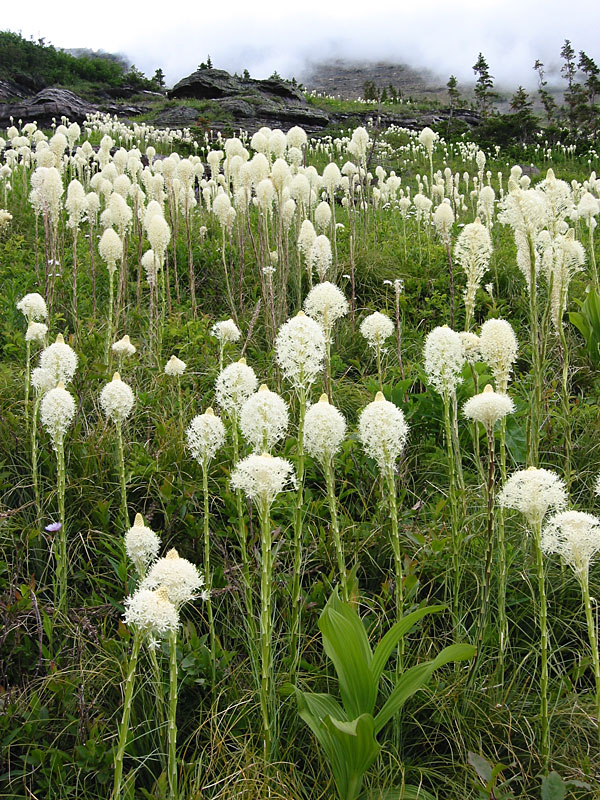
Beargrass
Xerophyllum tenax
☀️ Full Sun 💧 Low

Billy-Goat Weed
Ageratum conyzoides
☀️ Full Sun 💧 Moderate
Bird Vetch
Vicia cracca

Bird’s-Foot Trefoil
Lotus corniculatus

Bitter Dock
Rumex obtusifolius
☀️ Full Sun 💧 Moderate

Black Fritillary
Fritillaria camschatcensis

Black Horehound
Ballota nigra

Blinks
Montia fontana
☀️ Full Sun 💧 High
Common Questions
What makes a plant a wildflower?
A wildflower is an uncultivated flowering plant that grows and reproduces independently in the wild without deliberate human breeding or hybridization.
How do you prepare soil for planting wildflowers?
Clear all existing vegetation and weed seeds, rake the top 2.5 cm (1 in) of soil into a fine tilth, and avoid adding fertilizer, which encourages invasive grasses over native forbs.
Are all wildflowers safe to touch and grow?
No, several common wildflowers cause chemical burns, dermatitis, or severe systemic toxicity when touched or ingested, including deadly nightshade and henbane.
When is the best time of year to sow wildflower seeds?
Autumn is the optimal sowing window for most temperate wildflowers, as cold winter temperatures break seed dormancy through natural stratification before spring germination.