Wildflowers Guide: Identification and Growing Advice
10 plant profiles · Explore native and naturalised wildflowers, from damp meadow ferns to dry grassland blooms. Learn how to identify and grow diverse wildflower species.
Wildflowers encompass uncultivated flowering species and primitive vascular plants that thrive in native meadows, open woodlands, scrubland, and aquatic habitats across Europe and North America. Selecting wildflowers depends on your site's soil moisture, sunlight exposure, and intended ecological purpose. Sunny, well-draining soils support species like blue thimble flower (Gilia capitata), which produces dense globose heads of blue blossoms, and corn chamomile (Anthemis arvensis), an annual that prefers disturbed soil. In contrast, aquatic species such as common bladderwort (Utricularia vulgaris) inhabit still freshwaters where they capture microscopic invertebrates using submerged bladders.
Soil texture and nutrient levels dictate species success when establishing a wildflower area. Low-growing perennials like field mouse-ear (Cerastium arvense) thrive in nutrient-poor sandy soils, forming dense mats of star-like white blooms. Shaded damp ground suits primitive ferns such as adder’s tongue (Ophioglossum vulgatum), which produces a single fleshy blade and spore spike each spring. For dry-to-mesic meadows, common centaury (Centaurium erythraea) offers pink starry flowers that open in direct sunlight.
Managing wildflowers requires matching growth habits to your landscape. Spreading species like creeping buttercup (Ranunculus repens) spread quickly across heavy clay via long stolons. Avoid high-nitrogen fertilisers, as rich soil encourages coarse grasses that crowd out native wildflowers.

Adder’s Tongue
Ophioglossum vulgatum
☀️ Partial Shade 💧 Moderate

Blue Thimble Flower
Gilia capitata
☀️ Full Sun 💧 Low

Common Bladderwort
Utricularia vulgaris
☀️ Full Sun 💧 Aquatic
Common Centaury
Centaurium erythraea
☀️ Full Sun 💧 Low
Common Speedwell
Veronica arvensis

Corn Chamomile
Anthemis arvensis
☀️ Full Sun 💧 Low
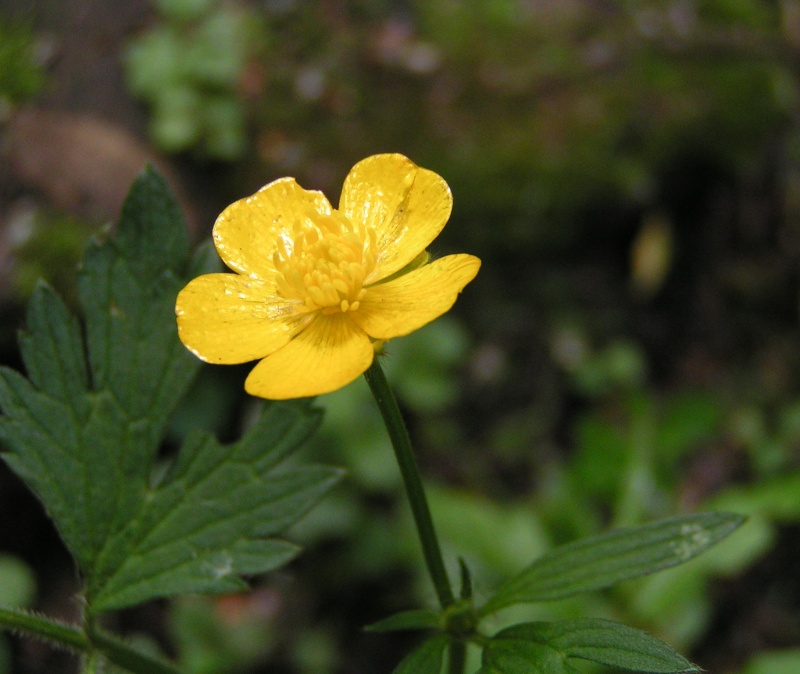
Creeping Buttercup
Ranunculus repens
☀️ Partial Sun 💧 High

Field Mouse-Ear
Cerastium arvense
☀️ Full Sun 💧 Low

Largeflower Triteleia
Triteleia grandiflora
☀️ Full Sun 💧 Low

Small-Flowered Sweet-Briar
Rosa micrantha
Common Questions
How do you establish a wildflower meadow from seed?
Prepare a clean seedbed by removing weeds and turf, then sow seed at 2–5 g/m² (0.06–0.15 oz/sq yd) onto unfertilised soil in autumn or early spring. Press seeds into the soil surface without burying them, as many wildflower species require light to germinate. Water gently until seedlings establish.
Do wildflowers need fertiliser?
No, most native wildflowers thrive in low-nutrient soil and should not be fertilised. High levels of nitrogen encourage dominant agricultural grasses and invasive weeds, which outcompete slower-growing wildflower species.
How often should a wildflower area be mown?
Mow wildflower areas once or twice a year, primarily in late summer after seeds have dropped. Cut to a height of 5–7 cm (2–3 in) and collect all cuttings to prevent nutrient build-up in the soil.
Why are wildflowers important for native pollinators?
Wildflowers supply essential nectar and pollen throughout the growing season for native bees, butterflies, and hoverflies. Species with varied flower structures provide resources for short-tongued and long-tongued insect species alike.