Best Hedge Plants for Privacy, Windbreaks, and Boundaries
316 plant profiles · Compare 204 hedging plants for screening, windbreaks, and boundaries. Learn spacing, growth rates, and pruning requirements.
A hedge is a linear planting of woody shrubs or trees spaced closely together to form a continuous screen, barrier, or boundary marker. Choosing the correct species depends on mature height, local climate, soil drainage, and tolerance to regular clipping. Dense evergreen conifers like Japanese plum yew (Cephalotaxus harringtonia) provide year-round shade and visual privacy, whereas deciduous options like alpine currant (Ribes alpinum) leaf out early in spring and withstand cold continental winters down to -40 °C (-40 °F).
For coastal boundaries or sandy ground, salt-tolerant choices like sea buckthorn (Hippophae rhamnoides) and Japanese black pine (Pinus thunbergii) establish deep root systems that stabilize shifting soil and buffer strong winds. In mild or Mediterranean regions, shrubby germander (Teucrium fruticans) thrives in dry, lean gravel and responds well to formal topiary, while Chilean guava (Ugni molinae) forms an edible boundary reaching 1.2 to 1.8 m (4 to 6 ft) tall with fragrant autumn berries.
Subtropical and warm-temperate gardens benefit from fast-growing broadleaf evergreens such as lilly pilly (Syzygium smithii), which regenerates rapidly after hard pruning. To establish an effective hedge, space smaller shrubs 30 to 45 cm (12 to 18 in) apart, while larger hedging trees require 60 to 90 cm (24 to 36 in) intervals to ensure dense lower growth without premature stem dieback.

Adam’s Needle
Yucca filamentosa
☀️ Full Sun 💧 Low

African Honeysuckle
Halleria lucida
☀️ Partial Sun 💧 Moderate

African Sumac
Searsia lancea
☀️ Full Sun 💧 Low
Alder Buckthorn
Frangula alnus
☀️ Partial Sun 💧 Moderate

Alpine Currant
Ribes alpinum
☀️ Partial Shade 💧 Moderate

American Black Currant
Ribes americanum
☀️ Partial Sun 💧 Moderate

American Coral Tree
Erythrina americana
☀️ Full Sun 💧 Low

American Elderberry
Sambucus canadensis
☀️ Full Sun 💧 High

American Hazelnut
Corylus americana
☀️ Full Sun 💧 Moderate

American Holly
Ilex opaca
☀️ Full Sun 💧 Moderate

Apple Rose
Rosa villosa
☀️ Full Sun 💧 Moderate

Australian Blackthorn
Bursaria spinosa
☀️ Full Sun 💧 Low

Australian Brush Cherry
Syzygium australe
☀️ Full Sun 💧 Moderate

Australian Cheesewood
Pittosporum undulatum
☀️ Partial Sun 💧 Moderate

Australian Finger Lime
Microcitrus australasica
☀️ Full Sun 💧 Moderate

Australian Laurel
Pittosporum tobira
☀️ Full Sun 💧 Low

Australian Pine
Casuarina equisetifolia
☀️ Full Sun 💧 Low

Balsam Spurge
Euphorbia balsamifera
☀️ Full Sun 💧 Low

Banks’ Grevillea
Grevillea banksii
☀️ Full Sun 💧 Low
Barbados Gooseberry
Pereskia aculeata
☀️ Full Sun 💧 Moderate
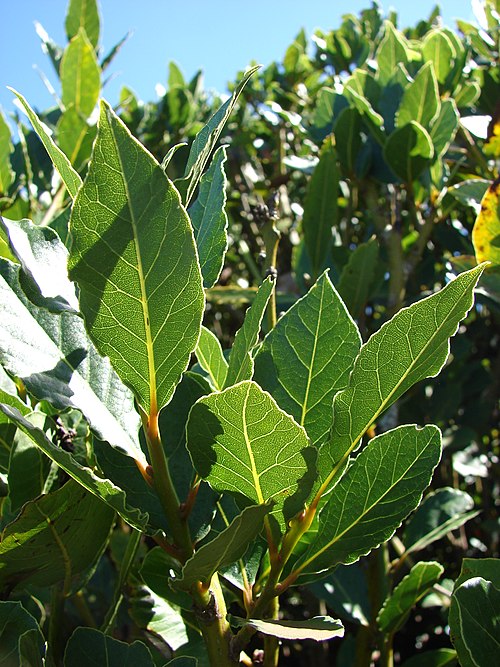
Bay Laurel
Laurus nobilis
☀️ Full Sun 💧 Moderate

Beauty Bush
Kolkwitzia amabilis
☀️ Full Sun 💧 Moderate

Big Bluestem
Andropogon gerardi
☀️ Full Sun 💧 Low

Black Bamboo
Phyllostachys nigra
☀️ Full Sun 💧 Moderate
Common Questions
How far apart should you space hedge plants?
Space most hedge plants 30 to 60 cm (12 to 24 in) apart, depending on their mature spread. For a dense, low boundary under 1 m (3.3 ft), plant at 30 to 40 cm (12 to 16 in) centres, whereas tall privacy screens require 60 to 90 cm (24 to 36 in) spacing.
What is the best time of year to plant a new hedge?
Plant bare-root hedges between November and March while the plants are dormant, provided the ground is neither frozen nor waterlogged. Container-grown specimens can go into the ground at any point from autumn through mid-spring, allowing roots to establish before summer heat.
How often do you need to prune an established hedge?
Prune formal hedges two to three times a year between late spring and late summer to keep their geometric shape crisp. Informal or flowering hedges only need a single annual prune immediately after flowering finishes or in late winter to remove dead wood.
How do you stop a hedge from going bare at the bottom?
Prune the sides with a slight taper known as a batter, so the top is narrower than the base. This profile ensures sunlight reaches the lowest branches, preventing the leaf drop and bare stems that occur when top growth shades out the bottom.