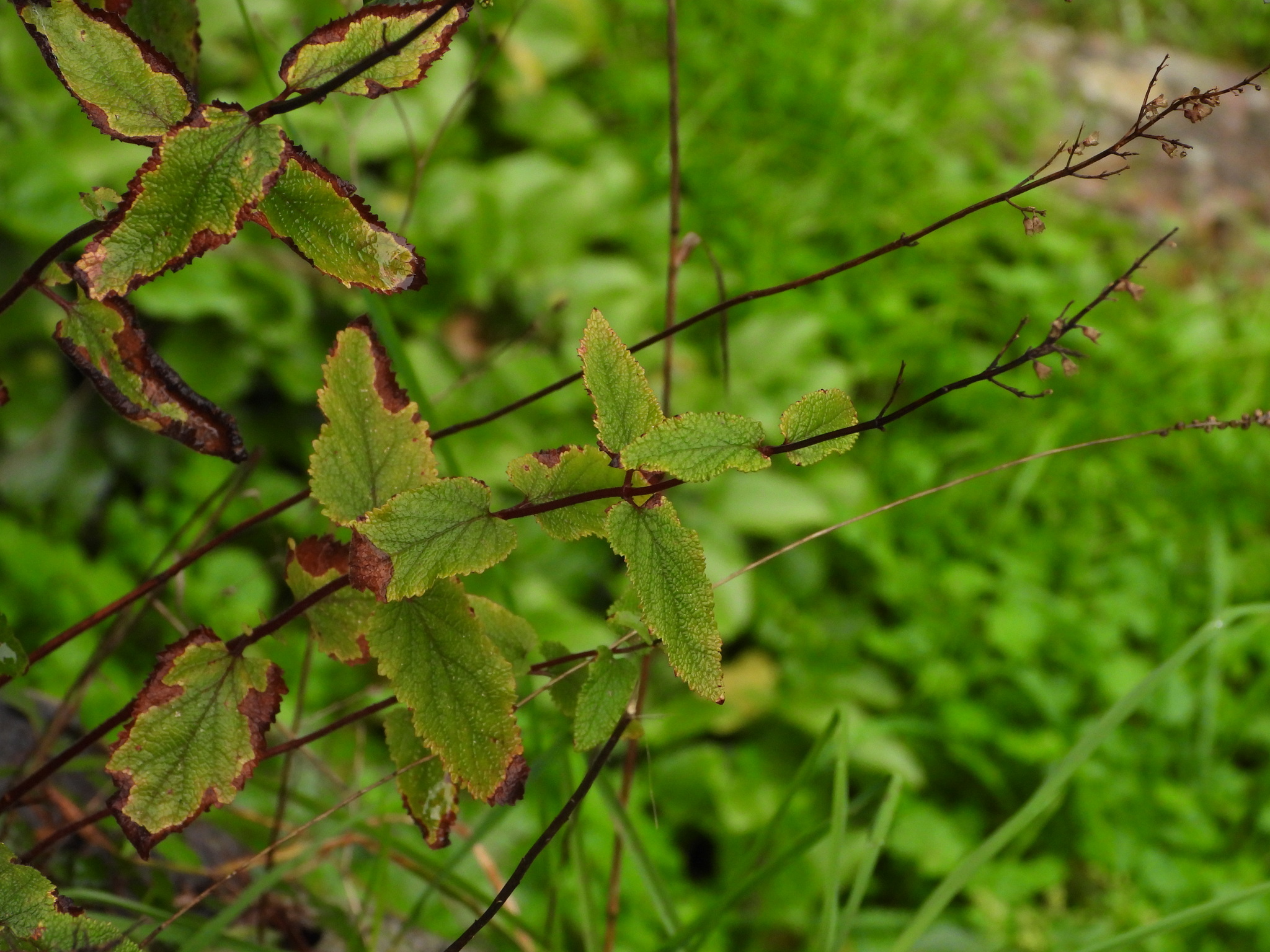
Shrubby Germander is a spreading evergreen shrub from the western and central Mediterranean, belonging to the mint family Teucrium fruticans. It is distinguished by its square, white-felted stems and small, aromatic leaves that remain silver-grey throughout the year.
This species is a staple in coastal gardens from New Zealand to the UK because it tolerates salt spray and high winds. It grows much wider than it does tall, making it a functional choice for low, wide-reaching ground coverage or formal hedging in dry climates.
Key Facts
- Light: Needs full sun to maintain silver foliage
- Size: Reaches 1 m (3 ft) tall and 4 m (13 ft) wide
- Soil: Requires sharp drainage, thrives in sandy or rocky earth
- Hardiness: Best in USDA zones 8 to 10
- Bloom: Pale blue flowers appear from summer into autumn
Is Shrubby Germander Right for Your Garden?
Shrubby Germander is a Mediterranean native that thrives in coastal gardens and dry, sunny borders where other shrubs might struggle with salt or heat. It is an ideal choice for gardeners in USDA zones 8-10 who need a fast-growing, evergreen privacy screen or a low-maintenance filler for a large bank. Because it can spread up to 4 m (13 ft) wide if left unmanaged, you must ensure you have the space or the commitment to prune it regularly.
This shrub is highly resistant to drought once its root system is established, typically after one full growing season. It performs exceptionally well in New Zealand and California, where its silver-grey foliage provides a cool contrast to darker green garden plants. It is also a magnet for bees, which frequent the pale blue flowers for their nectar throughout the summer months.
Identifying Teucrium fruticans by Its Silver Stems
The most distinctive feature of Shrubby Germander is the white, velvety felt that covers its square stems and the undersides of its leaves. The leaves themselves are ovate-lanceolate, measuring about 1.5-2.5 cm (0.6-1 in) long, with a glossy, dark green upper surface. This contrast between the green top and white bottom gives the entire plant a shimmering silver appearance when the wind blows.
- Stems: Square in cross-section, becoming woody with age.
- Leaves: Opposite pairs, aromatic when crushed, evergreen.
- Flowers: 2.5 cm (1 in) long, two-lipped, lacking an upper lip.
- Habit: Spreading and arching, forming a dense mound.
Choosing the Best Site for Shrubby Germander
You must plant Shrubby Germander in a location that receives at least 6-8 hours of direct sunlight daily to prevent the stems from becoming leggy. In partial shade, the plant loses its tight habit and the silver colour of the foliage dulls significantly. It is well-suited for exposed, windy sites, as its flexible stems and waxy leaves are built to withstand coastal gales and salt spray.
Drainage is the most important site factor, as this Mediterranean species will quickly develop root rot in heavy clay or waterlogged soil. If your garden has heavy soil, plant it on a mound or incorporate plenty of grit to ensure water moves away from the crown. It is tolerant of alkaline conditions and thrives in limestone-rich soils with a pH up to 8.5.
Planting Distances for Hedges
For a dense, formal hedge, space your plants 45-60 cm (18-24 in) apart to ensure they knit together within two growing seasons. If you are planting Shrubby Germander as a standalone specimen or a loose, informal screen, allow at least 1.5 m (5 ft) between plants to accommodate their natural spreading habit. Dig a hole twice the width of the root ball but no deeper, as burying the stem can lead to fungal issues.
Initial care involves watering once a week during the first summer to help the roots penetrate the surrounding soil. In the UK and cooler parts of Europe, planting near a south-facing wall provides extra warmth and protection from late spring frosts. Avoid adding heavy organic mulch directly against the base of the stems, as this can trap moisture and cause the bark to rot.
Watering and Feeding Requirements
Established Shrubby Germander plants require minimal to no supplemental watering, even during prolonged dry spells in summer. Overwatering is a common mistake that leads to yellowing leaves and a shortened lifespan for the shrub. Only water during the first year of growth or if you notice the shoot tips wilting significantly during an extreme heatwave.
Fertilizing is rarely necessary and can actually be detrimental by encouraging soft, sappy growth that is more susceptible to frost damage. If your soil is particularly nutrient-poor, a light application of a balanced granular fertilizer in early spring is sufficient. Avoid high-nitrogen feeds, as these will cause the plant to lose its compact shape and silver intensity.
How to Prune Shrubby Germander
You should prune Shrubby Germander twice a year to maintain a tight, formal shape, typically in late spring and again in late summer after flowering. It is a very forgiving shrub that responds well to hard pruning, making it easy to keep at a height of 60-90 cm (2-3 ft) for a low garden border. If the plant becomes woody and sparse in the centre, you can cut it back by a third to stimulate fresh, silver growth from the base.
- Spring Prune: Remove any frost-damaged tips and shape the plant before new growth begins.
- Summer Prune: Lightly trim after the first flush of flowers to encourage a second bloom.
- Hedge Maintenance: Use shears to keep the sides slightly tapered so light reaches the bottom.
- Renovation: Cut back into old wood only if the plant is healthy and well-established.
Winter Care and Hardiness
Shrubby Germander is hardy down to -10 °C (14 °F), provided the soil remains relatively dry during the winter months. In regions with cold, wet winters, the combination of damp soil and freezing temperatures is often fatal. If a severe cold snap is forecast, protecting the base with a dry mulch of straw or gravel can help the plant survive.
Avoid pruning late in the autumn, as the resulting new growth will be too tender to survive the first frost. In the UK, it is often treated as a H4 hardy plant, meaning it survives most winters in a sheltered spot but may suffer tip dieback in northern areas. If the foliage turns brown after a freeze, wait until late spring to see where new buds emerge before cutting away the dead wood.
Common Problems and Pests
The primary threat to Shrubby Germander is root rot caused by Phytophthora, which occurs when the soil is too wet or poorly drained. Symptoms include a sudden wilting of the entire plant followed by the foliage turning a dull grey-brown. There is no cure once the roots have rotted, so prevention through proper site selection and minimal watering is essential.
- Leaf Spot: Dark spots on leaves caused by high humidity; improve air circulation.
- Aphids: May cluster on new spring growth; usually controlled by ladybirds.
- Legginess: Caused by insufficient light; move the plant to a sunnier spot.
- Frost Dieback: Blackened tips after winter; prune back to healthy wood in May.
Propagating from Cuttings
The most successful way to propagate Shrubby Germander is by taking semi-ripe cuttings in mid to late summer. Select non-flowering shoots that are starting to turn woody at the base, roughly 10-15 cm (4-6 in) long. Remove the lower leaves and dip the base in hormone rooting powder before inserting them into a gritty, well-draining compost mix.
Place the cuttings in a cold frame or a bright, unheated greenhouse, keeping the compost slightly moist but never soggy. They typically take 4-6 weeks to develop a robust root system. Once rooted, pot them on individually and overwinter them in a sheltered spot before planting out the following spring once the risk of frost has passed.
Year-Round Care for Shrubby Germander
| Spring | Prune out any frost-damaged stems in late spring. Apply a light, balanced fertilizer if the soil is poor and mulch with grit to suppress weeds. |
|---|---|
| Summer | Monitor for aphids on new growth. Lightly trim the plant after the main flowering period to maintain its shape and encourage a second flush of blue blooms. |
| Autumn | Avoid heavy pruning as winter approaches. Ensure the surrounding area is clear of fallen leaves that might trap moisture around the base of the plant. |
| Winter | Protect young plants with horticultural fleece if temperatures drop below -10 °C (14 °F). Ensure pots are raised on feet to prevent waterlogging during rainy months. |
Why Is My Shrubby Germander Struggling?
| What you see | Likely cause | What to do |
|---|---|---|
| Sudden wilting and brown leaves | Root rot (overwatering) | Reduce watering immediately and ensure the soil has adequate drainage. |
| Leggy, sparse growth | Insufficient light | Prune back hard and move the plant to a full sun location. |
| Blackened shoot tips | Frost damage | Wait until late spring and prune back to the first healthy green buds. |
| Yellowing lower leaves | Nutrient deficiency or wet feet | Check soil moisture; if dry, apply a light liquid seaweed feed. |
Common Cultivars of Shrubby Germander
- ‘Azureum’ – darker, more intense blue flowers on 1m stems.
- ‘Compactum’ – tighter, dwarf habit reaching only 60cm tall.
- ‘Selection’ – more upright growth, ideal for formal hedges.
- ‘White Form’ – rare variety with pure white flowers.
Best Companion Plants for Mediterranean Gardens
Shrubby Germander pairs best with other drought-tolerant Mediterranean species that share its love for sun and drainage. The silver foliage provides an excellent backdrop for the purple spikes of French Lavender (Lavandula dentata) or the deep green needles of Rosemary (Salvia rosmarinus). These plants have identical care requirements, making them easy to manage together in a water-wise garden.
For a contrast in flower shape, consider planting alongside Rock Rose (Cistus x purpureus) or Blue Oat Grass (Helictotrichon sempervirens). The arching stems of the germander also look effective when planted behind lower-growing perennials like Stachys byzantina or Salvia officinalis. Ensure all companions are spaced far enough apart to allow for the significant spread of the germander as it matures.
Frequently Asked Questions
How fast does Shrubby Germander grow?
It is a fast-growing shrub that can add 30-40 cm (12-16 in) of new growth per year under ideal sunny conditions. This makes it an excellent choice for establishing a quick hedge or screen.
Can I grow Teucrium fruticans in a pot?
Yes, it grows well in large containers provided you use a very gritty, free-draining potting mix. Ensure the pot has large drainage holes and is placed in a position that receives full sun all day.
Is Shrubby Germander invasive?
It is not considered invasive in most regions, though its 4 m (13 ft) spread can overwhelm smaller garden spaces if not pruned annually. It spreads via its arching stems but does not typically self-seed aggressively.
Does Shrubby Germander attract bees?
Yes, the pale blue flowers are highly attractive to honeybees and solitary bees. It is often included in pollinator-friendly garden designs because it blooms for a long period from mid-summer into autumn.
Is it toxic to dogs or cats?
Shrubby Germander is generally considered non-toxic to pets by major veterinary resources. However, it is not an edible plant and should not be ingested in large quantities by animals or humans.
Information about traditional or historical uses is provided for educational interest only and is not medical advice. Do not use any plant to treat a condition without speaking to a qualified professional.
Sources & Verification
Taxonomy and distribution are checked against the databases below. Care guidance is written for cultivated species only and reviewed by our editor. How We Build Plant Profiles →