
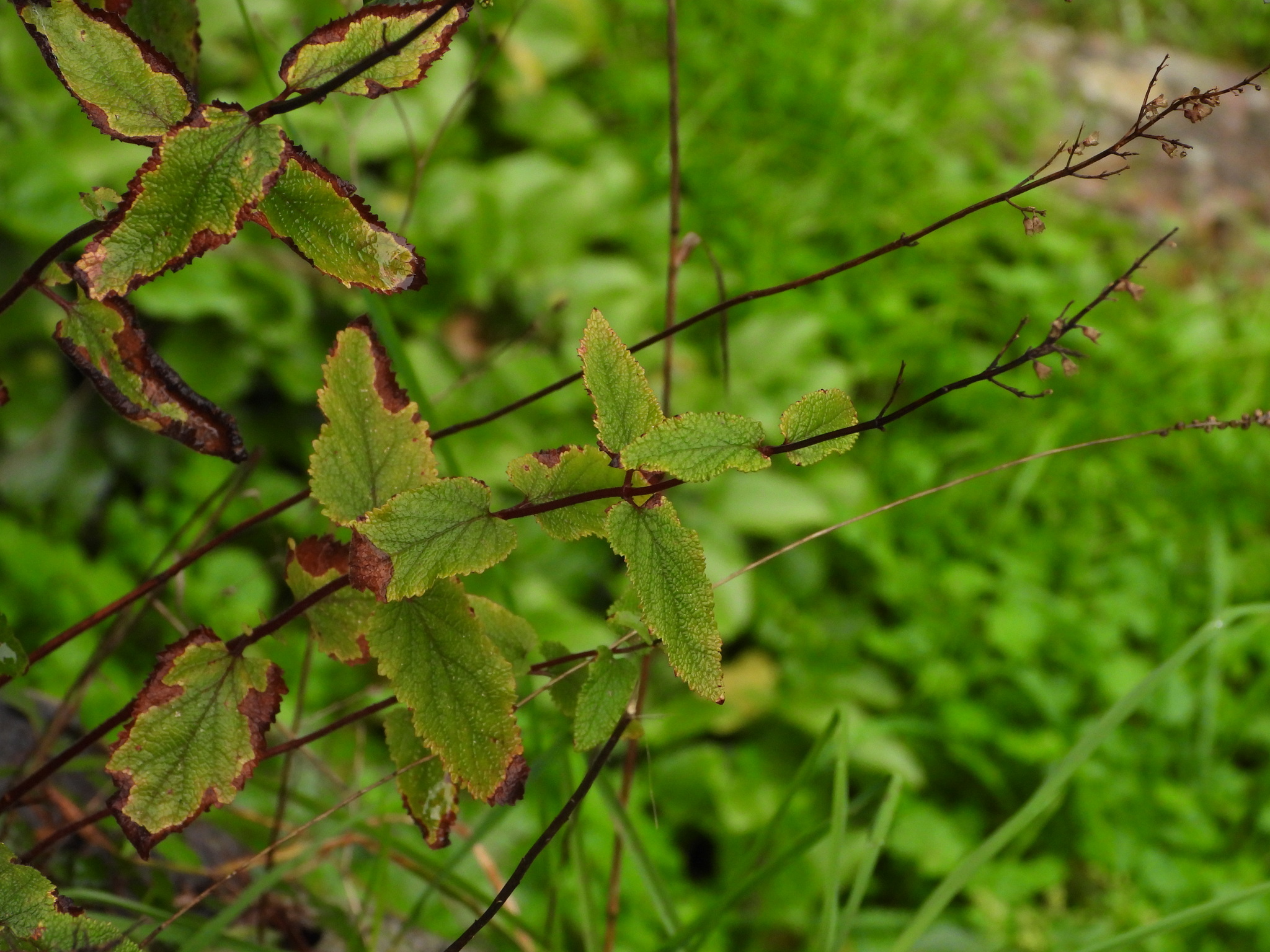
Wood Sage (Teucrium scorodonia) is a perennial member of the mint family Lamiaceae native to Western Europe and Tunisia. It thrives on dry, acidic soils in shaded woodlands and heaths, growing up to 50 cm (20 in) tall with distinctive yellowish-green flowers.
Despite its common name, it does not belong to the true sage genus Salvia, though its foliage releases a pungent aroma when crushed. It serves as an important nectar source for native pollinators and adapts well to informal wildlife gardens.
Key Facts
- Type: Herbaceous perennial wildflower
- Height: 30-50 cm (12-20 in)
- Bloom time: July to September
- Soil: Acidic, well-drained, sandy or rocky
- Native range: Western Europe and North Africa
What Is Wood Sage and Where Does It Grow
Wood Sage is a low-growing perennial herb that forms dense patches in dry, acid-rich environments across Western Europe. It reaches a maximum height of 50 cm (20 in) and spreads slowly via underground rhizomes to form persistent ground cover.
You will typically find this plant on the edges of oak and beech woods, dry heaths, rocky banks, and coastal dunes. It tolerates deep shade beneath tree canopies better than many other woodland plants, provided the soil remains free of standing water.
- Prefers acidic substrates with a pH below 6.5
- Thrives under partial shade or full canopy cover
- Commonly colonizes disturbed woodland margins
How to Identify Wood Sage
Wood Sage is easily recognized by its opposite, wrinkled leaves and asymmetrical yellowish-green flowers arranged in one-sided racemes. The leaves measure 3-6 cm (1.2-2.4 in) long and feature deeply crenate margins with a heart-shaped base.
The square stems, typical of the Lamiaceae family, are covered in fine, soft hairs and emerge from a woody base near the ground. When crushed, the leaves emit a bitter, herbal scent reminiscent of hops mixed with sage, which separates it visually from true sages.
- Leaves: Ovate, wrinkled, and hairy on the underside
- Flowers: Pale yellow to greenish, with long protruding stamens
- Stems: Quadrangular, branched, and slightly woody at the base
Wood Sage Habitat and Growing Conditions
Wood Sage requires poor, acidic, and exceptionally well-drained soils to thrive in its natural environment. It grows best in USDA Hardiness Zones 6 through 9 where winter temperatures do not consistently drop below -23 °C (-10 °F).
This species refuses to grow in heavy, waterlogged clay or alkaline soils rich in calcium. Drought tolerance is high once established, thanks to a deep root system that taps into moisture beneath dry topsoil.
- Soil texture: Sandy loam, peat, or stony ground
- Moisture level: Low to moderate; intolerant of soggy roots
- Sun exposure: Partial shade to dappled woodland light
Wood Sage Ecology and Wildlife Value
Wood Sage plays a supporting role in woodland ecosystems by providing late-season nectar for beneficial insects. Flowering occurs from July to September, bridging the gap between spring ephemerals and autumn nectar sources.
The dense foliage mats offer shelter for ground-dwelling beetles, spiders, and small mammals. Specialized pollinators, including various solitary bees and hoverflies, frequently visit the unusual curved flowers.
- Attracts native bees, wasps, and butterflies
- Serves as a larval host for certain moth species
- Provides structural cover for soil-dwelling microorganisms
Conservation Status of Teucrium scorodonia
Wood Sage maintains a secure global population and is classified as Least Concern on the IUCN Red List. Over 490,000 recorded occurrences across Europe demonstrate its resilience and wide distribution in the wild.
While local populations face disruption from intensive forestry and agricultural clearing, the species regenerates rapidly from seed and root fragments. It is not currently listed as protected or endangered in its native range.
- Global status: Least Concern (LC)
- Distribution: Widespread across Western and Central Europe
- Threats: Habitat fragmentation and heavy grazing pressure
Traditional Uses and Medicinal Benefits of Wood Sage
Wood Sage has a long history in European herbalism, where historical texts referred to it as scordium or woodland germander. Traditional healers used infusions of the dried aerial parts to treat fevers, digestive complaints, and superficial skin wounds.
Modern commercial perfumes occasionally reference the scent profile of wood sage, famously paired with sea salt in luxury fragrances. However, the plant is rarely used in contemporary medicine due to the presence of potent bitter compounds.
- Historically brewed as a bitter tonic for digestion
- Applied topically in poultices for minor cuts and bruises
- Employed in fragrance notes for commercial colognes
Known Cultivars of Wood Sage
- ‘Crispum’ – features tightly curled, crinkled foliage
- ‘Variegated’ – displays cream-splashed leaf margins
Similar Species You Might Confuse with Wood Sage
Wood Sage shares its habitat with several plants that feature similar foliage or growth habits, requiring close inspection to separate them. True sage (Salvia officinalis) differs by having broader, grey-green leaves with a distinctly savory culinary aroma and blue flowers.
Wood Avens (Geum urbanum) grows in similar woodland margins but features compound leaves and bright yellow buttercup-like flowers rather than spikes. Water Germander (Teucrium scordium) occupies wet meadows and smells strongly of garlic, unlike the dry-loving wood sage.
- True sage (Salvia officinalis): Grey-green leaves, blue floral spikes
- Wood avens (Geum urbanum): Compound leaves, yellow five-petal flowers
- Water germander (Teucrium scordium): Wetland habitat, garlic scent
Frequently Asked Questions
What is wood sage?
Wood sage (Teucrium scorodonia) is a perennial European wildflower in the mint family with wrinkled leaves and yellowish-green summer flowers.
What are wood sage medicinal uses?
Traditionally, herbalists used wood sage infusions as a bitter tonic for digestion and as a wash for minor wounds, though it is rarely used medicinally today.
Is wood sage used in perfume?
Yes, wood sage inspires popular commercial fragrances, most notably paired with sea salt in luxury colognes.
How do you grow wood sage in a garden?
Wood sage requires partial shade and well-drained, acidic soil, making it an ideal choice for dry, shaded woodland gardens.
Is wood sage toxic to pets?
Wood sage contains bitter compounds that can cause digestive upset if ingested by animals, though toxicity data for pets is limited.
Information about traditional or historical uses is provided for educational interest only and is not medical advice. Do not use any plant to treat a condition without speaking to a qualified professional.
Sources & Verification
Taxonomy and distribution are checked against the databases below. Care guidance is written for cultivated species only and reviewed by our editor. How We Build Plant Profiles →


