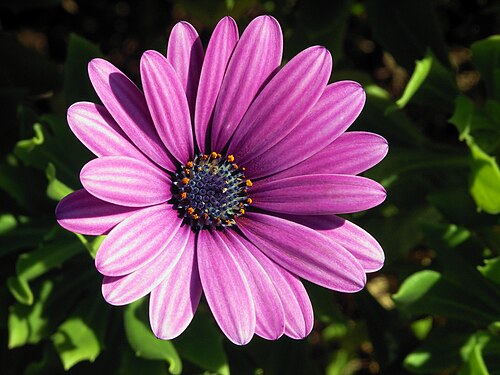
The Cape marigold, Dimorphotheca sinuata, is a quick-growing annual native to the arid regions of southern Africa. It thrives in open, sunny spaces and is famous for its vibrant, daisy-like flowers that open wide in direct sunlight.
You will find this plant succeeds best in areas with high light and well-draining soil. It is an excellent choice if you want a rapid display of colour during the spring months.
Key Facts
- Light: Needs full sun to open its blooms
- Water: Keep soil moderately moist but never waterlogged
- Life cycle: Grown as an annual in most climates
- Height: Typically reaches 30-40 cm (12-16 in)
- Soil: Requires sandy, well-draining ground
Is Cape Marigold Right for Your Garden
Cape marigold is a perfect choice if you have a sunny spot that needs quick, seasonal colour. It suits gardeners who prefer low-maintenance annuals that establish themselves rapidly from seed.
Because it originates from desert environments, it performs best when you provide it with plenty of space and intense light. Avoid planting it in heavy, clay-rich soil where drainage is poor, as this will lead to root rot. If you live in a region with heavy spring rains, ensure your site is on a slope or a raised bed.
How to Identify Cape Marigold
You can identify the Cape marigold by its distinctive, glandular-hairy leaves and bright, daisy-like flower heads that measure roughly 5 cm (2 in) across. The plant typically grows in a low, bushy habit with stems reaching up to 40 cm (16 in) in height.
- Leaves are alternate, often with a wavy or sinuate margin.
- Flower petals are usually orange, yellow, or white with a darker central disc.
- The entire plant is covered in fine, sticky hairs, a feature that distinguishes it from other similar daisies.
- Blooms only fully expand in direct sun, closing tightly during cloudy weather or at night.
Site Selection and Planting
Choose a site that receives at least 6 to 8 hours of direct sunlight every day. This plant is sensitive to shade and will become leggy and fail to flower if light levels are too low.
Prepare your soil by incorporating coarse sand or grit to improve drainage. Sow your seeds directly into the garden in early spring once the danger of frost has passed. Space your plants 20 cm (8 in) apart to ensure adequate airflow between the bushy stems.
Watering and Feeding Needs
Provide moderate water during the active growing season to keep the soil consistently moist but never saturated. Once the plants are established, they show surprising tolerance for short dry spells.
- Water at the base of the plant to keep the foliage dry.
- Avoid overhead watering, which can encourage fungal issues on the leaves.
- Feed lightly with a balanced, water-soluble fertiliser once midway through the spring.
- Too much nitrogen will result in lush leaves but very few flowers.
Pruning and Maintenance
Maintenance for this plant is minimal, but you should deadhead spent blooms to encourage a longer flowering window. Removing the faded flowers prevents the plant from putting its energy into seed production too early.
If the plants look straggly late in the season, you can lightly trim back the stems to promote bushier growth. However, because this is an annual, the plant will naturally decline once temperatures rise significantly in the summer. Clear away all plant debris at the end of the season to prevent pests from overwintering in your beds.
Propagation from Seeds
Growing from seed is the most reliable way to propagate Cape marigold. The seeds germinate rapidly in warm, well-draining soil within 10 to 14 days.
- Collect seeds once the flower heads have dried and turned brown.
- Store seeds in a cool, dark, and dry paper envelope until the next planting season.
- Sow directly in the garden; this species does not transplant well due to its taproot.
- If you start indoors, use biodegradable peat pots to avoid disturbing the roots.
Common Problems and Pests
The most common issue you will face is root rot caused by poor drainage or overwatering. Watch for yellowing lower leaves, which often signal that the soil is staying too wet for too long.
- Powdery mildew: Appears as white, dusty spots on leaves during humid weather; improve air circulation.
- Aphids: Small insects that cluster on new growth; blast them off with a strong stream of water.
- Leggy growth: Caused by lack of sunlight; move your plants to a brighter location.
- Failure to open: Happens when the weather is consistently cloudy; the plant needs direct sun to trigger opening.
Cape Marigold Through the Year
| Spring | Sow seeds directly into the garden after the final frost. Provide regular water to support rapid initial growth. |
|---|---|
| Summer | Deadhead faded flowers to keep the display going. Monitor for aphids and water only when the top 3 cm (1 in) of soil is dry. |
| Autumn | Collect seeds from dried flower heads for next year. Pull up and compost the entire plant once it begins to wither. |
| Winter | Keep the garden bed clean and free of debris. In frost-free zones, you may leave the area fallow until spring sowing. |
What Is Wrong With My Cape Marigold
| What you see | Likely cause | What to do |
|---|---|---|
| Yellowing lower leaves | Overwatering | Allow the soil to dry out significantly between waterings. |
| White spots on leaves | Powdery mildew | Increase spacing between plants and avoid wetting the foliage. |
| Leggy, sparse growth | Insufficient sunlight | Move or replant in a location that gets at least 6 hours of full sun. |
Cape Marigold Varieties Worth Knowing
- Pastel Shades Mixed – a selection of soft pink, salmon, and cream colours
- Orange Glory – a classic cultivar with intense, solid orange petals
Companions for Your Daisy Display
Pair your Cape marigold with other drought-tolerant, sun-loving annuals to create a cohesive desert-style garden. Choose plants that share the same requirement for fast-draining, sandy soil.
- California poppy (Eschscholzia californica) for a similar orange colour palette.
- Blue cornflower (Centaurea cyanus) to provide a contrasting cool-toned bloom.
- Sweet alyssum (Lobularia maritima) as a low-growing carpet around the base.
- Blue-eyed daisy (Arctotis stoechadifolia) for a similar growth habit and foliage texture.
Frequently Asked Questions
Is Cape marigold a perennial?
No, Cape marigold is an annual that completes its life cycle in one season. It grows rapidly from seed, blooms, and then dies back once the weather becomes too hot or dry.
Why is my Cape marigold not opening?
Cape marigold flowers only open in direct, bright sunlight. If the sky is overcast, cloudy, or if the plant is in a shaded spot, the flowers will remain closed.
Does Cape marigold need lots of water?
No, it prefers moderate water and actually dislikes being overwatered. It is adapted to arid conditions and performs best when the soil is allowed to dry slightly between waterings.
Can I grow Cape marigold in pots?
Yes, you can grow them in pots as long as you use a well-draining, sandy potting mix. Ensure the container has large drainage holes to prevent the roots from sitting in excess moisture.
Sources & Verification
Taxonomy and distribution are checked against the databases below. Care guidance is written for cultivated species only and reviewed by our editor. How We Build Plant Profiles →