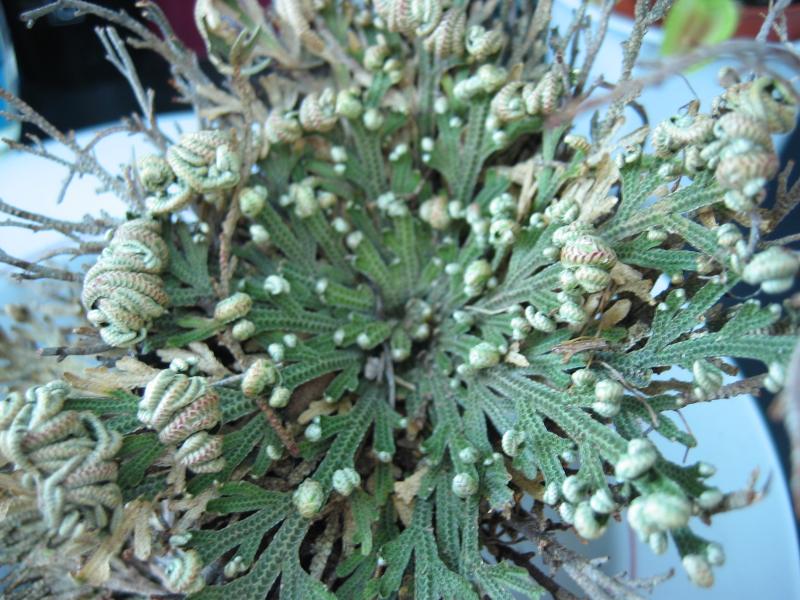
Lesser clubmoss is a small, primitive vascular plant that inhabits the damp, alkaline soils of the Northern Hemisphere. While it resembles a true moss in its low-growing habit, Selaginella selaginoides is a lycophyte, a lineage of plants that has existed for over 400 million years.
This species is a specialist of cold, nutrient-poor environments where it avoids competition from larger plants. It is the only member of its genus native to much of northern Europe and the British Isles, making it a distinct find for hikers in mountain flushes or coastal dunes.
Key Facts
- Height: upright fertile stems reach 10 cm (4 in)
- Habitat: prefers lime-rich, marshy ground and fens
- Reproduction: spreads via two types of spores (heterosporous)
- Range: circumpolar across Europe, Asia, and North America
- Soil: strictly requires alkaline or base-rich conditions
Where Can You Find Lesser Clubmoss?
Lesser clubmoss is found in damp, base-rich environments such as fens, mountain flushes, and wet heathlands. It thrives in the circumpolar regions of the Northern Hemisphere, extending from the Arctic tundra down to the high-altitude mountains of the Alps and the Pyrenees. In the British Isles, it is most frequently spotted in the Scottish Highlands and the Lake District.
Because it is a calcicole, it acts as a biological indicator for lime-rich soils. You will often find it growing alongside other specialist species like the yellow mountain saxifrage (Saxifraga aizoides) or various Carex sedges. It avoids acidic peat bogs, which distinguishes its habitat from many other common clubmosses.
Identifying Selaginella selaginoides in the Field
The plant is 3-10 cm (1.2-4 in) tall and features two distinct types of stems. The sterile stems are short, creeping, and lie flat against the ground, while the fertile stems stand upright and end in a yellowish cone. These upright cones, or strobili, are noticeably thicker than the creeping stems and appear from June to August.
Its leaves provide a specific identification mark. Each leaf is 2-4 mm (0.08-0.16 in) long, lance-shaped, and spirally arranged around the stem. Unlike true mosses, these leaves have tiny, visible teeth along their margins and a single central vein. The pale green color of the foliage often turns a brownish-yellow as the spores mature in late summer.
Habitat Requirements and Soil Conditions
Lesser clubmoss requires constant moisture and alkaline soil to survive. It is often found on north-facing slopes or in areas where cold, mineral-rich water trickles over rocks. It can grow at altitudes ranging from sea level in northern latitudes to over 3,000 m (9,800 ft) in southern mountain ranges.
- Requires a soil pH above 7.0 for optimal growth.
- Found in damp dune slacks where sea shells provide calcium.
- Thrives in open vegetation where taller grasses do not shade it out.
- Often occupies cracks in limestone pavement where moisture collects.
The Unique Ecology of Club Spikemoss
Lesser clubmoss is heterosporous, meaning it produces two different sizes of spores in its cones. The larger megaspores develop into female gametophytes, while the smaller microspores become male gametophytes. This is a more advanced reproductive strategy than that of true clubmosses in the Lycopodium genus.
Genetically, this species is a survivor of an ancient lineage. It has only one closely related sister species, Selaginella deflexa, which is native to the Hawaiian Islands. Together, these two plants form a unique group that is distinct from all other 700+ species within the Selaginella genus worldwide.
Conservation and Population Trends
While listed as Least Concern (LC) globally, lesser clubmoss is declining in the southern parts of its range. In England and Wales, many historic lowland populations have vanished due to land drainage and the acidification of bogs. It is sensitive to nitrogen deposition, which encourages faster-growing grasses to smother its low-growing stems.
Protection of its habitat is the primary way to ensure its survival. Maintaining high water tables in fens and preventing overgrazing in alpine meadows helps preserve the delicate moss-like carpets it forms. In some regions, it is legally protected as a rare or threatened species at the local level.
Traditional Uses of the Lesser Clubmoss
Historically, various species of spikemoss were traditionally used in folk medicine to treat skin conditions or as diuretics. In some northern cultures, the dried plants were used as a source of yellow dye for wool. However, because the plant is small and difficult to harvest in quantity, these uses were never widespread or commercially significant.
Today, the plant has no modern culinary or medicinal application. It is valued primarily by botanists and ecologists as a indicator of high-quality, undisturbed alkaline wetlands. Its presence suggests a habitat that has remained stable and unpolluted for a long duration.
How to Tell Lesser Clubmoss from Other Species
Lesser clubmoss is often confused with Fir clubmoss (Huperzia selago), but can be distinguished by its habitat and cone structure. While fir clubmoss grows in acidic soils and lacks a distinct terminal cone, the lesser clubmoss requires lime and features very clear, upright fruiting spikes. True mosses lack the vascular veins found in the leaves of Selaginella.
- Lycopodium clavatum: Has long, trailing stems and paired cones on long stalks.
- Diphasiastrum alpinum: Has blue-green, flattened, scale-like leaves.
- Selaginella helvetica: Features leaves of two different sizes arranged in rows.
- Selaginella kraussiana: A common houseplant with much softer, spreading foliage.
Frequently Asked Questions
What is the common name of Selaginella selaginoides?
The most widely used common name is lesser clubmoss, though it is also frequently called club spikemoss or prickly mountain-moss.
Is lesser clubmoss a type of moss?
No, it is a vascular plant belonging to the lycophyte group. While it looks like a moss, it has a complex internal system for transporting water and nutrients, which true mosses lack.
Where can I find lesser clubmoss in the United Kingdom?
You are most likely to find it in the Scottish Highlands, the Lake District, or Upper Teesdale, usually in wet, lime-rich mountain flushes or coastal dune slacks.
Can I grow lesser clubmoss in my garden?
It is very difficult to grow in a garden setting because it requires specific, cold, lime-rich, and permanently wet conditions. It is best enjoyed in its natural wild habitat.
Is Selaginella selaginoides rare?
It is common in the Arctic and high mountains, but it is considered rare and declining in lowland areas of Western Europe due to habitat loss.
Information about traditional or historical uses is provided for educational interest only and is not medical advice. Do not use any plant to treat a condition without speaking to a qualified professional.
Sources & Verification
Taxonomy and distribution are checked against the databases below. Care guidance is written for cultivated species only and reviewed by our editor. How We Build Plant Profiles →