
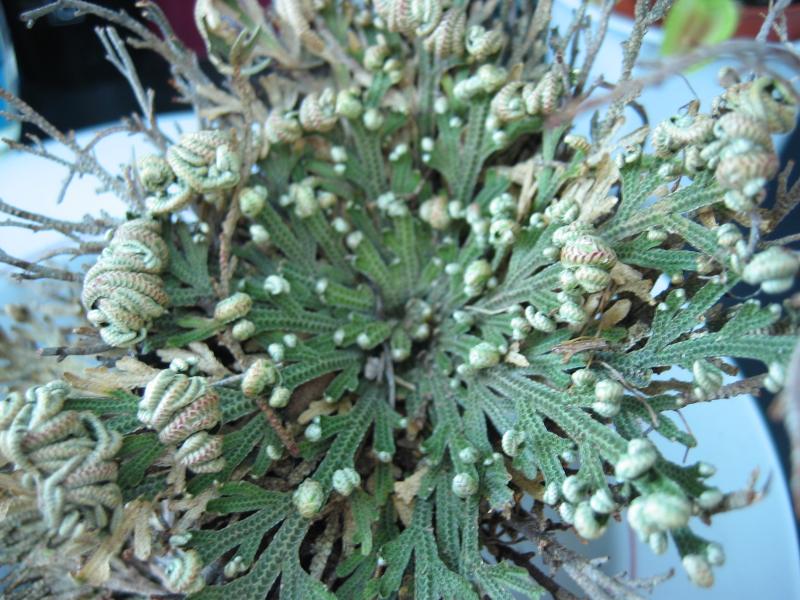
Resurrection Plant (Selaginella lepidophylla) is a drought-tolerant desert spikemoss native to the Chihuahuan Desert of the United States and Mexico. It belongs to the family Selaginellaceae and survives extreme dry periods by curling into a dormant brown ball.
When exposed to water, the stems uncurl and turn green within hours, resuming metabolic activity. This plant requires very specific care when grown indoors as a dry-dormancy novelty rather than a standard houseplant.
Key Facts
- Light: bright indirect light
- Water: soak weekly or keep dry
- Temperature: 18-24 °C (65-75 °F)
- Soil: well-draining sandy mix
- Toxicity: non-toxic to pets
What Is It Like to Grow a Resurrection Plant
Growing a flower of stone requires accepting that the plant spends part of its life looking entirely dead. The key rule is balancing hydration cycles so the tissue does not rot from sitting in stagnant water too long. It suits growers looking for a low-maintenance novelty rather than a lush green houseplant.
- Treat it as a fascinating biological specimen rather than a typical foliage plant.
- Expect the dry brown ball to transform into green fronds within 24 hours of watering.
- Allow the plant to dry out completely between hydration cycles to mimic its desert origins.
How to Identify Resurrection Plant
Resurrection plants are seedless vascular plants that grow up to 15 cm (6 inches) across. They feature scale-like, overlapping leaves arranged tightly along branching stems that curl inward during dry spells.
- Forms a tight, spherical brown ball when dehydrated, resembling a fistful of dried ferns.
- Spreads outward into an open, rosette-like mat of dark green to greyish-green fronds when hydrated.
- Produces no flowers or seeds, reproducing instead via spores hidden on the undersides of specialized leaves.
How Much Light Does Resurrection Plant Need
Resurrection plants thrive best in bright indirect light when actively growing. Direct midday sun can scorch the delicate tissue, while deep shade prevents proper drying and encourages fungal decay.
- Place the container near an east- or west-facing window with filtered sunlight.
- Provide at least 6 hours of indirect brightness daily during its hydrated green phase.
- Avoid dark corners where moisture lingers on the fronds for too long after watering.
How Often to Water a Flower of Stone
Watering a resurrection plant depends entirely on whether you are keeping it active or letting it rest. The golden rule is to submerge the dry base in water for a few hours, then remove it completely to prevent root rot.
- Submerge the roots in a shallow dish containing 2 cm (0.75 inches) of water to trigger uncurling.
- Change the water every 2 days if kept continuously hydrated to prevent bacterial growth and foul odours.
- Allow the plant to dry out entirely for several weeks between hydration cycles to mimic natural drought.
Best Soil and Potting Mix
Resurrection plants need an extremely fast-draining substrate if planted in soil rather than kept as a loose dry specimen. Standard potting compost holds too much moisture and will quickly rot the shallow root system.
- Mix equal parts standard potting soil, coarse sand, and perlite for adequate drainage.
- Use shallow containers or decorative stones where the base can rest without getting waterlogged.
- Ensure the pot features at least 1 drainage hole if you choose to anchor the roots in soil.
Ideal Temperature and Humidity
Resurrection plants prefer warm indoor temperatures between 18-24 °C (65-75 °F) throughout the year. They tolerate cool winter drops down to 10 °C (50 °F) when kept in their dry, dormant state.
- Keep the plant away from drafty air conditioning vents and hot radiators.
- Maintain indoor humidity around 40-50 percent during the active green phase.
- Ensure good air circulation around the unfolding fronds to discourage mold development in stagnant air.
How to Propagate Resurrection Plant
Propagating Selaginella lepidophylla at home is rarely done because plants are usually collected or purchased as mature specimens. Division of larger clumps or growing from spores are the only natural reproduction methods.
- Separate healthy offsets from a mature clump using sterile shears during spring.
- Dust divisions with antifungal powder before placing them on a gritty, well-draining medium.
- Maintain high ambient humidity around cuttings until new root growth establishes after 4 weeks.
Common Problems and Toxicity
Resurrection plants suffer primarily from mold and rot caused by sitting in stagnant water for too long. Foul-smelling slime on the fronds indicates bacterial decay from staying wet past 48 hours.
- Remove rotting fronds immediately and let the specimen dry out completely for a month to recover.
- Inspect the base for white powdery mildew if humidity remains too high without adequate airflow.
- Rest easy knowing the plant is completely non-toxic to cats, dogs, and humans if ingested.
Resurrection Plant Through the Seasons
| Spring | Initiate regular hydration cycles by soaking the plant in shallow water weekly. Provide bright indirect light to encourage green frond development. |
|---|---|
| Summer | Maintain good air circulation around the plant to prevent mold during humid weeks. Change the soaking water every 48 hours if kept continuously green. |
| Autumn | Begin reducing the frequency of watering sessions as natural daylight hours decrease. Allow the plant to curl into its dry, dormant brown ball state. |
| Winter | Keep the resurrection plant completely dry and stored in a cool, dark location. Rest the dormant ball until spring prompts the next watering cycle. |
Resurrection Plant Problems and Quick Fixes
| What you see | Likely cause | What to do |
|---|---|---|
| Fronds turning black and slimy | Sitting in water too long | Remove the plant from water immediately, trim decayed parts, and let it dry out for two weeks. |
| Plant refuses to uncurl in water | Extreme dehydration or plant death | Ensure water is fresh and room temperature, and give the specimen up to 24 hours to respond. |
| White fuzzy growth on stems | Fungal mold from stagnant air | Improve air circulation around the plant and let it dry completely before the next watering. |
Frequently Asked Questions
Is the resurrection plant really a flower of stone?
No, it is a spikemoss rather than a true flowering plant or a mineral crystal. The common name flower of stone refers to its desert habitat and its ability to open up like a flower when exposed to moisture.
Can a resurrection plant stay green forever?
No, keeping a resurrection plant green continuously will cause it to rot and die within a few weeks. It requires periodic dry resting phases to mimic its natural desert dormancy cycle.
Is resurrection plant toxic to cats and dogs?
No, resurrection plants are completely non-toxic to cats, dogs, and humans. Pets may chew on the dry fronds, but ingestion will not cause poisoning.
How long can a resurrection plant stay dry?
A resurrection plant can remain dry and dormant for several years in its balled-up state. It retains its cellular structure until moisture triggers metabolic revival.
What is the difference between Selaginella lepidophylla and true rose of Jericho?
Selaginella lepidophylla is a New World spikemoss native to desert regions, whereas the true rose of Jericho refers to Anastatica hierochuntica, an entirely different mustard-family flowering annual from the Middle East.
Sources & Verification
Taxonomy and distribution are checked against the databases below. Care guidance is written for cultivated species only and reviewed by our editor. How We Build Plant Profiles →

