Houseplants by Light, Care, and Type
262 plant profiles · Browse care guides for 194 indoor plants. Compare watering schedules, light levels, soil mixes, and pet safety for tropicals, succulents, and ferns.
Indoor plants are tropical understory perennials, arid succulents, and epiphytes adapted to survive within the temperature range of human homes, typically 18–24 °C (65–75 °F). Because indoor spaces lack natural rainfall, wind movement, and direct overhead sun, these species share a reliance on artificial watering rhythms, pots with drainage holes, and specific window placements to match their native light thresholds.
Choosing the correct plant depends on the light meter reading or window exposure in your room:
- Direct south-facing sun: Desert dwellers such as the spineless yucca (Yucca gigantea) and string of hearts (Ceropegia woodii) require high solar radiation to prevent weak, stretched stems.
- Bright indirect light: Epiphytes like the staghorn fern (Platycerium bifurcatum) and woodland perennials such as the natal lily (Clivia miniata) thrive near east-facing or shaded west-facing windows.
- Moderate shade and humidity: Understory herbs like the fishbone prayer plant (Ctenanthe burle-marxii) and purple shamrock (Oxalis triangularis) collapse in hot sun but flourish under diffuse light when ambient humidity stays above 50 percent.
Every indoor specimen faces moisture control risks. Without wind to dry out saturated compost, root rot caused by stagnant water in non-draining saucers is the leading cause of plant loss indoors. Grouping plants with matching water frequencies and checking soil moisture down to 5 cm (2 in) beneath the surface prevents chronic overwatering.

African Hemp
Sparrmannia africana
☀️ Bright Indirect 💧 High
African Milk Tree
Euphorbia trigona
☀️ Full Sun 💧 Low

African Violet
Streptocarpus ionanthus
☀️ Bright Indirect 💧 Moderate

Air Plant
Tillandsia ionantha
☀️ Bright Indirect 💧 Low
Albany Pitcher Plant
Cephalotus follicularis
☀️ Bright Indirect 💧 High
Alocasia Polly
Alocasia mortfontanensis
☀️ Bright Indirect 💧 Moderate

Aloe vera
☀️ Full Sun 💧 Low
Amaryllis
Hippeastrum vittatum
☀️ Bright Indirect 💧 Moderate
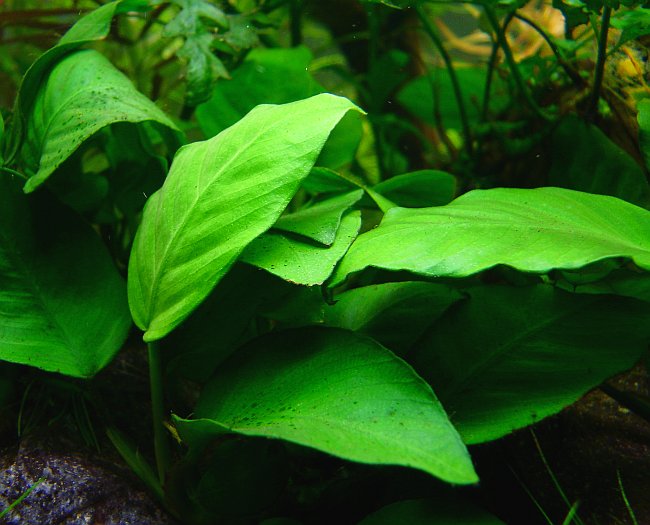
Anubias
Anubias barteri
☀️ Low Light 💧 Aquatic

Arabian Jasmine
Jasminum sambac
☀️ Full Sun 💧 Moderate

Arabica Coffee
Coffea arabica
☀️ Bright Indirect 💧 Moderate

Areca Palm
Dypsis lutescens
☀️ Bright Indirect 💧 Moderate

Arrowhead Plant
Syngonium podophyllum
☀️ Bright Indirect 💧 Moderate

Arrowroot
Maranta arundinacea
☀️ Partial Shade 💧 High

Asparagus Fern
Asparagus setaceus
☀️ Bright Indirect 💧 Moderate

Avocado
Persea americana
☀️ Full Sun 💧 Moderate
Baby Rubber Plant
Peperomia obtusifolia
☀️ Bright Indirect 💧 Moderate

Baby Sun Rose
Mesembryanthemum cordifolium
☀️ Full Sun 💧 Low

Baby’s Tears
Soleirolia soleirolii
☀️ Bright Indirect 💧 High
Balloon Cactus
Parodia magnifica
☀️ Bright Indirect 💧 Low

Balsam Spurge
Euphorbia balsamifera
☀️ Full Sun 💧 Low
Bamboo Palm
Chamaedorea seifrizii
☀️ Bright Indirect 💧 Moderate

Banana
Musa acuminata
☀️ Full Sun 💧 High

Baseball Cactus
Euphorbia obesa
☀️ Full Sun 💧 Low
Common Questions
How do you know when a houseplant needs water?
Check the soil moisture by pressing your finger 2.5–5 cm (1–2 in) deep into the pot; water only when that upper layer feels completely dry to the touch, or when the pot feels noticeably light upon lifting.
What window direction gives the best light for indoor plants?
An east-facing window provides gentle morning sun suitable for the widest range of foliage plants without the thermal burn caused by unshaded southern or western exposures.
Why do the leaf tips of indoor plants turn brown and crispy?
Crispy brown leaf tips are caused by low ambient humidity below 40 percent, excess fertiliser salts accumulating in the potting mix, or chlorine and fluoride present in municipal tap water.
Do houseplants need fertiliser during winter?
Houseplants do not need fertiliser during winter because shorter daylight hours and lower light intensity naturally pause vegetative growth between November and February in the northern hemisphere.