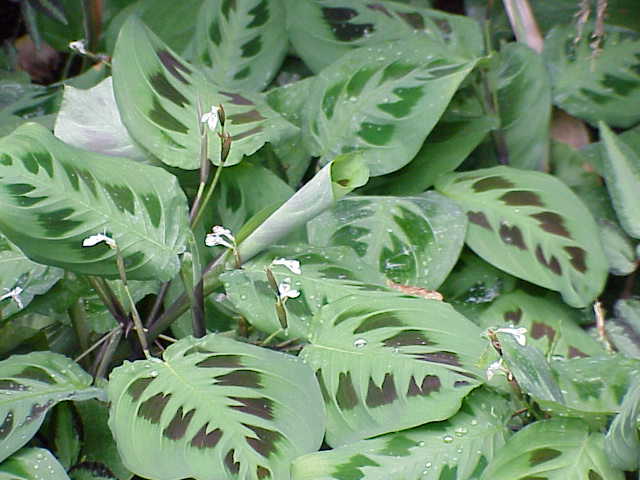
Arrowroot (Maranta arundinacea) is a tropical herbaceous perennial native to Central and South America and the Caribbean, recognised by its broad spear-shaped leaves and thick, scaly underground rhizomes. It produces a digestible, gluten-free culinary starch.
Gardeners cultivate it either as an edible root crop in humid subtropical zones or as a foliage container plant indoors. Consistent warmth and steady soil moisture are the two requirements you must provide to prevent dormancy.
Key Facts
- Soil temperature: Minimum 20 °C (68 °F) for rhizome sprouting
- Water: Keep consistently moist; do not allow root zone to dry completely
- Light: Dappled sunlight outdoors; bright indirect light indoors
- Harvest window: 10 to 12 months after planting rhizome pieces
- Spacing: Plant rhizomes 30-40 cm (12-16 in) apart in beds
- Hardiness: USDA Zones 10-12; leaves die back below 10 °C (50 °F)
Is Arrowroot Right for Your Garden or Home?
Arrowroot suits growers who have at least 10 frost-free months outdoors or a warm, humid room with filtered sunlight indoors. It thrives in high humidity above 60% and requires consistent warmth throughout its growing season.
Because it belongs to the same botanical family as prayer plants (Maranta leuconeura) and rattlesnake plants (Goeppertia insignis), its care indoors resembles that of tropical houseplants. In outdoor garden beds, it requires space to produce its underground rhizomes.
- Indoor gardeners: provides upright tropical foliage in containers placed near east-facing windows.
- Warm-climate growers: delivers home-grown culinary starch from garden beds in USDA zones 10 to 12.
- Cold-climate growers: requires greenhouse overwintering or digging rhizomes in autumn before soil drops below 12 °C (54 °F).
How to Identify the Arrowroot Plant and Flower
You can identify Maranta arundinacea by its lance-shaped leaves reaching 15-30 cm (6-12 in) long on upright, branching green stems that reach 1-1.8 m (3-6 ft) in height. The foliage emerges alternately with prominent parallel veins running outward from a central midrib.
The root system consists of elongated, spindle-shaped rhizomes measuring 10-25 cm (4-10 in) in length and 2-4 cm (0.8-1.6 in) in diameter, covered in overlapping, paper-thin white scales. If broken open, the rhizome flesh is crisp, white, and full of liquid starch.
Small, two-lipped white flowers appear in loose clusters on slender stalks during midsummer. Each bloom measures roughly 1-2 cm (0.4-0.8 in) across, featuring three white petals with slight violet or yellowish shading on the lip. Plants rarely produce viable seeds in temperate zones, reproducing instead by clonal division of the creeping rhizomes.
Ideal Growing Conditions for Arrowroot
Arrowroot requires temperatures between 22 and 30 °C (72 and 86 °F) and loose, fertile soil to swell its underground tubers without rotting. Growth stalls when temperatures dip below 15 °C (59 °F), and frost blackens the foliage immediately.
Provide morning sun with afternoon shade in hot climates, or continuous bright, dappled sunlight beneath high tree canopies. Heavy clay soils bind the rhizomes and cause deformities; prepare sandy loam amended with aged compost.
- Sun exposure: 4 to 6 hours of filtered light; avoid harsh midday sun that bleaches leaf edges.
- Soil mixture: 2 parts sandy loam, 1 part leaf mould or compost, 1 part perlite or grit.
- Substrate pH: slightly acidic to neutral, between 5.5 and 6.8.
- Humidity target: 60% to 80% relative humidity prevents brown, papery leaf tips.
How to Plant Arrowroot Rhizomes
Plant arrowroot rhizome pieces 5-7 cm (2-3 in) deep horizontally into warm soil once spring temperatures reliably stay above 18 °C (64 °F). Each planting piece must contain at least two to three healthy growth buds or ‘eyes’.
Space rhizomes 30-40 cm (12-16 in) apart in rows spaced 60 cm (24 in) apart to give lateral tubers room to expand. If you grow arrowroot in containers, choose pots at least 35 cm (14 in) wide and deep with base drainage holes.
- Select firm rhizomes without soft brown spots or mold.
- Cut rhizomes into 5-8 cm (2-3 in) segments using a sanitised blade, ensuring active eye buds on each piece.
- Allow cut ends to air-dry for 24 hours to develop a protective callus before planting.
- Lay segments flat in the furrow or container and cover with 5 cm (2 in) of loose, moist potting soil.
- Water thoroughly once, then withhold heavy watering until green shoots emerge 14 to 21 days later.
Arrowroot Plant Care and Watering Routines
Water arrowroot whenever the top 2.5 cm (1 in) of soil feels dry, keeping the root layer consistently damp like a wrung-out sponge. Never let container pots sit in stagnant saucers of water, as rhizomes rot quickly in waterlogged conditions.
Fertilise active plants once every three to four weeks from late spring through late summer using a balanced, diluted organic liquid feed. High-nitrogen fertilisers spur excessive leaf growth at the expense of rhizome starch reserves.
Indoor potted plants benefit from daily morning misting or gravel trays filled with water to counter dry air from heating vents. Wipe dust from the leaves monthly with a damp cloth to maximise light absorption. If lower leaves yellow and dry as autumn approaches, decrease watering to match the plant’s natural maturation cycle.
How and When to Harvest Arrowroot Rhizomes
Harvest arrowroot rhizomes 10 to 12 months after planting, once the stems turn yellow, wilt, and fall over naturally in autumn or winter. This dieback indicates that the plant has transferred its leaf carbohydrates downward into storage starch.
Carefully insert a garden fork 20 cm (8 in) away from the stem base and lever the root cluster upward to avoid piercing the fleshy rhizomes. Shake off loose soil, cut the leafy stems 2 cm (0.8 in) above the tuber crowns, and rinse the rhizomes in clean water.
- Save the top 5 cm (2 in) crown portions with attached eyes immediately for next season’s replanting.
- Select firm, mature white rhizomes for food processing; discard woody or discoloured roots.
- Process or consume harvested roots within 48 to 72 hours, as fresh rhizomes deteriorate rapidly at room temperature.
Culinary Uses, Arrowroot Powder, and Skin Care
Arrowroot starch provides a neutral-tasting, clear thickening agent that gels at a lower temperature (65 °C / 149 °F) than cornstarch. Unlike cornstarch, arrowroot thickens acidic fruit fillings without clouding and holds its structure when frozen and thawed.
To make homemade arrowroot flour, peel the fibrous outer scales, grate the flesh finely, wash the pulp through muslin cloths with cold water, and allow the suspended white starch to settle. Once settled, decant the water and dry the sediment cake in a food dehydrator at 45 °C (113 °F) before grinding into fine powder.
In cosmetics and skin care, cosmetic-grade arrowroot powder functions as an oil-absorbing, talc-free base for homemade dry shampoos, body powders, and mineral deodorants. In Bengali and wider South Asian culinary heritage, arrowroot is known as ararut (আরারুট), traditionally prepared as an easily digested boiled gruel for infants and individuals recovering from stomach upsets.
Common Arrowroot Pests and Problems
The most frequent issue affecting arrowroot is leaf-margin browning caused by dry air or chlorine in tap water. Water the plant with filtered or rainwater, and raise ambient humidity above 60% using a room humidifier.
Watch for two-spotted spider mites (Tetranychus urticae) on the undersides of the leaves, especially during winter indoors. Spider mites reveal themselves through fine webbing and pale stippling along leaf margins; wash them away with insecticidal soap sprays.
- Root rot (Fusarium or Pythium): stems collapse at soil level with black mushy rhizomes; remedy by reducing watering and improving soil drainage.
- Curling leaf blades: indicates under-watering, intense direct sunlight, or temperatures below 15 °C (59 °F).
- Arrowroot leaf roller caterpillars (Calpodes ethlius): outdoor larvae fold leaves with silk threads to feed inside; hand-pick rolled leaves or apply organic Bacillus thuringiensis.
Curing Rhizomes and Storing Arrowroot Starch
Store extracted, fully dehydrated arrowroot starch in airtight glass containers in a cool, dark cupboard for up to three years without quality loss. Keep ambient moisture out of containers, as powdered starch absorbs ambient humidity and forms clumps.
Fresh unpeeled rhizomes do not store well fresh. If you cannot process them immediately, store clean, dry rhizomes in perforated containers buried in slightly damp peat moss or sawdust at 13-15 °C (55-59 °F) for up to 14 days.
In household laundering, arrowroot starch mixed with warm water has traditionally served as a natural clothes-stiffening spray. Boil 1 tablespoon of starch in 500 ml (1 pint) of water, cool, strain into a spray bottle, and iron fabric while lightly damp to add crisp body to cotton shirts and table linens.
Seasonal Tasks for Arrowroot Crops
| Spring | Divide stored rhizomes into 5 cm (2 in) pieces with active eyes once ambient temperatures top 18 °C (64 °F). Plant in fresh compost outdoors or repot indoor specimens into rich potting soil. Water sparingly until active green sprouts appear. |
|---|---|
| Summer | Maintain steady soil moisture and mist foliage daily if indoor humidity drops below 50%. Feed monthly with a balanced liquid fertiliser diluted to half strength. Monitor undersides of leaves for spider mites and protect outdoor plants from dry winds. |
| Autumn | Cease all fertiliser applications and taper watering as foliage yellows and naturally begins to collapse. Dig up outdoor garden rhizomes before the first frost, setting aside root crowns for winter storage or spring propagation. |
| Winter | Store replanting rhizomes in dry peat moss at 13-16 °C (55-61 °F). For indoor potted plants kept evergreen, reduce watering to roughly every 10 to 14 days, position in the brightest indirect light available, and keep away from draughty doors. |
Diagnosing Arrowroot Growing Problems
| What you see | Likely cause | What to do |
|---|---|---|
| Brown, brittle leaf margins and crispy tips | Low ambient humidity, dry soil, or mineral buildup from hard tap water | Switch to rainwater or filtered water, and increase humidity around the plant using a humidifier or pebble tray. |
| Yellowing foliage and foul-smelling, mushy base | Overwatering and poorly drained, waterlogged substrate causing rhizome rot | Cease watering, excavate the clump to prune off black decaying rhizomes, and replant firm sections in porous, free-draining sandy loam. |
| Leaves rolled tightly into tubes with silk webbing | Arrowroot leaf roller caterpillar (Calpodes ethlius) feeding | Unroll and manually remove caterpillars, or apply a spray containing Bacillus thuringiensis (Bt) across leaf surfaces. |
| Pale bleached patches on leaf surfaces | Sunburn from exposure to intense, direct afternoon sun | Move the container into bright indirect light, or erect a 30% shade cloth over outdoor beds. |
Arrowroot Varieties and Cultivars
- ‘Variegata’ – broad leaves irregularly splashed with cream and white markings; grown primarily as an ornamental houseplant.
- ‘Creole’ – traditional Caribbean cultivar featuring long, fibrous rhizomes that yield high amounts of fine starch.
- ‘Banana’ – shorter, plumper rhizomes that sit shallower in the soil, making them easier to dig by hand.
Frequently Asked Questions
What is arrowroot powder used for in cooking?
Arrowroot powder is used as a neutral, gluten-free thickener for sauces, pie fillings, soups, and puddings. It produces a clear, glossy finish and thickens at a lower heat than cornstarch.
Is arrowroot healthy?
Yes, arrowroot starch consists of easily digestible carbohydrates with negligible fat and protein, making it gentle on the stomach. It is naturally gluten-free and historically served as nourishment during digestive recovery.
How do you care for an arrowroot houseplant?
Place the container in bright indirect light, keep soil moist but never waterlogged, and maintain indoor temperatures between 20 and 26 °C (68 and 79 °F). Maintain humidity above 60% to stop leaf edges from turning brown.
What is arrowroot in Bengali?
In Bengali (Bangla), arrowroot is known as ararut (আরারুট). It is commonly bought as a fine white powder and prepared into a smooth, soothing boiled porridge for children or convalescents.
Can arrowroot powder be used for clothes starching?
Yes, mixing 1 tablespoon of arrowroot powder dissolved in boiled water creates a natural laundry stiffener for cotton fabrics. Spray it onto clothing before ironing to achieve smooth, crisp collars and seams.
What is the difference between arrowroot and calathea?
While both belong to the Marantaceae family, arrowroot (Maranta arundinacea) produces thick, edible starch-filled rhizomes and plain green leaves, whereas calatheas such as Goeppertia insignis are grown purely for their patterned foliage and lack harvestable food tubers.
Information about traditional or historical uses is provided for educational interest only and is not medical advice. Do not use any plant to treat a condition without speaking to a qualified professional.
Sources & Verification
Taxonomy and distribution are checked against the databases below. Care guidance is written for cultivated species only and reviewed by our editor. How We Build Plant Profiles →