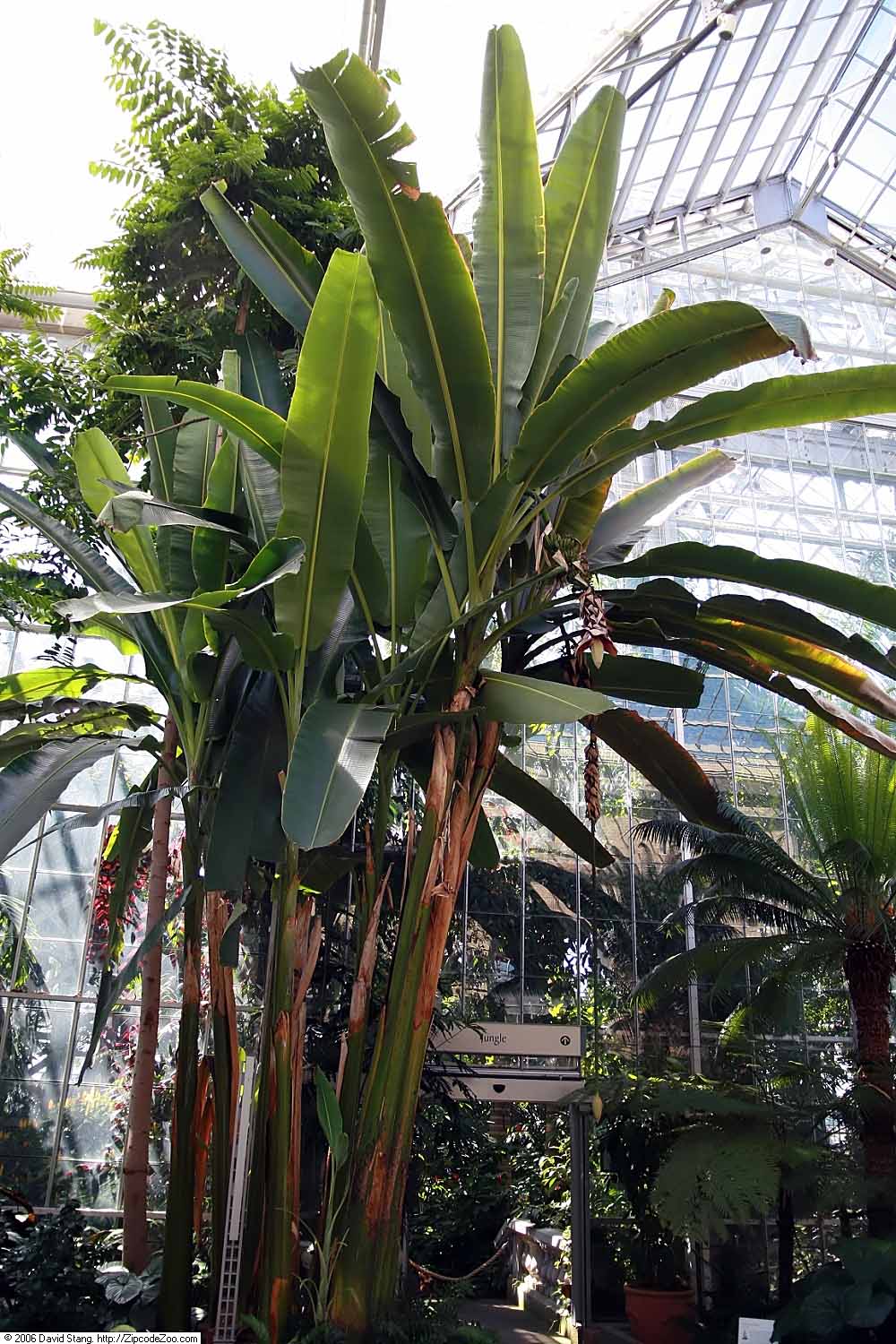
The Banana plant, specifically Musa acuminata, is a giant herbaceous perennial native to the tropical regions of Southeast Asia and the Indian subcontinent. It is the primary wild ancestor of almost all modern dessert bananas, characterized by its thick pseudostem and expansive, paddle-shaped foliage that can dominate a room.
Indoors, this species requires significant vertical space and high light levels to thrive, often reaching the ceiling within two growing seasons. While it is frequently confused with the plantain (Musa × paradisiaca), the Cavendish varieties of this species are the ones most commonly found in grocery stores and home collections.
Key Facts
- Light: At least 6 hours of direct sunlight daily
- Water: Keep soil consistently moist but never waterlogged
- Height: 1.5–4 m (5–13 ft) depending on the cultivar
- Humidity: Requires levels above 50% to prevent leaf browning
- Growth Rate: Can produce one new leaf every week in summer
Is a Banana Plant Right for Your Home?
Growing a Banana indoors requires a commitment to providing high humidity and ample floor space for its rapid expansion. Because it is a giant herb rather than a tree, it grows from a central corm and can reach heights of 2 m (6.5 ft) even in its dwarf forms, making it unsuitable for small apartments or low-light corners. The plant is a heavy consumer of resources, requiring a dedicated routine that some might describe as a full-time gardening career.
You must be prepared for the plant’s physical presence, as the leaves can extend 1 m (3.3 ft) in length and catch the wind or snag on furniture. Historically, the massive scale of these plantations led to the term “Banana Republic,” referring to the political dominance of fruit companies in Central America. For the home grower, this history translates into a plant that needs a stable, warm environment free from drafts.
- Requires a heavy pot to prevent the top-heavy leaves from tipping it over.
- Needs a ceiling height of at least 2.4 m (8 ft) for standard indoor varieties.
- Best suited for sunrooms, conservatories, or south-facing windows.
Identifying the Look of Musa acuminata
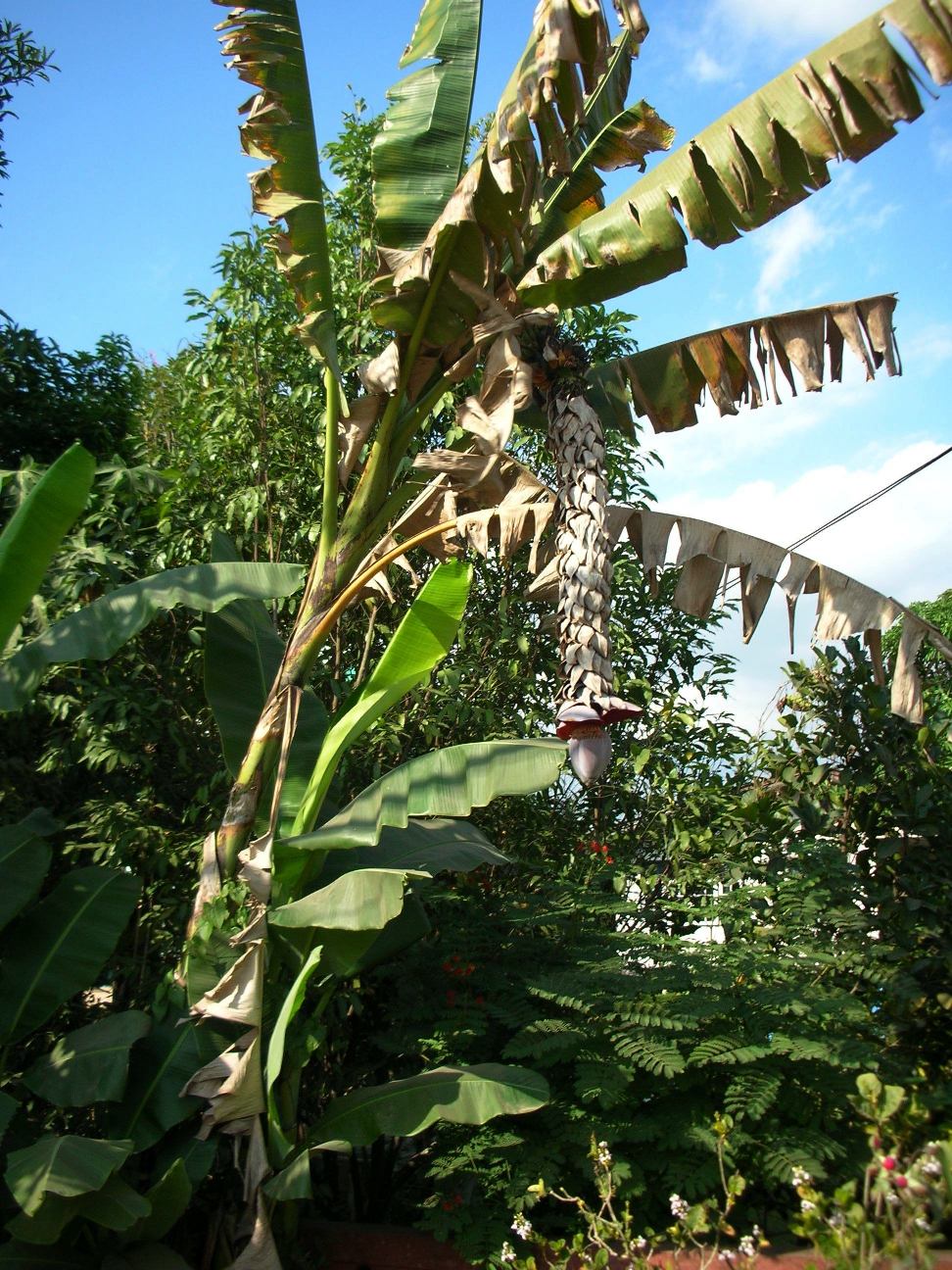
The Banana is identified by its “pseudostem,” which is actually a collection of tightly wrapped leaf bases rather than a woody trunk. The leaves are oblong and spirally arranged, featuring a prominent midrib and lateral veins that run parallel to each other toward the leaf edge. In high-wind environments or near indoor fans, these leaves often tear along the veins, a natural adaptation that prevents the entire plant from being uprooted.
Mature specimens of Musa acuminata produce a large, drooping inflorescence with purple bracts that peel back to reveal rows of small, tubular flowers. The fruit develops in clusters called “hands,” with each individual fruit known as a “finger.” The curved shape of these fingers is the direct inspiration for the “banana clip” hair accessory, mimicking the natural arc of the ripening fruit.
- Leaves are typically bright green, though some cultivars have red splotches.
- The pseudostem is fleshy and contains a high percentage of water.
- New leaves emerge as a tightly rolled “cigar leaf” from the center.
- Roots are fibrous and grow from a thick, underground rhizome or corm.
How Much Light Does a Banana Plant Need?
A Banana plant requires a minimum of 6 to 12 hours of bright, direct sunlight every day to maintain its growth rate and structural integrity. If kept in low-light conditions, the plant will suffer from etiolation, where the pseudostem becomes weak and the leaves turn a pale, sickly green. South-facing windows are the only reliable indoor locations that provide the intensity needed for this tropical species.
During the shorter days of winter, you may need to supplement natural light with high-intensity LED grow lights to prevent the plant from entering a state of decline. If the plant does not receive enough light, it will stop producing new leaves and the existing foliage may begin to droop significantly. In summer, moving the pot to a sheltered patio can provide the UV exposure the plant craves, provided it is acclimated slowly.
Watering Schedule for Indoor Bananas
Water your Banana plant whenever the top 2.5 cm (1 in) of soil feels dry to the touch, which may be as often as every 2-3 days in summer. These plants are exceptionally thirsty because their large leaves lose water rapidly through transpiration. However, the soil must never remain saturated or “swampy,” as the underground corm is highly susceptible to fungal rot in anaerobic conditions.
You may notice “guttation,” which is the appearance of water droplets on the leaf tips in the morning; this is a normal process where the plant expels excess moisture. Use room-temperature water to avoid shocking the tropical root system. During the winter months, reduce watering frequency significantly as the plant’s metabolic rate slows down with the cooler temperatures.
- Use a pot with large drainage holes to allow excess water to escape.
- Avoid letting the pot sit in a saucer of standing water for more than 30 minutes.
- Water deeply until it runs out of the bottom of the container.
The Best Soil Mix for Musa acuminata
The ideal soil for a Banana is a rich, well-draining potting medium with a slightly acidic pH between 5.5 and 6.5. A standard peat-based or coconut coir-based potting mix amended with 20% perlite and 10% compost provides the necessary aeration and nutrient retention. Because the plant grows so quickly, it will rapidly deplete the nutrients in a small volume of soil, making the quality of the mix vital.
Avoid using heavy garden soil or pure clay, which will compact around the roots and prevent oxygen from reaching the corm. If the soil pH rises above 7.0, the plant may struggle to up-take iron and manganese, leading to yellowing between the leaf veins. Repotting is usually required every 12-18 months as the plant becomes root-bound and the soil structure breaks down.
Humidity and Temperature Requirements
Maintain a humidity level of at least 50% to 60% to keep the leaf edges from turning brown and crispy. In typical heated indoor environments, humidity often drops below 30%, which is detrimental to Musa acuminata. Using a dedicated humidifier or placing the plant in a large group of other tropical species can help create a localized microclimate with higher moisture content.
Temperature is equally important; the plant thrives between 20–30 “C (68–86 “F). Growth will stop entirely if temperatures drop below 15 “C (59 “F), and prolonged exposure to temperatures near freezing will kill the foliage and potentially the corm. Keep the plant away from air conditioning vents and cold window glass during the winter months.
- Mist the leaves daily with distilled water to provide a temporary humidity boost.
- Use a pebble tray filled with water beneath the pot, ensuring the pot doesn’t touch the water.
- Avoid drafty hallways or doorways where temperatures fluctuate rapidly.
Feeding Your Banana Plant for Growth
Apply a balanced, water-soluble fertilizer every two weeks during the active growing season from spring through early autumn. Banana plants are among the heaviest feeders in the plant world, requiring high levels of nitrogen for leaf production and potassium for stem strength. A fertilizer ratio such as 10-10-10 or 20-20-20 is sufficient for young plants, while older plants benefit from extra potassium.
Always apply fertilizer to moist soil to prevent root burn, which manifests as scorched leaf tips. If you are hoping for fruit, switch to a high-potassium fertilizer once the plant reaches its mature size. During the winter, stop all fertilization entirely, as the plant cannot process the nutrients without active growth and high light levels.
How to Propagate Banana Pups
Propagate Musa acuminata by removing the suckers or “pups” that emerge from the base of the parent plant. Wait until the pup has reached at least 30 cm (12 in) in height and has developed its own independent root system before attempting to separate it. This is the most reliable method of propagation, as seeds from commercial varieties are usually sterile or non-existent.
To separate a pup, use a sharp, sterilized knife to cut it away from the main corm, ensuring you take a significant portion of the pup’s roots with it. Plant the pup in a small pot with the same high-quality soil mix used for the parent. Keep the new plant in a warm, humid spot with bright indirect light until it shows signs of new leaf growth, indicating the roots have established.
- Ensure the pup has at least 3-4 of its own leaves before removal.
- Dust the cut surfaces with cinnamon or a fungicide to prevent rot.
- Keep the soil slightly more moist than usual for the first two weeks after repotting.
Common Problems and Pests
The most frequent pest for indoor Banana plants is the spider mite (Tetranychidae), which thrives in the dry air often found in homes. These tiny arachnids congregate on the undersides of the large leaves, sucking the sap and causing a fine stippling of yellow dots. If left untreated, the mites will spin visible webs and can eventually kill the plant by causing total leaf drop.
Another common issue is leaf spot disease, caused by fungi or bacteria when water sits on the leaves for too long in stagnant air. Ensure good air circulation around the foliage, but avoid direct cold drafts. If you see brown, mushy patches on the pseudostem near the soil line, this is likely a sign of corm rot from overwatering, which is often fatal if not caught early.
- Wipe leaves weekly with a damp cloth to remove dust and discourage mites.
- Treat infestations with neem oil or insecticidal soap, covering all leaf surfaces.
- Prune away dead or dying lower leaves to improve airflow and aesthetics.
Is the Banana Plant Toxic?
The Banana plant is considered non-toxic to humans, dogs, and cats according to the ASPCA and other veterinary toxicology resources. This makes it a safe choice for households with curious pets who might nibble on the low-hanging foliage. Unlike many other tropical houseplants like the Philodendron or Monstera, it does not contain calcium oxalate crystals that cause mouth irritation.
While the plant is safe, the sap from the leaves and pseudostem is very sticky and can cause permanent brown stains on clothing and upholstery. In rare cases, individuals with a latex allergy may experience a cross-reactive skin irritation when handling the cut surfaces of the plant. Always wash your hands after pruning or propagating to remove the tacky residue.
Indoor Flowering and Fruit Production
Flowering in an indoor Banana is rare and typically only occurs after 10 to 15 months of optimal, uninterrupted growth. The plant must reach a certain leaf count and size before it can produce the terminal inflorescence. Because most homes lack the intense light and consistent heat of the tropics, many indoor specimens never bloom, remaining purely ornamental foliage plants.
If your plant does flower and produce fruit, the “fingers” will take several months to fill out and ripen. Once the fruit is harvested, the main pseudostem will naturally die back, as each stem only flowers once. You must then select one of the suckers at the base to become the new lead plant for the next season. The fruit from Musa acuminata is the base for many recipes, including banana bread, banana chips, and banana cake.
Year-Round Care for Your Banana Plant
| Spring | Repot the plant if it has become root-bound and begin fertilizing every 14 days. This is the best time to separate and pot up any suckers (pups) that emerged over winter. |
|---|---|
| Summer | Increase watering frequency to keep soil moist and move the plant outdoors to a sheltered, sunny spot if temperatures stay above 18 “C (65 “F). Check daily for spider mites. |
| Autumn | Bring the plant back indoors before night temperatures drop below 12 “C (54 “F). Gradually reduce fertilizer and watering as the days shorten and growth slows. |
| Winter | Stop fertilizing and allow the top 5 cm (2 in) of soil to dry out between waterings. Use a humidifier to keep the air moist and ensure the plant is in the brightest possible location. |
Diagnosing Common Banana Plant Problems
| What you see | Likely cause | What to do |
|---|---|---|
| Brown, crispy leaf edges | Low humidity or underwatering | Increase humidity with a humidifier and ensure the soil stays consistently moist. |
| Yellowing lower leaves | Natural aging or nitrogen deficiency | Prune off old leaves and ensure you are using a high-nitrogen fertilizer during the growing season. |
| Small, pale new leaves | Insufficient light | Move the plant to a south-facing window or add a full-spectrum grow light. |
| Mushy, brown pseudostem base | Root or corm rot | Reduce watering immediately and check if the pot has adequate drainage; if severe, take a healthy pup and discard the parent. |
Popular Musa acuminata Cultivars for Home Growing
- ‘Dwarf Cavendish’ – The most common indoor variety, reaching 2 m (6.5 ft).
- ‘Super Dwarf Cavendish’ – Stays under 1.2 m (4 ft), ideal for smaller rooms.
- ‘Zebrina’ – Known as the Blood Banana, featuring dark red splotches on leaves.
- ‘Grand Nain’ – A commercial variety that produces high-quality fruit but grows taller.
- ‘Dwarf Red’ – Produces distinctive reddish-purple pseudostems and fruit skins.
Frequently Asked Questions
What is the difference between a Banana and a Mango?
The Banana (Musa acuminata) is a giant herb with long, soft leaves and fruit that grows in clusters, while the Mango (Mangifera indica) is a woody tree with leathery leaves and single large drupe fruits. Bananas grow from underground corms, whereas mangoes grow from a traditional trunk and branch system.
Can I make banana cake in an air fryer using home-grown bananas?
Yes, if your Musa acuminata produces ripe fruit, you can mash them into a batter and bake at 160 "C (320 "F) for 20-30 minutes in an air fryer. Home-grown Cavendish bananas have the same sugar content and moisture as store-bought ones, making them perfect for air fryer recipes.
Why is my banana plant dripping water from the leaves?
This is a natural process called guttation, where the plant expels excess water and minerals through small pores at night. It is usually a sign that the soil is very moist and the humidity is high, which are conditions the plant enjoys.
What does 'banana prompts' or 'banana ai' mean?
These terms usually refer to a viral digital game or AI-generated art trends involving the fruit's image; they are not related to the botanical care or cultivation of the Musa acuminata plant itself.
Are banana leaves edible?
While the leaves themselves are too fibrous to eat, they are traditionally used in many cultures as waterproof wrappers for steaming or grilling food. They impart a subtle, tea-like aroma to dishes like tamales or fish.
Information about traditional or historical uses is provided for educational interest only and is not medical advice. Do not use any plant to treat a condition without speaking to a qualified professional.
Sources & Verification
Taxonomy and distribution are checked against the databases below. Care guidance is written for cultivated species only and reviewed by our editor. How We Build Plant Profiles →