Guide to Growing Houseplants Indoors
155 plant profiles · Discover indoor plant profiles, light requirements, watering schedules, and humidity needs for growing healthy houseplants in your home.
Houseplants are terrestrial, epiphytic, or aquatic species adapted to survive within the temperature range of heated human dwellings, typically between 15 and 24 °C (60 and 75 °F). Most originate in subtropical and tropical understories, arid scrublands, or sheltered cloud forests where frost does not occur. Because domestic interiors offer lower light levels and lower relative humidity than outdoor habitats, species grown indoors share adaptations such as broad shade-tolerant foliage, specialized water-storage organs, or slow metabolic rates.
Selecting the right indoor plant depends directly on your room’s natural light exposure and ambient humidity. Arid succulents like string of hearts (Ceropegia woodii) and drought-tolerant foliage such as spineless yucca (Yucca gigantea) thrive on unobstructed south-facing windowsills where substrate dries rapidly between waterings. In contrast, understory species like the fishbone prayer plant (Ctenanthe burle-marxii) require shaded northern exposures and relative humidity levels above 50 percent to prevent marginal leaf scorch.
Growth habits vary widely across indoor profiles, ranging from tree-form specimens to delicate trailing vines and soil-free epiphytes. Large woody perennials such as the banyan (Ficus benghalensis) can reach ceilings over several years, while aerial epiphytes like the sky plant (Tillandsia ionantha) absorb moisture entirely through epidermal scales called trichomes. For spaces with low light, the natal lily (Clivia miniata) produces deep green strap foliage and flowers without direct sun, whereas trailing selections like English ivy (Hedera helix) tolerate cooler drafty corridors down to 10 °C (50 °F).

African Hemp
Sparrmannia africana
☀️ Bright Indirect 💧 High

African Violet
Streptocarpus ionanthus
☀️ Bright Indirect 💧 Moderate

Air Plant
Tillandsia ionantha
☀️ Bright Indirect 💧 Low
Albany Pitcher Plant
Cephalotus follicularis
☀️ Bright Indirect 💧 High
Alocasia Polly
Alocasia mortfontanensis
☀️ Bright Indirect 💧 Moderate

Aloe vera
☀️ Full Sun 💧 Low
Amaryllis
Hippeastrum vittatum
☀️ Bright Indirect 💧 Moderate

Arrowhead Plant
Syngonium podophyllum
☀️ Bright Indirect 💧 Moderate

Asparagus Fern
Asparagus setaceus
☀️ Bright Indirect 💧 Moderate
Baby Rubber Plant
Peperomia obtusifolia
☀️ Bright Indirect 💧 Moderate

Baby’s Tears
Soleirolia soleirolii
☀️ Bright Indirect 💧 High

Banana
Musa acuminata
☀️ Full Sun 💧 High
Bird of Paradise
Strelitzia reginae
☀️ Full Sun 💧 Moderate

Black Bat Flower
Tacca chantrieri
☀️ Bright Indirect 💧 High
Black Gold Philodendron
Philodendron melanochrysum
☀️ Bright Indirect 💧 Moderate
Black-Eyed Susan Vine
Thunbergia alata
☀️ Full Sun 💧 Moderate

Bleeding Heart Vine
Clerodendrum thomsoniae
☀️ Bright Indirect 💧 High

Blushing Bromeliad
Neoregelia carolinae
☀️ Bright Indirect 💧 Moderate
Blushing Philodendron
Philodendron erubescens
☀️ Bright Indirect 💧 Moderate

Busy Lizzie
Impatiens walleriana
☀️ Partial Shade 💧 High

Caladium
Caladium bicolor
☀️ Bright Indirect 💧 High
Calathea Orbifolia
Goeppertia orbifolia
☀️ Bright Indirect 💧 Moderate
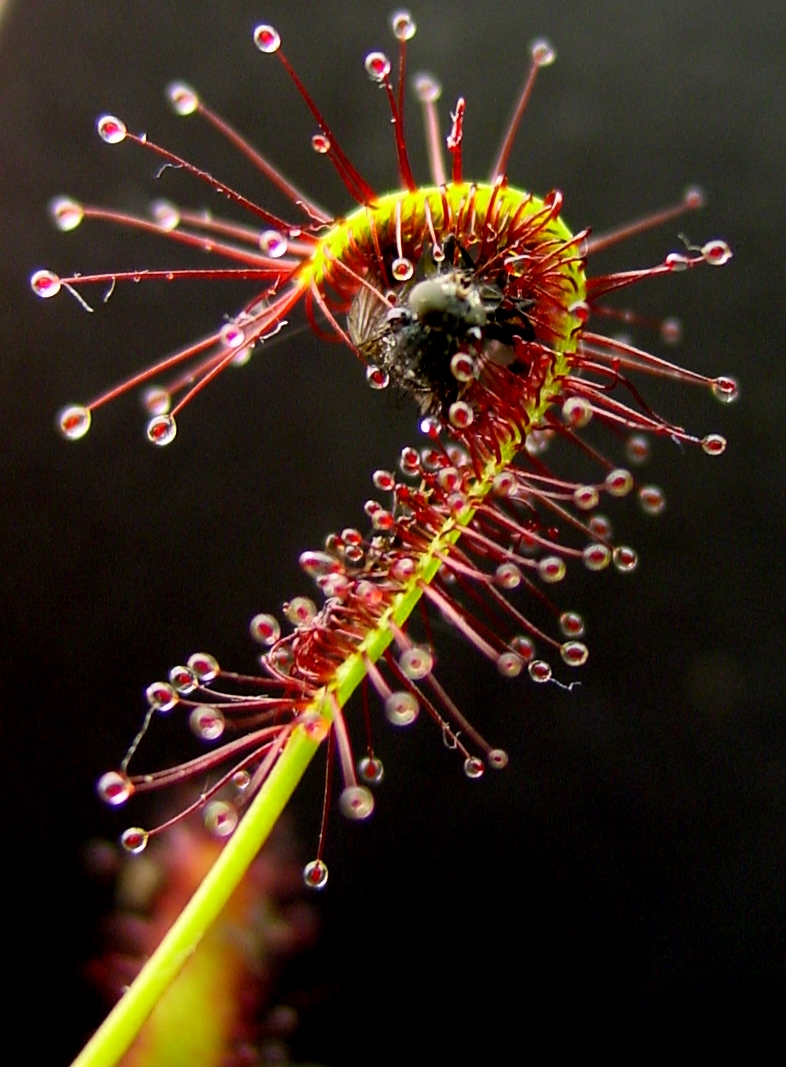
Cape Sundew
Drosera capensis
☀️ Full Sun 💧 High

Cardboard Palm
Zamia furfuracea
☀️ Bright Indirect 💧 Low
Common Questions
How often should you water indoor houseplants?
Water most houseplants only when the top 2.5 to 5 cm (1 to 2 in) of potting mix feels completely dry to the touch. Understory and tropical species require light moisture throughout the root ball during active growth, while succulents and arid species should dry out completely between waterings.
What is the best light exposure for houseplants?
An east- or west-facing window providing bright, indirect light suits the widest variety of indoor foliage plants. Direct southern sun can scorch thin tropical leaves, while north-facing windows provide between 50 and 200 foot-candles of light, which is best suited for shade-adapted species.
Why are the leaf tips turning brown on my houseplants?
Brown leaf tips are most commonly caused by low ambient humidity below 40 percent or tap water minerals accumulating in the potting soil. Running a cool-mist humidifier or switching to collected rainwater typically halts new tip burn on sensitive tropical species.
Do houseplants need fertilizer during the winter?
Do not fertilize houseplants during the winter months when low light slows their metabolic rate and halts vegetative growth. Resume feeding with a balanced liquid fertilizer diluted to half strength once active growth resumes in spring.