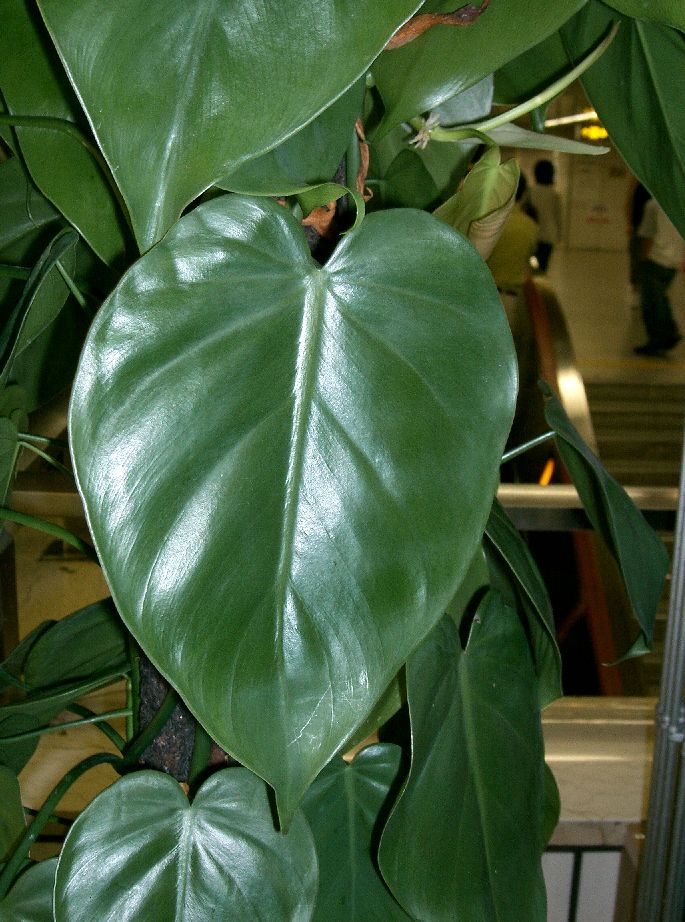
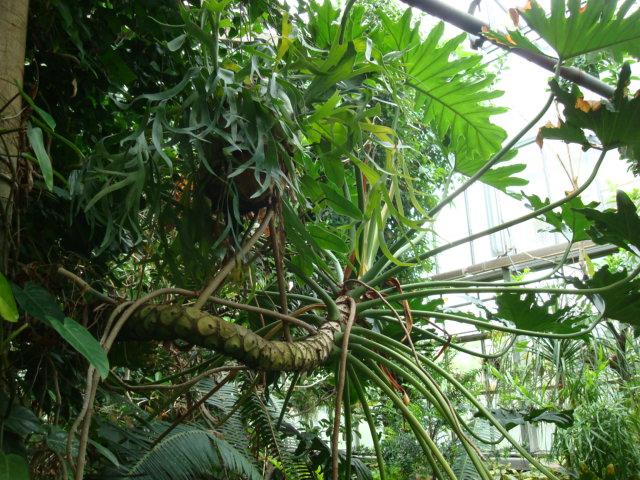
Philodendron erubescens is a climbing evergreen from the rainforests of Colombia, marked by its distinctive reddish-purple stems and glossy foliage. It is a member of the Araceae family and can grow as an epiphyte in the wild, using its aerial roots to scale trees.
This species reaches heights of 3–6 m (10–20 ft) in its native habitat but stays more manageable indoors when provided with a sturdy moss pole. It grows faster than the common heart-leaf philodendron (Philodendron hederaceum) and requires more vertical space than the non-climbing lacy tree philodendron (Philodendron bipinnatifidum).
Key Facts
- Light: Bright indirect light is required to maintain red stems
- Water: Wait until the top 2.5 cm (1 in) of soil is dry
- Humidity: Prefers levels above 60% for optimal leaf size
- Toxicity: Contains calcium oxalate crystals; toxic to cats and dogs
- Growth: Vining habit that requires a support structure
Fitting Blushing Philodendron into Your Home
The blushing philodendron is a vigorous climber that needs vertical support to reach its full potential. You should place it in a room with high ceilings or a corner where a moss pole can be anchored securely. Because its leaves can grow up to 40 cm (16 in) long, it requires more physical space than smaller tabletop aroids.
This plant is well-suited for bright living rooms or hallways where it can act as a floor-standing focal point. It is not a choice for dark corners, as low light will cause it to lose its characteristic red pigmentation and produce small, weak leaves. Ensure the location is away from drafts or air conditioning vents to prevent leaf drop.
Identifying the Red-Leaf Philodendron
You can identify Philodendron erubescens by its deep red or purple petioles (leaf stems) and glossy, triangular leaves. The foliage starts as a copper-red color when young, eventually maturing into a dark, waxy green with a slightly reddish underside. The leaves are arranged alternately along a thick stem that produces frequent aerial roots.
- Mature leaves reach 25–40 cm (10–16 in) in length
- Stems are thick, fleshy, and consistently reddish-purple
- Leaf shape is a distinct elongated heart or arrowhead
- Aerial roots are brown and woody as the plant matures
Blushing Philodendron Light Requirements
Your plant needs bright, indirect light for at least 6 to 8 hours a day to thrive. While it can survive in medium light, the stems will become leggy and the red color will fade to a dull green. Avoid placing it in direct afternoon sun, which will scorch the leaves and leave permanent brown patches.
A north or east-facing window is often ideal in the Northern Hemisphere. If you only have south-facing windows, use a sheer curtain to filter the intensity of the light. If the plant starts leaning heavily toward the light source, rotate the pot 90 degrees every week to maintain an even shape.
How to Water Blushing Philodendron
Water this species only when the top 2.5–5 cm (1–2 in) of soil feels dry to the touch. It is sensitive to overwatering, which quickly leads to root rot in the dense foliage of aroids. Use lukewarm water and pour until it drains freely from the bottom of the pot, then discard any excess water in the saucer.
In the winter months, the plant’s growth slows, and you should reduce watering frequency significantly. Always check the soil moisture with your finger rather than following a strict calendar schedule. Drooping leaves can indicate both underwatering and overwatering, so check the soil before adding more moisture.
The Best Soil for Blushing Philodendron
Use a well-draining aroid mix with a pH between 5.5 and 6.0 for the best results. Standard potting soil is often too heavy and retains too much moisture, which can suffocate the roots. A custom mix of peat moss, perlite, and orchid bark provides the aeration these epiphytic roots need.
- 1 part potting soil
- 1 part orchid bark
- 1 part perlite or pumice
- A handful of horticultural charcoal to prevent sour soil
Humidity and Temperature Needs
Maintain indoor temperatures between 18–27 °C (65–80 °F) to keep your plant growing actively. It can tolerate short drops to 15 °C (60 °F), but prolonged cold will stop growth and may cause leaf yellowing. As a tropical native, it thrives in high humidity and struggles when the air is dry.
Aim for a humidity level of 60% or higher, especially during the winter when indoor heaters dry out the air. You can increase humidity by grouping plants together, using a humidifier, or placing the pot on a tray filled with pebbles and water. Misting is generally ineffective for long-term humidity and can encourage fungal leaf spots.
Feeding and Pruning Your Plant
Apply a balanced liquid fertilizer once a month during the spring and summer growing season. Dilute the fertilizer to half the strength recommended on the bottle to avoid salt buildup in the soil. Do not feed the plant during the winter months when it is dormant.
Pruning is necessary to control the size of this vigorous climber and to encourage bushier growth. Use sterilized shears to cut just above a leaf node; this will stimulate new stems to grow from that point. You should also remove any yellowing or damaged leaves at the base of the petiole to keep the plant healthy.
How to Propagate Blushing Philodendron
You can propagate Philodendron erubescens easily using stem cuttings placed in water or moist sphagnum moss. Ensure each cutting has at least two leaf nodes and one or two healthy leaves. Aerial roots attached to the cutting will speed up the rooting process significantly.
- Cut a 10–15 cm (4–6 in) section of stem below a node
- Remove the bottom leaves to expose the nodes
- Place the cutting in a jar of filtered water
- Change the water every 5 days to prevent bacterial growth
- Transplant to soil once roots are 5 cm (2 in) long
Blushing Philodendron vs Pink Princess
The standard Philodendron erubescens has solid green leaves, whereas the ‘Pink Princess’ is a variegated cultivar of the same species. While they share the same growth habit and red stems, ‘Pink Princess’ features splashes of bright pink on its foliage. The care requirements are similar, but the variegated version needs even more light to maintain its color.
Another common point of confusion is with the Swiss cheese plant (Monstera deliciosa). While both are climbing aroids, the blushing philodendron never develops holes (fenestrations) in its leaves. The leaf shape of the philodendron remains a solid, elongated heart throughout its life, regardless of size.
Why Is My Blushing Philodendron Flowering?
Indoor flowering is rare but occurs when the plant is mature and highly healthy, usually in summer or autumn. The flowers consist of a deep red spathe, about 15 cm (6 in) long, surrounding a white spadix. These flowers are fragrant but short-lived, typically lasting only a few days.
If your plant does flower, it is a sign that your light and humidity levels are near-perfect. The plant invests significant energy into these blooms, so some growers choose to snip them off to prioritize leaf growth. However, leaving them to finish their cycle will not harm a healthy, established specimen.
Year-Round Care for Blushing Philodendron
| Spring | Resume monthly feeding with half-strength liquid fertilizer. Repot the plant into a container 5 cm (2 in) larger if roots are circling the bottom. |
|---|---|
| Summer | Check soil moisture every 3-4 days as evaporation increases. Increase humidity through misting or humidifiers to counter heat stress. |
| Autumn | Gradually reduce watering frequency as daylight hours decrease. Wipe leaves with a damp cloth to remove dust and maximize light absorption. |
| Winter | Stop all fertilizing. Move the plant away from cold window glass and ensure temperatures stay above 15 °C (60 °F). |
Common Blushing Philodendron Problems
| What you see | Likely cause | What to do |
|---|---|---|
| Yellowing lower leaves | Overwatering | Allow the top half of the soil to dry out before watering again. |
| Small leaves and long stems | Insufficient light | Move the plant closer to a bright window or add a grow light. |
| Brown, crispy leaf tips | Low humidity | Place the plant near a humidifier or use a pebble tray. |
| Sudden leaf drop | Cold drafts | Relocate the plant away from doors, vents, or uninsulated windows. |
Popular Philodendron erubescens Cultivars
- ‘Pink Princess’ – dark leaves with high-contrast pink variegation
- ‘Red Emerald’ – elongated leaves with bright red stems
- ‘Burgundy’ – very dark, almost black-purple mature foliage
- ‘Imperial Red’ – self-heading (non-vining) hybrid with deep red leaves
- ‘Prince of Orange’ – self-heading variety with orange new growth
Frequently Asked Questions
How fast does blushing philodendron grow?
In ideal conditions with a moss pole, it can grow 30–60 cm (1–2 ft) per year. Providing bright indirect light and consistent humidity is the best way to maintain this pace.
Can I grow blushing philodendron in water permanently?
Yes, it can grow in water for long periods, but it will eventually need nutrients. Add a drop of liquid fertilizer to the water monthly and ensure the jar is large enough to support its heavy stems.
Is blushing philodendron toxic to cats?
Yes, it is toxic to cats because it contains insoluble calcium oxalate crystals. If chewed, it causes immediate oral pain, swelling of the mouth and throat, and drooling.
How do I make my blushing philodendron more red?
Increase the light intensity to the maximum level of indirect light the plant can handle. The red pigmentation in the stems and petioles is a natural response to higher light levels.
Why are the new leaves on my philodendron stuck?
This is usually caused by low humidity. The leaf sheath (cataphyll) dries out and grips the new leaf; increasing humidity or very gently misting the new growth can help it unfurl.
Sources & Verification
Taxonomy and distribution are checked against the databases below. Care guidance is written for cultivated species only and reviewed by our editor. How We Build Plant Profiles →