Plants in the Araceae Family
42 plant profiles · Learn about the Araceae family, from monstera and peace lilies to aquatic anubias. Find care rules, light needs, and toxicity details for aroids.
Members of the Araceae family, commonly called aroids, are unified by a distinct inflorescence consisting of a central flower spike called a spadix surrounded by a leaf-like bract called a spathe. Most species contain microscopic calcium oxalate crystals, making them toxic to pets and humans if chewed raw. You will find aroid species thriving across aquatic, terrestrial, and climbing habitats, ranging from floating Asian watermeal (Wolffia globosa), which measures just 0.5 mm (0.02 in) long, to giant taro (Alocasia macrorrhizos) with leaves stretching over 1.5 m (5 ft) wide.
To choose the right aroid for your space, assess your indoor lighting and ambient humidity levels. Indoor foliage species like the Swiss cheese plant (Monstera deliciosa) rely on aerial roots to climb supports in bright, indirect light above 18 °C (65 °F). If you need low-light tolerance, peace lily (Spathiphyllum wallisii) survives in lower light conditions with soil kept consistently moist, while heart of Jesus (Caladium bicolor) demands bright light and summer temperatures of 21-29 °C (70-85 °F) to maintain leaf coloration before going dormant in autumn.
For aquariums or outdoor beds, submerged aquatics and tuberous species offer specialized growth habits. Submerged aquariums suit Wendt's water trumpet (Cryptocoryne wendtii), which grows fully underwater at temperatures of 22-28 °C (72-82 °F). Outdoor garden beds in warm zones support tuberous species like calla lily (Zantedeschia aethiopica), which store energy underground through seasonal dry spells.
Alocasia Polly
Alocasia mortfontanensis
☀️ Bright Indirect 💧 Moderate

American Skunk Cabbage
Lysichiton americanus
☀️ Partial Shade 💧 High
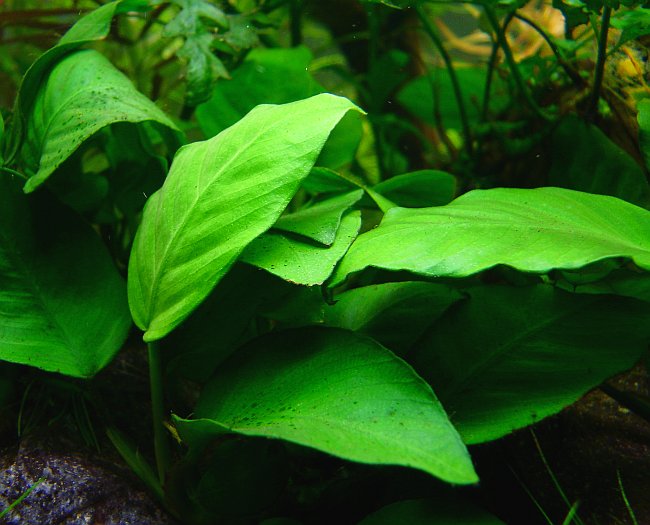
Anubias
Anubias barteri
☀️ Low Light 💧 Aquatic

Arrowhead Plant
Syngonium podophyllum
☀️ Bright Indirect 💧 Moderate
Asian Watermeal
Wolffia globosa
☀️ Full Sun 💧 Aquatic
Black Gold Philodendron
Philodendron melanochrysum
☀️ Bright Indirect 💧 Moderate
Blushing Philodendron
Philodendron erubescens
☀️ Bright Indirect 💧 Moderate

Caladium
Caladium bicolor
☀️ Bright Indirect 💧 High

Calla Lily
Zantedeschia aethiopica
☀️ Full Sun 💧 High

Chinese Evergreen
Aglaonema commutatum
☀️ Bright Indirect 💧 Moderate

Common Duckweed
Lemna minor
☀️ Full Sun 💧 Aquatic

Cuckoo Pint
Arum maculatum

Dumb Cane
Dieffenbachia seguine
☀️ Bright Indirect 💧 Moderate
Dumb Cane
Dieffenbachia amoena
☀️ Bright Indirect 💧 Moderate

Elephant Foot Yam
Amorphophallus paeoniifolius
☀️ Full Sun 💧 Moderate

Flamingo Flower
Anthurium andraeanum
☀️ Bright Indirect 💧 Moderate
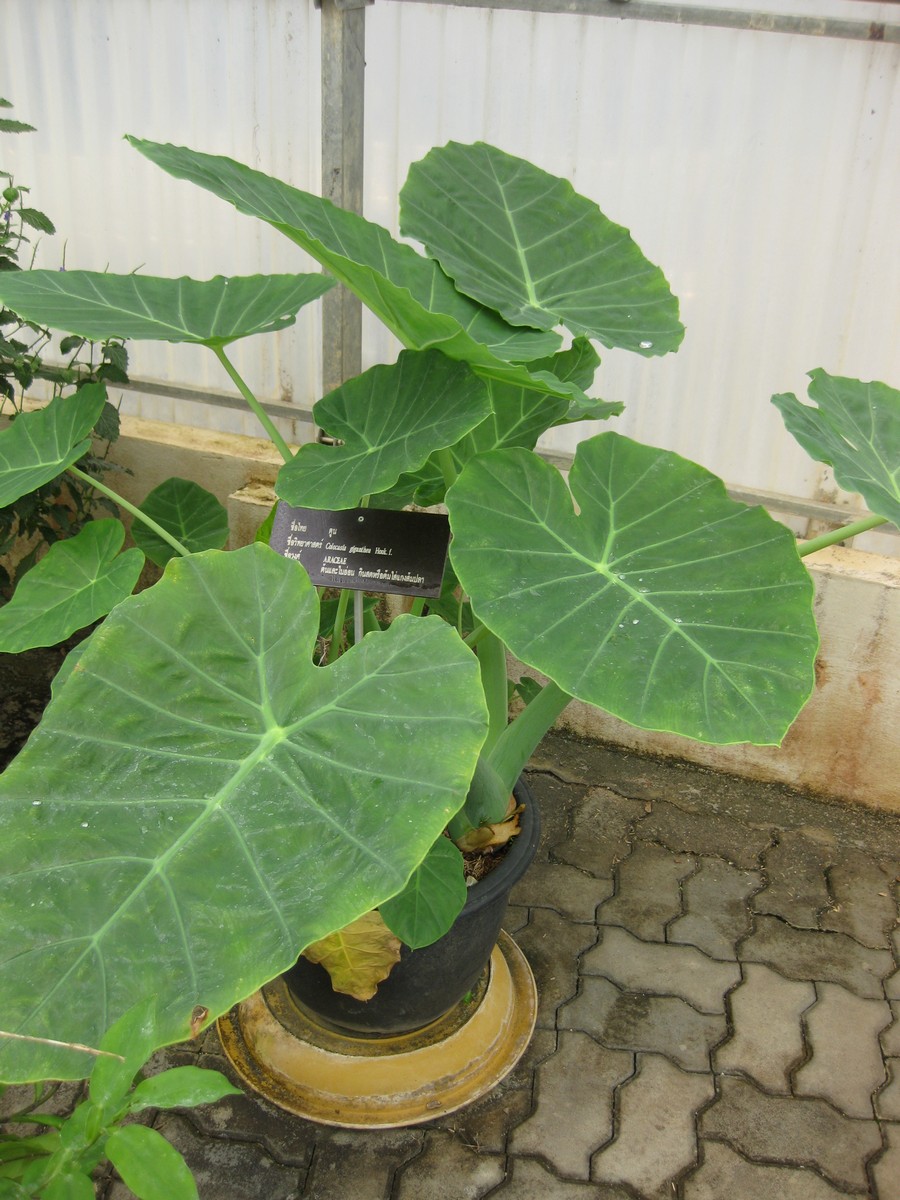
Giant Elephant Ear
Leucocasia gigantea
☀️ Full Sun 💧 High

Giant Swamp Taro
Cyrtosperma merkusii
☀️ Full Sun 💧 Aquatic

Giant Taro
Alocasia macrorrhizos
☀️ Bright Indirect 💧 High

Golden Arum
Zantedeschia elliottiana
☀️ Full Sun 💧 Moderate
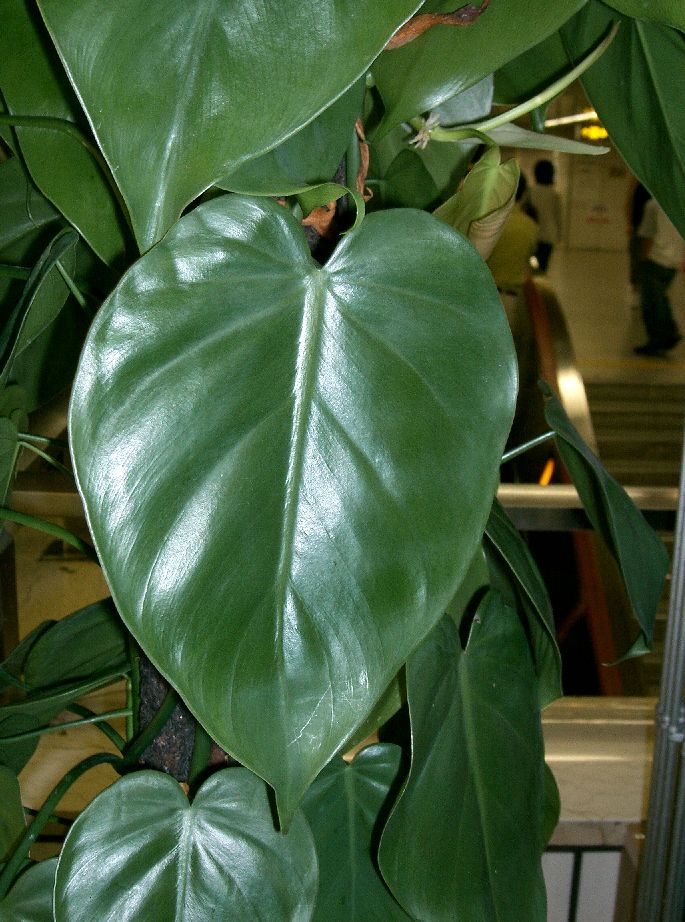
Heartleaf Philodendron
Philodendron hederaceum
☀️ Bright Indirect 💧 Moderate

Italian Lords and Ladies
Arum italicum
☀️ Partial Shade 💧 Moderate
Kohila
Lasia spinosa
☀️ Partial Sun 💧 Aquatic

Konjac
Amorphophallus konjac
☀️ Partial Shade 💧 Moderate
Common Questions
Are all plants in the Araceae family toxic to cats and dogs?
Nearly all Araceae plants contain insoluble calcium oxalate crystals that cause immediate oral irritation, burning, drooling, and swelling if chewed by pets. Keep climbing and bushy indoor species out of reach of pets, or choose non-aroid houseplants if you have animals that chew foliage.
What soil mix is best for Araceae houseplants?
A coarse, well-draining soil mix with a pH of 5.5-6.5 prevents root rot while providing aeration for aroid roots. Combine 50% coarse orchid bark, 20% perlite, 20% coco coir, and 10% worm castings.
Why do Araceae flowers have a spathe and spadix?
The spathe acts as a visual shield and landing pad for pollinators, while the central spadix holds hundreds of minute male and female flowers. In some species, the spadix generates heat up to 15 °C (27 °F) above ambient temperatures to release odor compounds that attract pollinating insects.
How do you know when to water an aroid?
Water when the top 5 cm (2 in) of soil feels dry to the touch for potted tropical aroids. Aquatic species remain submerged in water continuously, whereas tuberous outdoor varieties require dry conditions during winter dormancy.