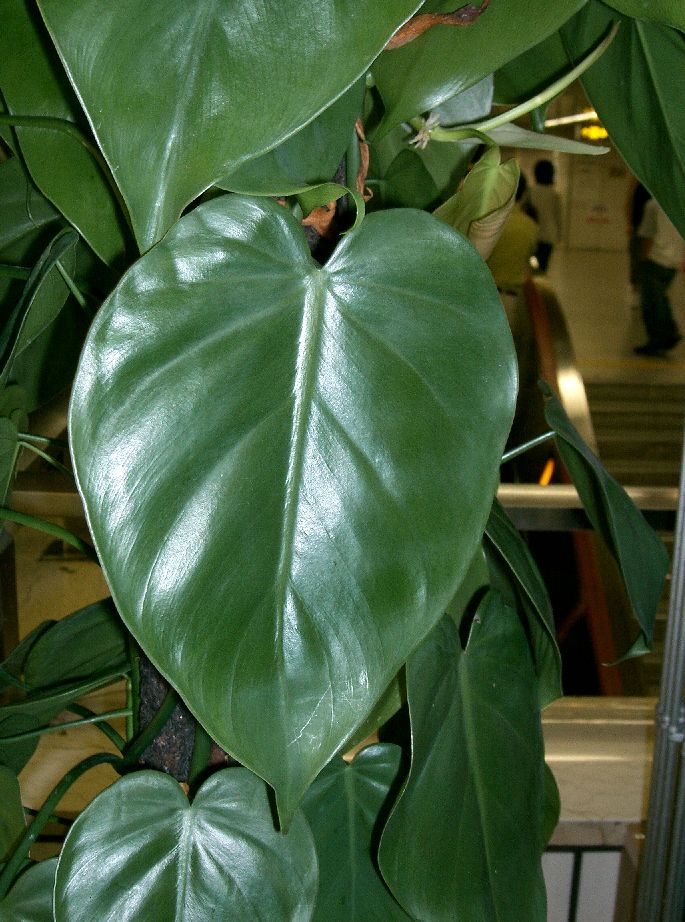
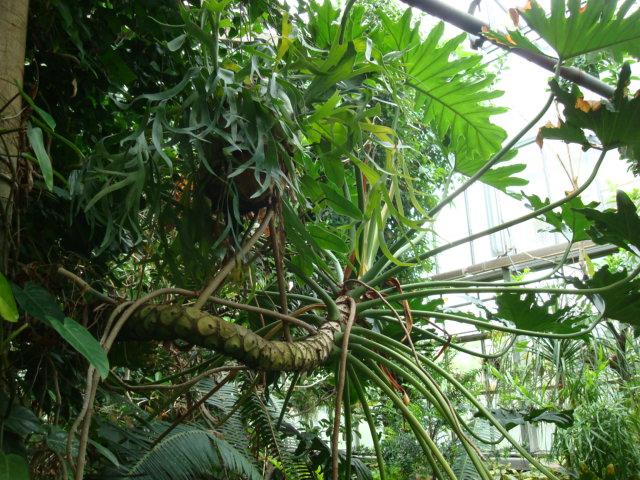
Black gold philodendron (Philodendron melanochrysum) is a tropical climbing vine in the family Araceae, endemic to the wet Andean foothills of Colombia. It is recognized by its dark, velvety leaves accented by pale yellow or gold veins.
Mature indoor leaves can reach up to 100 cm (39 in) long when given a climbing pole. Without vertical support, trailing vines produce small leaves and long, sparse internodes.
Key Facts
- Light: Bright indirect light, 6-8 hours daily
- Water: Allow top 5 cm (2 in) of soil to dry
- Humidity: Prefers 60% relative humidity or higher
- Temperature: Maintains best growth between 18-27 °C (65-80 °F)
- Toxicity: Toxic to cats, dogs, and humans if chewed
Is Black Gold Philodendron Hard to Grow?
Black gold philodendron requires moderate effort due to its high humidity and vertical support needs.
Native to the wet Andean foothills of Colombia at altitudes around 500 m (1,640 ft), this species thrives in warm indoor spaces. You need a sturdy climbing pole, as trailing stems produce smaller leaves and slow down overall development.
It suits houseplant growers who can maintain consistent ambient moisture. Without sturdy support, stem internodes stretch out, leaving long bare gaps between leaves.
How to Identify Philodendron melanochrysum
Mature leaves of Philodendron melanochrysum grow up to 100 cm (39 in) long with a deep heart-shaped base and velvet texture.
Juvenile foliage starts small, heart-shaped, and copper-bronze before maturing into dark green leaves that appear nearly black. Prominent pale yellow or gold veins run along the center and lateral ribs.
Stem petioles are cylindrical and smooth, measuring 15-45 cm (6-18 in) long. The main vine produces aerial roots at each node to grip moss poles or trees in humid environments.
How Much Light Does Black Gold Philodendron Need?
Position your plant in bright, indirect light for 6 to 8 hours daily.
Direct sunlight scorching velvet leaf blades creates bleached white or crisp brown patches that do not recover. Deep shade slows leaf sizing and leads to leggy stems with small foliage.
An east-facing window provides ideal gentle morning sun. If using artificial light, keep LED grow lights 30-45 cm (12-18 in) above the highest leaves.
How Often to Water Black Gold Philodendron
Water when the top 5 cm (2 in) of soil feels dry to the touch.
Saturate the potting mix thoroughly until water drains from the bottom hole, then empty the collection tray immediately. Saturated roots rapidly decay, causing lower leaves to turn soft and yellow.
Reduce frequency during autumn and winter when growth slows. Always test moisture levels with your finger rather than following a fixed calendar schedule.
The Best Soil Mix for Philodendron melanochrysum
Use a chunky, well-aerated potting mix with a pH between 5.5 and 6.5.
Standard potting soil retains excessive moisture around root tissue. Combine equal parts coarse bark, perlite, peat moss or coco coir, and horticultural charcoal to mimic its natural epiphytic rooting environment.
- Coarse orchid bark: 40% volume for drainage and aeration
- Peat moss or coco coir: 30% volume to hold light moisture
- Perlite or pumice: 20% volume to prevent soil compaction
- Horticultural charcoal: 10% volume to absorb impurities
Temperature and Humidity Requirements
Maintain humidity levels above 60 percent and temperatures between 18 °C and 27 °C (65-80 °F).
Low air humidity below 50 percent causes leaf tips to crisp, while emerging leaves often tear or get trapped in their sheaths. Keep ambient temperatures above 15 °C (59 °F) to protect tropical foliage from chill damage.
Use a dedicated humidifier nearby rather than misting, as wet velvet leaves trap water droplets that invite fungal leaf spot pathogens.
How to Fertilize Black Gold Philodendron
Apply a balanced liquid houseplant fertilizer diluted to half strength every 4 weeks during spring and summer.
Active vegetative growth requires consistent nitrogen, potassium, and trace minerals to expand large velvet leaf blades. Avoid feeding during late autumn and winter when the plant enters dormant phases.
Flush the potting soil with plain distilled water every 3 months to wash away accumulated mineral salts that burn root tips.
How to Propagate Black Gold Philodendron
Propagate stems by taking stem node cuttings with at least one leaf and one aerial root node in late spring.
Cut just below a node using sterilised pruning shears. Submerge the node in clean water or press it into damp sphagnum moss inside a warm propagation box maintained at 22-25 °C (72-77 °F).
- Step 1: Slice a 10 cm (4 in) stem section containing one active node.
- Step 2: Dust the cut end with cinnamon or let it callus for 30 minutes.
- Step 3: Place the node into moist sphagnum moss or perlite.
- Step 4: Cover with a clear plastic bag to seal in 80% humidity.
- Step 5: Pot into chunky Aroid mix once roots reach 5 cm (2 in) long.
Why Is My Philodendron Turning Black or Yellow?
Leaf discoloration in black gold philodendron typically stems from overwatering or root decay.
When roots drown in waterlogged soil, lower leaves turn soft and yellow while stem bases turn black and mushy. Inspect roots immediately and snip away damaged black tissue before repotting in fresh substrate.
Pests like spider mites and mealybugs target velvety foliage in dry air. Treat infestations by wiping leaves with insecticidal soap or diluted neem oil every 7 days.
Is Philodendron melanochrysum Toxic to Pets?
Black gold philodendron is toxic to dogs, cats, and humans if ingested.
Plant tissues contain insoluble calcium oxalate crystals that cause immediate oral pain, burning of the mouth, drooling, vomiting, and difficulty swallowing upon chewing.
Keep climbing stems well out of reach of pets and small children, or grow the plant inside secure plant cabinets.
Black Gold Philodendron Flowers Explained
Indoor specimens rarely bloom, but mature plants produce a green and white spathe enclosing a central spadix in tropical conditions.
In native Colombian habitats, adult vines flower during warm wet periods, producing inflorescences typical of the Araceae family. The flowers lack ornamental value compared to the velvety foliage.
Remove spent floral spathes near the main stem to redirect energy toward growing larger leaf blades.
Year-Round Care for Black Gold Philodendron
| Spring | Resume feeding with half-strength liquid fertilizer every 4 weeks. Secure growing vine tips to your moss pole and take node cuttings for propagation. |
|---|---|
| Summer | Check soil moisture twice weekly and water when top 5 cm (2 in) is dry. Maintain humidifier levels above 60 percent to prevent leaf tearing during fast growth. |
| Autumn | Reduce fertilizer application to zero by late season. Move plants away from drafty windows as ambient indoor temperatures begin to drop below 18 °C (65 °F). |
| Winter | Water only when the top half of the potting container feels dry. Keep away from cold glass and active heating vents to avoid low-humidity leaf crisping. |
Black Gold Philodendron Troubleshooting Guide
| What you see | Likely cause | What to do |
|---|---|---|
| Yellowing lower leaves | Overwatering or waterlogged soil | Allow top 5 cm (2 in) of potting mix to dry out before watering again. |
| Crispy brown leaf edges | Low air humidity below 50% | Run a humidifier nearby to maintain room humidity above 60%. |
| Leaves stuck in sheath | Dry air during leaf unfurling | Increase humidity and wrap a warm, damp cloth around the trapped tip for 10 minutes. |
| Stem blackening at soil line | Fungal stem or root rot | Cut away rotten stem tissue, treat healthy top nodes, and restart in clean sphagnum moss. |
| Small trailing leaves | Lack of vertical support | Attach the main stem securely to a moist moss pole so aerial roots can attach. |
Philodendron melanochrysum Varieties and Variegation
- ‘Variegata’ – rare mutant form featuring cream or pale yellow splashes on dark foliage
- ‘Orange Variegated’ – sport exhibiting warm orange and yellow marbling on juvenile leaves
- ‘Pink Variegated’ – rare chimera form displaying pinkish streaks on velvet foliage
Frequently Asked Questions
Is black gold philodendron rare?
While once scarce, black gold philodendron is now widely available through specialized nurseries, though variegated mutations remain extremely rare.
What is the difference between Philodendron black gold and Philodendron melanochrysum?
There is no difference; "black gold philodendron" is simply the common English name for the species Philodendron melanochrysum. It is distinct from velvet look-alikes such as heartleaf philodendron (Philodendron hederaceum 'Micans') or Philodendron verrucosum.
Does black gold philodendron need a moss pole?
Yes, securing the vine to a damp moss pole encourages leaves to mature to their maximum length of up to 100 cm (39 in).
How fast does Philodendron melanochrysum grow?
In optimal conditions with high humidity and warmth, it grows at a moderate rate, producing one new leaf every 3 to 4 weeks during spring and summer.
Why are my black gold philodendron leaves turning yellow?
Yellow leaves usually indicate overwatering, poorly draining soil, or root rot from soggy substrate.
Sources & Verification
Taxonomy and distribution are checked against the databases below. Care guidance is written for cultivated species only and reviewed by our editor. How We Build Plant Profiles →