
Philodendron gloriosum is a terrestrial aroid native to the tropical rainforests of Colombia. It is distinguished by its large, heart-shaped leaves that feature a velvety texture and prominent white or pale-pink veins.
Unlike many of its climbing relatives, this plant grows horizontally along the forest floor. You must provide a wide, rectangular pot to accommodate its creeping rhizome, as it will quickly outgrow standard round containers.
Key Facts
- Water: When top 3 cm (1.2 in) of soil is dry
- Light: Bright indirect light; avoid direct afternoon sun
- Humidity: Maintain levels between 60% and 80%
- Habit: Creeping terrestrial rhizome; does not climb
- Soil: Chunky, well-draining aroid mix with orchid bark
- Toxicity: Contains calcium oxalate; toxic to pets
Living with Philodendron gloriosum
Philodendron gloriosum requires horizontal space rather than vertical height because it is a crawler. It is best suited for experienced indoor gardeners who can manage high humidity and have room for wide planters. Unlike the heartleaf philodendron (Philodendron hederaceum), this species will not climb a moss pole or trellis.
The growth habit involves a thick, green rhizome that moves across the surface of the substrate. If the rhizome hits the edge of a pot, the leaves will begin to shrink in size. You should choose a long, rectangular trough or a wide bulb pan to give the plant at least 30 cm (12 in) of runway for future growth.
Identifying the Velvety Leaves
The leaves of this species are cordate (heart-shaped) and can reach a massive 60-90 cm (2-3 ft) in length. The surface is velutinous, meaning it has a soft, suede-like texture that traps light and creates a deep green appearance. New leaves often emerge with a distinct pink or reddish margin before maturing into their final color.
The venation is a primary identifying feature, with thick, pale-green to white primary veins radiating from the center. Occasionally, the veins may show a pink tint, especially in the ‘Pink Zebra’ or ‘Dark Form’ variations. In rare cases, mature plants produce a green and white spathe and spadix, though this is seldom seen outside of tropical greenhouses.
Best Light for Philodendron gloriosum
This plant performs best in bright, indirect light for 6-8 hours a day. Direct sunlight must be avoided as it will quickly scorch the delicate velvety leaf surface, causing permanent brown patches or a bleached, yellow appearance. A spot 1-2 meters (3-6 ft) away from a south-facing window is usually ideal.
- North-facing: Often too dark, resulting in leggy growth and small leaves
- East-facing: Excellent for gentle morning sun
- West-facing: Safe if the plant is protected by a sheer curtain
- Artificial light: Responds well to full-spectrum LED grow lights
How Much to Water Philodendron gloriosum
You should water your Philodendron gloriosum when the top 3 cm (1.2 in) of the soil feels dry to the touch. It is sensitive to overwatering, which can lead to rhizome rot, but it also dislikes drying out completely. Use room-temperature water to avoid shocking the tropical root system.
During the active growing season in spring and summer, you may need to water every 7-10 days. In winter, growth slows down, and you should reduce the frequency to every 14-21 days. Always ensure the pot has drainage holes so that water does not pool around the buried roots.
The Right Soil for a Creeping Rhizome
The soil must be highly aerated and chunky to prevent the thick rhizome from rotting. A standard potting mix is too dense and will retain too much moisture around the roots. A specialized aroid mix is necessary to mimic the loose forest floor of Colombia.
A successful mix for this species includes:
- 40% Orchid bark for structural aeration
- 20% Perlite or pumice for drainage
- 20% Peat moss or coco coir for moisture retention
- 10% Horticultural charcoal to filter impurities
- 10% Worm castings for natural nutrients
Temperature and Humidity Requirements
Philodendron gloriosum thrives in temperatures between 18-27 °C (65-80 °F) and should never be exposed to temperatures below 13 °C (55 °F). Cold drafts from air conditioners or winter windows can cause the leaves to droop or develop yellow spots. Consistency is more important than high heat.
Humidity is the most challenging aspect of its care, requiring a minimum of 60% to keep the leaves from crisping at the edges. In average household air (usually 30-40%), the new leaves may get stuck while unfurling, leading to deformities. Using a dedicated humidifier or placing the plant in a greenhouse cabinet is the most effective way to maintain the necessary moisture levels.
Fertilizing for Large Leaves
Apply a balanced liquid fertilizer at half-strength once a month during the spring and summer. This species is not a heavy feeder, but it requires consistent nutrients to produce its signature large foliage. Look for a fertilizer with an NPK ratio like 10-10-10 or 20-20-20.
Avoid fertilizing in late autumn or winter when the plant is dormant, as the salts can build up in the soil and burn the roots. If you notice the white veins turning yellow while the rest of the leaf remains green, it may indicate a magnesium deficiency, which can be corrected with a diluted Epsom salt solution.
Propagating Philodendron gloriosum from Cuttings
The most reliable method of propagation is rhizome division during the spring. You must identify a section of the rhizome that has at least one healthy leaf and several visible roots or nodes. Use a sterilized knife to make a clean cut through the horizontal stem.
After cutting, allow the wound to callus for 24 hours to prevent infection before placing it in a propagation medium. You can use damp sphagnum moss or a perlite-heavy mix. Keep the new cutting in a high-humidity environment (above 80%) until new growth appears, which typically takes 4-6 weeks.
Common Philodendron gloriosum Problems
The primary threat to this plant is rhizome rot, usually caused by burying the rhizome too deep or overwatering. The rhizome should sit on top of the soil, with only the roots extending downward. If the stem feels mushy or turns black, you must immediately cut away the damaged tissue and repot the plant in fresh, dry substrate.
Pests are a secondary concern but can be persistent:
- Spider mites: Look for fine webbing on the velvety undersides of leaves
- Thrips: Indicated by silver streaks or tiny black specks of waste
- Fungus gnats: Common in soil that stays too wet for too long
- Mealybugs: White, cottony clusters often found where the leaf meets the stem
Is Philodendron gloriosum Toxic to Cats?
Yes, Philodendron gloriosum is toxic to cats, dogs, and humans if ingested. Like all members of the Araceae family, it contains insoluble calcium oxalate crystals. These crystals act like tiny needles when chewed, causing immediate irritation to the mouth and digestive tract.
Symptoms of poisoning include intense burning of the lips and tongue, excessive drooling, and difficulty swallowing. In severe cases, the airway can swell, making breathing difficult. It is best to keep this plant on high shelves or in a dedicated plant room where pets cannot reach the low-growing foliage.
Year-Round Care for Philodendron gloriosum
| Spring | Repot into a longer rectangular container if the rhizome has reached the edge. Begin monthly feeding with half-strength liquid fertilizer. |
|---|---|
| Summer | Monitor humidity closely as air conditioning can dry out the air. Increase watering frequency to ensure the soil stays lightly moist but not soggy. |
| Autumn | Gradually reduce watering and stop fertilizing as light levels drop. Check for spider mites before the heating season begins. |
| Winter | Maintain a minimum temperature of 15 °C (60 °F). Use a humidifier to combat dry indoor air and only water when the soil is significantly dry. |
Why Is My Philodendron gloriosum Dying? Quick Diagnosis
| What you see | Likely cause | What to do |
|---|---|---|
| Yellowing lower leaves | Overwatering or poor drainage | Allow the top 5 cm of soil to dry and ensure the rhizome is not buried. |
| Brown, crispy leaf edges | Low humidity | Increase humidity to 60% or more using a humidifier or misting. |
| Small, stunted new leaves | Insufficient light or pot too small | Move to a brighter location and check if the rhizome has room to crawl. |
| Pale or bleached leaves | Too much direct sunlight | Move the plant further from the window or use a sheer curtain. |
Popular Philodendron gloriosum Cultivars
- ‘Dark Form’ – Deeper green leaves with more compact growth.
- ‘Zebra’ – Features much wider and more brilliant white veins.
- ‘Pink Zebra’ – The white veins have a distinct pinkish-red hue.
- ‘Snow Leopard’ – Rare variety with white variegated patches.
- ‘Round Form’ – Leaves are more circular than the standard heart shape.
Frequently Asked Questions
What is the difference between Philodendron gloriosum and Philodendron 'Glorious'?
Philodendron gloriosum is a crawling terrestrial plant, while Philodendron 'Glorious' is a hybrid (gloriosum x melanochrysum) that climbs and has more elongated leaves.
Can Philodendron gloriosum climb a moss pole?
No, it is a terrestrial species that creeps along the ground; it will not attach to or climb a vertical support.
How fast does Philodendron gloriosum grow?
It is a moderate grower, typically producing one new leaf every 4-6 weeks during the spring and summer growing season.
Why are the new leaves on my Gloriosum stuck?
This is almost always caused by low humidity; the cataphyll (leaf sheath) dries out and prevents the leaf from sliding out smoothly.
Should I bury the rhizome of my Philodendron gloriosum?
No, the rhizome should sit on top of the soil; burying it often leads to rot and the death of the plant.
Sources & Verification
Taxonomy and distribution are checked against the databases below. Care guidance is written for cultivated species only and reviewed by our editor. How We Build Plant Profiles →
More in Philodendron
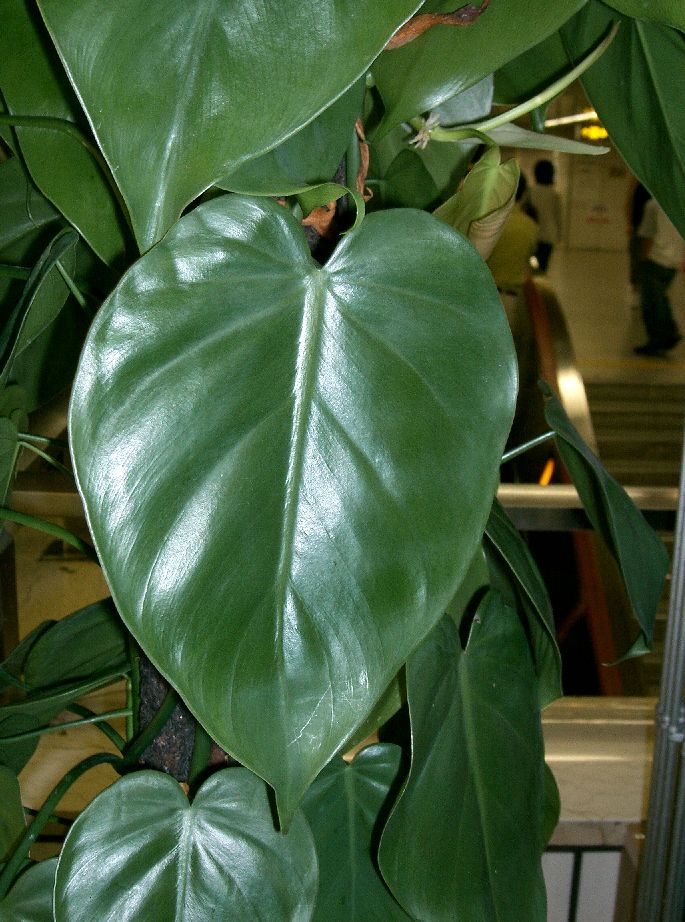
Heartleaf Philodendron
Philodendron hederaceum
☀️ Bright Indirect 💧 Moderate
Black Gold Philodendron
Philodendron melanochrysum
☀️ Bright Indirect 💧 Moderate
Blushing Philodendron
Philodendron erubescens
☀️ Bright Indirect 💧 Moderate
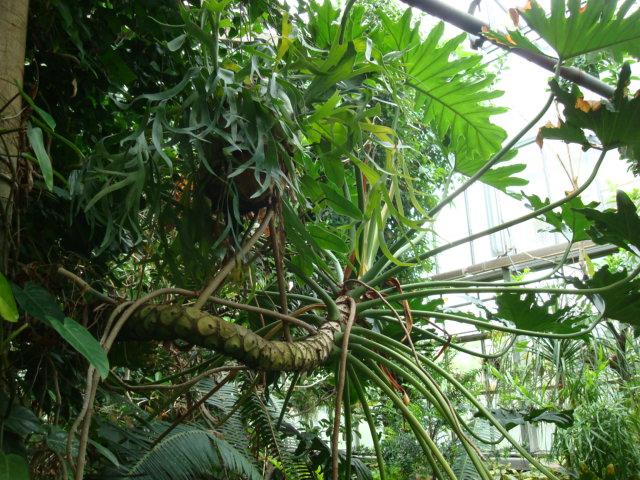
Tree Philodendron
Philodendron bipinnatifidum
☀️ Bright Indirect 💧 Moderate