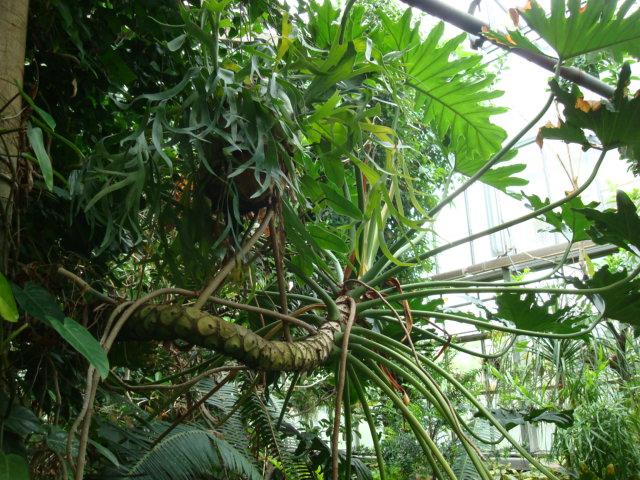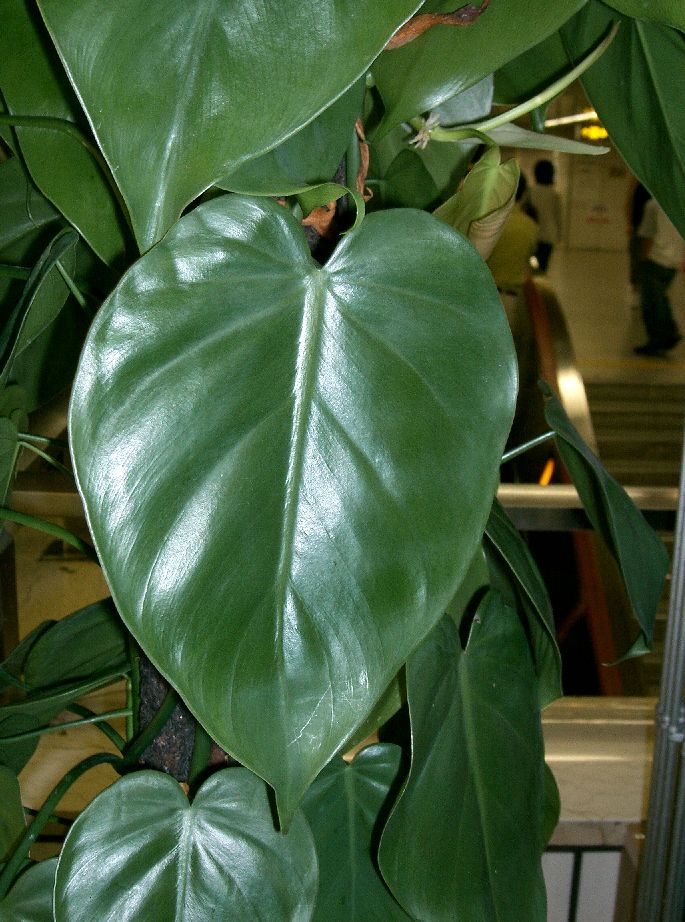
Philodendron hederaceum is a trailing evergreen perennial native to the tropical rainforests of Central America and the Caribbean. It is widely recognized by its thin, flexible stems and deep green, perfectly heart-shaped foliage that can grow several meters long in its native habitat.
This species is frequently confused with the golden pothos (Epipremnum aureum), though it features thinner leaves and a smoother texture. While it is a common sight in the houseplant trade, it is essential to manage its vining habit to prevent it from tangling with nearby furniture or other indoor plants.
Key Facts
- Light: Bright indirect light; survives in low light
- Water: When the top 2-3 cm (1 in) of soil is dry
- Temperature: Maintains health between 18-27 °C (65-80 °F)
- Growth: Vining stems can reach 3-6 m (10-20 ft) indoors
- Safety: Toxic to cats, dogs, and humans if ingested
Why Heartleaf Philodendron Is the Best Choice for Beginners
Heartleaf philodendron survives in light levels as low as 50 foot-candles, making it one of the most shade-tolerant indoor vines available. This adaptability allows it to thrive in windowless offices with fluorescent lighting or in the darker corners of a living room where other tropicals might fail. Because it is an epiphyte in the wild, it has evolved to be less demanding of frequent watering than terrestrial plants.
You will find that this plant is forgiving of occasional neglect, often recovering quickly from a missed watering session. Its fast growth rate means you can see visible progress in a single season, with stems extending up to 10 cm (4 in) per month during the peak growing period. It fits perfectly on high shelves, in hanging baskets, or trained up a moss pole to mimic its natural climbing behavior.
Identification: Heartleaf Philodendron vs Pothos
You can identify a heartleaf philodendron by the presence of brownish, papery sheaths called cataphylls that remain on the stem after new leaves emerge. These sheaths eventually dry up and fall off, a feature entirely absent in pothos (Epipremnum aureum). Additionally, the leaves of Philodendron hederaceum have a more pronounced, pointed tip and a deeper indentation where the petiole meets the leaf blade.
To tell them apart at a glance, look at the stems and leaf texture:
- Petiole: Heartleaf philodendron has smooth, round stems; pothos stems have a distinct groove.
- Leaf Texture: Philodendron leaves are matte and thin; pothos leaves are thicker and waxier.
- Aerial Roots: Philodendron produces multiple small aerial roots per node; pothos usually produces one thick root.
How Much Light Does Heartleaf Philodendron Need?
Provide 6 to 8 hours of bright, indirect sunlight to maintain the largest possible leaf size and prevent the stems from becoming leggy. An East-facing window is often the best location, as it provides gentle morning sun without the intensity of afternoon heat. If the plant receives too much direct light, you will notice yellow or brown scorched patches on the leaf surfaces.
While the plant is often marketed for low light, it will stop producing new growth if the environment is too dark. In these conditions, the leaves will grow significantly smaller, and the distance between the leaf nodes will increase. If you notice your plant looks sparse, move it 1-2 meters (3-6 ft) closer to a light source or supplement with a dedicated grow light.
Watering Schedule and Soil Requirements
Water your heartleaf philodendron only when the top 2.5-5 cm (1-2 inches) of soil has completely dried out. Overwatering is the most common cause of failure, leading to root rot which manifests as black, mushy stems at the soil line. During the winter months, you should reduce watering frequency as the plant enters a period of slower metabolic activity.
The soil must be highly porous to allow oxygen to reach the roots. A standard potting mix should be amended with perlite or orchid bark to improve drainage. Consider these soil components for the best results:
- Peat moss or coco coir: 50% for moisture retention.
- Perlite: 25% to prevent soil compaction.
- Orchid bark: 25% to mimic the epiphytic environment.
Humidity and Temperature for Tropical Growth
Maintain indoor humidity levels between 40% and 60% to prevent the leaf tips from turning brown and crispy. While the heartleaf philodendron can tolerate the dry air found in most homes, it will grow faster and produce glossier leaves in more humid environments. If your home humidity drops below 30% in winter, consider placing the pot on a tray filled with pebbles and water.
Temperature is equally important for this tropical species. It thrives in a range of 18-24 °C (65-75 °F) and should never be exposed to temperatures below 13 °C (55 °F). Keep the plant away from cold drafts near doors or windows, as well as direct heat from radiators, which can cause the foliage to wilt and drop prematurely.
Fertilizer and Pruning for a Bushier Plant
Apply a balanced, water-soluble fertilizer at half-strength once every 4 weeks during the active growing season from March to September. Do not fertilize during the winter, as the plant cannot effectively process the nutrients when light levels are low. Excessive fertilizer can lead to salt buildup in the soil, which burns the sensitive roots and causes yellowing leaf margins.
Pruning is the best way to control the shape and density of your plant. If the vines become too long or thin, use sterilized scissors to cut just above a leaf node. This stimulates the plant to produce new growth from the node, resulting in a fuller, bushier appearance. You can prune at any time of year, but the plant responds most vigorously in early spring.
How to Propagate Heartleaf Philodendron in Water or Soil
Cut a 10-15 cm (4-6 inch) stem section that includes at least two nodes and place the bottom node in a jar of room-temperature water. Remove any leaves that would be submerged to prevent rot. Roots typically begin to emerge from the nodes within 14 to 21 days, and the cutting can be moved to soil once the roots reach 5 cm (2 inches) in length.
You can also propagate directly in soil or moist sphagnum moss. This method often results in stronger root systems that do not need to acclimate from water to soil. Follow these steps for soil propagation:
- Dip: Coat the bottom node in rooting hormone (optional).
- Plant: Insert the cutting into a small pot with moist seed-starting mix.
- Cover: Place a clear plastic bag over the pot to create a mini-greenhouse.
- Ventilate: Open the bag for 10 minutes daily to prevent mold growth.
Is Heartleaf Philodendron Toxic to Cats and Dogs?
The heartleaf philodendron is toxic to pets because it contains insoluble calcium oxalate crystals that cause immediate pain and swelling when chewed. According to the ASPCA, ingestion leads to intense oral irritation, drooling, vomiting, and difficulty swallowing. Unlike some toxins that act internally, the effect of this plant is mechanical, as the crystals pierce the soft tissues of the mouth and throat.
To keep your pets safe, grow this plant in hanging baskets or on high shelves where it is out of reach. If you have a cat that likes to climb, consider securing the vines to the wall so they do not dangle near the floor. If you suspect your pet has chewed on a leaf, rinse their mouth with water or milk and contact a veterinarian immediately.
Common Pests and Growth Problems
Check the undersides of leaves and the stem junctions weekly for mealybugs, which appear as small, white, cottony masses. Other common pests include spider mites, which thrive in dry conditions and leave fine webbing between the leaves. You can treat most infestations by wiping the foliage with a solution of 70% isopropyl alcohol or using a diluted neem oil spray.
Physical symptoms often indicate environmental stress rather than pests. Use this list to diagnose common issues:
- Yellow leaves: Usually a sign of overwatering or poor drainage.
- Brown, crispy edges: Caused by low humidity or direct sunlight.
- Small, pale leaves: Indicates the plant is not receiving enough light.
- Drooping foliage: Can mean the plant is either extremely thirsty or the roots have rotted.
Year-Round Heartleaf Philodendron Maintenance
| Spring | Repot if roots are visible through the drainage holes. Resume fertilizing every 4 weeks and increase watering as new growth appears. |
|---|---|
| Summer | Monitor soil moisture daily during heatwaves. Move the plant away from direct afternoon sun and prune long vines to maintain the desired shape. |
| Autumn | Gradually reduce watering frequency as daylight hours decrease. Stop fertilizing by late October and check for pests before the indoor heating is turned on. |
| Winter | Water only when the soil is 75% dry. Keep the plant away from cold window glass and heaters; supplement with a humidifier if the air is very dry. |
Why Is My Heartleaf Philodendron Dying? Quick Diagnosis
| What you see | Likely cause | What to do |
|---|---|---|
| Yellowing lower leaves | Overwatering | Allow the soil to dry out completely and ensure the pot has drainage holes. |
| Brown, crunchy leaf tips | Low humidity | Mist the plant daily or place it near a humidifier. |
| Long, leafless stems | Insufficient light | Move the plant to a brighter location and prune back the leggy growth. |
| Sticky residue on leaves | Scale or Aphids | Wipe leaves with insecticidal soap or neem oil. |
Popular Philodendron hederaceum Cultivars
- ‘Brasil’ – heart-shaped leaves with a central yellow-green stripe
- ‘Lemon Lime’ – bright neon-yellow foliage that stays consistent
- ‘Micans’ – velvet-textured leaves with bronze and purple undertones
- ‘Silver Stripe’ – similar to Brasil but with white and silver variegation
- ‘Gabby’ – a rare cultivar with heavy cream-white variegation
Frequently Asked Questions
Is heartleaf philodendron the same as pothos?
No, they are different genera; philodendrons have smooth stems and papery cataphylls, while pothos (Epipremnum aureum) has grooved stems and no cataphylls.
How fast does heartleaf philodendron grow?
In ideal conditions with bright indirect light, it can grow up to 10 cm (4 inches) per month during the summer.
Can I grow heartleaf philodendron in water permanently?
Yes, it can grow in water indefinitely, provided you change the water weekly and add a drop of liquid fertilizer once a month.
Why are the new leaves on my philodendron so small?
Small new growth is almost always a sign of insufficient light; move the plant closer to a window to encourage larger foliage.
Is heartleaf philodendron toxic to cats?
Yes, it contains calcium oxalate crystals that cause mouth swelling and vomiting in cats if they bite the leaves.
Information about traditional or historical uses is provided for educational interest only and is not medical advice. Do not use any plant to treat a condition without speaking to a qualified professional.
Sources & Verification
Taxonomy and distribution are checked against the databases below. Care guidance is written for cultivated species only and reviewed by our editor. How We Build Plant Profiles →