
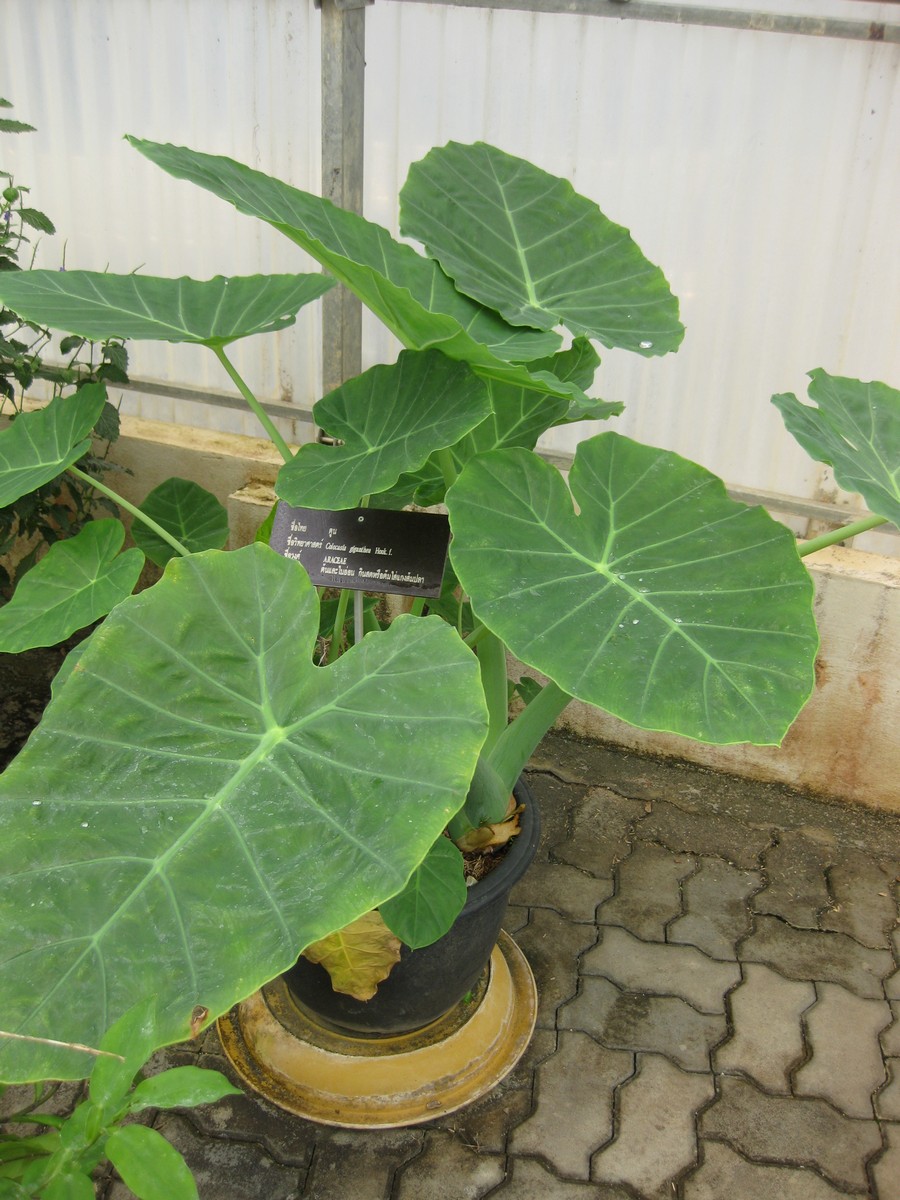
Giant elephant ear is a massive herbaceous perennial from Southeast Asia that reaches heights of 3 m (10 ft). Scientifically known as Leucocasia gigantea, it is the sole species in its genus and is distinguished from common taro by its glaucous, matte-green foliage and upright habit.
This species requires significantly more space and heat than standard Colocasia varieties to reach its full potential. While often grown for its architectural scale, it serves as a major food crop in Vietnam and Thailand, where the thick petioles are harvested for soups and salads.
Key Facts
- Height: typically reaches 1.5-3 m (5-10 ft)
- Light: requires full sun to partial shade
- Water: maintains health with consistently moist soil
- Hardiness: survives outdoors in USDA zones 8-11
- Edibility: stems are edible only after specific peeling and cooking
Is Giant Elephant Ear Right for Your Garden?
Giant elephant ear requires a dedicated space of at least 2.5 m (8 ft) in width to accommodate its massive spread. This plant is suitable for large landscapes or oversized containers where a tropical focal point is needed. Because it grows rapidly in high temperatures, it is best for gardeners who can provide consistent irrigation and heavy feeding throughout the summer months.
Unlike the common taro (Colocasia esculenta), this species is more sensitive to cold and will stop growing when temperatures drop below 15 °C (59 °F). It is an excellent choice for boggy areas or the margins of water features where the soil remains damp. In temperate climates like the UK or Northern US, it must be treated as a summer bedding plant or moved into a heated greenhouse for winter.
Identifying Leucocasia gigantea Features
The identifying feature of Leucocasia gigantea is its matte, glaucous green leaf surface that lacks the gloss found on many Alocasia species. The leaves are broadly cordate (heart-shaped) and can measure 1.5 m (5 ft) in length and 1 m (3 ft) in width. They are held on thick, succulent petioles (stems) that emerge from a large, fibrous underground corm.
The plant produces inflorescences consisting of a white or cream spathe surrounding a central spadix, typically appearing in clusters of 2 to 5. The mature habit is upright and vase-shaped, with the leaves pointing slightly upward rather than drooping. The stems are pale green or silvery, often covered in a thin, waxy bloom that rubs off when touched.
Best Growing Conditions for Indian Taro
Giant elephant ear performs best in full sun to partial shade with protection from strong winds that can shred the large leaves. While it tolerates full sun in humid climates, partial shade is recommended in arid regions to prevent leaf scorch. High humidity levels above 60% are necessary for the leaves to reach their maximum size without browning at the edges.
The soil must be rich in organic matter and capable of retaining significant moisture. A mix of garden loam, compost, and well-rotted manure provides the necessary nutrients for its fast growth rate. If growing in containers, use a 50-liter (13-gallon) pot or larger to prevent the plant from becoming root-bound and stunted within a single season.
How to Plant Giant Elephant Ear Bulbs
Plant giant elephant ear corms (bulbs) at a depth of 10 to 15 cm (4 to 6 in) once the soil temperature reaches at least 18 °C (65 °F). Ensure the growing tip or “eye” is facing upward when placing the corm in the hole. If the corm is smooth and the top is unclear, look for the remains of old stem fibers to indicate the upper side.
- Space multiple plants at least 1.8 m (6 ft) apart to allow for leaf expansion.
- Water the planting site deeply immediately after burying the corm.
- Apply a 5 cm (2 in) layer of organic mulch to retain soil moisture.
- Keep the soil consistently damp but not waterlogged until the first sprout appears.
Watering and Feeding Giant Elephant Ear
Apply water 2 to 3 times per week during the peak of summer to keep the soil saturated. In high-heat environments above 30 °C (86 °F), daily watering may be required, especially for container-grown specimens. If the leaves begin to droop or the edges turn crispy, the plant is likely suffering from moisture stress.
Because it produces such massive foliage, this species is a heavy feeder that requires high-nitrogen fertilizer. Use a balanced liquid fertilizer every 2 weeks during the growing season, or apply a slow-release granular formula in late spring. Avoid fertilizing in late autumn as the plant enters dormancy, which can lead to corm rot in cold, wet soil.
Harvesting and Preparing Indian Taro Stems
Harvest the petioles (stems) when they reach a diameter of at least 5 cm (2 in) for culinary use. In Vietnamese cuisine, these are known as “bac ha” and are valued for their spongy texture which absorbs broth. Always wear gloves when handling the raw plant to avoid skin irritation from calcium oxalate crystals.
- Select the outer, older stems first to allow the center to continue growing.
- Cut the stem at the base near the corm using a sharp, clean knife.
- Peel the tough, fibrous outer skin entirely before cooking.
- Boil or stir-fry the spongy interior thoroughly to neutralize irritating compounds.
Overwintering and Corm Storage
In regions where temperatures drop below 4 °C (40 °F), the corms must be lifted and stored indoors for the winter. Wait until the first light frost has blackened the foliage before cutting the stems back to 10 cm (4 in) above the soil line. Carefully dig around the corm to avoid slicing the flesh, which can lead to fungal infections during storage.
Clean off excess soil and allow the corms to dry in a shaded, well-ventilated area for several days. Store them in a breathable container, such as a mesh bag or a box filled with dry peat moss or sawdust. Keep the storage container in a cool, dark place maintained at 10-15 °C (50-60 °F) until the following spring.
Common Pests and Leaf Problems
Spider mites are the most frequent pest, appearing as tiny yellow speckles on the undersides of the leaves. These pests thrive in dry conditions, so maintaining high humidity or misting the leaves can help deter them. If an infestation occurs, wash the leaves with a strong stream of water or apply insecticidal soap.
Aphids and mealybugs may also target the tender new growth in the center of the plant. Root rot is a significant risk if the soil is cold and poorly drained during the winter months. To prevent rot, ensure that container plants are not sitting in saucers of water when temperatures are low and the plant is not actively growing.
Year-Round Giant Elephant Ear Care
| Spring | Plant corms outdoors once soil is 18 °C (65 °F). Apply a high-nitrogen fertilizer to jumpstart foliage growth. |
|---|---|
| Summer | Water 2-3 times weekly and feed every 14 days. Monitor for spider mites during dry spells. |
| Autumn | Reduce watering as temperatures drop. Cut back foliage after the first frost and lift corms for storage in cold zones. |
| Winter | Store lifted corms in a dry, frost-free location at 10-15 °C (50-60 °F). Inspect monthly for soft spots or mold. |
Common Giant Elephant Ear Problems
| What you see | Likely cause | What to do |
|---|---|---|
| Yellowing lower leaves | Natural aging or nitrogen deficiency | Remove old leaves and increase liquid fertilizer frequency. |
| Brown, crispy leaf edges | Low humidity or underwatering | Increase watering frequency and mist the foliage daily. |
| Small, stunted leaves | Insufficient heat or pot-bound roots | Move to a warmer location or transplant into a larger 50-liter container. |
| Soft, mushy corm | Overwatering in cold soil | Improve drainage and reduce water until soil is warm. |
Popular Leucocasia gigantea Cultivars
- ‘Thailand Giant’ – the largest cultivar, reaching 3 m (10 ft) with massive leaves
- ‘Jack’s Giant’ – a fast-growing selection often confused with Colocasia
- ‘Laosy Giant’ – known for having exceptionally thick, sturdy stems
Frequently Asked Questions
Is giant elephant ear the same as Alocasia?
No, while they look similar, giant elephant ear is the species Leucocasia gigantea, which has matte leaves and different flower structures than the glossy-leaved Alocasia macrorrhizos.
Can I grow giant elephant ear in the UK?
Yes, but it must be grown as a summer plant, started indoors in March and moved outside only when nights are above 12 °C (54 °F).
How fast does giant elephant ear grow?
In ideal conditions with heat and fertilizer, it can grow from a small sprout to a 2-meter (6.5 ft) plant in a single 4-month growing season.
Are giant elephant ear flowers edible?
The flowers are not typically eaten; the most common edible part of this specific species is the thick, succulent leaf stem (petiole).
Why is my giant elephant ear dripping water from the leaves?
This is called guttation and is a normal process where the plant releases excess moisture; it usually happens at night when soil moisture is high.
Sources & Verification
Taxonomy and distribution are checked against the databases below. Care guidance is written for cultivated species only and reviewed by our editor. How We Build Plant Profiles →