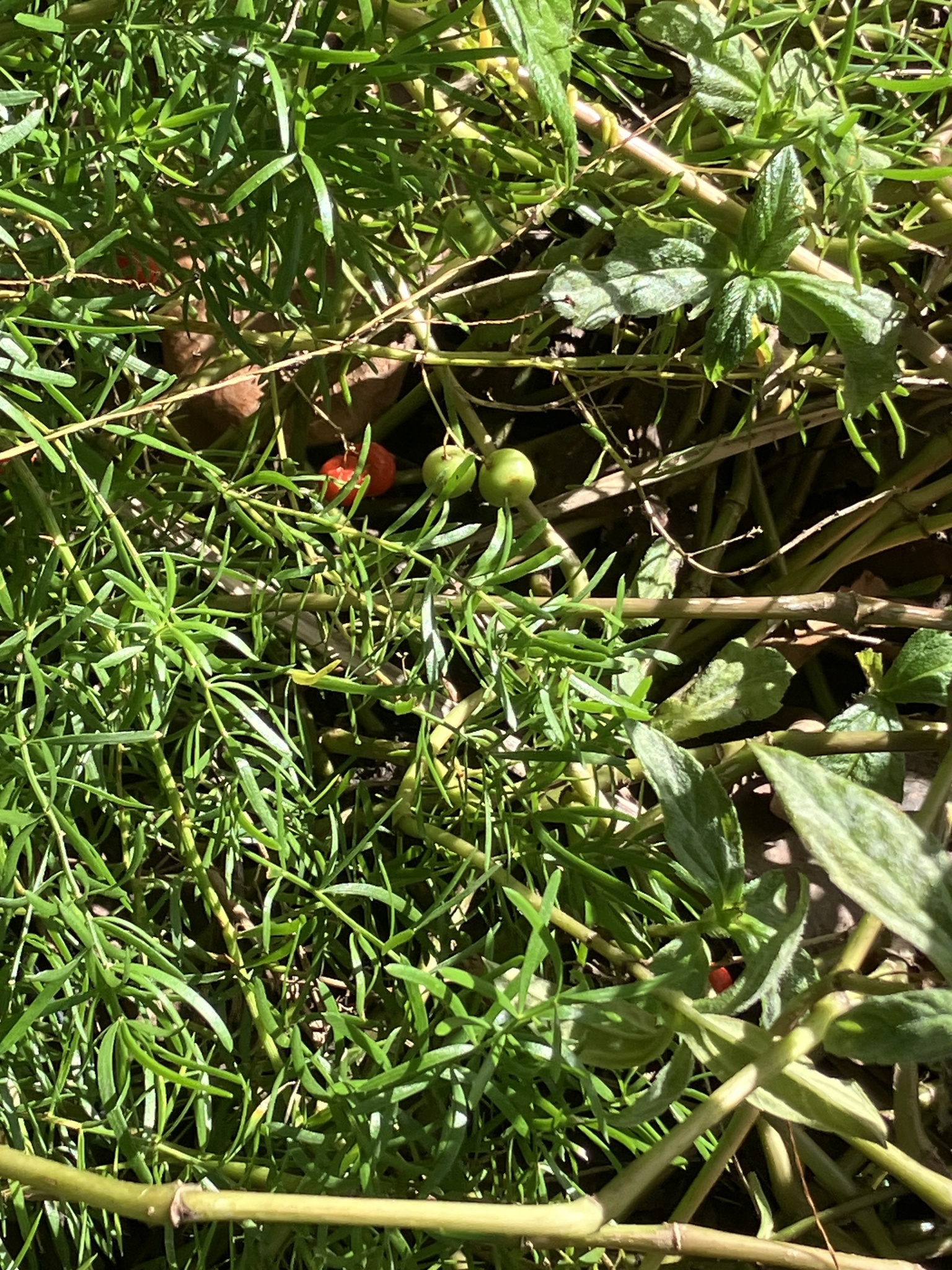
Asparagus fern (Asparagus setaceus) is a scrambling perennial plant native to Southern Africa that is often mistaken for a true fern due to its delicate, feathery foliage. It belongs to the Asparagaceae family, making it a closer relative of the edible garden asparagus (Asparagus officinalis) than any true fern species.
This plant produces thin, wiry stems that can reach lengths of 3 m (10 ft) or more when provided with support. It develops small, sharp thorns on mature stems and fleshy, tuberous roots that store water, allowing it to survive short periods of neglect better than the moisture-loving Boston fern (Nephrolepis exaltata).
Key Facts
- Light: Bright indirect light; avoid direct midday sun
- Water: Keep soil consistently moist but never waterlogged
- Humidity: Prefers levels above 50% for healthy foliage
- Temperature: Maintains growth between 18-24 °C (65-75 °F)
- Toxicity: Berries and sap are toxic to cats and dogs
- Growth: Fast-growing vine that requires regular pruning
Living with Asparagus Fern
Asparagus fern is a fast-growing climber that requires regular pruning to maintain a bushy shape in indoor settings. While it appears soft and delicate, mature stems develop sharp thorns that can catch on clothing or skin during maintenance. It is a suitable choice for hanging baskets where its stems can trail, or for tall shelves where the foliage can cascade downward.
This species is more tolerant of varying light levels than many tropical plants, but it will shed its needle-like cladodes if moved too frequently. It is particularly effective in bathrooms or kitchens where natural humidity is higher. Because it grows from aggressive tuberous roots, it may eventually crack plastic nursery pots if not repotted every 1-2 years.
- Space requirement: 60-90 cm (2-3 ft) of vertical or horizontal room
- Maintenance level: Moderate due to pruning and humidity needs
- Best placement: East or West-facing windows with filtered light
Identifying Asparagus setaceus
The lace fern is identified by its flattened, needle-like cladodes which function as leaves and grow in horizontal, fan-like sprays. These cladodes are typically 4-7 mm (0.15-0.27 in) long and occur in clusters of 7 to 20 along the wiry stems. The stems themselves are green when young, turning woody and brown with age as they develop recurved spines.
Unlike the Sprenger’s asparagus (Asparagus aethiopicus), which has broader, flatter leaves, the lace fern has a much finer, misty texture. Its root system consists of white, fleshy tubers and fibrous roots that can quickly fill a 15-20 cm (6-8 in) pot. In summer, mature plants may produce tiny, six-petaled flowers that are often hidden beneath the dense foliage.
Best Light for Asparagus Fern Care
Asparagus fern thrives in bright, indirect light for at least 4 to 6 hours per day. Direct afternoon sunlight, especially through south-facing windows, will scorch the delicate cladodes, causing them to turn yellow or brown and drop. Conversely, if the light is too low, the plant will produce elongated, spindly stems with sparse foliage as it reaches for a light source.
In regions with high light intensity, such as Singapore or the Southern United States, placing the plant 1-2 m (3-6 ft) away from a window is necessary. If you are growing it in a darker corner, supplemental LED grow lights can prevent the common problem of needle drop. Outdoor specimens in USDA zones 9-11 should be kept in partial shade to maintain the deep green color.
Watering Schedule and Tuber Health
Water your asparagus fern when the top 2.5 cm (1 in) of soil feels dry to the touch. Because this plant possesses tuberous roots that store water, it is more resilient to underwatering than true ferns, but prolonged drought will cause the entire plant to turn brittle. During the active growing season in spring and summer, you may need to water 1-2 times per week depending on the temperature.
Overwatering is a common cause of root rot, which manifests as yellowing stems and a mushy base. Always use a pot with drainage holes and discard any water that collects in the saucer after 15 minutes. In winter, reduce watering frequency significantly, allowing the soil to dry out more thoroughly between applications as the plant’s metabolic rate slows down.
Soil Mix and Fertilizing Needs
Use a well-draining, peat-based potting mix with a pH between 6.0 and 7.0 for optimal growth. A standard indoor potting soil amended with 20% perlite or coarse sand provides the necessary aeration for the tuberous roots. Avoid heavy garden soils which compact easily and trap too much moisture around the crown.
Feed the plant every 4 weeks during the spring and summer using a balanced, water-soluble fertilizer diluted to half strength (e.g., a 10-10-10 NPK ratio). Do not fertilize in the winter months when growth is minimal. If the plant becomes pot-bound, which you can identify by roots emerging from the drainage holes, move it to a container 5 cm (2 in) larger in diameter during early spring.
Ideal Humidity and Temperature
Maintain a temperature range of 18-24 °C (65-75 °F) during the day and no lower than 13 °C (55 °F) at night. Asparagus ferns are sensitive to sudden temperature fluctuations and should be kept away from cold drafts, air conditioning vents, and radiators. If temperatures exceed 27 °C (80 °F), the plant will require more frequent watering and increased humidity to prevent leaf crisping.
Humidity is a major factor in preventing the foliage from turning brown. Aim for a humidity level of 50% or higher through the following methods:
- Place the pot on a tray filled with pebbles and water
- Group it with other plants like the spider plant (Chlorophytum comosum)
- Use a room humidifier during the winter when indoor air is dry
- Mist the foliage 2-3 times per week with room-temperature water
How to Propagate Asparagus Fern
The most reliable method of propagation is root division during the spring repotting process. Carefully remove the plant from its pot and use a clean, sharp knife to slice through the root ball, ensuring each section has several healthy stems and a cluster of tubers. Replant these divisions immediately into fresh potting soil and keep them in a warm, humid environment until new growth appears.
You can also grow Asparagus setaceus from seeds harvested from the ripe black berries. Soak the seeds in warm water for 24 hours before sowing them 0.5 cm (0.2 in) deep in a seed-starting mix. Maintain a consistent temperature of 21-24 °C (70-75 °F); germination typically occurs within 3 to 4 weeks. Note that seeds from cultivars may not grow true to the parent plant’s form.
Why Is My Asparagus Fern Turning Yellow?
Yellowing foliage is most often caused by excessive direct sunlight or extremely low humidity. If only the lower leaves are yellowing, the plant may be pot-bound or suffering from a nitrogen deficiency. Check the undersides of the feathery sprays for spider mites, which appear as tiny moving dots and create fine webbing; these pests thrive in the dry air that often accompanies yellowing symptoms.
If the stems are turning yellow and feel soft or mushy at the base, this indicates overwatering and potential root rot. To fix this, remove the plant from its pot, trim away any black or slimy roots, and repot into fresh, dry soil. Brown, crispy tips are usually a sign of underwatering or the use of tap water with high chlorine or fluoride levels.
- Yellowing: Too much sun or dry air
- Needle drop: Low light or sudden temperature change
- Brown tips: Underwatering or chemical buildup
- Stunted growth: Root-bound or lack of fertilizer
Is Asparagus Fern Toxic to Cats and Dogs?
The berries of the asparagus fern contain sapogenins, which are toxic to cats, dogs, and horses. Ingestion of the berries can cause vomiting, diarrhea, and abdominal pain in pets. While the berries are the most concentrated source of toxins, the sap within the stems can cause allergic dermatitis (skin irritation) if a pet brushes against a pruned stem or chews on the foliage.
The ASPCA recommends keeping this plant out of reach of curious animals. If your pet exhibits signs of skin redness, swelling, or gastrointestinal distress after contact with the plant, consult a veterinarian immediately. For households with pets, consider placing the plant in a high hanging basket where the trailing stems remain inaccessible.
Flowers and Berries of the Lace Fern
Mature plants produce small, greenish-white flowers in late summer, though they rarely bloom when kept in low-light indoor conditions. The flowers are bell-shaped and approximately 0.5 cm (0.2 in) wide, appearing at the tips of the branches. If pollination occurs, these flowers develop into small green berries that eventually ripen to a dark purple or black color.
Each berry contains 1 to 3 black seeds. While the berries are visually interesting, they should be removed if you have children or pets to prevent accidental ingestion. In some tropical and subtropical regions, the lace fern has escaped cultivation because birds eat the berries and disperse the seeds, leading it to be classified as an invasive species in parts of Australia and Florida.
Asparagus Fern Through the Seasons
| Spring | Repot pot-bound plants into a container 5 cm (2 in) larger. Begin fertilizing every 4 weeks and increase watering as new bright green shoots emerge. |
|---|---|
| Summer | Monitor for spider mites in dry weather. Provide maximum humidity and ensure the plant is shielded from harsh midday sun. Prune back any leggy stems. |
| Autumn | Slow down fertilizing and reduce watering frequency. Bring any outdoor pots inside before night temperatures drop below 13 °C (55 °F). |
| Winter | Stop fertilizing entirely. Allow the soil to dry out more between waterings and use a humidifier to counteract dry indoor heating. |
Why Is My Asparagus Fern Dying? Quick Diagnosis
| What you see | Likely cause | What to do |
|---|---|---|
| Yellowing needles and shedding | Too much direct sun or very dry air | Move the plant to a spot with filtered light and increase humidity with a pebble tray. |
| Soft, mushy stems at the base | Overwatering or poor drainage | Reduce watering frequency and ensure the pot has functional drainage holes. |
| Fine webbing on feathery sprays | Spider mites | Wash the foliage with a lukewarm shower and apply neem oil or insecticidal soap. |
| Pale, spindly new growth | Insufficient light | Move the plant closer to a bright window or provide a grow light. |
Popular Asparagus Fern Cultivars
- ‘Nanus’ – a compact form that stays shorter and denser.
- ‘Pyramidalis’ – grows in a distinct upright, pyramidal habit.
- ‘Robustus’ – a vigorous climber with stronger stems.
Frequently Asked Questions
Is asparagus fern a real fern?
No, it is a member of the lily family (Asparagaceae) and reproduces via seeds rather than spores. It is called a fern only because its fine, feathery foliage resembles the fronds of true ferns.
How do I make my asparagus fern bushier?
Prune the long, trailing stems back to the desired length using sharp scissors. This encourages the plant to produce new growth from the base, resulting in a denser, more compact appearance.
Can I grow asparagus fern outdoors?
You can grow it outdoors year-round in USDA zones 9-11, but it must be kept in a pot and brought inside in colder climates. In some areas like Florida, it is considered invasive, so check local regulations before planting it in the ground.
Why is my asparagus fern dropping its needles?
Needle drop is usually a reaction to a sudden change in environment, such as a drop in temperature, a move to a darker room, or the soil drying out completely. Maintain consistent conditions to stop the shedding.
Does asparagus fern have thorns?
Yes, mature stems develop small, sharp, hooked thorns that can be difficult to see among the fine foliage. Always wear gloves when pruning or repotting older specimens to avoid scratches.
Sources & Verification
Taxonomy and distribution are checked against the databases below. Care guidance is written for cultivated species only and reviewed by our editor. How We Build Plant Profiles →