Garden Asparagus is a perennial vegetable that provides a reliable harvest for up to 20 years once established in a permanent bed. Known scientifically as Asparagus officinalis, this Eurasian native grows from underground rhizomes called crowns, producing succulent spears in early spring.
You must wait two to three years after planting before your first full harvest to allow the root system to strengthen. Unlike the ornamental asparagus fern (Asparagus setaceus), this species is grown primarily for its edible shoots rather than its decorative potential.
Key Facts
- Lifespan: Produces spears for 15-25 years
- Light: Minimum 6-8 hours of full sun daily
- Soil: Well-drained with a pH of 6.5-7.0
- Harvest: Pick spears when 15-20 cm (6-8 in) tall
- Space: Requires 30-45 cm (12-18 in) between plants
Fitting Asparagus into Your Garden
Growing asparagus requires a permanent location because the crowns remain productive for two decades or more. You should choose a spot at the edge of the garden where the tall, 1.5 m (5 ft) feathery summer stalks will not shade out smaller vegetables like lettuce (Lactuca sativa).
Because this crop is a long-term commitment, soil preparation is the most significant step you will take. It thrives in dedicated raised beds or deeply dug trenches that are kept entirely free of perennial weeds.
- Select a site with excellent drainage to prevent crown rot.
- Avoid areas where you previously grew potatoes or tomatoes.
- Plan for a bed width of at least 90 cm (3 ft).
Identifying Asparagus Spears and Ferns
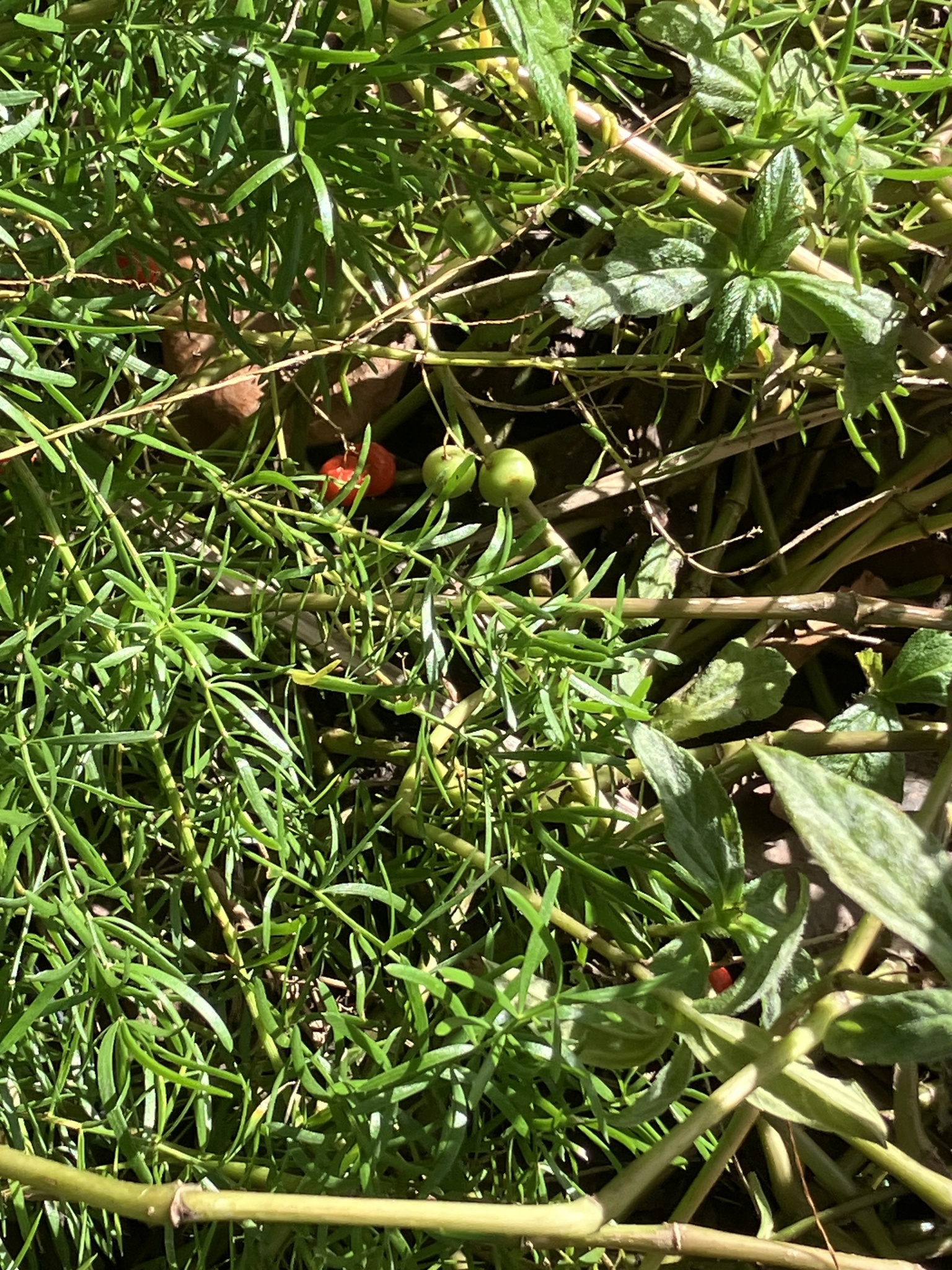
The plant is identified by its thick, fleshy spears that emerge from the soil at 1-2 cm (0.5-0.75 in) in diameter during the spring. If left unharvested, these spears develop into tall, branching stems with needle-like cladophylls that resemble fern fronds.
Asparagus is dioecious, meaning individual plants are either male or female. Male plants, such as the ‘Jersey’ series, are preferred by many growers because they do not expend energy producing seeds and generally yield more spears.
- Spears: Smooth, pointed tips with tight scales.
- Foliage: Soft, airy, and bright green, turning yellow in autumn.
- Flowers: Small, bell-shaped, and greenish-yellow.
- Berries: Small red globes found only on female plants.
Ideal Growing Conditions for Garden Asparagus
Asparagus performs best in full sun and soil with a near-neutral pH of 6.5 to 7.0. If your soil is too acidic, the crowns will struggle to establish, and yields will remain low regardless of how much you water.
The plant is highly sensitive to “wet feet,” so heavy clay soils must be amended with organic matter or grit to improve drainage. It is hardy down to USDA Zone 3, requiring a period of winter dormancy to produce spears the following spring.
- Temperature: Optimal growth occurs between 16-24 °C (60-75 °F).
- Soil: Deep, stone-free loam allows roots to expand.
- Nutrition: High phosphorus levels help early root development.
Planting and Sowing Asparagus Crowns
Most gardeners plant one-year-old crowns in the spring to save one full year of waiting time compared to starting from seed. Dig a trench 20-30 cm (8-12 in) deep and create a mound of soil along the center for the crowns to sit on.
Space the crowns 30-45 cm (12-18 in) apart and spread the roots out like spider legs. Cover them with 5 cm (2 in) of soil initially, then gradually fill the trench as the spears grow taller throughout the first summer.
- Planting depth: Crown tops should be 15 cm (6 in) below the surface.
- Row spacing: Leave 1 m (3 ft) between parallel trenches.
- Soaking: Submerge dry crowns in water for 20 minutes before planting.
Watering and Feeding Asparagus
Consistent moisture is required during the first two years of establishment to ensure the root system does not dry out. Mature plants are more drought-tolerant but still require about 2.5 cm (1 in) of water per week during the summer foliage stage.
Fertilize in early spring before spears emerge and again immediately after the harvest ends in June. Use a balanced fertilizer like 10-10-10 or a thick layer of well-rotted compost to replenish the nutrients used during the intense spring growth.
- Mulching: Apply 5-10 cm (2-4 in) of straw to suppress weeds.
- Weeding: Hand-pull weeds to avoid damaging shallow roots.
- Summer care: Never cut down green ferns, as they feed next year’s crop.
When and How to Harvest Asparagus
You should not harvest any spears during the first year after planting, and only harvest for 2-3 weeks in the second year. By the third year, the plant is usually strong enough for a full 6-8 week harvest season, typically ending in mid-June.
Use a sharp knife to cut spears at or just below the soil level, or simply snap them off by hand. Stop harvesting when the emerging spears become thinner than a pencil, which indicates the crown’s energy reserves are depleting.
- Spear height: Harvest when they reach 15-20 cm (6-8 in).
- Frequency: Check the bed daily during warm spells.
- End of season: Allow all remaining spears to grow into full ferns.
Traditional Uses and Cooking
Asparagus is traditionally prepared by steaming, roasting, or grilling to preserve its delicate texture. In the kitchen, it is often paired with fats like butter or olive oil and acidic components like lemon juice to balance its earthy flavor.
Historically, Asparagus officinalis was used in European folk medicine as a diuretic and to support kidney function. While it is a significant source of Vitamin K and folate, it is most famous for causing a distinct odor in urine due to the breakdown of asparagusic acid.
- Oven roasting: Toss with oil and bake at 200 °C (400 °F) for 10-15 minutes.
- White asparagus: Produced by “mounding” soil over spears to block light.
- Purple varieties: Contain anthocyanins and are often sweeter than green types.
Common Asparagus Problems and Pests
The asparagus beetle (Crioceris asparagi) is the most common pest, appearing as 6 mm (0.25 in) blue-black insects with yellow spots. They chew on spears and larvae defoliate the summer ferns, which can weaken the plant over several seasons.
Fungal issues like asparagus rust or Fusarium crown rot occur in poorly drained soils or humid climates. You can minimize these risks by ensuring wide plant spacing for airflow and removing all dead foliage at the end of the winter.
- Beetle control: Hand-pick adults or use neem oil on larvae.
- Slugs: Protect emerging spears in damp springs with grit or traps.
- Frost: Late spring frosts can turn spears mushy; cover with fleece if predicted.
Storing and Preserving Your Harvest
Freshly harvested asparagus loses its sugar content and flavor within 24 to 48 hours if not stored correctly. To maximize shelf life, treat the spears like a bouquet of flowers rather than a standard vegetable.
If you have a surplus, asparagus can be blanched and frozen for up to eight months. However, the texture will become softer, making frozen spears better suited for soups or quiches than for roasting or grilling.
- Fridge storage: Stand spears upright in 2 cm (1 in) of water.
- Freezing: Blanch in boiling water for 2 minutes, then ice-bath.
- Pickling: A common method for preserving the crunch of spring spears.
Year-Round Care for Asparagus Beds
| Spring | Apply a balanced fertilizer before spears emerge. Harvest spears daily once they reach 15 cm (6 in) for 6-8 weeks. |
|---|---|
| Summer | Stop harvesting by mid-June. Allow spears to grow into tall ferns and provide 2.5 cm (1 in) of water weekly during dry spells. |
| Autumn | Wait for foliage to turn completely yellow or brown after the first frost. Do not cut back while still green. |
| Winter | Cut dead stalks to the ground. Apply a 5 cm (2 in) layer of compost or well-rotted manure over the bed to protect crowns. |
Asparagus Growing Problems Explained
| What you see | Likely cause | What to do |
|---|---|---|
| Skinny, pencil-thin spears | Young plant or exhausted crown | Stop harvesting immediately and allow all spears to grow into ferns. |
| Chewed spears with black eggs | Asparagus beetle | Hand-pick beetles and wash off eggs with a firm spray of water. |
| Spears turning brown and mushy | Late spring frost | Cut damaged spears to the ground and cover the bed with fleece on cold nights. |
| Yellowing ferns in mid-summer | Drought stress or spider mites | Increase deep watering and check the undersides of leaves for webbing. |
Best Asparagus Cultivars for Home Gardens
- ‘Mary Washington’ – classic heirloom, resistant to rust
- ‘Jersey Knight’ – high-yielding male hybrid, vigorous growth
- ‘Purple Passion’ – sweet, purple spears, tender texture
- ‘Millennium’ – performs well in heavy clay soils
- ‘Apollo’ – early producer, good in warmer climates
Frequently Asked Questions
How do I cook asparagus in the oven?
Toss trimmed spears with olive oil, salt, and pepper, then roast at 200 °C (400 °F) for 10-15 minutes until tender. Thicker spears may require an extra 5 minutes, while very thin ones cook faster.
What is the difference between Garden Asparagus and Asparagus Fern?
Garden Asparagus (Asparagus officinalis) is an edible vegetable, while Asparagus Fern (Asparagus setaceus) is a toxic ornamental houseplant. You can tell them apart because the edible variety has much thicker, fleshier stems.
How do I care for asparagus after harvest?
Once the harvest ends in June, fertilize the bed and allow all new spears to grow into tall, feathery ferns. These ferns are essential because they photosynthesize and store energy in the crown for next year's crop.
Why does asparagus make urine smell?
The smell is caused by the breakdown of asparagusic acid into sulfur-containing compounds. This is a harmless biological process that occurs in most people, though not everyone has the genes to detect the odor.
Can I grow asparagus in a pot?
It is not recommended because the root systems are massive and need to spread deep and wide over many years. Asparagus grown in containers rarely lives more than a few seasons and produces very small yields.
Information about traditional or historical uses is provided for educational interest only and is not medical advice. Do not use any plant to treat a condition without speaking to a qualified professional.
Sources & Verification
Taxonomy and distribution are checked against the databases below. Care guidance is written for cultivated species only and reviewed by our editor. How We Build Plant Profiles →