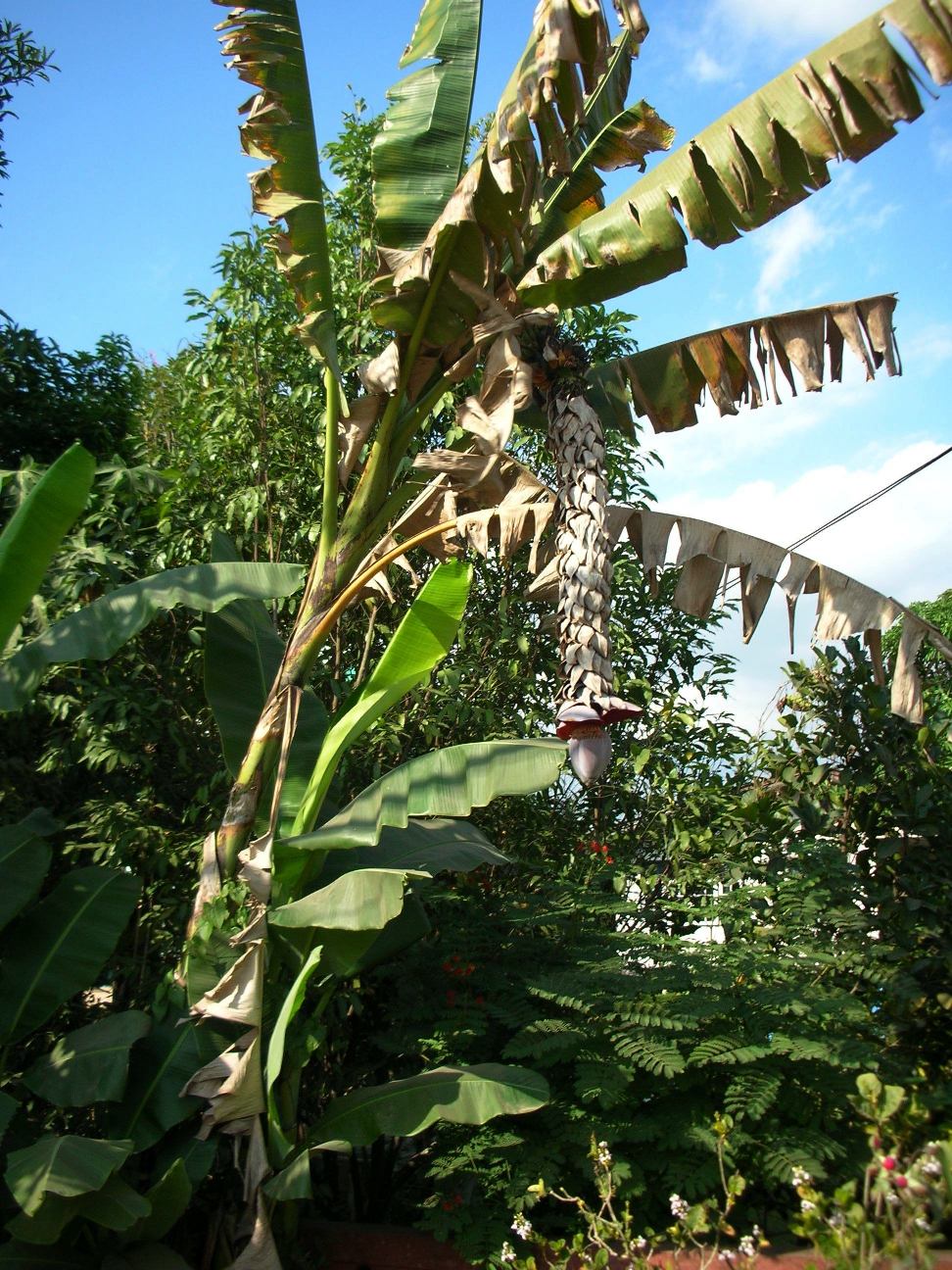
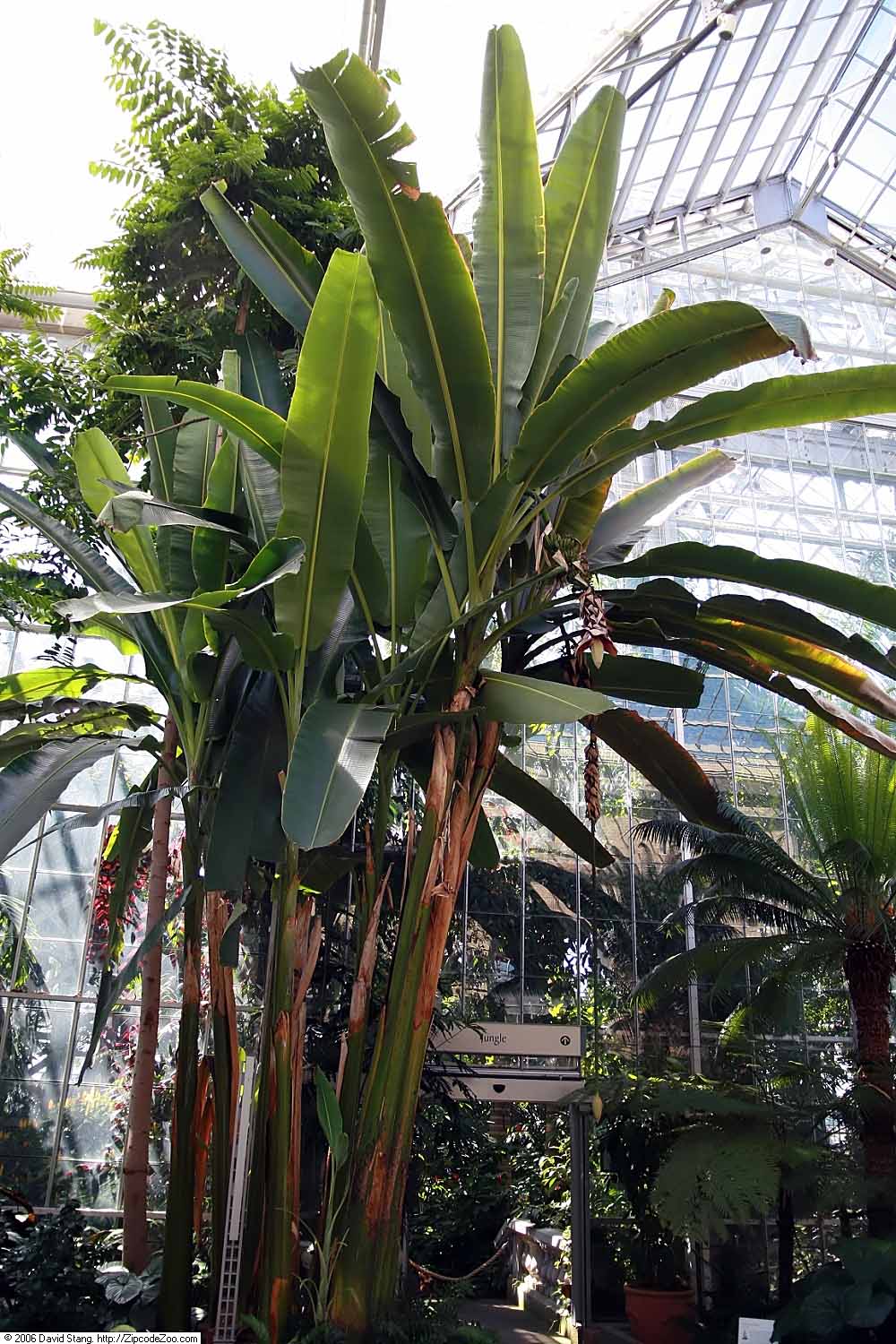
The Japanese banana (Musa basjoo) is a large herbaceous perennial belonging to the family Musaceae, originating from the subtropical province of Sichuan in China. It is widely recognized for its dramatic, bright green leaves that can reach lengths of over 2 m (6.5 ft).
While it creates an instant tropical aesthetic in temperate gardens, you must protect the pseudostem in freezing regions to ensure it returns vigorously each spring.
Key Facts
- Light: Full sun to partial shade
- Water: High moisture during growing season
- Soil: Rich, fertile, well-draining loam
- Hardiness: USDA Zones 5 to 10 with mulch
- Growth: Up to 4 m (13 ft) tall
Living with Japanese Banana
Growing the Japanese banana suits anyone wanting to establish an architectural, jungle-like focal point in a temperate landscape. You will need to commit to heavy watering and seasonal winter mulching to keep the plant thriving. It performs exceptionally well in courtyard settings and sheltered patio borders where high winds cannot shred the enormous foliage.
- Provides rapid vertical growth of up to 3 m (10 ft) in a single season.
- Demands protection from gale-force winds that tear the leaf blades.
- Requires rich soil amendments to sustain its heavy feeding habits.
Although the common searches for Japanese banana cake or Japanese banana milk often confuse this species with culinary dessert bananas, this specific plant is strictly grown for ornament rather than kitchen use. The small, seeded fruits produced in warm climates are inedible, so look elsewhere if you want kitchen crops.
Botanical Look and Identification
The Japanese banana features a robust, green pseudostem formed by tightly overlapping leaf sheaths, growing up to 4 m (13 ft) tall at maturity. The bright green, paddle-shaped leaves easily measure 2 m (6.5 ft) in length and 60 cm (2 ft) across, featuring prominent central midribs. In mid-summer, mature specimens produce pendulous yellow-cream inflorescences followed by small, inedible, fibrous green fruits.
- Pseudostem displays a distinct green color sometimes marked with faint dark blotches.
- Leaves shred naturally along the veins when exposed to strong garden breezes.
- Root system consists of thick, fleshy rhizomes that spread underground to form clumps.
Unlike true woody trees, this species is a giant herbaceous perennial whose above-ground stems die back in severe frosts. The rootstock survives underground and pushes up fresh pups every spring.
Mature Size and Growth Rate
A healthy Japanese banana reaches a mature height of 3.5 m (11.5 ft) with an equal spread after two or three established growing seasons. The root system aggressively sends out offsets or pups around the base, gradually forming a dense multi-stemmed clump. Growth speed is exceptionally fast once summer temperatures consistently exceed 20 °C (68 °F).
- First-year plants typically reach 1.5 m (5 ft) from dormant rhizomes.
- Established clumps widen by 30-50 cm (12-20 inches) every year.
- Leaf emergence can exceed one new leaf per week during peak summer weather.
If you grow Japanese banana plant indoor pots, expect a much smaller stature due to root restriction, rarely exceeding 1.8 m (6 ft) without adequate root space.
Choosing the Right Site
Select a planting location that receives at least 6 hours of direct sunlight daily and stays protected from strong winds. Soil must be rich in organic matter and retain moisture without becoming waterlogged during heavy rains. Southern exposure against a brick wall provides ideal radiant heat during cooler shoulder seasons.
- Ensure the site is clear of utility lines or aggressive root competition from large trees.
- Prepare planting holes at least 60 cm (2 ft) wide and deep.
- Incorporate two buckets of well-rotted manure or compost into the native soil.
Avoid low-lying frost pockets where cold air pools, as these microclimates severely damage emerging spring leaves.
How to Plant Japanese Banana
Plant your Japanese banana in late spring after all danger of heavy frost has completely passed. Dig a hole twice as wide as the root ball and position the crown level with the surrounding soil surface. Firm the soil gently and water deeply to settle the surrounding earth around the thick rhizomes.
- Space multiple plants at least 2 m (6.5 ft) apart to allow for clump expansion.
- Apply a 10 cm (4-inch) layer of organic mulch around the base to retain soil moisture.
- Water every 2 days for the first month until new root growth establishes.
Container-grown specimens purchased from nurseries transplant reliably if you tease out any tightly bound roots before backfilling the hole.
Watering and Feeding Schedule
Provide your Japanese banana with at least 5 cm (2 inches) of water per week through rainfall or deep irrigation during the active summer season. Feed monthly from May through August using a balanced granular fertilizer high in nitrogen to support massive leaf expansion. Reduce watering frequency sharply as autumn temperatures drop below 10 °C (50 °F).
- Apply 20 liters (5 gallons) of water per large plant twice weekly in dry weather.
- Work slow-release organic pellets into the topsoil every 4 weeks in summer.
- Stop all fertilizer applications by September to let the stem harden off before winter.
Stressed plants suffering from drought quickly exhibit brown leaf margins and slow down new shoot production entirely.
Pruning and Maintenance
Cut away dead or tattered leaves in autumn using a sharp, sterile pruning saw or knife. Never prune live green growth late in the season, as open wounds invite fungal rot during cold weather. Remove excess basal pups in spring if you want to maintain a single dominant specimen rather than a wide clump.
- Trim off storm-damaged leaves cleanly at the base of the petiole.
- Clear away fallen organic debris from the root zone to prevent pest habitats.
- Divide congested clumps every 3 to 4 years in early summer.
Regular cleanup keeps the plant looking tidy and prevents fungal spores from overwintering on decaying leaf litter.
Japanese Banana Plant Winter Care
Protect your Japanese banana in USDA Zone 5 through 8 by cutting the main stem down to 30 cm (1 ft) after the first killing frost. Construct a wire cylinder around the remaining stump and pack it tightly with dry straw, leaves, or bracken. Cover the top with a waterproof cap or plastic sheet to prevent moisture from rotting the crown.
- Apply winter mulch protection once sustained night temperatures drop below 0 °C (32 °F).
- Remove the insulating straw blanket in spring when daytime highs consistently exceed 10 °C (50 °F).
- Potted specimens must move indoors to a frost-free garage or greenhouse for the winter months.
Failing to insulate the crown in colder regions results in complete root death, preventing the perennial from returning next year.
Troubleshooting Leaf Browning and Pests
Diagnose Japanese banana plant leaves turning brown by checking soil moisture levels and wind exposure first. Spider mites occasionally infest indoor specimens or protected greenhouse plants during dry winter storage. Fungal leaf spot can appear during prolonged damp, humid summers without adequate air circulation.
- Brown crispy leaf edges: Caused by underwatering or strong, dry winds.
- Yellow lower leaves: Natural aging process as the plant sheds older foliage.
- Stiff webbing on leaves: Treat spider mite infestations with insecticidal soap sprays.
Japanese banana spider concerns usually refer to harmless garden orb-weavers spinning webs between the massive leaves rather than dangerous venomous species.
Landscape Uses
Utilize the Japanese banana as a dramatic specimen plant near patios, swimming pools, or tropical-themed borders. Combine it with architectural perennials like Gunnera manicata or large ferns to build layered, high-impact garden displays. It functions well as a seasonal screen when planted in tight rows along fence lines.
- Plant against dark wooden fencing to make the bright green leaves stand out.
- Pair with canna lilies (Canna indica) and castor bean plants (Ricinus communis).
- Grow in large fiberglass containers on urban rooftop terraces.
The bold foliage texture contrasts sharply with fine-textured ornamental grasses and slender bamboo varieties.
Japanese Banana Through the Seasons
| Spring | Remove winter mulch blankets once frosts finish. Apply a heavy topdressing of well-rotted manure and resume regular watering as new shoots emerge. |
|---|---|
| Summer | Water deeply twice a week and apply monthly high-nitrogen fertilizer. Cut away storm-shredded lower leaves to maintain a clean appearance. |
| Autumn | Cease all fertilizing by September. Cut back the main pseudostem and wrap the crown with straw once the first hard frost kills the foliage. |
| Winter | Ensure waterproof caps remain secure over winter mulch structures. Keep container plants dormant in a frost-free garage with minimal water. |
Japanese Banana Plant Problems Explained
| What you see | Likely cause | What to do |
|---|---|---|
| Leaves turning brown at the edges | Wind damage or lack of water | Move to a sheltered spot and increase summer irrigation frequency. |
| Lower leaves turning yellow and dying | Natural senescence or root crowding | Trim away old foliage cleanly and divide congested clumps. |
| Stem rotting at ground level over winter | Excess moisture trapped in winter mulch | Ensure insulation uses dry straw and features a waterproof top cover. |
| Stunted growth and pale green leaves | Insufficient nitrogen or nutrient deficiency | Apply a balanced high-nitrogen granular fertilizer every four weeks. |
Popular Japanese Banana Cultivars
- Musa basjoo 'Sakhalin' – a supposedly hardier selection collected from northern islands
- Musa basjoo 'Variegata' – rare form featuring cream-striped leaf variegation
Frequently Asked Questions
Can you eat the fruit of a Japanese banana?
No, the fruit of the Japanese banana is inedible, fibrous, and filled with hard black seeds. This species is grown purely for its ornamental tropical foliage.
Can Japanese banana grow indoors?
Yes, you can grow a Japanese banana indoors if you provide a very bright, south-facing window with direct sun. However, indoor plants remain much smaller and require diligent watering.
How cold hardy is the Japanese banana?
The Japanese banana is hardy down to USDA Zone 5 if the root crown is heavily mulched and protected from winter moisture. While top growth dies in a freeze, the roots survive to resprout in spring.
How fast does the Japanese banana grow?
The Japanese banana grows extremely fast, shooting up to 3 m (10 ft) in a single season once summer weather arrives. It is among the fastest-growing perennial plants in temperate climates.
Do I need to dig up Japanese bananas in winter?
You do not need to dig up garden-planted Japanese bananas in regions down to Zone 5 if you insulate the stem base with thick straw and a waterproof cover. Potted specimens must be moved indoors.
Sources & Verification
Taxonomy and distribution are checked against the databases below. Care guidance is written for cultivated species only and reviewed by our editor. How We Build Plant Profiles →