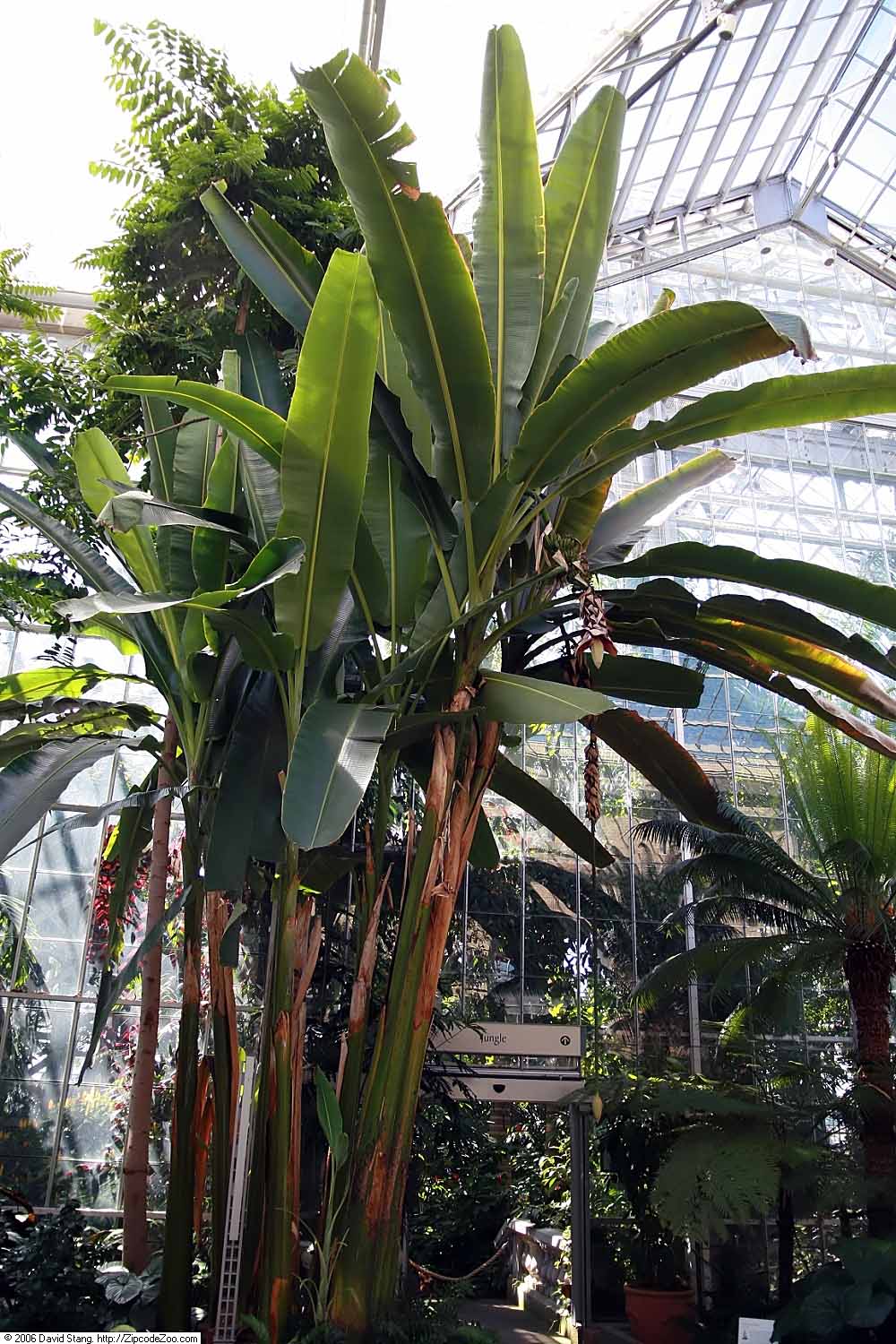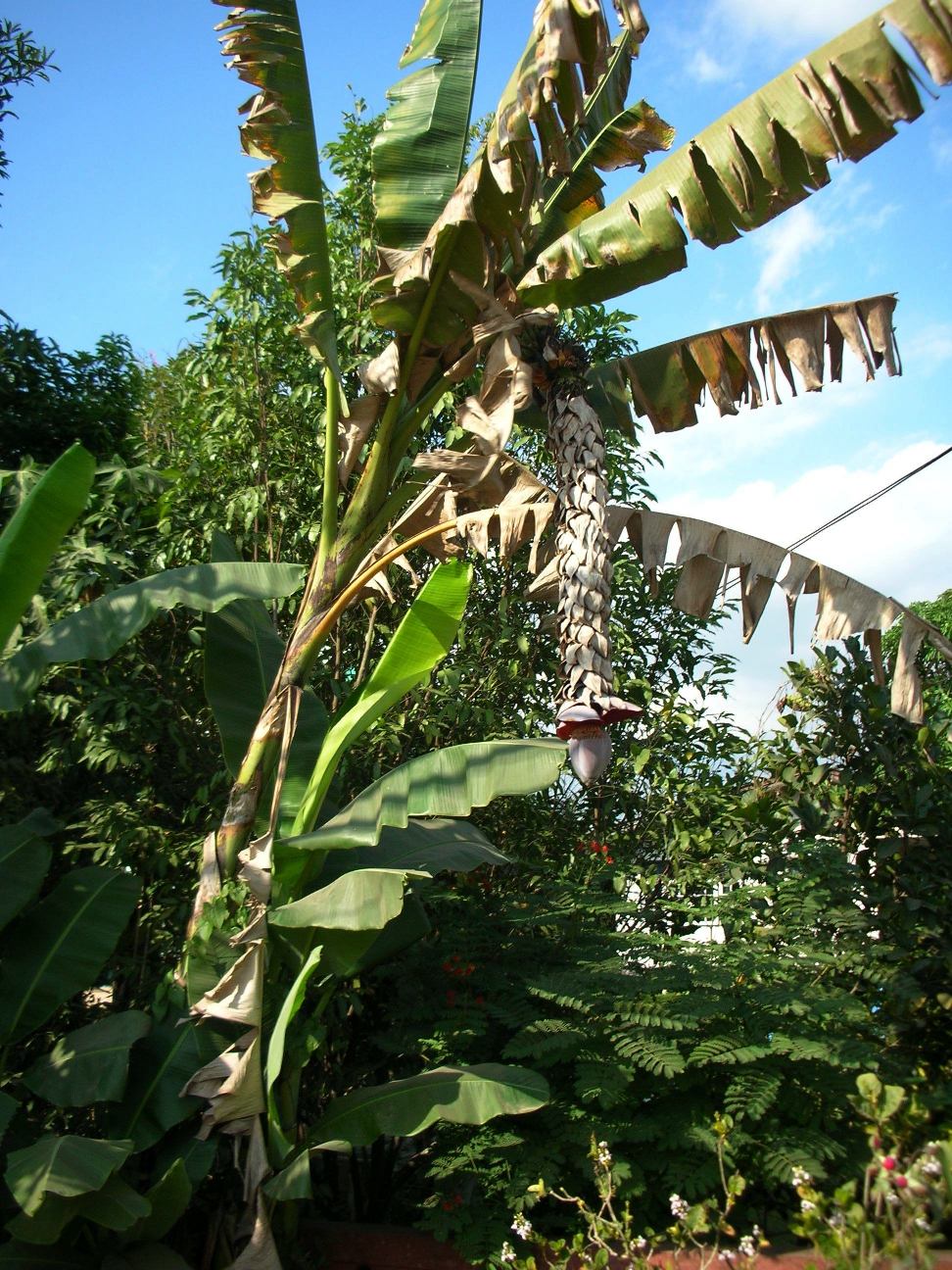
Musa balbisiana is a wild ancestor of the common supermarket banana, native to South Asia and Southeast Asia. It grows as a massive perennial herb with upright, trunk-like pseudostems and large, paddle-shaped leaves that can reach several meters in length.
Unlike hybrid bananas, this species produces fruit filled with hard, black seeds rather than soft pulp. It is significantly more resistant to disease and cold than most dessert cultivars, making it a frequent choice for breeding programs and tropical-style landscaping in temperate zones.
Key Facts
- Water: Keep soil consistently moist but never waterlogged
- Light: Full sun is required for optimal growth and fruiting
- Hardiness: Survives temperatures down to -5 °C (23 °F) with mulching
- Fruit: Edible but contains numerous hard, pea-sized seeds
- Growth: Can reach full height in just two growing seasons
Growing Wild Banana in Your Landscape
Growing Wild Banana requires significant space and a commitment to high-volume watering. This plant is not a true tree but a giant herb, meaning it consists of soft, water-filled tissues that grow at an exceptional rate when provided with heat and nutrients. It suits large gardens where a tropical screen or focal point is needed quickly.
You must ensure the planting site is protected from strong winds, which easily shred the massive leaves. While it is more tolerant of cool weather than the Cavendish banana (Musa acuminata), it still requires a long, frost-free growing season to produce its characteristic purple flower bracts. In many temperate climates, it is grown purely for its architectural foliage rather than fruit.
How to Identify Musa balbisiana
Identify Wild Banana by its distinctly upright, robust pseudostem which typically grows 6 to 9 meters (20 to 30 feet) tall. The pseudostem is usually green or yellowish-green, occasionally with black blotches near the base of the leaf sheaths. Unlike some ornamental bananas, the leaves of this species are held more vertically, creating a narrower silhouette than the spreading habit of a typical fruiting banana.
- Leaves: Oblong, up to 3 m (10 ft) long and 60 cm (2 ft) wide with a pale midrib.
- Flowers: A large, drooping inflorescence with dark purple to maroon outer bracts.
- Fruit: Angled, yellowish-green bunches containing seeds 5-10 mm (0.2-0.4 in) wide.
- Habit: Clump-forming with multiple suckers or “pups” emerging from the base.
Size and Growth Rate
A healthy Wild Banana can reach a height of 9 meters (30 feet) under ideal tropical conditions. In a single summer, a young plant may grow 2 to 3 meters (6 to 10 feet) if provided with weekly fertilization and daily watering. The spread of a single mature clump can reach 4.5 meters (15 feet) as it produces offsets from the central rhizome.
The speed of growth is directly tied to soil temperature and nitrogen availability. Once the plant reaches its maximum height, it redirects energy into the flower spike. Because the main stem dies after fruiting, the overall size of the colony is maintained by the succession of younger suckers that replace the parent plant.
Choosing the Best Planting Site
Place your Wild Banana in a location that receives at least 8 hours of direct sunlight daily. While it can survive in partial shade, the stems will become leggy and prone to falling over under the weight of the leaves. The soil must be deep and rich in organic matter, as the plant is a heavy consumer of nitrogen and potassium.
Avoid low-lying areas where water sits for more than 24 hours after rain, as this can lead to rhizome rot. Because the leaves are so large, they act like sails in the wind; a site near a south-facing wall or a dense windbreak will prevent the foliage from becoming tattered. Ensure there is enough clearance from power lines and roof gutters, as the height often surprises new growers.
Planting Wild Banana Seeds and Suckers
Propagate Wild Banana by sowing seeds or by dividing the suckers that emerge from the base of a mature plant. If using seeds, you must soak them in warm water for 24 to 48 hours before planting to soften the hard outer coat. Sow seeds 2 cm (0.8 in) deep in a sterile seed-starting mix and maintain a constant temperature of 25-30 °C (77-86 °F).
- Sucker Division: Select a sucker at least 1 m (3 ft) tall with its own roots.
- Spacing: Plant individual clumps 3 to 5 meters (10 to 16 feet) apart.
- Hole Depth: Dig a hole twice the width of the root ball and just as deep.
- Settling: Water heavily immediately after planting to remove air pockets.
Watering and Feeding Requirements
Apply 50 to 100 liters (13 to 26 gallons) of water per week to a mature clump during the peak of summer. The soil should feel like a wrung-out sponge—consistently damp but not muddy. If the leaves begin to fold inward or droop prematurely, the plant is likely experiencing drought stress, which will immediately halt growth.
Feed the plant every 4 to 6 weeks during the growing season with a high-potassium fertilizer, such as a 10-10-30 NPK ratio. Wild bananas are greedy feeders because they must build massive amounts of tissue in a short window. Mulching with 10 cm (4 inches) of wood chips or compost helps retain moisture and provides a slow release of nutrients as it breaks down.
Pruning and Maintenance
Prune Wild Banana by removing dead or shredded leaves only after they have turned completely brown. Cutting green leaves deprives the plant of energy and can invite pests into the soft pseudostem. Use a sharp, sterilized knife or a small saw to make clean cuts near the base of the leaf petiole.
Thinning the suckers is necessary to prevent the clump from becoming a congested thicket. Leave the main fruiting stem, one medium-sized “successor” sucker, and one small “follower” sucker per clump. This 3-tier system ensures a continuous cycle of growth without the plants competing for light and nutrients. Remove all other small shoots as they appear by cutting them off at ground level.
Common Problems and Pests
Watch for Spider Mites and Aphids, which are the most common pests for this species, especially during dry spells. These insects congregate on the undersides of the leaves and can cause yellow spotting or curling. A strong blast of water from a garden hose is often sufficient to dislodge them, though severe infestations may require insecticidal soap.
- Leaf Shredding: Caused by wind; move the plant or provide a windbreak.
- Yellow Leaves: Usually a sign of nitrogen deficiency or overwatering.
- Root Rot: Indicated by a foul smell at the base and wilting despite wet soil.
- Panama Disease: While resistant, it can occasionally show wilting in contaminated soils.
Winter Care and Cold Protection
Protect the central rhizome by applying a 30 cm (12 inch) layer of mulch around the base before the first frost. In USDA Zone 9, the leaves will likely die back to the ground after a freeze, but the plant will resprout in spring. If you live in a colder region, you can cut the pseudostem back to 1 meter (3 feet) and wrap it in burlap and plastic to insulate the core.
Stop all fertilization in late summer to allow the plant to harden off before the cold arrives. Reduce watering significantly during the winter months, as the plant enters a dormant state and cannot process excess moisture. If the pseudostem turns mushy after a freeze, cut it back to firm tissue to prevent rot from traveling down into the underground corm.
Uses and Edibility of Wild Banana
The fruit of Wild Banana is technically edible but is rarely eaten raw because of the large, stone-like seeds. In Southeast Asian cuisine, the unripe green fruits are sometimes sliced and used in curries or salads, where the seeds are less developed. The flower bud is also a common vegetable, often boiled or added to soups after the bitter outer layers are removed.
Beyond food, the leaves are used as natural, biodegradable plates and for wrapping food for steaming. Historically, various parts of the plant were traditionally used in folk medicine to treat inflammation and digestive issues. The plant’s primary modern value is in its genetics, as its resistance to the devastating Fusarium wilt is vital for the future of commercial banana farming.
Year-Round Care for Wild Banana
| Spring | Remove winter protection and cut away dead, mushy tissue. Apply a balanced fertilizer and increase watering as new green shoots appear. |
|---|---|
| Summer | Water daily during heatwaves and fertilize every 4 weeks with a high-potassium blend. Monitor for spider mites on the leaf undersides. |
| Autumn | Stop fertilizing by mid-season to slow growth. Harvest any mature fruit bunches before the first frost and clear away fallen debris. |
| Winter | Cut back frost-damaged foliage. Apply a heavy layer of mulch to the base and wrap the pseudostem if temperatures will drop below -2 °C (28 °F). |
Wild Banana Growth Problems Explained
| What you see | Likely cause | What to do |
|---|---|---|
| Leaves splitting into ribbons | Wind exposure | Move the plant to a sheltered location or install a temporary windbreak. |
| Slow growth and pale leaves | Nitrogen deficiency | Apply a high-nitrogen liquid fertilizer once a week for three weeks. |
| Base of plant feels soft and smells | Rhizome rot | Stop watering immediately and improve soil drainage by adding grit or raising the bed. |
Notable Wild Banana Types
- Musa balbisiana ‘Gigantea’ – extra-large form reaching 10 meters
- Musa balbisiana ‘Atia Black’ – features a dark, almost black pseudostem
- Musa × paradisiaca – the hybrid descendant of balbisiana used for cooking
Frequently Asked Questions
Are wild bananas safe to eat?
Yes, they are safe to eat, but they are full of hard, black seeds that make them difficult to enjoy raw. They are better suited for cooking or using the flower buds as a vegetable.
What is the difference between a wild banana and a modern banana?
Wild bananas like Musa balbisiana contain many large, hard seeds and have a more robust, cold-tolerant habit, while modern domestic bananas (Musa acuminata) are seedless hybrids bred for soft pulp.
How can you tell a wild banana plant from a Giant Bird of Paradise?
Wild banana leaves are arranged spirally around the stem and have a prominent midrib, whereas the Giant Bird of Paradise (Strelitzia nicolai) has leaves that grow in a flat, fan-like plane.
Is the wild banana plant toxic to cats or dogs?
No, Musa balbisiana is considered non-toxic to cats, dogs, and horses according to the ASPCA, making it a safe choice for pet owners.
What are the benefits of growing wild bananas?
They provide a fast-growing tropical aesthetic, produce edible flowers, and are more resistant to common banana diseases and cooler temperatures than commercial varieties.
Information about traditional or historical uses is provided for educational interest only and is not medical advice. Do not use any plant to treat a condition without speaking to a qualified professional.
Sources & Verification
Taxonomy and distribution are checked against the databases below. Care guidance is written for cultivated species only and reviewed by our editor. How We Build Plant Profiles →