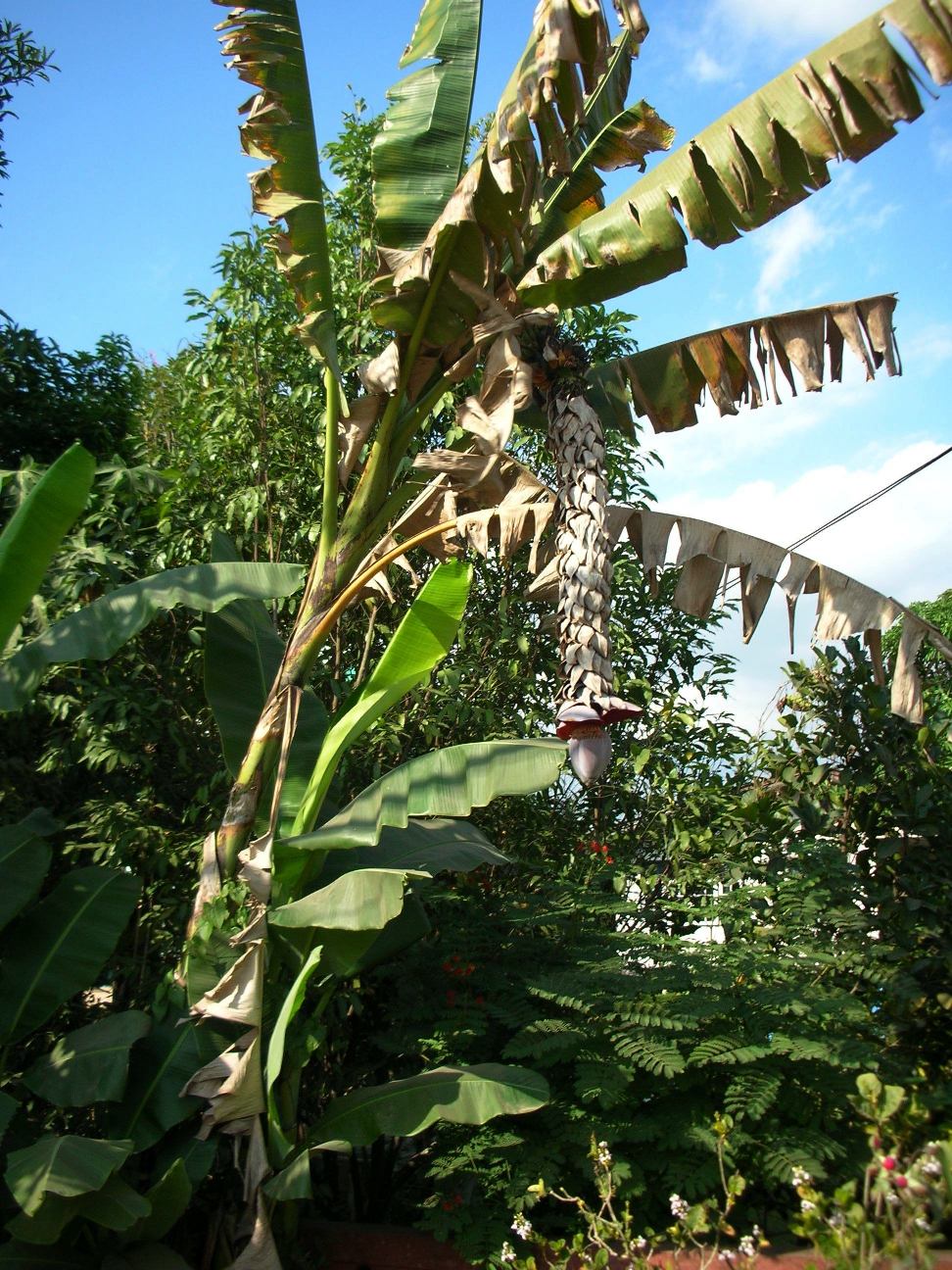
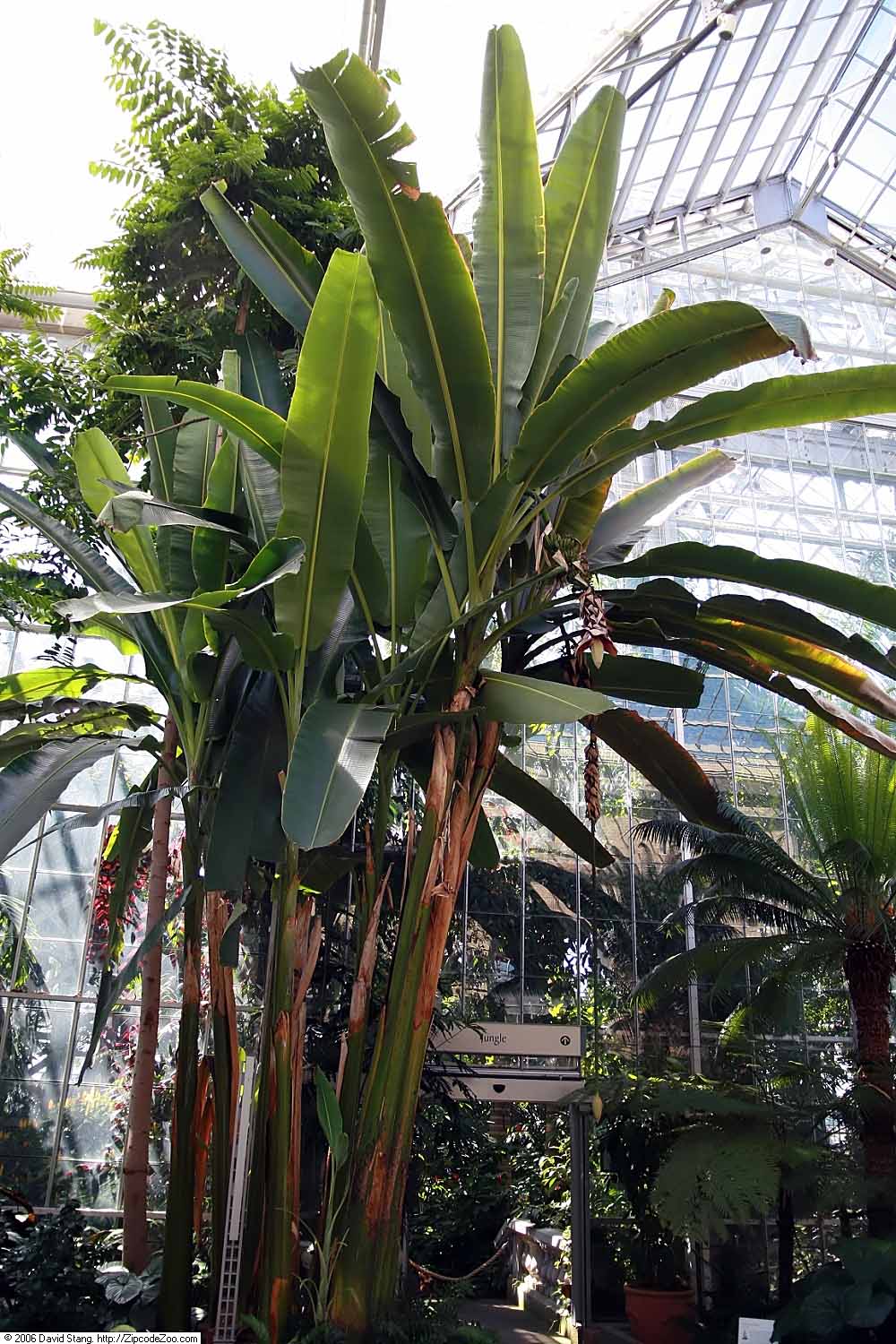
Flowering banana (Musa ornata) is a compact, slender-stemmed perennial herb native to Bangladesh, India, and Myanmar, distinguished by its upright pinkish-purple floral bracts. Unlike agricultural banana varieties, this species remains under 3 m (10 ft) in height and produces strictly ornamental fruit.
Its broad foliage tears easily in blustery conditions, meaning you must choose a site shielded from prevailing winds. Because each pseudo-stem dies after setting fruit, ongoing pruning of spent trunks is required to sustain continuous flowering.
Key Facts
- Height: 1.5–2.7 m (5–9 ft) tall
- Light: Full sun to partial shade
- Water: Keep soil evenly moist during active growth
- Hardiness: USDA Zones 9–11 (rhizome hardy to Zone 8)
- Bloom time: Late spring through autumn
- Fruit: Inedible, packed with hard black seeds
Growing Flowering Banana in the Garden
Flowering banana suits warm, sheltered courtyard gardens, poolside borders, or large outdoor patio containers. You need a dedicated floor footprint of 1.5 to 2 m (5 to 6.5 ft) to accommodate its suckering clumping habit.
This plant establishes quickly in warm weather, producing offsets from a central underground corm within its first growing season. It performs reliably for gardeners who want tropical texture without the massive 6 to 9 m (20 to 30 ft) clearance demanded by standard fruit-bearing banana trees.
Identifying Musa ornata Foliage, Flowers, and Fruit
Flowering banana produces slender pseudo-stems reaching 1.5 to 2.7 m (5 to 9 ft) tall, topped by erect, paddle-shaped leaves up to 1.8 m (6 ft) long. The foliage features a distinct purplish-red midrib on the underside and smooth green surfaces.
The inflorescence stands strictly upright rather than hanging downward like edible bananas. Tubular yellow-orange true flowers are protected by overlapping, waxy bracts that range in colour from lilac-pink to purple and bronze-orange.
The small, angled fruits mature to 6–8 cm (2.4–3.1 in) long and turn pale greenish-yellow. While not poisonous, each fruit is filled with dense, hard black seeds measuring 4–5 mm (0.16–0.2 in) across, leaving negligible flesh to eat.
Sun, Shelter, and Soil Requirements
Flowering banana requires at least six hours of direct sunlight daily to trigger regular flowering. In hot inland regions with temperatures regularly exceeding 35 °C (95 °F), light afternoon shade prevents leaf scorch.
Wind exposure is the primary threat to the appearance of the foliage. Gusts tear the broad lamina along lateral veins into ragged strips, so position plants against south-facing walls, fences, or dense evergreen screens.
Provide a rich, aerated soil mix rich in compost or aged manure. Soil needs to retain consistent moisture while allowing surplus water to drain away freely, keeping root-zone pH between 5.5 and 6.8.
How to Plant Musa ornata
Plant container-grown flowering banana specimens in late spring once soil temperatures consistently exceed 18 °C (64 °F). Cold, waterlogged soil in early spring invites root rot on newly settled corms.
Dig a planting hole twice as wide as the nursery pot and match the depth precisely so the crown sits level with the surrounding grade. Space multiple clumps 1.5 to 2 m (5 to 6.5 ft) apart to prevent overcrowding.
- Incorporate 5–10 cm (2–4 in) of compost into the native soil at the base of the hole.
- Gently untangle any circling roots before setting the root ball in place.
- Backfill firmly to eliminate large air pockets around the corm.
- Apply a 7–10 cm (3–4 in) layer of wood chip mulch, keeping it 5 cm (2 in) clear of the stem.
- Water with 15–20 L (4–5 gal) of water immediately after backfilling.
Watering and Banana Flowering Stage Fertilizer
Provide 25 to 50 mm (1 to 2 in) of water every week during the warm summer months. Never allow the soil around the root zone to dry out completely while the plant is actively producing new leaves.
Flowering banana is a heavy nutrient feeder. In spring, apply a balanced granular fertiliser such as 10-10-10 or 8-10-8 every 4 weeks to fuel rapid leaf growth.
Switch to a high-potassium formula once the plant enters its flowering stage:
- Select a fertiliser with a higher potassium ratio, such as 9-3-27 or 10-10-20.
- Apply potassium every 2 to 3 weeks through mid-summer to support bloom longevity.
- Flush potted specimens with plain water once a month to prevent fertiliser salt buildup.
- Stop all fertiliser applications 6 weeks before your expected autumn frost date.
Pruning and Removing Spent Stems
Cut flowering banana pseudo-stems down to ground level once their floral bracts fade and the seed pod cluster matures. Banana stems are monocarpic, meaning each individual trunk flowers once and then naturally withers.
Remove damaged or yellowed exterior leaves throughout the summer using a clean, sharp pruning knife. Slice stems cleanly at a 45-degree angle just above the soil surface without nicking adjacent emerging shoots.
Thin out overcrowded clumps in early spring by removing weak, spindly suckers. Retain three to five strong, staggered pseudo-stems per clump to maintain a balanced display and allow adequate air penetration.
Propagating Flowering Banana from Offsets and Seeds
Propagate flowering banana by separating suckers that have reached at least 60 to 90 cm (24 to 36 in) in height. These ‘sword suckers’ possess their own independent root networks and take hold far faster than seeds.
Sever the sucker from the parent corm with a clean, sharp spade, taking care to preserve several firm, white feeder roots. Pot the division into a free-draining, soil-less potting mix and place it in warm, bright shade for 3 weeks until new leaf growth appears.
Seed propagation is possible using fresh seeds extracted from ripe fruit:
- Soak seeds in tepid water for 24 to 48 hours to soften the hard outer seed coat.
- Sow seeds 1 cm (0.4 in) deep in moist perlite and peat or sterile seed-starting mix.
- Maintain a consistent bottom-heat temperature of 24–28 °C (75–82 °F).
- Germination is irregular, typically requiring 4 to 12 weeks.
Overwintering Flowering Banana Plants
Flowering banana foliage sustains frost damage when temperatures drop below 0 °C (32 °F), though the underground rhizome can survive brief drops to -5 °C (23 °F) in USDA Zone 8b.
In Zones 8 and 9, cut frosted foliage back to 15 cm (6 in) above the ground after the first killing frost. Mound 20 to 30 cm (8 to 12 in) of dry shredded bark or straw over the crowns and cover with a breathable tarp to shed excessive winter rainfall.
In Zone 7 and colder, grow this plant in containers. Move pots indoors to an unheated basement, sunroom, or garage held at 7–12 °C (45–54 °F), reducing watering to once a month to keep the dormant corm from shrivelling.
Banana Flowering Time and Inflorescence Care
The main flowering time spans June through September, occurring on pseudo-stems that are roughly 10 to 14 months old. Individual inflorescences hold their bright colour for 8 to 12 weeks on the plant.
The floral display starts as an upright terminal spike wrapped in deep pink or reddish-purple bracts. One by one, the outer bracts lift and curl backward to reveal rows of slender yellow-orange flowers that produce sweet nectar.
To keep the display clean, gently pull off dead brown florets as the spike elongates. Avoid handling the soft flower spikes during cold or exceptionally dry winds, which cause the bract tips to turn brown prematurely.
Year-Round Care for Flowering Banana
| Spring | Uncover mulched outdoor beds once frost risk passes. Apply a 5 cm (2 in) layer of compost and feed with balanced 10-10-10 fertiliser as the first new leaves unroll. |
|---|---|
| Summer | Water thoroughly 2 to 3 times per week during dry spells. Switch to a high-potassium fertiliser every 3 weeks to support flower development, and cut out spent, post-bloom pseudo-stems. |
| Autumn | Cease fertiliser applications by late September. Remove shredded, tatty leaves before winter storms and bring potted specimens indoors before outdoor night temperatures drop below 5 °C (41 °F). |
| Winter | In Zones 8–9, cut dead foliage down to 15 cm (6 in) after frost and apply a 20 cm (8 in) mulch heap over the crown. For indoor container plants, reduce watering to once every 3–4 weeks. |
Flowering Banana Problems and How to Fix Them
| What you see | Likely cause | What to do |
|---|---|---|
| Torn, shredded leaf blades | High winds mechanically splitting the broad leaf lamina | Relocate the clump or erect a physical windbreak screen using fencing or dense shrubbery. |
| Yellowing lower leaves with soft stem base | Overwatering or waterlogged soil causing root and corm rot | Reduce watering frequency immediately and amend the soil with coarse sand and perlite to improve drainage. |
| Brown, dry leaf margins | Low humidity, underwatering, or excessive fertiliser salt buildup | Increase watering consistency and flush container soil thoroughly with clean rainwater. |
| Stunted growth and lack of flower spikes | Insufficient direct sunlight or lack of potassium | Move to a location receiving at least 6 hours of full sun and apply a high-potassium plant food. |
| Fine webbing and stippled foliage | Two-spotted spider mites in hot, dry conditions | Spray both sides of the foliage with insecticidal soap or neem oil every 7 days for 3 weeks. |
Flowering Banana Varieties and Selections
- ‘Royal Purple’ – deep violet-purple bracts, 2 m (6.5 ft) tall
- ‘Macro’ – larger, broader bronze-pink bracts
- ‘Standard Pink’ – classic lilac-pink bracts with yellow flowers
- ‘Bronze’ – reddish-bronze floral bracts on dark stems
Companion Plants for Musa ornata
Pair flowering banana with companion plants that thrive in moist, fertile soil and sheltered light. Broad, upright banana stems benefit from mid-height perennials and contrasting textures at their base.
Layer these compatible companions nearby:
- Giant elephant ear (Colocasia esculenta), whose deep purplish or dark green heart-shaped leaves contrast with the upright banana stems.
- Canna lily (Canna indica), which adds red, yellow, or bronze foliage and blooms in identical high-moisture conditions.
- Cast iron plant (Aspidistra elatior), providing a deep green, shade-tolerant evergreen skirt around the base of leggy stems.
- Crocosmia (Crocosmia aurea), adding airy sprays of orange-red blooms that match the warm tones in the banana flowers.
Frequently Asked Questions
Can you eat Musa ornata fruit?
No, the fruit of flowering banana is practically inedible because it is packed with hard, pebble-like black seeds and contains very little flesh. While not poisonous to humans or animals, eating it is unpleasant and can chip teeth.
What is the difference between Musa ornata and Musa velutina?
Pink velvet banana (Musa velutina) produces fuzzy, bright pink fruits that peel back on their own when ripe, whereas flowering banana (Musa ornata) produces smooth, greenish-yellow fruit. Additionally, flowering banana grows taller, typically reaching 2 to 2.7 m (6.5 to 9 ft) compared to the 1.2 to 1.5 m (4 to 5 ft) stature of Musa velutina.
Does a blue Musa ornata exist?
No, genuine blue-flowering or blue-fruited varieties of Musa ornata do not exist. Seed sellers advertising 'blue banana' plants are offering mislabelled stock or digitally altered photographs, though wild species like Musa itinerans have naturally glaucous, bluish stems.
How long does a flowering banana take to bloom?
A flowering banana pseudo-stem typically blooms within 10 to 14 months of emergence under warm, sunny conditions. Because the plant constantly sends up new suckers, an established clump blooms every year from late spring through late summer.
Is flowering banana toxic to cats and dogs?
No, Musa ornata is completely non-toxic to dogs, cats, and horses according to veterinary plant safety databases. Its sap can stain fabrics brown, but ingestion causes no chemical poisoning.
Sources & Verification
Taxonomy and distribution are checked against the databases below. Care guidance is written for cultivated species only and reviewed by our editor. How We Build Plant Profiles →
- Kew Plants of the World OnlineTaxonomic status and native distribution records
- NC State Extension Gardener Plant ToolboxHardiness, cultural requirements, and ornamental attributes
- Missouri Botanical GardenLandscape use and winter care guidelines
- GBIFOccurrence data and verified regional observations
- Wikipediageneral reference