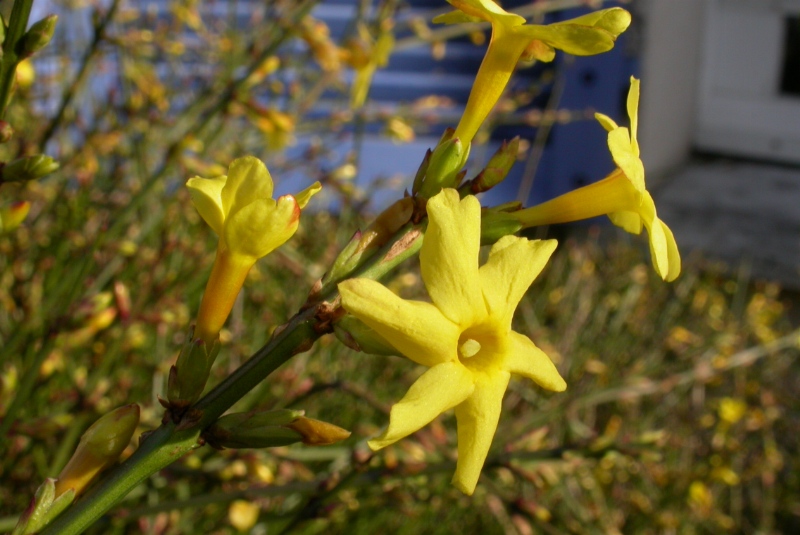
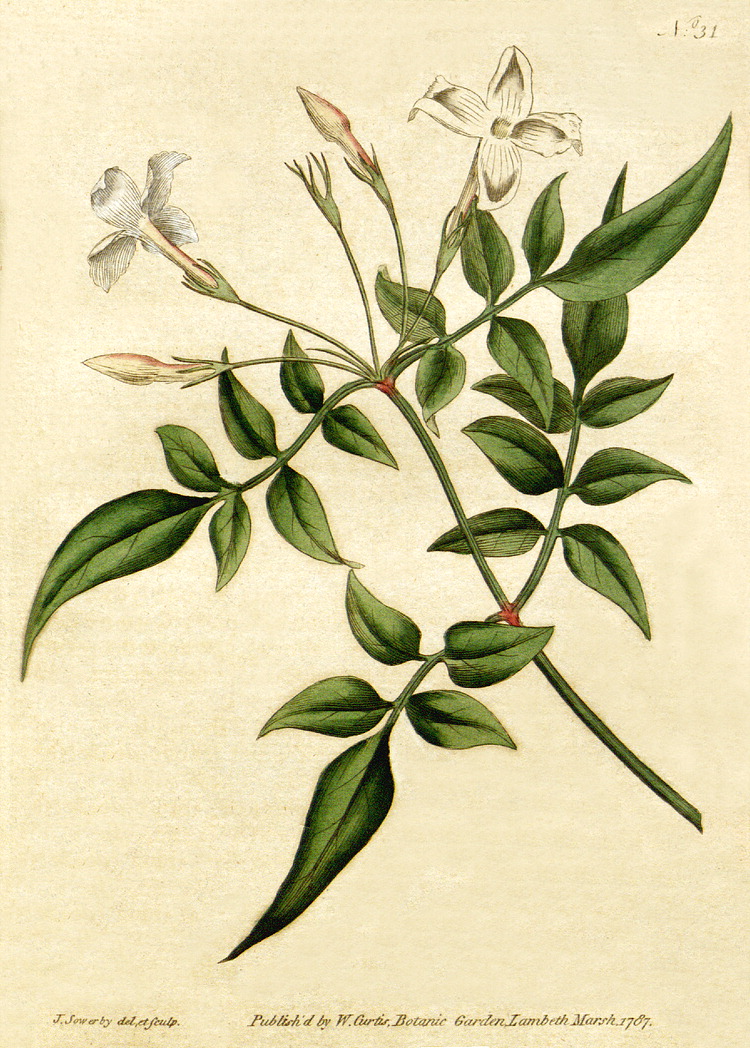
Arabian jasmine is a sprawling evergreen shrub or vine native to India and Bhutan. Jasminum sambac is identified by its glossy green foliage and highly fragrant white flowers that open at night and fade to pink as they age.
You can grow it as a potted patio plant or a garden shrub in warm climates. Success depends on providing high heat, humidity, and consistent moisture during the summer growing season.
Key Facts
- Light: 6-8 hours of direct sun daily
- Water: Keep soil moist; water when top 2.5 cm (1 in) is dry
- Temperature: Minimum 10 °C (50 °F) for healthy growth
- Bloom: White, waxy flowers appearing year-round in tropics
- Hardiness: USDA zones 9-11; must overwinter indoors elsewhere
Growing Arabian Jasmine at Home
You should grow Arabian jasmine if you have a warm, sunny location that maintains high humidity. It is a sprawling plant that can be trained as a vine on a small trellis or kept as a bushy shrub through regular pinching.
- Choose a pot with large drainage holes to prevent root rot.
- Maintain a temperature between 21-32 °C (70-90 °F) for the best flower production.
- Provide a humidity tray or humidifier if growing indoors to prevent leaf drop.
- Place near a window or patio door to enjoy the evening scent.
Identifying Features and Growth Habit
Arabian jasmine is an evergreen shrub reaching 0.5 to 3 meters (1.6 to 10 feet) in height depending on the variety and support provided. The leaves are ovate and glossy, measuring 4-12 cm (1.5-4.7 in) long, and grow in opposite pairs or whorls of three.
The flowers are the most distinctive feature, appearing in clusters of 3-12 at the ends of branches. Each flower is roughly 2.5 cm (1 in) across, featuring a tubular base and multiple waxy white petals. Unlike common jasmine (Jasminum officinale), the leaves of this species are simple rather than pinnate.
Choosing the Best Site
Select a site that receives at least 6 hours of direct sunlight every day to ensure heavy blooming. In extremely hot regions like Florida or South Asia, providing light afternoon shade can prevent the leaves from scorching.
- Ensure the location is sheltered from cold northern winds.
- Avoid areas with standing water or heavy clay soil.
- Space plants 1.2-1.5 m (4-5 ft) apart if planting a hedge.
- Indoor plants require a south-facing window for maximum light.
Planting in Pots and Gardens
Plant your Arabian jasmine in rich, well-draining soil enriched with organic matter like compost or leaf mold. If you are planting in a container, use a high-quality peat-based or coco-coir potting mix with added perlite for aeration.
When transplanting, ensure the top of the root ball is level with the soil surface. Firm the soil gently around the roots and water deeply to settle the plant. For climbing types, install a trellis or support system at the time of planting to avoid disturbing the roots later.
Watering and Fertilizing Schedule
Water the plant deeply whenever the top 2.5 cm (1 inch) of soil feels dry. This species prefers consistently moist soil but will develop root rot if left in standing water or soggy conditions.
- Apply a balanced 10-10-10 fertilizer every 4 weeks during the growing season.
- Switch to a high-phosphorus bloom booster in early spring to encourage buds.
- Reduce watering in the winter months when growth slows down.
- Leach the soil with plain water every few months to remove fertilizer salt buildup.
Pruning Arabian Jasmine for More Flowers
Prune your plant in late summer or early autumn immediately after the main flowering flush has finished. Because the plant produces flowers on new growth, regular pruning stimulates the development of more blooming tips.
Remove dead, diseased, or crossing branches to improve air circulation within the canopy. You can cut back the previous year’s growth by one-third to maintain a compact, bushy shape. Pinching the tips of young stems throughout the spring also encourages a fuller habit.
How to Propagate from Cuttings
Propagate Arabian jasmine using 10-15 cm (4-6 inch) semi-ripe cuttings taken during the summer. Select a healthy stem that is firm at the base but soft at the tip, and make a clean cut just below a leaf node.
- Remove the lower leaves, leaving only the top two pairs.
- Dip the cut end in rooting hormone powder.
- Insert the cutting into a moist mix of sand and peat moss.
- Cover with a plastic bag to maintain high humidity until roots form.
Winter Care and Cold Protection
Move your plant indoors if outdoor temperatures are forecast to drop below 10 °C (50 °F). Arabian jasmine is a tropical species and will suffer leaf drop or stem dieback if exposed to light frost or sustained cold.
During winter, place the plant in the sunniest window possible and reduce fertilizer applications to once every two months. Keep the plant away from cold drafts and heating vents, which can dry out the foliage. If the plant loses its leaves in winter, it will usually recover in spring once temperatures rise above 18 °C (65 °F).
Maximizing the Scent and Bloom
The fragrance of Arabian jasmine is strongest between 6 PM and 8 PM when the flowers first open. The scent is chemically complex and is traditionally extracted to create “attar” or essential oils for high-end perfumery.
To get the most flowers, ensure the plant is not over-fertilized with nitrogen, which promotes leaves at the expense of buds. Picking the flowers early in the morning, just as they begin to close, is the best way to preserve their scent for use in jasmine tea or as a decorative garnish.
Year-Round Care for Arabian Jasmine
| Spring | Apply a balanced 10-10-10 fertilizer and move potted plants outdoors once nights stay above 13 °C (55 °F). Pinch back stem tips to encourage bushy growth. |
|---|---|
| Summer | Water frequently to keep soil moist during high heat. Monitor for spider mites and apply a high-phosphorus fertilizer to boost flower production. |
| Autumn | Prune back long, leggy stems by one-third after the final flowers fade. Bring containers indoors before the first frost or when temperatures hit 10 °C (50 °F). |
| Winter | Reduce watering and stop fertilizing. Place in the brightest indoor spot available and mist the foliage or use a humidifier to maintain 50% humidity. |
Common Arabian Jasmine Problems Explained
| What you see | Likely cause | What to do |
|---|---|---|
| Yellowing lower leaves | Overwatering or poor drainage | Allow the top 2.5 cm of soil to dry before watering again and ensure the pot has drainage holes. |
| No flowers appearing | Insufficient light or too much nitrogen | Move the plant to a sunnier spot and use a fertilizer with a higher middle number (phosphorus). |
| Fine webbing on leaves | Spider mites | Increase humidity and wash the leaves with insecticidal soap or neem oil. |
| Leaves falling off in winter | Cold drafts or dry indoor air | Move the plant away from vents and use a humidity tray. |
Popular Arabian Jasmine Cultivars
- 'Maid of Orleans' – Single layer of five waxy petals, very fragrant.
- 'Grand Duke of Tuscany' – Double flowers that look like miniature white roses.
- 'Belle of India' – Semi-double flowers with long, narrow petals.
- 'Mysore Mulli' – Similar to Duke but with slightly shorter petals and vigorous growth.
Companion Plants for Mogra
Pair your Arabian jasmine with other heat-loving tropical perennials that share its soil and water requirements. These companions should thrive in similar acidic to neutral pH levels and require high light intensity.
- Cape jasmine (Gardenia jasminoides) for contrasting foliage and scent.
- Chinese hibiscus (Hibiscus rosa-sinensis) for bold, colorful blooms.
- Plumeria (Plumeria rubra) to create a multi-layered tropical canopy.
- Canna lilies (Canna indica) to provide a lush, leafy backdrop.
Frequently Asked Questions
What is the Arabian jasmine name in Bengali?
In Bengali, Arabian jasmine is known as Beli or Beli Phul. It is a culturally significant flower in Bangladesh and West Bengal, often used in garlands and traditional ceremonies.
Is Arabian jasmine toxic to cats and dogs?
No, Arabian jasmine is considered non-toxic to cats, dogs, and horses according to the ASPCA. However, it should not be confused with 'Star Jasmine' or 'Carolina Jasmine', which can be harmful.
Why does my jasmine only smell at night?
Arabian jasmine is pollinated by nocturnal moths, so the plant concentrates its fragrance production during the evening hours to attract them. The flowers typically open at sunset and the scent fades by mid-morning.
Can you eat Arabian jasmine flowers?
The flowers are traditionally used to scent green tea, but they are not usually eaten whole. Ensure any flowers used for tea are grown without systemic pesticides or chemical sprays.
What does the Arabian jasmine flower symbolize?
In many cultures, it symbolizes purity, love, and divine hope. It is the national flower of the Philippines (where it is called Sampaguita) and Indonesia (Melati putih).
Information about traditional or historical uses is provided for educational interest only and is not medical advice. Do not use any plant to treat a condition without speaking to a qualified professional.
Sources & Verification
Taxonomy and distribution are checked against the databases below. Care guidance is written for cultivated species only and reviewed by our editor. How We Build Plant Profiles →