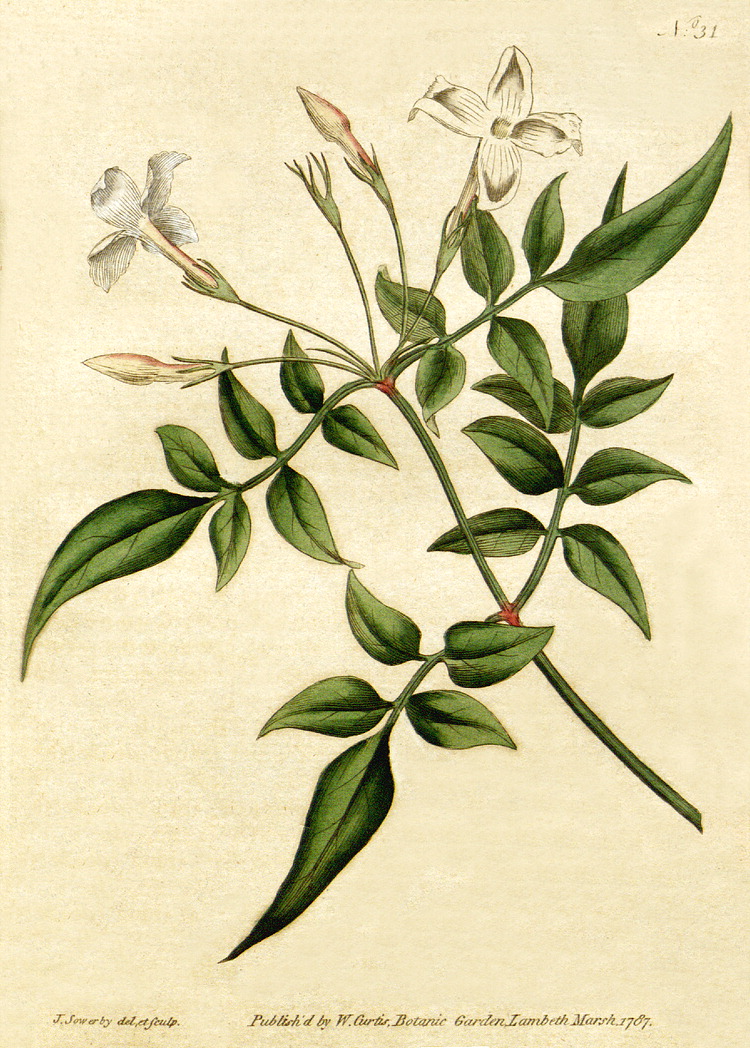
Common jasmine, or Jasminum officinale, is a vigorous deciduous climbing vine native to the Caucasus and the Himalayas, reaching heights of up to 10 m (33 ft). It is the primary source of jasmine essential oil and is widely grown in temperate gardens for its clusters of white, star-shaped flowers that release a heavy fragrance at night.
This species requires a sturdy support system and regular pruning to prevent it from becoming a tangled mass of unproductive wood. Unlike the similar star jasmine (Trachelospermum jasminoides), common jasmine is often deciduous in cooler climates and produces its flowers on the current season’s growth.
Key Facts
- Light: Full sun to very light partial shade
- Water: Keep soil moist but never waterlogged
- Hardiness: USDA zones 7-10; tolerates down to -15 °C (5 °F)
- Soil: Well-drained, fertile loam or chalky soil
- Growth: Fast-growing climber up to 10 m (33 ft)
Is Common Jasmine Right for Your Garden?
Common jasmine is best suited for gardens where its intense fragrance can be enjoyed near seating areas or windows. Because it can grow 3-5 m (10-16 ft) in a single season once established, you must provide a large trellis, fence, or pergola to accommodate its weight. It is an ideal choice for gardeners in USDA zones 7 through 10 who want a traditional cottage garden aesthetic.
This vine is not a self-clinger; it twists its stems around supports rather than using tendrils or suckers. You will need to tie in the young shoots manually during the first two years of growth. It is also a high-maintenance plant in terms of pruning, as neglected specimens quickly become a messy thicket of dead stems and sparse foliage.
Identifying Common Jasmine by Leaves and Flowers
Common jasmine is identified by its pinnate leaves, which typically consist of 5 to 9 individual leaflets. The leaflets are dark green, lance-shaped, and arranged in opposite pairs along the stem, with the terminal leaflet being slightly larger than the others. In late spring, the plant produces pointed pinkish-red buds that open into pure white, five-petaled flowers.
- Flower size: 2 cm (0.8 in) in diameter
- Leaflet length: 1-6 cm (0.4-2.4 in)
- Stem type: Slender, green, and wiry when young
- Fragrance: Sweet, musky, and strongest after sunset
Choosing the Best Site for Common Jasmine
For the best flower production, plant common jasmine in a south-facing or west-facing position that receives at least 6 hours of direct sunlight. While it can survive in partial shade, the stems will become leggy and the scent will be significantly weaker. In colder regions, a site against a warm brick wall provides a microclimate that protects the roots from deep freezes.
The soil must be well-drained to prevent root rot, especially during wet winters. It thrives in loamy soil enriched with organic matter but is surprisingly tolerant of alkaline or chalky conditions. Avoid planting it in low-lying frost pockets where cold air settles, as late spring frosts can damage the emerging flower buds.
How to Plant and Support Common Jasmine Vines
Plant common jasmine in spring or autumn, ensuring the root ball is level with the surrounding soil surface. If planting against a wall, place the plant at least 30 cm (12 in) away from the base to avoid the “rain shadow” where soil remains too dry. Dig a hole twice the width of the pot and incorporate well-rotted garden compost or leaf mould.
- Spacing: 1.5-2.5 m (5-8 ft) between plants
- Initial support: Use bamboo canes to lead stems toward the permanent trellis
- Tying: Use soft garden twine to secure main stems loosely
- Mulching: Apply 5 cm (2 in) of bark or compost to retain moisture
Watering and Feeding Schedule
Water common jasmine once or twice a week during the first growing season to ensure the root system establishes deeply. Established plants are moderately drought-tolerant but will stop flowering if the soil dries out completely during a summer heatwave. Aim to keep the soil consistently moist but not saturated, particularly from June through September.
Apply a high-potash liquid fertilizer, such as tomato feed, every two weeks during the flowering season. In early spring, top-dress the base of the plant with a balanced granular fertilizer. Avoid over-applying nitrogen-rich fertilizers, as this will result in excessive leaf growth at the expense of the fragrant flowers.
How to Prune Common Jasmine for Better Growth
Prune common jasmine immediately after flowering in late summer or early autumn. This timing allows the plant to develop new wood over the winter, which will carry next year’s blooms. Start by removing the “three Ds”: dead, damaged, or diseased wood, then thin out overcrowded stems to improve air circulation and light penetration.
If a plant has become overgrown and bare at the base, you can perform restorative pruning by cutting the entire vine back to 60 cm (24 in) from the ground in early spring. This will sacrifice one year of flowers but results in a much healthier, bushier plant. Regular maintenance involves cutting back flowered side shoots to a strong pair of buds near the main framework.
Common Jasmine Problems: Pests and Lack of Flowers
The most frequent issue is a lack of flowers, usually caused by insufficient sunlight or pruning at the wrong time of year. If the plant is in deep shade, it will focus all its energy on vine length rather than buds. Additionally, if you prune in early spring, you may accidentally remove the developing flower sites for that season.
- Aphids: Check shoot tips for greenfly; wash off with a firm water spray
- Mealybugs: Look for white, cottony tufts in leaf axils; treat with horticultural oil
- Yellow leaves: Often indicates waterlogged soil or a magnesium deficiency
- Spider mites: Occur in hot, dry conditions; increase humidity with misting
Common Jasmine Winter Care and Hardiness
In zones 7 and 8, common jasmine requires a thick mulch of organic matter over the root zone before the first hard frost. While the top growth may die back during an exceptionally cold winter, the roots usually survive and will send up new shoots in spring. In colder climates, it is often grown in large containers and moved into a frost-free greenhouse or conservatory for the winter months.
If growing common jasmine indoors during winter, keep it in a bright, unheated room where temperatures stay between 5-10 °C (40-50 °F). This “chill period” is necessary to trigger flower production for the following summer. Avoid placing it near central heating vents, as the dry air will cause the foliage to drop prematurely.
Year-Round Care for Common Jasmine
| Spring | Apply a balanced granular fertilizer and a fresh layer of mulch. Tie in new climbing shoots to their supports as they emerge. |
|---|---|
| Summer | Water twice weekly during dry spells. Feed with a high-potash liquid fertilizer every 14 days to prolong the blooming period. |
| Autumn | Prune back flowered side shoots by roughly one-third. Remove any dead or crossing branches to maintain a tidy shape. |
| Winter | Protect the base of the plant with 10 cm (4 in) of straw or bark mulch in cold regions. Move container plants to a sheltered spot. |
Common Jasmine Diagnosis and Fixes
| What you see | Likely cause | What to do |
|---|---|---|
| No flowers despite healthy growth | Too much shade or nitrogen | Move to a sunnier spot and switch to a high-potash fertilizer. |
| Sticky residue on leaves | Aphid or scale infestation | Spray the foliage with insecticidal soap or neem oil. |
| Brittle, brown leaves in winter | Frost damage or windburn | Prune out dead wood in spring; the plant will likely regrow from the base. |
Popular Common Jasmine Cultivars
- 'Argenteovariegatum' – leaves edged with creamy white
- 'Aureum' – foliage splashed with yellow variegation
- 'Fiona Sunrise' – bright golden-yellow leaves all summer
- 'Clotted Cream' – larger, cream-colored flowers with intense scent
- 'Inverleith' – deep red buds opening to white flowers
Best Companion Plants for Jasmine
Pair common jasmine with late-flowering clematis (Clematis viticella) to provide a contrast in flower shape and color. The fine texture of jasmine leaves also complements the bold, glossy foliage of climbing roses (Rosa). For a multi-sensory experience, plant it alongside other fragrant species that bloom at different times.
- Star Jasmine (Trachelospermum jasminoides): Provides evergreen cover when common jasmine is bare
- Honeysuckle (Lonicera periclymenum): Overlaps in scent and growth habit
- Mexican Orange Blossom (Choisya ternata): Offers a similar citrus-jasmine scent in shrub form
- Lavender (Lavandula angustifolia): Masks the bare lower stems of the jasmine vine
Frequently Asked Questions
What is the difference between common jasmine and star jasmine?
Common jasmine (Jasminum officinale) is a deciduous vine with pinnate leaves made of several leaflets, while star jasmine (Trachelospermum jasminoides) is an evergreen with thick, leathery, single leaves.
Can I grow common jasmine indoors?
Yes, but it needs a very bright window and a cool period in winter (around 10 °C / 50 °F) to set flower buds for the next year.
Is common jasmine toxic to cats or dogs?
No, Jasminum officinale is considered non-toxic to cats, dogs, and horses according to the ASPCA.
Why does my jasmine only smell at night?
Common jasmine is pollinated by nocturnal moths, so it has evolved to increase its scent production as light levels drop to attract them.
How fast does common jasmine grow?
In ideal conditions with plenty of sun and water, it can grow up to 3-5 m (10-16 ft) in a single year.
Information about traditional or historical uses is provided for educational interest only and is not medical advice. Do not use any plant to treat a condition without speaking to a qualified professional.
Sources & Verification
Taxonomy and distribution are checked against the databases below. Care guidance is written for cultivated species only and reviewed by our editor. How We Build Plant Profiles →