

Common honeysuckle (Lonicera periclymenum) is a woody deciduous climber native to European woodlands and hedgerows, known for its clusters of creamy-white, two-lipped flowers that flush red or purple. The blooms release a concentrated evening perfume adapted to attract nocturnal hawk-moths.
A mature vine reaches 4–7 m (13–23 ft) in height and fails rapidly if planted in dry, sun-baked soil without root shading. It climbs solely by twining its stems, which means it requires a dedicated trellis or post system rather than smooth brickwork to ascend.
Key Facts
- Light: Full sun to partial shade, with roots shaded
- Water: Moderate; keep soil evenly moist during establishment
- Height: 4–7 m (13–23 ft) with a 1.5–2 m spread
- Pruning: Group 2 climber; prune directly after summer flowering
- Toxicity: Berries are mildly toxic to humans and pets
- Hardiness: USDA Zones 4–9; fully frost-hardy
Growing Common Honeysuckle: What to Expect
Common honeysuckle is a vigorous twining climber that requires firm support and consistently cool roots to stay healthy. In practical terms, this plant demands an active approach to guiding its young shoots during spring, as uncontrolled stems quickly tangle into an impassable knot.
Expect rapid vegetative extension once roots establish, with new shoots lengthening by 1–2 m (3.3–6.6 ft) per season. Because the vine drops all of its foliage in late autumn, it leaves bare, ropy stems through winter. It suits pergolas, boundary fences, and wildlife hedgerows where intense evening fragrance is prioritized over year-round privacy screening.
How to Identify Lonicera periclymenum
Botanical identification relies on separate, distinct upper leaf pairs beneath the terminal flower heads. Unlike trumpet honeysuckle (Lonicera sempervirens), the upper leaves of common honeysuckle never fuse into a continuous round disk or cup around the stem.
Key diagnostic features include:
- Leaves: Opposite, ovate to elliptic, 3–7 cm (1.2–2.8 in) long, dark green above and distinctly blue-green (glaucous) beneath.
- Stems: Slender, reddish-brown when young, maturing into fibrous, peeling grey-brown woody bark that twines clockwise.
- Flowers: Tubular, 4–5 cm (1.6–2.0 in) long with two distinct lips; petal tubes open white or cream, age to rich yellow, and carry heavy reddish-purple streaks along the exterior.
- Fruit: Tight terminal clusters of globe-shaped, glossy red berries measuring 6–8 mm (0.2–0.3 in) in diameter.
Where to Plant Common Honeysuckle
Select a location where the root system receives full shade while the upper foliage receives 4–6 hours of direct sun. This replicates European woodland margins where the base remains protected under leaf litter while the top climbs into canopy light.
Avoid dry, exposed southwest-facing walls without ground cover, as radiant heat dries the soil and triggers severe mildew attacks. Wet, poorly draining hollows will rot the root system over winter. Plant along east- or west-facing boundaries, against open-slat fencing, or at the base of mature deciduous shrubs that cast protective low-level shade.
Planting and Trellising Methods
Set the rootball 5 cm (2 in) deeper than it stood in the nursery pot to encourage strong basal sprouting. Space individual plants 1.5–2 m (5–6.6 ft) apart along fences or walls.
Follow these steps during planting:
- Position the rootball at least 30–45 cm (12–18 in) away from masonry or wooden panels to ensure rainfall reaches the roots.
- Tilt the rootball at a 45-degree angle toward the support structure before backfilling.
- Incorporate well-rotted leafmould or compost into the native soil to improve moisture retention without adding excessive salts.
- Secure initial main stems to horizontal support wires spaced 30 cm (12 in) apart using soft twine; do not let stems strangle themselves around thick posts.
Watering and Feeding Schedules
Apply 15–20 litres (4–5 gallons) of water per week during the first two growing seasons whenever rainfall falls below 25 mm (1 in). Mature specimens tolerate brief dry spells but drop flower buds prematurely if the root zone dries out completely during flowering.
Top-dress the soil annually in early March with a 5–7 cm (2–3 in) blanket of well-rotted garden compost or bark chips, keeping the mulch 10 cm (4 in) clear of the woody stems. Avoid concentrated high-nitrogen synthetic fertilizers. Excess nitrogen stimulates soft, sappy foliage that attracts heavy aphid infestations and invites powdery mildew spores.
How to Prune Common Honeysuckle
Prune common honeysuckle in late summer immediately after flowering finishes, or carry out maintenance shaping during late winter while the plant is dormant. Flowers develop on current-year laterals that emerge from the previous year’s woody growth.
Maintain the vine using these targeted cuts:
- Cut back flowering side shoots to 2–3 healthy buds from the structural frame to promote flowering spurs for next year.
- Thin out weak, dead, or crossing shoots at the base to improve internal air movement.
- Retain some ripening berry stems if you wish to feed wild birds into autumn.
- Renovate old, tangled, bare-bottomed vines by cutting all woody stems back to 60 cm (24 in) above the soil in February; fresh basal shoots will emerge by May.
Propagating Common Honeysuckle
The most dependable propagation method is taking semi-ripe nodal cuttings 10–15 cm (4–6 in) long during July or August. Softwood cuttings taken in May also take root readily under mist, but rot faster if excess humidity collects on the leaves.
To take cuttings, select current-season stems that are firm at the base but soft at the tip. Trim directly below a node, strip the lowest pair of leaves, and insert the stem into a 50:50 mix of perlite and peat-free potting compost. Keep the container in bright, indirect light at 18–21 °C (65–70 °F). Roots emerge within three to four weeks, allowing you to pot them up separately before winter dormancy.
Common Honeysuckle Diseases and Pest Problems
Powdery mildew (Erysiphe lonicerae) and the honeysuckle aphid (Hyadaphis tataricae) are the two most damaging problems for this species. Both target drought-stressed plants grown in still, dry air.
Manage common vine issues with these specific measures:
- Powdery mildew: Leaves develop a white powdery film, curl, and drop; prune out badly affected stems, keep roots mulched, and improve base airflow.
- Honeysuckle aphids: Pests congregate on shoot tips in May, curling foliage and stunting flowers; wash them off with a direct water spray or apply insecticidal soap.
- Cercospora leaf spot: Irregular brown spots develop on older foliage; remove fallen autumn leaves from the base to eliminate overwintering fungal spores.
- Stem borer caterpillars: Entire shoots wilt suddenly; locate the entry hole on the vine, prune below the damaged section, and destroy the infested wood.
Flower Fragrance and Berry Toxicity
The intense scent of common honeysuckle peaks from dusk through the night, matching the flight periods of elephant hawk-moths (Deilephila elpenor) and privet hawk-moths (Sphingius ligustri). Long-tongued moths are among the few insects capable of reaching nectar at the bottom of the 30 mm floral tube.
Following pollination, the blooms develop clusters of translucent red berries that ripen between August and October. These berries are not edible for humans or domestic pets. Ingestion of raw berries causes vomiting, abdominal cramping, and diarrhea due to toxic saponins, though thrushes, blackbirds, and fieldfares consume them safely and distribute the seeds.
Seasonal Tasks for Common Honeysuckle
| Spring | Apply a 5 cm (2 in) mulch of compost over the root zone, keeping it clear of the stems. Tie emerging shoots to horizontal wires before stems twist together. |
|---|---|
| Summer | Water thoroughly once a week during hot periods. Prune flowered side shoots back to 2–3 buds once the main flush finishes, leaving seed heads only if berries are wanted. |
| Autumn | Clear fallen foliage from around the base to prevent leaf spot spores from overwintering. Collect ripe red berries if extracting seeds for cold stratification. |
| Winter | Cut out old, dead, or congested wood down to the main framework while the plant is leafless. Re-tie loose main stems to wires to prevent wind-rock damage. |
Troubleshooting Common Honeysuckle Problems
| What you see | Likely cause | What to do |
|---|---|---|
| White powdery coating on foliage and distorted flower buds | Powdery mildew infection driven by dry roots and poor air movement | Water the base deeply, apply a 7 cm (3 in) moisture-retaining mulch, and thin out overcrowded center shoots. |
| Distorted, tightly curled young shoot tips coated in sticky residue | Honeysuckle aphid infestation feeding on sap | Dislodge colonies with a strong jet of water or treat early infestations with insecticidal soap. |
| Bare, woody stems at the bottom with flowers only at the top | Natural apical dominance and insufficient light at the base | Train young shoots horizontally rather than vertically to trigger lateral flowering buds lower on the vine. |
| Yellowing leaves that drop prematurely during midsummer | Root-zone drought or heat stress against a sunny wall | Soak the root area with 20 litres (5 gallons) of water weekly and plant low shrubs to shade the soil. |
Notable Common Honeysuckle Cultivars
- ‘Serotina’ – late-flowering variety with dark purplish-red outer tubes
- ‘Graham Thomas’ – pure white blooms aging to clear amber-yellow
- ‘Belgica’ – early-flowering cultivar with reddish-purple streaks and bright red berries
- ‘Scentsation’ – exceptionally fragrant selection with creamy-yellow blooms from May to July
- ‘Sweet Sue’ – compact selection producing pale yellow blooms with minimal pink shading
Companion Plants for Lonicera periclymenum
Pair common honeysuckle with plants that cast ground shade over its root perimeter without competing aggressively for soil moisture. Underplanting keeps root zones naturally cool and moist.
Effective companion choices include:
- Guelder rose (Viburnum opulus): A native deciduous shrub providing complementary white spring flowers and upright support branches.
- Hart’s tongue fern (Asplenium scolopendrium): Evergreen, glossy fronds that carpet the shaded soil directly around the climber’s root flare.
- Sweet mock orange (Philadelphus coronarius): Offers dense lower branching to shield honeysuckle bases while extending the garden’s white-flower fragrance season.
- Masterwort (Astrantia major): Herbaceous perennial that tolerates partial shade and produces pincushion blooms around the lower climbing wires.
Frequently Asked Questions
Are common honeysuckle berries edible?
No, common honeysuckle berries are mildly toxic and should not be eaten. They contain saponins that cause nausea, stomach cramps, and diarrhea in humans and household pets.
Is common honeysuckle evergreen?
No, common honeysuckle is fully deciduous. It drops its foliage completely in late autumn and remains bare until fresh buds break in early spring.
How do you tell common honeysuckle from Japanese honeysuckle?
Common honeysuckle (Lonicera periclymenum) has separate leaves beneath the blooms, produces bright red berries, and is deciduous. Japanese honeysuckle (Lonicera japonica) is semi-evergreen or evergreen, features black berries, and spreads aggressively via stolons.
Does common honeysuckle damage brick walls?
No, common honeysuckle does not produce adhesive pads or aerial clinging roots like ivy. It climbs entirely by twining its stems and requires a trellis, wire framework, or mesh attached to the wall.
Why is my common honeysuckle not flowering?
A lack of flowers is usually caused by excessive shade, severe winter pruning that removed flowering spurs, or too much high-nitrogen fertilizer. Ensure the upper vine receives at least 4 hours of sun and stop using nitrogen feeds.
Sources & Verification
Taxonomy and distribution are checked against the databases below. Care guidance is written for cultivated species only and reviewed by our editor. How We Build Plant Profiles →
- Royal Horticultural SocietyCultivar profiles and RHS pruning group classifications
- Kew Plants of the World OnlineNative distribution, synonymy, and botanical taxonomy
- NC State Extension Gardener Plant ToolboxClimbing traits, landscape uses, and toxicity profile
- GBIF — Global Biodiversity Information Facilitytaxonomy, synonyms, occurrence records
- Wikipediageneral reference
More in Lonicera
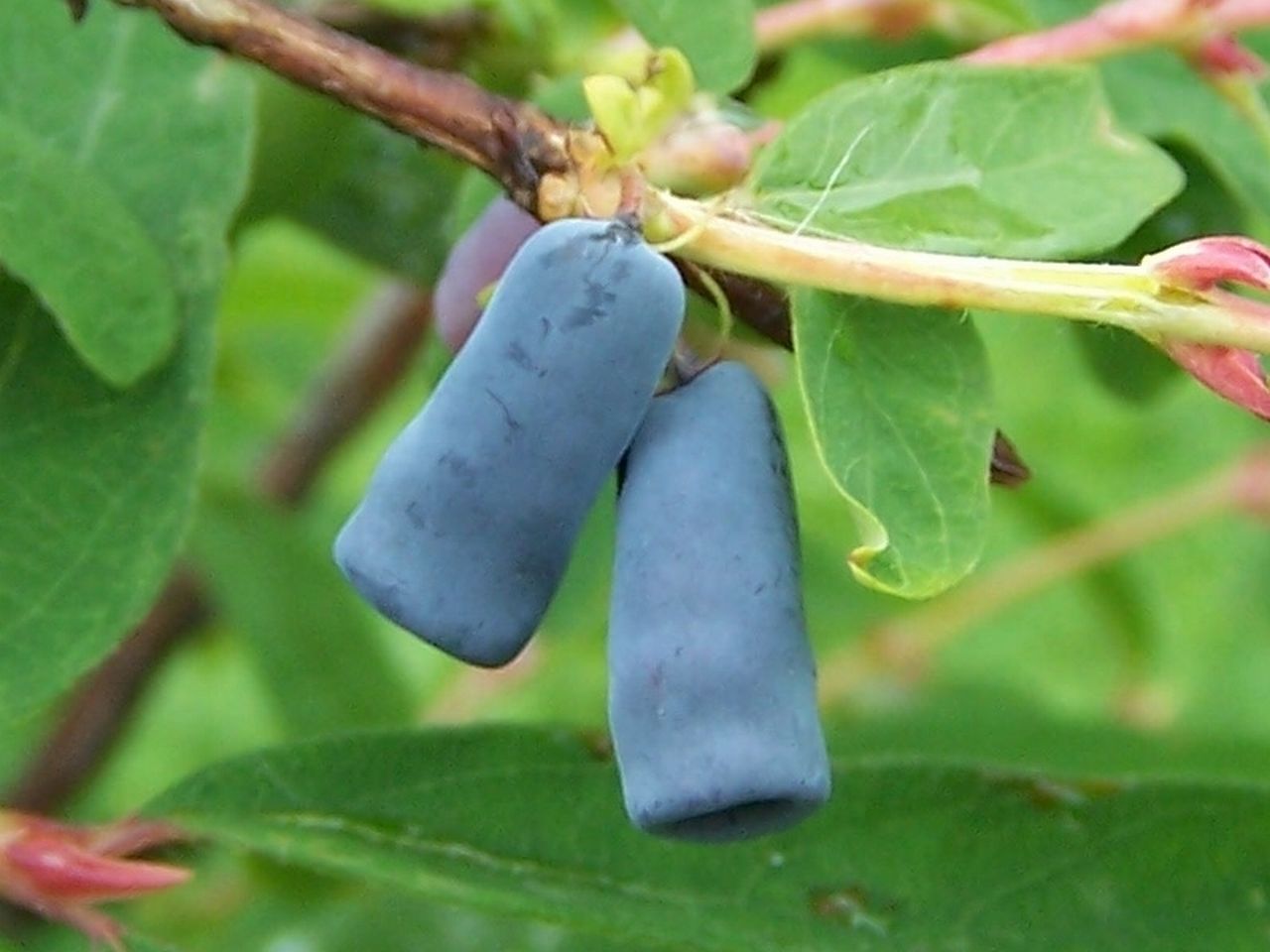
Honeyberry
Lonicera caerulea
☀️ Full Sun 💧 Moderate

Japanese Honeysuckle
Lonicera japonica
☀️ Full Sun 💧 Moderate

Winter Honeysuckle
Lonicera fragrantissima
☀️ Partial Sun 💧 Moderate

Box Honeysuckle
Lonicera pileata
☀️ Partial Sun 💧 Moderate

Morrow’s Honeysuckle
Lonicera morrowii
☀️ Partial Sun 💧 Moderate