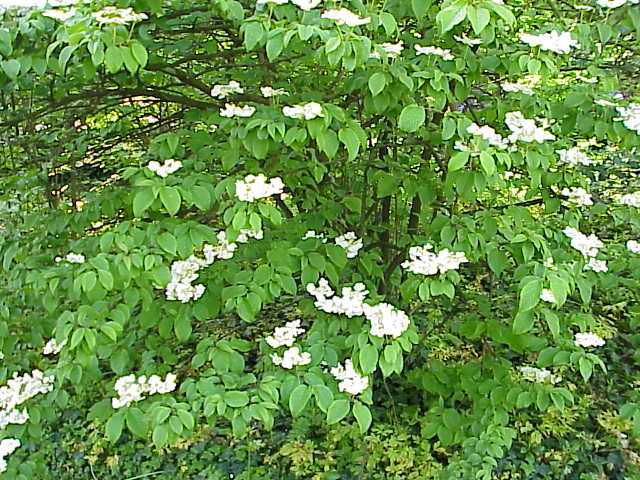
Guelder rose (Viburnum opulus) is a deciduous, multi-stemmed native European shrub that produces flat lacecap white flowerheads in late spring and translucent red berries in autumn.
It thrives in damp ground across the UK and Ireland, growing up to 4 m (13 ft) tall and serving as an exceptional hedging plant for wildlife gardens.
Key Facts
- Height: 2 to 4 m (6.5 to 13 ft)
- Soil: Moist, fertile clay or loam
- Position: Full sun to partial shade
- Pruning Time: Immediately after spring flowering
- Toxicity: Raw berries are mildly toxic
Living with Guelder Rose
Guelder rose fits best into mixed native hedges, damp woodland edges, and naturalised habitat gardens where space allows its spreading form to develop. Expect a shrub that reaches 4 m (13 ft) in height and spread within 10 years, making it too large for small suburban borders without regular trimming.
Key characteristics for garden planning include:
- Strong tolerance for heavy clay and waterlogged soil
- High wildlife value for pollinators and birds
- Seasonal changes from spring blooms to autumn foliage and persistent winter berries
How to Identify a Guelder Rose Shrub
Guelder rose produces maple-like, three-lobed leaves measuring 5–10 cm (2–4 in) long, arranged in opposite pairs along greyish stems. In late spring, flat-topped flowerheads spanning 10 cm (4 in) across display an outer ring of large sterile florets surrounding tiny fertile blooms.
Distinctive features throughout the year:
- Leaves feature distinct palmate veining and turn deep crimson in October
- Translucent red berries measure 8–10 mm (0.3–0.4 in) and persist into winter
- Bark develops shallow vertical fissures on older wood
Guelder Rose Planting Position and Light
Plant guelder rose in a site receiving at least 4 hours of direct sunlight daily, though it tolerates partial shade well. Moist, fertile soils with a pH between 6.0 and 8.0 produce the densest growth and heaviest flower crops.
Site considerations for success:
- Avoid dry, exposed hilltops where soil moisture dries out quickly
- Tolerates seasonally waterlogged soil near pond edges or streams
- Thrives in UK and Irish lowland landscapes, from coastal regions near Southport to inland woodlands
How to Plant Guelder Rose
Space bare-root or container-grown plants 45–60 cm (18–24 in) apart when establishing a native hedge, or 2–3 m (6.5–10 ft) apart for specimen shrubs. Plant between November and March while the shrub is dormant, provided the ground is not frozen.
Steps for planting:
- Dig a pit twice as wide as the root ball and equal in depth
- Incorporate well-rotted leaf mould into heavy clay or light sandy soils
- Backfill carefully, firming soil around roots to eliminate air pockets
- Water with 10–15 litres of water immediately after planting
Watering and Feeding Requirements
Water young plants with 10 litres of water weekly during their first summer when rain falls below 25 mm (1 in) per week. Mature shrubs established in moisture-retentive ground rarely require supplemental watering except during extended heatwaves.
Feeding routine:
- Apply a 5 cm (2 in) mulch layer of composted bark or leaf mould each spring
- Scatter a balanced organic fertilizer at 50 g/m² around the drip line in March
- Avoid excessive nitrogen fertilizers, which spur soft stem growth vulnerable to aphids
Guelder Rose Pruning UK and Timing
Prune guelder rose in June or July immediately after flower petals drop to avoid removing next year’s blossom buds. Cut back one-in-three older stems to 15 cm (6 in) above ground level to renovate overgrown specimens.
Pruning guidelines by hedge type:
- For formal hedges, trim sides lightly twice a year in early summer and autumn
- For informal wildlife hedges, prune annually after flowering, leaving berry-bearing shoots intact
- Remove dead, diseased, or crossing branches back to healthy side shoots
Propagating Guelder Rose
Take semi-ripe cuttings measuring 10–15 cm (4–6 in) long in midsummer from current season shoots. Cuttings root within 4 to 6 weeks when placed in a moist 50:50 peat-free compost and perlite mixture.
Alternative propagation methods:
- Hardwood cuttings taken in late autumn using 20 cm (8 in) dormant stems
- Sowing wild-collected seed outdoors in autumn (requires 18 months of cold stratification to germinate)
- Layering flexible lower branches into soil in spring
Pests and Diseases
Viburnum beetle (Lochmaea suturalis) larvae cause significant skeletonisation of foliage between May and June. Check lower leaf surfaces regularly and hand-pick larvae or spray severe infestations with organic insecticidal soap.
Common problems and indicators:
- Skeletonised leaves in early summer indicate viburnum beetle feeding
- White powdery coating on leaves signals powdery mildew in dry shade
- Black aphid clusters on spring shoots cause leaf curling
Winter Care and Cold Hardiness
Guelder rose is fully hardy down to -20 °C (-4 °F), corresponding to USDA hardiness zones 3 through 8. It requires no frost protection in the UK, Ireland, or central Europe during winter months.
Winter maintenance steps:
- Leave persistent red berries on stems as winter food for thrushes and waxwings
- Apply fresh organic mulch over root zones in November to retain soil moisture
- Check mature hedges for storm-damaged branches and clean-cut splinters
Flowers and Guelder Rose Berries
Lacecap flowerheads open in late May, measuring 5–10 cm (2–4 in) across, featuring sterile outer florets that attract hoverflies and bees. Glossy red berries mature in September, measuring 8–10 mm (0.3–0.4 in) in diameter.
Berry toxicity and culinary notes:
- Raw berries contain saponins and are mildly toxic, causing nausea if consumed fresh
- Boiling berries destroys toxic compounds, allowing traditional use in preserves or syrups
- Berries soft after first frost are eaten readily by mistle thrushes and bullfinches
Companion Plants for Guelder Rose
Pair guelder rose with native hedging species like hawthorn (Crataegus monogyna) and common hazel (Corylus avellana) to build a dense wildlife corridor. Underplant with shade-tolerant woodland species that thrive in damp soil.
Recommended companion species:
- Dogwood (Cornus sanguinea) for autumn color and red winter stems
- Wayfaring tree (Viburnum lantana) for contrasting grey-green foliage
- Spindle (Euonymus europaeus) for pink seed capsules and orange seeds
- Wood anemone (Anemone nemorosa) as early spring groundcover underneath
Frequently Asked Questions
Is guelder rose good for wildlife?
Yes, guelder rose provides high wildlife value, offering nectar for hoverflies and bees in spring and bright red berries for birds like thrushes in winter.
Are guelder rose berries edible?
Raw guelder rose berries are mildly toxic and bitter, causing stomach upset if eaten fresh. However, cooking or boiling destroys the mild toxins, allowing them to be made into traditional jellies.
Why is guelder rose called crampbark?
The common name crampbark comes from the traditional use of its dried inner bark in herbal medicine to relieve smooth muscle cramps and spasms.
Is guelder rose a tree or a shrub?
Guelder rose is a multi-stemmed deciduous shrub, though older unpruned plants can reach tree-like proportions up to 4 m (13 ft) tall.
When should I prune guelder rose in the UK?
Prune guelder rose in early summer immediately after flower petals drop, typically in June or July, so you do not cut off next year's flower buds.
Information about traditional or historical uses is provided for educational interest only and is not medical advice. Do not use any plant to treat a condition without speaking to a qualified professional.
Sources & Verification
Taxonomy and distribution are checked against the databases below. Care guidance is written for cultivated species only and reviewed by our editor. How We Build Plant Profiles →