Viburnaceae Family: List of Elderberry and Viburnum Plants and How to Tell Them
10 plant profiles · Identify species in the Viburnaceae family. Compare Elderberry and Viburnum shrubs by their opposite leaves, berry clusters, and flowering habits.
The Viburnaceae family consists primarily of woody shrubs and small trees found throughout temperate regions of the Northern Hemisphere. You can identify these plants by their opposite leaf arrangement and small, five-petaled flowers that usually grow in flat-topped or rounded clusters called cymes. While many produce berries used in jams, others are strictly ornamental or possess toxic properties when raw.
- Leaf structure: Sambucus species have compound leaves; Viburnum species have simple leaves.
- Fruit: Most produce small drupes that turn from red to black or blue.
- Stems: Many species have a soft, pithy center in their branches.
Choosing a plant depends on your space and soil. If you want large, pinnate leaves and edible fruit for cooking, look at the American Elderberry (Sambucus canadensis) or the common Elder (Sambucus nigra). For garden structure, the Japanese Snowball (Viburnum plicatum) reaches 3 m (10 ft) with tiered horizontal branching. If you need year-round privacy, Laurustinus (Viburnum tinus) is one of the few evergreen members, flowering in temperatures as low as 5 °C (41 °F).
Distinguishing between the two main genera is straightforward once you look at the foliage. Sambucus species, such as the Red Elderberry (Sambucus racemosa) and the herbaceous Danewort (Sambucus ebulus), have compound leaves divided into leaflets. In contrast, Viburnum species like the Wayfaring Tree (Viburnum lantana) and Guelder Rose (Viburnum opulus) have simple leaves that may be smooth, lobed, or deeply veined.

American Elderberry
Sambucus canadensis
☀️ Full Sun 💧 High
Danewort
Sambucus ebulus
☀️ Full Sun 💧 Moderate

Elder
Sambucus nigra
☀️ Full Sun 💧 Moderate

Guelder Rose
Viburnum opulus
☀️ Partial Sun 💧 Moderate

High-Bush Cranberry
Viburnum edule
☀️ Partial Sun 💧 High
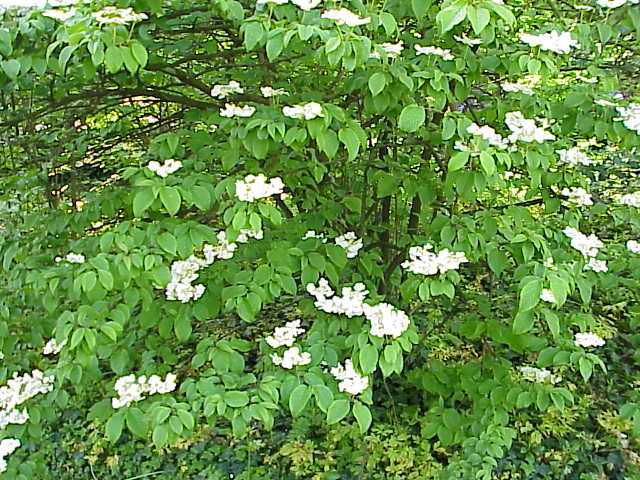
Japanese Snowball
Viburnum plicatum
☀️ Partial Sun 💧 Moderate

Laurustinus
Viburnum tinus
☀️ Partial Sun 💧 Moderate

Nannyberry
Viburnum lentago
☀️ Partial Sun 💧 Moderate

Red Elderberry
Sambucus racemosa
☀️ Full Sun 💧 Moderate

Wayfaring Tree
Viburnum lantana
☀️ Full Sun 💧 Low
Common Questions
Are all Viburnaceae berries edible?
No, while some like High-Bush Cranberry (Viburnum edule) are used for preserves, others like Danewort are toxic and should never be consumed.
How can you tell a Viburnum from an Elderberry?
Check the leaves; Viburnums have simple leaves, while Elderberries have pinnately compound leaves made of multiple leaflets arranged along a central stalk.
Do Viburnaceae plants grow in shade?
Most species prefer full sun to partial shade, though some like the Wayfaring Tree tolerate drier, alkaline soils in dappled light better than their relatives.