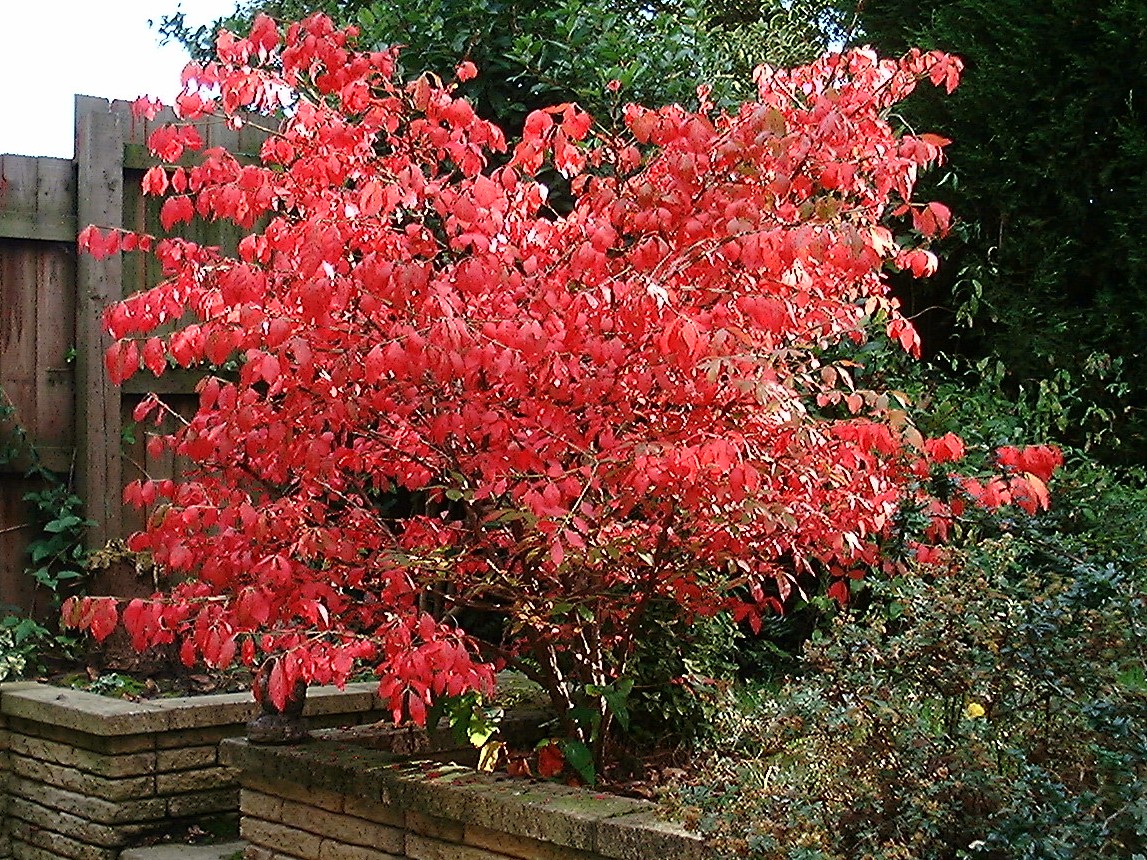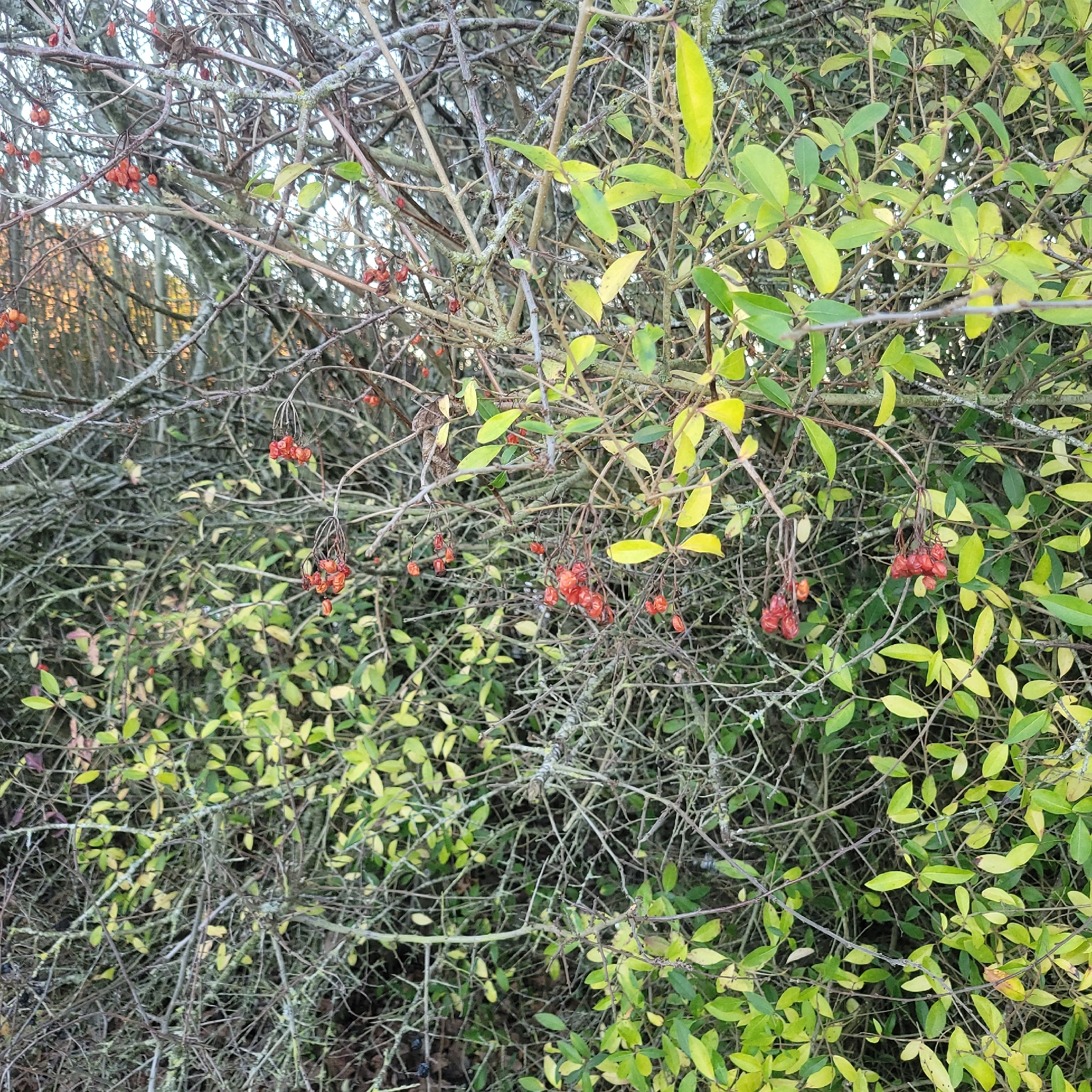
European spindle is a deciduous large shrub or small tree native across Europe and western Asia, recognised by its distinct four-lobed pink seed capsules that split to expose bright orange arils. Classified botanically as Euonymus europaeus, it grows wild along woodland margins, scrubby hillsides, and limestone hedges.
Horticulturists plant it for autumn fruit display and hedge cover in temperate gardens. Successful cultivation requires well-drained, alkaline or neutral soil and caution regarding its toxic parts.
Key Facts
- Height: reaches 3 to 6 m (10 to 20 ft)
- Soil preference: fertile, moist but well-drained limestone or chalk soils
- Sunlight: full sun to partial shade for best fruiting
- Fruit season: late summer through mid-winter
- Toxicity: severely toxic to humans, dogs, and horses if eaten
- USDA Hardiness: zones 4 through 7
Growing European Spindle: What to Expect
European spindle is an undemanding, cold-hardy deciduous shrub that requires minimal intervention once established in temperate ground. It fits naturalistic borders, native hedgerows, and woodland fringe plantings where seasonal interest matters more than formal shaping.
The plant spends late spring producing inconspicuous greenish blossoms that attract native hoverflies and bees. In autumn, the foliage shifts to shades of copper, purple, or red, accompanied by prominent pink seed pods that cling to bare branches into December.
Because every part of the plant contains poisonous alkaloids, position it away from livestock pasture and children’s play areas.
Identifying European Spindle: Fruit, Leaves, and Bark
European spindle is identified in autumn by its four-lobed pink capsules opening to reveal orange-coated seeds. Young twigs are distinctly green and four-angled, often developing narrow, greyish corky ridges as they mature.
The mature bark turns grey-brown with fine, shallow fissuring. Leaves are opposite, lanceolate to elliptic, measuring 3 to 8 cm (1.2 to 3.1 in) in length with finely serrate margins and pointed tips.
- Twigs: green, glabrous, prominently four-angled when young
- Flowers: 8 to 10 mm wide, four greenish-yellow petals in small clusters (cymes)
- Fruit: 10 to 15 mm wide, bright pink to carmine capsules splitting into four valves
- Seeds: white seeds enclosed by a fleshy, vivid orange aril
European Spindle Size and Growth Rate
European spindle grows at a moderate rate of 30 to 45 cm (12 to 18 in) per year, eventually reaching a height of 3 to 6 m (10 to 20 ft) and a spread of 2.5 to 4 m (8 to 13 ft). In shaded woodland conditions, it develops an open, irregular multi-stemmed structure.
When planted in open ground under direct sun, it forms a dense, rounded large shrub or can be trained onto a single trunk as a small ornamental tree. Root suckering can slowly widen the clump over several seasons if left unchecked.
Light and Soil Requirements for European Spindle
European spindle performs best in full sun to partial shade and strongly prefers alkaline or base-rich soils with a pH between 6.5 and 8.5. Full sunlight produces the heaviest fruit crops and the richest autumn leaf colour.
While it tolerates light clay and stony ground, waterlogged bogs cause root decay. Heavy chalk, rendzinas, and lime-rich loam mimic its native European calcareous scrub habitat.
- Sun exposure: minimum 6 hours of direct sunlight daily for maximum fruit set
- Soil moisture: moist but free-draining
- Soil chemistry: thrives in high-calcium, chalky, and nutrient-rich substrates
How to Plant a Spindle Tree
Plant dormant bare-root spindle specimens between November and March, or install containerised stock at any point from autumn through early spring. Dig a planting hole twice as wide as the root mass and equal to its depth.
Set the root flare level with the surrounding soil grade to avoid stem rot. Backfill with the native excavated soil without heavy amendments, firm gently to eliminate air pockets, and water with 10 to 15 litres (2.5 to 4 gallons) of water.
Spread an 8 cm (3 in) layer of woodchip mulch in a 60 cm (24 in) radius around the base, keeping the mulch 5 cm (2 in) clear of the woody stem.
Watering and Feeding Euonymus europaeus
Water young plants with 15 to 20 litres of water weekly during their first two growing seasons whenever rainfall drops below 25 mm (1 in). Established specimens possess deep root systems that tolerate ordinary summer dry spells without supplemental irrigation.
Fertiliser is rarely necessary in garden borders. On depleted, poor soils, top-dress the root zone in early spring with 50 grams per square metre of balanced organic fertiliser or well-rotted garden compost.
How and When to Prune European Spindle
Prune European spindle in late winter or early spring while the plant is fully dormant, just before bud swell. Flowers develop on current season’s shoots emerging from older wood, so light winter pruning will not eliminate the upcoming berry crop.
Remove dead, diseased, or crossing branches first to open the interior crown to airflow. When maintained as part of a formal or mixed hedge alongside common hawthorn (Crataegus monogyna) or blackthorn (Prunus spinosa), shear annually in late winter.
- Coppicing: established plants regenerate vigorously when cut back to 15 to 30 cm (6 to 12 in) above the ground in March
- Suckers: slice ground-level root shoots away with a sharp spade if a single trunk is desired
- Sanitation: wipe shears with 70% isopropyl alcohol between cuts to prevent pathogen spread
Pests, Diseases, and Invasiveness Concerns
European spindle is particularly susceptible to the spindle ermine moth (Yponomeuta cagnagella), whose caterpillars spin dense silken webs in May and can strip all foliage by June. While defoliation appears alarming, healthy shrubs re-leaf fully by midsummer.
The plant serves as the primary overwintering winter-host for the black bean aphid (Aphis fabae), which deposits eggs on the twigs before migrating onto garden broad beans in spring. In North America, escapees from cultivation have naturalised in forest understories across the Northeast and Midwest, leading several states to classify it as an invasive exotic.
- Powdery mildew: causes white dusting on leaves during humid, dry-root conditions; thin the canopy for air circulation
- Scale insects: treat persistent encrustations on stems using horticultural oil during late winter
- Root rot: avoid saturated ground where Phytophthora can destroy root structures
Winter Hardiness and Cold Protection
European spindle is hardy down to -30 °C (-22 °F), putting it comfortably within USDA Hardiness Zones 4 through 7. Mature plants require no winter fleece, wrapping, or specialised frost protection in temperate zones.
In container cultivation, insulate the root ball if temperatures remain below -10 °C (14 °F) for prolonged periods, as container soil freezes solid more rapidly than open ground. Autumn-set berries persist through freezing weather, providing winter landscape interest and emergency forage for thrushes and robins.
Landscape, Timber, and Historical Uses
Historically, the dense, hard, creamy-white wood of this shrub was turned on lathes to manufacture spinning spindles, giving the species its English name. Woodworkers also used it for toothpicks, knitting needles, musical instrument pegs, and high-grade artists’ charcoal.
Traditional herbal practices formerly utilised powdered seeds and bark as an external remedy against lice and skin parasites, though its severe internal toxicity led herbalists to abandon oral preparations. In modern gardens, it serves as a hedging plant, a wildlife corridor component, and a trained subject for deciduous bonsai culture.
Year-Round Care for European Spindle
| Spring | Inspect opening shoots in May for spindle ermine moth webbing and hand-pick small nests. Apply a 5 cm (2 in) mulch layer around the base before warm weather arrives. |
|---|---|
| Summer | Water young shrubs during drought periods lasting more than two weeks. Monitor neighboring vegetable plots for black bean aphid infestations migrating off the spindle. |
| Autumn | Collect ripe seed capsules if propagating by seed, wearing gloves during harvest. Rake and compost fallen leaves to eliminate overwintering powdery mildew spores. |
| Winter | Prune out dead, damaged, and crossing branches in January or February while dormant. Apply a dormant horticultural oil wash to stems if scale insects were observed. |
Common European Spindle Problems and Solutions
| What you see | Likely cause | What to do |
|---|---|---|
| Silken webbing enclosing bare, stripped twigs in late spring | Spindle ermine moth caterpillar infestation | Cut out and destroy the webbed nests by hand; the shrub will produce new leaves within four weeks. |
| Dense colonies of small black insects covering new shoot tips | Black bean aphid infestation | Blast colonies with a strong jet of water or spray with insecticidal soap. |
| White powdery film spreading across upper leaf surfaces in late summer | Powdery mildew infection triggered by dry roots and humid air | Mulch the root zone to conserve soil moisture and thin internal branches to improve air circulation. |
| Lack of pink seed pods despite healthy foliage | Heavy shade or immature specimen | Move the plant to a location receiving at least 6 hours of daily sunlight. |
Cultivars of European Spindle
- 'Red Cascade' – abundant rosy-pink fruits on arching branches
- 'Albus' – white outer capsules contrasting with orange arils
- 'Atrorubens' – deep crimson fruits and rich burgundy autumn foliage
Frequently Asked Questions
Is European spindle poisonous to humans and dogs?
Yes, all parts of European spindle are toxic, especially the pink fruits and seeds. They contain cardenolide glycosides and alkaloids that cause severe stomach pain, vomiting, diarrhoea, and irregular heartbeat if ingested.
Is European spindle tree invasive?
In North America, European spindle is classified as invasive in parts of the Northeast and Midwest where escaped garden plants crowd native forest understories. In Europe and the British Isles, it is a native species and forms part of balanced woodland ecosystems.
Can European spindle be grown as a bonsai?
Yes, European spindle is grown for bonsai due to its naturally fissured bark, small leaves under root restriction, and prominent autumn fruit display. Wire branches carefully in late spring, as the wood becomes brittle with age.
Why is it called a spindle tree?
The common name comes from the historical use of its hard, fine-grained wood to carve spinning spindles used in wool production. The timber resists splitting and finishes smooth without snagging wool fibres.
Do wild birds eat spindle berries?
Yes, European birds such as European robins (Erithacus rubecula), song thrushes (Turdus philomelos), and blackcaps (Sylvia atricapilla) consume the orange arils in winter without suffering harm, dispersing the seeds in their droppings.
Information about traditional or historical uses is provided for educational interest only and is not medical advice. Do not use any plant to treat a condition without speaking to a qualified professional.
Sources & Verification
Taxonomy and distribution are checked against the databases below. Care guidance is written for cultivated species only and reviewed by our editor. How We Build Plant Profiles →