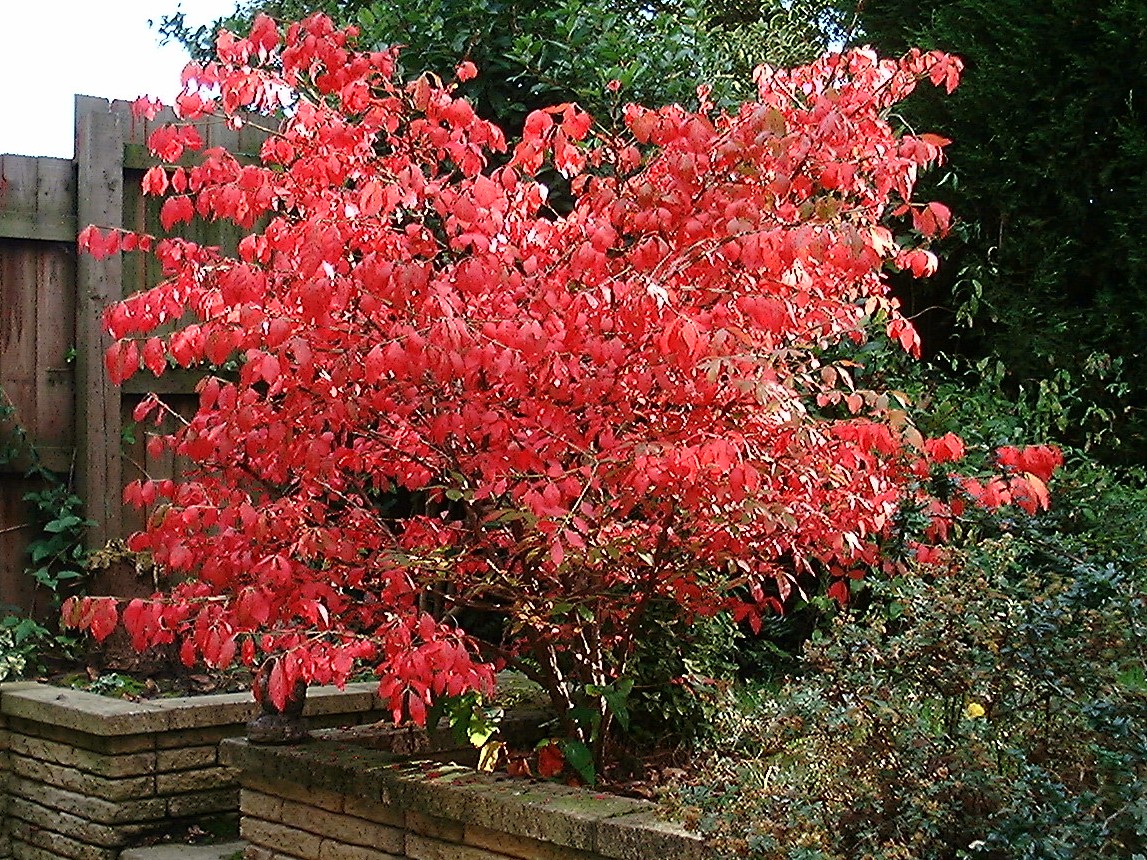
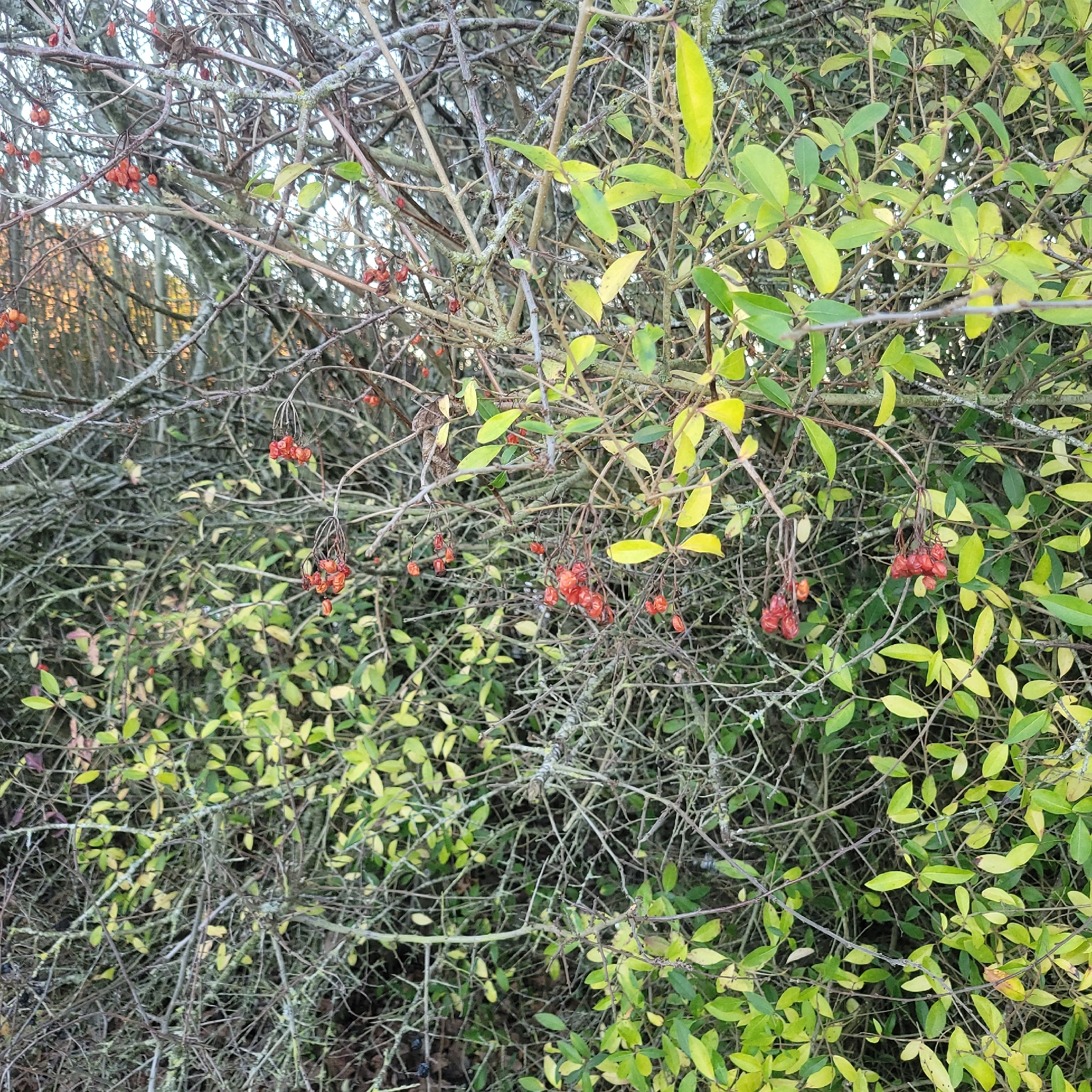
Wintercreeper is an evergreen woody plant from East Asia that can grow as a low-spreading groundcover, a mounded shrub, or a climbing vine using aerial roots. Known scientifically as Euonymus fortunei, it is most recognizable by its leathery, opposite leaves and its ability to scale trees up to 20 m (66 ft) high.
While functional for year-round foliage, this species is classified as highly invasive in many parts of the United States. You must monitor its spread closely to prevent it from escaping your garden and suffocating local native ecosystems.
Key Facts
- Water: once established, only during prolonged dry spells
- Hardiness: survives temperatures down to -30 °C (-22 °F)
- Growth: spreads up to 1 m (3 ft) per year
- Light: thrives in anything from full sun to deep shade
- Spread: climbs 20 m (66 ft) or spreads indefinitely
Is Wintercreeper Right for Your Garden?
Growing wintercreeper requires strict containment because of its invasive nature in North America. It suits gardeners who need a plant that survives in difficult, shaded spots where nothing else grows, such as under the canopy of large maples (Acer species). However, it is not suitable for gardens bordering natural woodlands or parks.
You should choose a cultivar that fits your space, as habits vary wildly between types. Some stay as low mounds while others will immediately begin to climb any vertical surface they touch. If you cannot commit to annual pruning, this plant will quickly overwhelm nearby shrubs and fences.
- Use it for erosion control on steep, dry banks.
- Avoid planting it near wooden structures you do not want damaged by aerial roots.
- Check local invasive species lists before purchasing.
How to Identify Wintercreeper Euonymus
Look for leathery, oval leaves that are 2-6 cm (0.8-2.4 in) long with finely toothed margins and pale veins. The leaves are arranged oppositely along the stems, which is a key way to tell it apart from other vines. In winter, many varieties take on a pink or purple tinge, especially on the undersides.
The stems of the climbing form develop small, brownish aerial roots that cling to bark or masonry. In early summer, mature plants produce inconspicuous greenish-white flowers with four petals. These are followed by small, orange-seeded capsules that resemble those of the common spindle (Euonymus europaeus).
- Leaves: dark green or variegated with white/yellow.
- Stems: greenish when young, turning brown and warty with age.
- Fruit: pinkish-red capsules that split to reveal orange seeds.
Wintercreeper Size and Growth Habits
As a vine, wintercreeper can reach heights of 20 m (66 ft), while shrub forms typically stay around 1.2 m (4 ft) tall. The plant exists in two distinct phases: a juvenile vegetative phase and an adult reproductive phase. Juvenile plants trail along the ground or climb, while adult plants produce woody branches that grow outward and bear flowers.
If left as a groundcover, a single plant can spread 15 m (50 ft) or more through rooting stems. You can maintain it at a height of 15-30 cm (6-12 in) with regular mowing or shearing. If it reaches a vertical surface, it will transition into its climbing phase and grow rapidly upward.
Best Site and Soil for Euonymus fortunei
This plant grows in almost any soil type except for permanently waterlogged or boggy ground. It is exceptionally tolerant of urban pollution and salt, making it a frequent choice for roadside plantings. While it thrives in full sun, it is one of the few evergreens that maintains dense foliage in deep shade.
Variegated cultivars, such as ‘Emerald ‘n Gold’, require at least 4-6 hours of sunlight to maintain their bright colors. In full shade, these varieties often revert to a solid green. It prefers a soil pH between 6.0 and 8.0 but is not overly sensitive to slight acidity or alkalinity.
How to Plant and Establish Wintercreeper
Space groundcover plants 30-45 cm (12-18 in) apart for quick coverage within two growing seasons. When planting, dig a hole twice as wide as the root ball and at the same depth. Ensure the crown of the plant sits level with the surrounding soil to prevent rot.
Water the new plants twice a week for the first month to encourage deep root establishment. If you are planting it as a climber, place it 15 cm (6 in) away from the wall or tree. You may need to lightly tie the stems to the support until the aerial roots begin to grip the surface.
- Plant in early spring or autumn.
- Apply a 5 cm (2 in) layer of mulch to retain moisture.
- Avoid high-nitrogen fertilizers which can over-stimulate invasive growth.
Wintercreeper Care and Maintenance
Established plants need very little supplemental water except during extreme droughts lasting more than three weeks. They are remarkably self-sufficient once the root system is deep. You do not need to fertilize wintercreeper annually; a light application of compost in spring is sufficient for most garden soils.
The primary maintenance task is keeping the plant within its designated boundaries. If it begins to climb trees, it can eventually shade out the tree’s own leaves and cause limb breakage. Regularly inspect the edges of the planting area to snip off any stems that are rooting into adjacent lawn or mulch beds.
Pruning and Controlling Invasive Spread
Hard pruning should occur in early spring before the first flush of new growth. You can use hedge shears to maintain a formal shape or a lawnmower on a high setting for large groundcover areas. This encourages the plant to stay in its juvenile, non-flowering phase, which prevents seed production.
To eradicate or get rid of wintercreeper, you must remove the entire root system or use a systemic herbicide. Cutting it to the ground will only cause it to resprout more vigorously. For large infestations, cut the climbing vines at chest height and immediately paint the stumps with a concentrated glyphosate or triclopyr solution.
- Prune variegated types to remove any ‘reverted’ all-green stems.
- Remove climbing stems from trees to prevent seed dispersal by birds.
- Dispose of clippings in the trash, not the compost, as stems can re-root.
Common Pests and Wintercreeper Problems
The most serious threat is Euonymus scale, which appears as tiny white or grey encrustations on the stems and leaf undersides. These insects suck the sap, leading to yellow spotting and eventually total leaf drop. Heavy infestations can kill the plant within 2-3 years if left untreated.
Other issues include powdery mildew in humid, stagnant air and crown gall, which causes warty growths at the soil line. If you notice scale, apply horticultural oil in late winter or early spring to smother the overwintering insects. Ensure good air circulation by thinning out dense patches every few years.
- Scale: look for white flecks on stems.
- Anthracnose: causes small, brownish spots on leaves.
- Aphids: usually found on new, tender spring growth.
Winter Protection and Cold Hardiness
Wintercreeper is hardy to USDA Zone 4 and generally requires no protection from the cold. In the coldest parts of its range, the leaves may turn a reddish-purple or bronze color. This is a natural response to cold temperatures and does not indicate a health problem.
In areas with dry winter winds and frozen ground, the foliage may suffer from “winter burn” or desiccation. This causes the leaf edges to turn brown and crispy. You can minimize this by watering the plant deeply in late autumn before the ground freezes and planting it in a spot protected from northern winds.
Landscape Uses and Invasive Warnings
Use it as a groundcover or erosion control on steep banks where turfgrass is impossible to mow. It is also effective as a low hedge when using mounding cultivars. However, you must be aware that birds eat the berries and spread the seeds into wild areas, where it outcompetes native plants like wild ginger (Asarum canadense).
In the United States, it is considered invasive in over 20 states. If you live near a forest, consider planting non-invasive alternatives. These include creeping phlox (Phlox subulata) or Allegheny spurge (Pachysandra procumbens), which provide similar green cover without the ecological risk.
Year-Round Maintenance for Wintercreeper
| Spring | Prune back overgrowth and shear groundcovers before new buds open. Apply horticultural oil to dormant stems to control Euonymus scale. |
|---|---|
| Summer | Monitor for scale crawlers and treat with insecticidal soap if needed. Water young plants if rainfall is less than 2.5 cm (1 in) per week. |
| Autumn | Rake up and destroy fallen leaves if the plant had fungal spots. Water deeply before the first hard freeze to prevent winter desiccation. |
| Winter | Check for deer damage, as they may graze on the evergreen leaves in heavy snow. Avoid using salt-based de-icers directly on the foliage. |
Why Is My Wintercreeper Dying? Quick Diagnosis
| What you see | Likely cause | What to do |
|---|---|---|
| White crusty bumps on stems | Euonymus scale infestation | Apply horticultural oil in early spring or use a systemic insecticide. |
| Yellow spots on top of leaves | Scale insects or spider mites | Check leaf undersides for pests and increase humidity or use soap sprays. |
| Variegated leaves turning solid green | Reversion or too much shade | Prune out green stems entirely and ensure the plant gets more sunlight. |
| Brown, crispy leaf edges in spring | Winter burn / desiccation | Water more in late autumn and prune off damaged tips in April. |
Popular Wintercreeper Cultivars
- 'Coloratus' – leaves turn deep purple in winter, excellent groundcover.
- 'Emerald 'n Gold' – bright yellow leaf margins, mounding habit.
- 'Emerald Gaiety' – white-edged leaves, can climb or mound.
- 'Silver Queen' – large leaves with creamy white variegation.
- 'Gold Splash' – improved yellow variegation and large round leaves.
- 'White Album' – highly stable white variegation, better disease resistance.
Frequently Asked Questions
How do I stop wintercreeper from being invasive?
Keep the plant in its juvenile state by pruning it heavily every spring to prevent it from climbing and producing flowers or seeds. Alternatively, grow it in a large container or a paved area where its stems cannot root into the soil.
Is wintercreeper toxic to dogs?
Yes, it is toxic to dogs, cats, and horses because it contains cardiac glycosides and alkaloids. Ingestion can cause vomiting, diarrhea, and in rare cases, heart rhythm issues.
What is the best way to kill wintercreeper?
The most effective method is the 'cut-and-paint' technique, where you cut the stems near the ground and immediately apply a herbicide containing triclopyr or glyphosate to the fresh cut. Simply pulling it often fails because any root fragment left behind will regrow.
Does wintercreeper grow in full shade?
Yes, it is highly shade-tolerant and will grow under dense tree canopies where other plants fail. However, variegated varieties may lose their bright colors and turn solid green in low light.
How fast does wintercreeper grow?
Once established, it can grow up to 1 m (3 ft) per year in optimal conditions. It spreads faster in moist, loamy soil but will still grow moderately well in poor, dry soil.
Sources & Verification
Taxonomy and distribution are checked against the databases below. Care guidance is written for cultivated species only and reviewed by our editor. How We Build Plant Profiles →