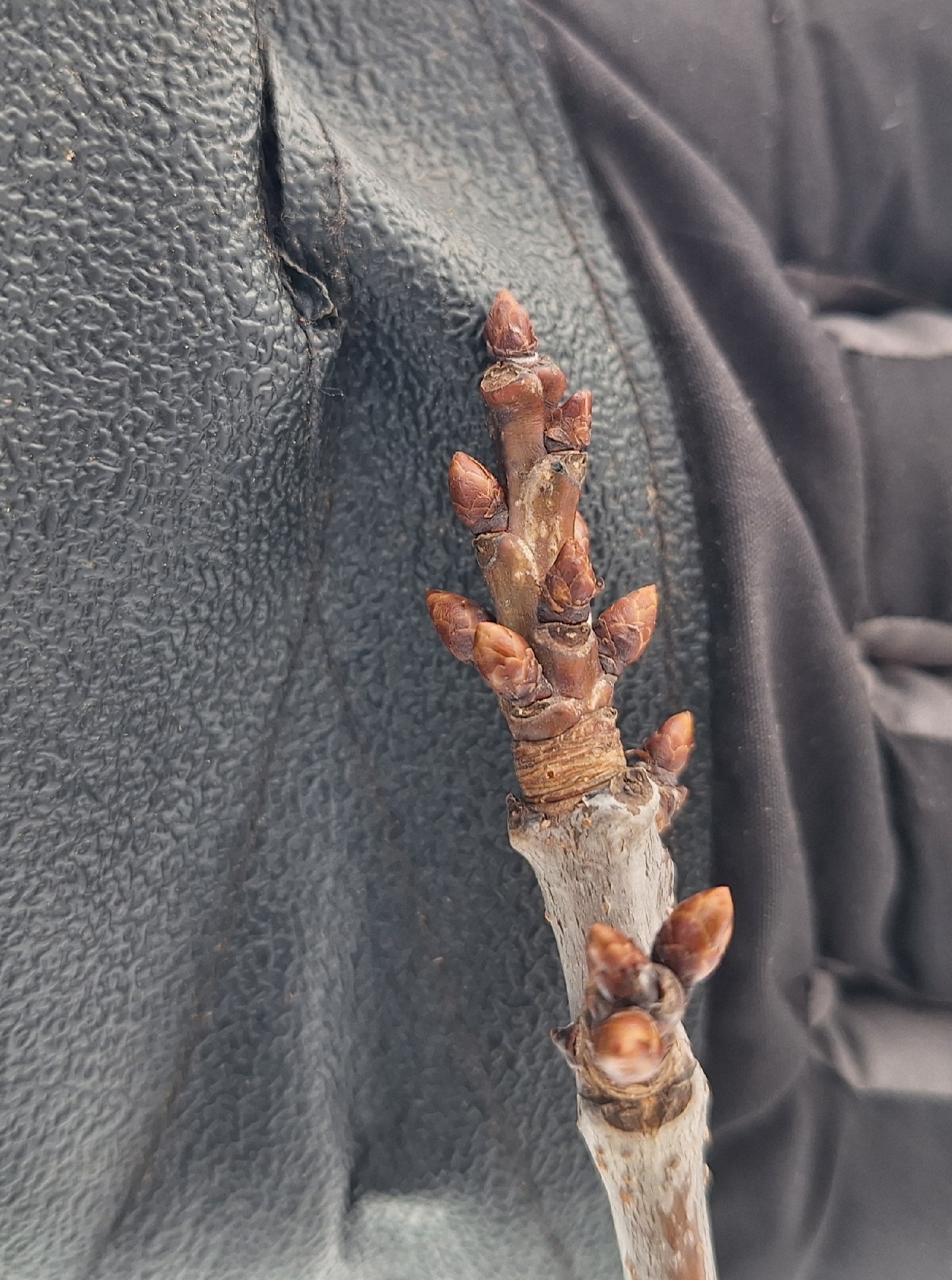
Blackthorn (Prunus spinosa) is a dense, spiny deciduous shrub native to Europe, western Asia, and northwest Africa, readily identified by its near-black bark and frosted blue-black berries known as sloes.
Rural landholders grow it for impenetrable, stock-proof boundary hedging and wildlife shelter. The primary maintenance challenge is controlling its aggressive underground root suckers.
Key Facts
- Type: Deciduous thorny shrub or small tree
- Mature size: 3–5 m (10–16 ft) tall and wide
- Flowering period: March to April, before foliage appears
- Fruiting period: September to November
- Hardiness: USDA Zones 4–8 (down to -28 °C / -18 °F)
- Soil preference: Tolerates heavy clay, chalk, and loam
Is Blackthorn Right for Your Garden or Hedgerow?
Blackthorn suits large gardens, rural boundaries, and exposed perimeter hedgerows where its defensive spines and spreading habit will not damage nearby pathways or formal plantings.
Its formidable thorns deter livestock, deer, and trespassers, while providing nesting protection for songbirds. Because the plant produces lateral root runners up to 3 m (10 ft) from the parent stem, do not plant it against paving, septic fields, or adjacent to a pristine lawn.
Identifying the Blackthorn Tree and Sloe Berries
You can identify blackthorn in early spring by its five-petalled white blossoms opening on bare black stems weeks before its green leaves emerge.
Mature plants display a rigid, interlocking habit with distinctive botanical features:
- Bark: Very dark brown to pitch black, rough and scaly on older branches.
- Thorns: Stiff, sharp modified shoot tips measuring 2 to 5 cm (0.8 to 2 in) long.
- Foliage: Alternate, dull green, oval leaves 2 to 4.5 cm (0.8 to 1.8 in) long with finely serrated margins.
- Flowers: Solitary or paired pure white flowers, 1.2 to 1.8 cm (0.5 to 0.7 in) across, carrying numerous brown-tipped stamens.
- Fruit: Globose drupes 10 to 15 mm (0.4 to 0.6 in) wide, ripening from dull green to deep purple-black coated with a pale blue waxy bloom.
Mature Size and Growth Rate
A free-standing blackthorn shrub reaches a mature height of 3 to 5 m (10 to 16 ft) with an equal or wider spread over 10 to 20 years.
Left unchecked, suckering colonial stems form dense, impassable thickets stretching over 10 m (33 ft) wide. Young plants grow at a moderate rate of 30 to 50 cm (12 to 20 in) per year under full sun, slowing once heavy fruit production begins.
Ideal Light, Soil, and Wind Exposure
Blackthorn requires full sun to partial shade, producing its heaviest blossom set and fruit yield in positions with at least 6 hours of direct daily sunlight.
It tolerates harsh conditions where sensitive orchard trees fail:
- Soil texture: Thrives in heavy clay, chalky limestone, or stony ground.
- Drainage: Performs well in moist, well-drained soils, but tolerates temporary seasonal waterlogging.
- Wind resistance: Extremely wind-firm; functions as a maritime and upland shelterbelt.
- Soil pH: Accepts a wide range from acidic 5.5 to alkaline 8.0.
How to Plant a Blackthorn Hedge or Tree
Plant bare-root blackthorn between November and March during winter dormancy when the soil is cool and moist.
Follow these steps to establish a thick hedge or single specimen:
- Dig a trench 40 cm (16 in) wide and deep, breaking up compacted subsoil.
- Space hedge plants 30 to 45 cm (12 to 18 in) apart in a staggered double row.
- Mix native hedge companions such as common hawthorn (Crataegus monogyna) and hazel (Corylus avellana) to improve seasonal disease resistance.
- Backfill with native soil, firm down with your heel, and water thoroughly with 10 L (2.6 gal) of water per plant.
- Cut new whips down to 15 to 20 cm (6 to 8 in) above ground level immediately after planting to stimulate basal branching.
Blackthorn Care and Watering Requirements
Established blackthorn requires zero supplemental watering or artificial fertilizer once its root network is settled.
During the first two growing seasons, water newly planted whips with 5 L (1.3 gal) per plant every 10 to 14 days during dry spells exceeding two weeks. Keep the base clear of aggressive turf and weeds for a radius of 50 cm (20 in) using an 8 cm (3 in) layer of wood chips. Never feed blackthorn with high-nitrogen fertilizers, which trigger weak, sappy growth vulnerable to aphids.
When and How to Prune Blackthorn
Prune blackthorn in late winter between January and February while the plant is completely dormant and birds are not nesting.
Always wear heavy-duty rigger gloves, as thorn punctures easily lead to fungal infections:
- Hedge trimming: Cut back lateral growth using sharp manual shears or a mechanical trimmer, shaping the hedge in an A-profile to allow light to the base.
- Sucker control: Sever unwanted root suckers cleanly below soil level with a sharp spade rather than pruning them above ground, which multiplies shoot production.
- Coppicing: Rejuvenate old, leggy stands by coppicing stems down to 10 cm (4 in) above the root collar in winter.
- Dead wood: Remove dead, diseased, or rubbing wood back to an outward-facing bud.
Common Pests and Diseases
The most serious threat to blackthorn is silver leaf fungus (Chondrostereum purpureum), which enters open wood through pruning cuts made during wet autumn weather.
Other typical problems affecting the plant include:
- Pocket plum gall (Taphrina pruni): Distorts the developing sloe fruit into elongated, hollow, seedless pouches in wet springs.
- Caterpillar defoliation: Lackey moth (Malacosoma neustria) and black-veined white (Aporia crataegi) caterpillars feed heavily on spring leaves; healthy shrubs recover without intervention.
- Bacterial canker (Pseudomonas syringae): Causes sunken lesions and amber gum oozing from stems; prune infected branches 15 cm (6 in) below the damaged area.
Winter Hardiness and Dormancy
Blackthorn is fully winter hardy down to -28 °C (-18 °F) without requiring any cold-protection fabric or root wrapping.
The plant requires 800 to 1,000 chill hours below 7 °C (45 °F) to break winter bud dormancy uniformly. Late spring frosts may damage the early white flowers in low-lying frost pockets, which reduces the autumn sloe harvest but leaves the shrub’s woody structure unharmed.
Traditional Uses of Sloe Fruit and Wood
Sloe fruit is harvested in October and November to make sloe gin, fruit liqueurs, jellies, and vinegar.
The raw fruit is excessively sour and astringent due to high tannin levels, but freezing breaks down cell walls to release natural sugars. Traditionally, blackthorn wood was harvested for walking sticks, shillelaghs, and tool handles because of its tight grain, hardness, and resistance to splitting. Its bark was traditionally boiled to yield a reddish-brown cloth dye.
Year-Round Care for Blackthorn
| Spring | Inspect blossoms for frost damage and clear grass from the bases of young specimens. Watch for emerging web-nesting caterpillars on tender shoot tips. |
|---|---|
| Summer | Provide 10 L (2.6 gal) of water per week to first-year transplants during hot droughts exceeding three weeks. Avoid trimming branches while birds are actively nesting. |
| Autumn | Harvest ripe sloes once they turn deep purple-black, ideally after the first overnight freeze. Plant new bare-root whips starting in late November. |
| Winter | Prune hedge lines and coppice overgrown thickets between January and February. Cut out wandering root suckers deep below the surface using a sharp spade. |
Diagnosing Common Blackthorn Problems
| What you see | Likely cause | What to do |
|---|---|---|
| Hollow, distorted, banana-shaped fruit | Pocket plum gall (Taphrina pruni fungus) | Pick off and burn distorted fruit before fungal spores mature, and prune out affected twig tips in winter. |
| Leaves develop a metallic silvery sheen followed by branch dieback | Silver leaf disease (Chondrostereum purpureum) | Cut the affected branch back to healthy wood showing no brown stain inside, and only prune during dry summer days. |
| Aggressive thorny shoots erupting through nearby grass | Root suckering response | Expose the runner at soil level and slice it cleanly flush against the parent root. |
| Webbing tents and defoliated spring twigs | Lackey moth caterpillars | Clip out the silk nests by hand on cool mornings and dispose of them. |
Blackthorn Cultivars and Ornamental Forms
- 'Purpurea' – dark purple leaves, pinkish-white flowers, slower growth
- 'Plena' – long-lasting double white flowers, rarely sets viable fruit
- 'Rosea' – pale pink blossoms on dark branches, medium vigour
Frequently Asked Questions
How do you tell blackthorn and hawthorn apart?
Blackthorn flowers in March on bare branches before its leaves appear, whereas common hawthorn (Crataegus monogyna) flowers in May after its green leaves have fully unfurled. Hawthorn thorns also carry small leaves, while blackthorn thorns are stiff, bare, and pointed.
Can you eat blackthorn berries straight from the branch?
Raw sloes are safe to taste but excessively astringent and sour, drying out the mouth immediately due to dense tannins. Cook them into sweetened syrups or infuse them into alcohol, and never crush or swallow the toxic seed stone.
Why do people wait for frost to pick sloes?
A hard overnight frost ruptures the skin and inner cell walls of the sloe berry, mellowing the harsh astringency and releasing natural sugars into the pulp. If frost arrives late, harvest the ripe fruit and place it in a home freezer overnight for the exact same chemical effect.
Is blackthorn wood good for anything?
Blackthorn timber is exceptionally hard, dense, and rot-resistant, making it the historic material of choice for Irish shillelaghs, walking sticks, and tool handles. It also burns slowly with intense heat when seasoned as firewood.
Is blackthorn poisonous to dogs?
The fruit stones, leaves, and bark contain amygdalin, a cyanogenic compound that releases hydrogen cyanide when chewed and digested. While the flesh of a sloe will not kill a dog, ingestion of cracked stones can cause respiratory distress, and its sharp thorns frequently cause foreign-body abscesses.
Information about traditional or historical uses is provided for educational interest only and is not medical advice. Do not use any plant to treat a condition without speaking to a qualified professional.
Sources & Verification
Taxonomy and distribution are checked against the databases below. Care guidance is written for cultivated species only and reviewed by our editor. How We Build Plant Profiles →