Prunus Trees and Shrubs: Cherries, Plums, Peaches, and Almonds
32 plant profiles · Prunus species list: sweet cherry, European plum, Japanese apricot, blackthorn, chokecherry and more, with identification, flowering time and care.
The Prunus genus contains over 400 species of deciduous and evergreen trees and shrubs in the rose family (Rosaceae). Members of this genus share distinctive five-petaled flowers, serrated leaves with small glands near the blade base, and fleshy fruit with a hard central seed pit (drupe). Most species originate in temperate northern regions across Asia, Europe, and North America, thriving in full sun and well-drained soil with a pH of 6.0–7.0.
Choosing the right species depends on your landscape goals, winter cold hardiness, and space constraints. Fruit growers often choose sweet cherry (Prunus avium), peach (Prunus persica), or Japanese plum (Prunus salicina), which require 400–1,000 chilling hours below 7 °C (45 °F) to set fruit. For ornamental spring blooms in compact gardens, Sargent’s cherry (Prunus sargentii) and winter-flowering cherry (Prunus subhirtella) display pink blossoms, while sand cherry (Prunus pumila) serves as a cold-tolerant groundcover shrub down to USDA zone 2.
Safety and hedging needs also dictate selection across the genus. Dense evergreen options like cherry laurel (Prunus laurocerasus) form thick privacy screens up to 6 m (20 ft) tall, whereas spiny species such as blackthorn (Prunus spinosa) create security hedges. All Prunus foliage, seeds, and stems contain cyanogenic glycosides, which release toxic hydrogen cyanide if chewed in large quantities by pets or livestock.

African Cherry
Prunus africana
☀️ Full Sun 💧 Moderate

Almond
Prunus amygdalus
☀️ Full Sun 💧 Moderate

Apricot
Prunus armeniaca
☀️ Full Sun 💧 Moderate

Bird Cherry
Prunus padus
☀️ Full Sun 💧 High
Black Cherry
Prunus serotina
☀️ Full Sun 💧 Moderate

Blackthorn
Prunus spinosa
☀️ Full Sun 💧 Moderate
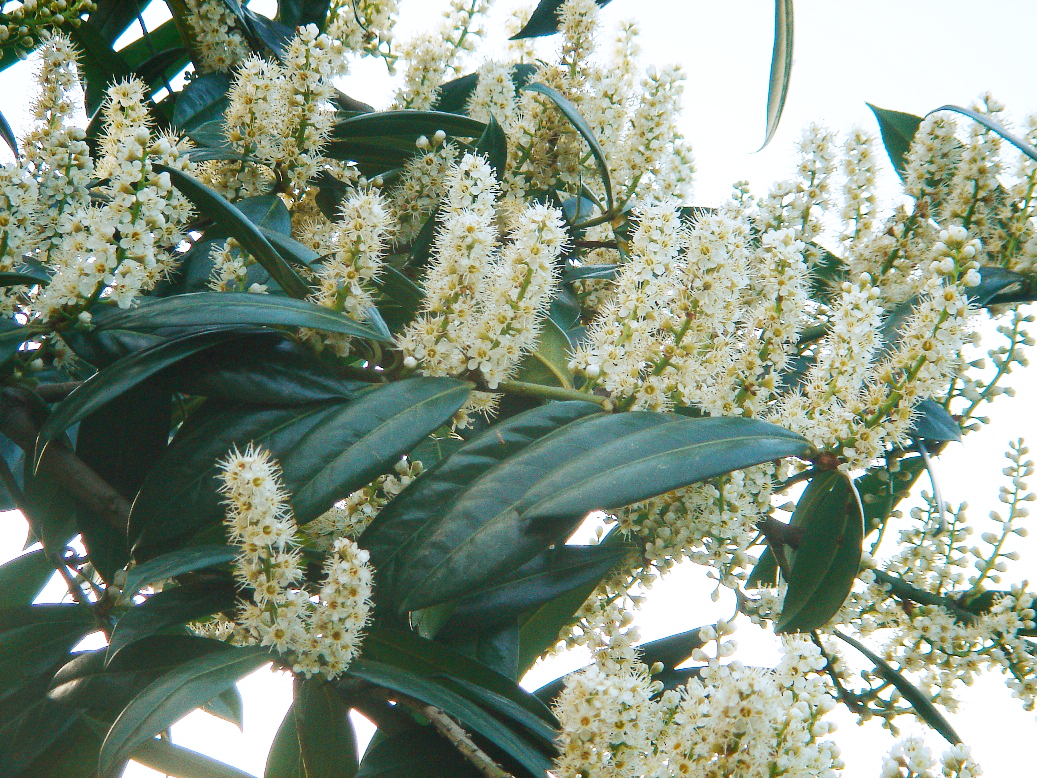
Cherry Laurel
Prunus laurocerasus
☀️ Partial Sun 💧 Moderate

Cherry Plum
Prunus cerasifera
☀️ Full Sun 💧 Moderate

Chickasaw Plum
Prunus angustifolia
☀️ Full Sun 💧 Moderate

Chinese Bush Cherry
Prunus japonica
☀️ Full Sun 💧 Moderate

Chokecherry
Prunus virginiana
☀️ Full Sun 💧 Moderate

Dwarf Russian Almond
Prunus tenella
☀️ Full Sun 💧 Low
European Plum
Prunus domestica
☀️ Full Sun 💧 Moderate

Gray’s Bird Cherry
Prunus grayana
☀️ Full Sun 💧 High

Higan Cherry
Prunus itosakura
☀️ Full Sun 💧 Moderate

Hollyleaf Cherry
Prunus ilicifolia
☀️ Full Sun 💧 Low

Japanese Apricot
Prunus mume
☀️ Full Sun 💧 Moderate

Japanese Cherry
Prunus serrulata
☀️ Full Sun 💧 Moderate

Japanese Plum
Prunus salicina
☀️ Full Sun 💧 Moderate
Mahaleb Cherry
Prunus mahaleb
☀️ Full Sun 💧 Low

Mexican Plum
Prunus mexicana
☀️ Full Sun 💧 Moderate

Nanking Cherry
Prunus tomentosa
☀️ Full Sun 💧 Moderate

Peach
Prunus persica
☀️ Full Sun 💧 Moderate

Portugal Laurel
Prunus lusitanica
☀️ Full Sun 💧 Moderate
Common Questions
Do all Prunus trees produce edible fruit?
No, not all Prunus fruit is palatable or safe to eat raw, though all species produce stone fruits. While sweet cherry and peach yield sweet crops, wild species like blackthorn produce sour, astringent fruits best suited for processing into preserves or liquor.
How do you distinguish a cherry tree from a plum tree?
Cherry trees have flowers in clusters with long stems and smooth bark with horizontal lenticels, whereas plum trees bear individual flowers on short stems with rougher bark. Plum buds are solitary, while cherry buds appear in tight clusters along the branches.
Why are my Prunus tree leaves developing brown spots and holes?
Brown spots that drop out to leave holes are caused by shot hole disease (Wilsonomyces carpophilus) or bacterial spot. Water at the soil level to keep foliage dry and prune overcrowded branches to improve air circulation.
Are Prunus trees toxic to dogs and cats?
Yes, the leaves, stems, and seeds of Prunus species contain cyanogenic glycosides that are toxic to pets if ingested. The fleshy fruit pulp itself is non-toxic, but the central pits present both a toxicity hazard and a choking risk.