

Higan cherry (Prunus itosakura) is a deciduous tree native to Japan that blooms in both autumn and spring. It features delicate pink or white flowers and forms an open, rounded canopy.
You need to provide full sun and well-drained soil to keep this tree healthy. Watch out for canker and aphids during damp spring weather.
Key Facts
- Light: Full sun for best blooms
- Water: Moderate moisture, drought tolerant once established
- Soil: Well-drained loal or sandy loam
- Hardiness: USDA zones 5 through 8
- Height: Up to 12 m (40 ft) tall
Is the Higan Cherry Right for Your Garden
The Higan cherry suits gardeners wanting multi-season blooms and a manageable medium-sized tree. You get bursts of soft pink flowers in October and a heavier display in April. It fits well in lawns or near patios where you can enjoy the weeping or upright habit up close. Make sure you have an open, sunny spot before planting.
- Provides reliable autumn and spring flowers
- Tolerates urban pollution better than many other cherries
- Requires regular formative pruning when young
Avoid planting this tree in heavy clay or waterlogged areas. Root rot sets in quickly if drainage fails.
What the Higan Cherry Looks Like
Higan cherry grows 6 to 12 m (20 to 40 ft) tall with an equal or slightly narrower spread. The leaves are ovate, finely serrated, 5 to 10 cm (2 to 4 in) long, and turn a muted yellow in autumn. Flowers appear in clusters of two to five, measuring about 2 cm (0.8 in) across. Bark is smooth, grayish-brown, and marked with horizontal lenticels.
- Foliage: Medium green summer leaves turning yellow in autumn
- Flowers: Single or double petals in pale pink or white
- Habit: Upright branching in the species, though weeping cultivars are common
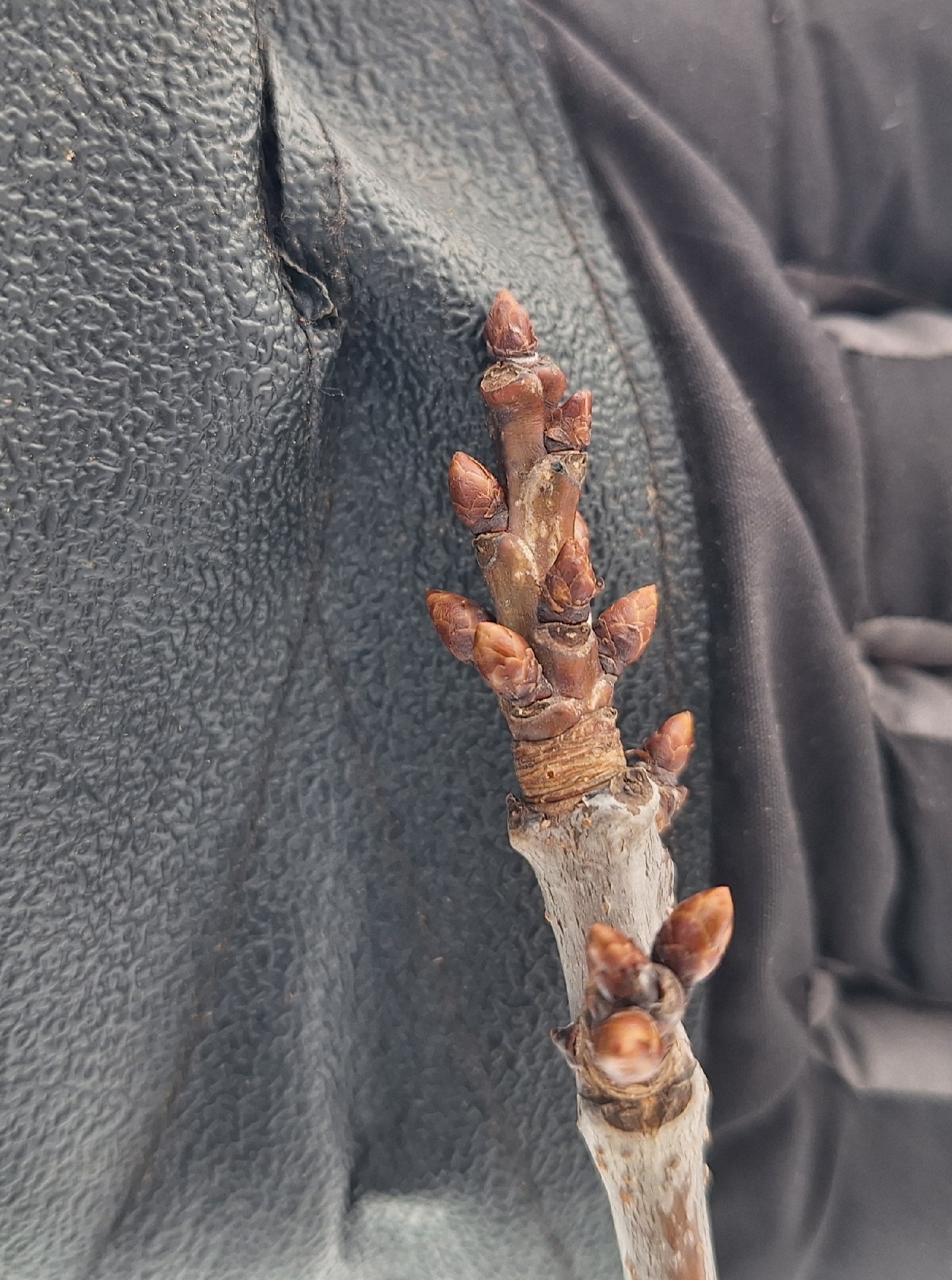
The thin twigs bear dense buds that open during warm winter spells or cool autumn days.
Higan Cherry Tree Size and Growth Rate
Higan cherry grows at a moderate rate of 30 to 60 cm (1 to 2 ft) per year under good conditions. Mature trees reach 9 m (30 ft) after twenty years. Standard forms maintain a broad, rounded canopy, while weeping selections spill downwards toward the turf.
- Height: 6-12 m (20-40 ft) at maturity
- Spread: 4.5-9 m (15-30 ft) wide
- Growth speed: Moderate compared to fast-growing poplars
Give young trees enough space from overhead utility lines and paved walkways to prevent future root and branch conflicts.
Where to Plant Your Higan Cherry
Plant your Higan cherry in a location receiving at least 6 hours of direct sunlight daily. Morning sun helps dry dew from the leaves, reducing fungal disease outbreaks. Pick a spot with loamy, fertile soil that drains freely after heavy rain.
- Light: Full sun is mandatory for heavy flowering
- Soil type: Deep, fertile loam with a pH between 6.0 and 7.0
- Air circulation: Open areas prevent powdery mildew and leaf spot
Avoid frost pockets where freezing air settles, as early autumn or late spring frosts can ruin open flower buds.
How to Plant Higan Cherry Trees
Dig a hole twice as wide as the root ball and just as deep. Place the tree so the root flare sits slightly above the surrounding soil level. Fill the hole with native soil, tamping gently to remove large air pockets.
- Water thoroughly immediately after planting to settle the soil
- Apply a 7 cm (3 in) layer of wood mulch around the base
- Keep mulch 10 cm (4 in) away from the trunk to prevent rot
Stake the tree only if it stands in a very windy exposed site; remove the stakes after one growing season.
Higan Cherry Care and Maintenance
Water young Higan cherry trees weekly during dry spells for the first two summers. Once established, they withstand moderate dry periods without supplemental irrigation. Apply a balanced slow-release tree fertilizer in early spring before new growth starts.
- Irrigation: 2.5 cm (1 in) of water per week for young specimens
- Fertilizing: Annual top-dressing with compost or balanced granular feed
- Weeding: Keep the root zone clear of grass and aggressive weeds
Inspect the bark regularly for signs of borers or splitting caused by winter sunscald.
How and When to Prune Higan Cherry
Prune your Higan cherry in late spring right after the main flowering period finishes. Never prune in autumn or winter when fungal spores spread easily in wet weather. Remove dead, damaged, or crossing branches to maintain a clean canopy.
- Timing: Late spring, post-bloom
- Tools: Clean, sharp bypass pruners and a pruning saw
- Technique: Cut back to outward-facing buds or main lateral branches
Sanitise your tools with isopropyl alcohol between cuts to prevent spreading bacterial canker.
Higan Cherry Tree Problems and Pests
Higan cherry faces occasional attacks from aphids, caterpillars, and Japanese beetles. Spray heavy aphid infestations with insecticidal soap in spring. Watch for black knot fungus or bacterial canker, which cause swollen galls or sticky amber ooze on branches.
- Aphids: Cause curled leaves and sticky honeydew secretions
- Bacterial canker: Kills branches; prune out 15 cm (6 in) below infected wood
- Powdery mildew: Appears as white dust on foliage during humid late summer
Rake up and destroy fallen leaves in autumn to reduce overwintering fungal spores.
Winter Care for Higan Cherry
Protect young Higan cherry trunks from sunscald by wrapping them with commercial tree wrap in late autumn. Remove the wrap in spring before insects nest beneath it. Mature trees handle winter cold down to USDA zone 5 without extra protection.
- Trunk protection: Paper or plastic tree guards for young trees
- Moisture check: Water during unseasonably warm, dry winter thaws
- Snow load: Gently brush heavy wet snow off weeping branches to prevent snapping
Check for rabbit and deer damage, as bark chewing during winter can girdle and kill young trees.
Higan Cherry Through the Seasons
| Spring | Prune immediately after the main bloom finishes. Apply balanced fertiliser and monitor for aphids. |
|---|---|
| Summer | Water deeply during extended dry spells. Mulch to retain soil moisture around the root zone. |
| Autumn | Rake and dispose of fallen leaves. Wrap young trunks to prevent winter sunscald. |
| Winter | Check for broken branches after heavy snow. Inspect bark for animal or frost damage. |
Higan Cherry Problem Diagnosis
| What you see | Likely cause | What to do |
|---|---|---|
| Yellow leaves in summer | Overwatering or poor drainage | Improve soil drainage and let the topsoil dry out between waterings. |
| Sticky amber ooze on branches | Bacterial canker infection | Prune out diseased wood well below the infected area during dry weather. |
| Curled leaves with sticky residue | Aphid infestation | Spray affected foliage with horticultural oil or insecticidal soap. |
| Lack of flowers | Insufficient sunlight or improper pruning | Move or prune surrounding trees to provide full sun exposure. |
Popular Higan Cherry Cultivars
- ‘Autumnalis’ – semi-double pink flowers opening in both autumn and spring
- ‘Pendula’ – graceful weeping branches with single pink flowers
- ‘Pendula Rosea’ – weeping form with deep rose-pink double flowers
Frequently Asked Questions
What is a Higan cherry?
Higan cherry (Prunus itosakura) is a wild cherry species from Japan known for blooming in both autumn and spring.
Higan cherry vs Yoshino cherry: what is the difference?
Higan cherry blooms in autumn and spring with smaller flowers, whereas Yoshino cherry (Prunus x yedoensis) blooms only in early spring with a massive, single flush.
Higan cherry vs weeping cherry: how do they compare?
Higan cherry is the parent species that includes both upright forms and weeping cultivars like 'Pendula', so all weeping cherries of this type belong to Prunus itosakura.
Can you grow Higan cherry as a bonsai?
Yes, Higan cherry responds well to bonsai training because of its small leaves, twiggy growth habit, and early spring or autumn flowers.
Sources & Verification
Taxonomy and distribution are checked against the databases below. Care guidance is written for cultivated species only and reviewed by our editor. How We Build Plant Profiles →
More in Prunus

Almond
Prunus amygdalus
☀️ Full Sun 💧 Moderate
Sour Cherry
Prunus cerasus
☀️ Full Sun 💧 Moderate

Winter-Flowering Cherry
Prunus subhirtella
☀️ Full Sun 💧 Moderate

Chokecherry
Prunus virginiana
☀️ Full Sun 💧 Moderate
Mahaleb Cherry
Prunus mahaleb
☀️ Full Sun 💧 Low

Sargent’s Cherry
Prunus sargentii
☀️ Full Sun 💧 Moderate