
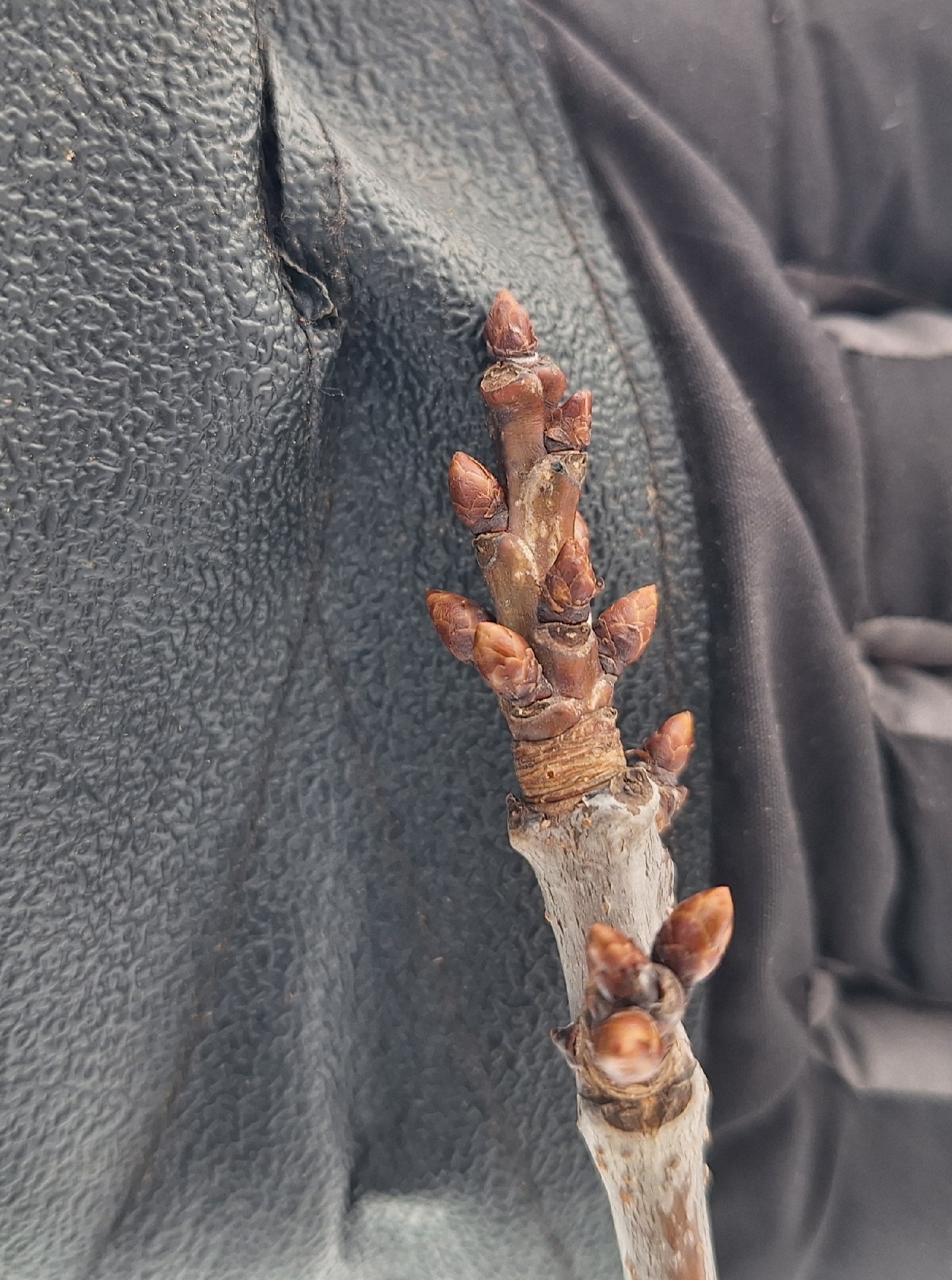
Sour cherry (Prunus cerasus) is a deciduous fruit tree originating from Europe and Southwest Asia, recognized by its small, tart fruit and white spring blossoms. It is physically smaller than its relative the sweet cherry (Prunus avium) and features a more spreading, shrub-like habit in many cultivars.
You can expect a reliable harvest even in regions with late spring frosts because this species blooms later than most stone fruits. It thrives in cooler climates where high-sugar varieties often fail to set fruit or suffer from winter dieback.
Key Facts
- Hardiness: USDA zones 4 to 8
- Water: 2.5 cm (1 inch) of water weekly
- Pollination: Most varieties are self-fertile
- Harvest: Typically mid to late summer
- Sun: Minimum 6 hours of direct light
Why Grow a Sour Cherry Tree?
Growing a Sour Cherry tree is more practical for small gardens than sweet varieties because most cultivars are self-fertile and do not require a second tree for pollination. This makes them ideal for urban spaces where room for a full orchard is unavailable. They are significantly hardier than sweet cherries, often surviving temperatures down to -34 °C (-30 °F) without significant branch damage.
While sweet cherries are often targeted by birds the moment they turn pink, the high acidity of the Sour Cherry provides a brief window of protection. Birds generally wait until the fruit is fully ripe and dark before descending, giving you more time to secure the harvest. These trees also produce fruit earlier in their lifespan, often within 3 to 5 years of planting.
- Requires only one tree for fruit production
- Smaller mature size fits into residential landscapes
- Higher resistance to common cherry pests and diseases
- Thrives in Zone 4 and 5 where sweet cherries struggle
Identifying Prunus cerasus
You can identify Prunus cerasus by its glossy, dark green leaves that measure 5 to 8 cm (2 to 3 inches) in length and have a stiff, leathery texture. The leaves are oval with finely serrated margins and usually lack the large glands on the petiole that are prominent on the sweet cherry (Prunus avium). In autumn, the foliage typically turns a yellow or dull orange before falling.
The flowers appear in clusters of 2 to 4, each featuring five white petals and numerous yellow stamens. The bark is smooth and reddish-brown on young trees, developing horizontal lenticels and becoming greyish and fissured as the tree ages. The fruit is a globose drupe, ranging from bright red in Amarelle types to nearly black in Morello types.
- Leaves: 5-8 cm long, serrated, glossy finish
- Flowers: White, 2 cm (0.8 inches) wide, appearing in spring
- Fruit: 1-2 cm diameter, bright to dark red
- Bark: Reddish-brown with prominent horizontal pores
How Big Does a Sour Cherry Tree Get?
A standard Sour Cherry tree typically reaches a height of 4 to 10 meters (13 to 33 feet) with a similar spread at maturity. However, most modern garden varieties are grafted onto dwarfing rootstocks such as ‘Gisela 5’, which keeps the tree under 3 meters (10 feet). This smaller size makes pruning and harvesting significantly easier without the need for tall ladders.
The growth habit is generally more rounded and spreading than the upright, pyramidal shape of many sweet cherry species. In the first three years, the tree grows rapidly, often adding 30 to 60 cm (12 to 24 inches) of new wood annually. Once fruit production begins, the growth rate slows as the tree diverts energy into berry development.
- Standard height: 4-10 m (13-33 ft)
- Dwarf height: 2.5-3.5 m (8-12 ft)
- Growth rate: 30-60 cm per year in youth
- Canopy: Rounded, spreading, and dense
Best Site for Planting
Your tree requires a site that receives at least 6 to 8 hours of direct sunlight daily to produce high-quality fruit and prevent fungal infections. Avoid low-lying areas in your garden where “frost pockets” form, as cold air can settle and kill the blossoms in late spring. Air circulation is vital; a slight slope or an open area helps wind move through the canopy, drying the leaves and reducing the risk of brown rot.
The soil should be deep and well-drained, as these trees are highly susceptible to root rot in standing water. They prefer a loamy texture but can tolerate sandy or slightly rocky soils if moisture is consistent. Avoid planting near wild black cherry (Prunus serotina) or chokecherry (Prunus virginiana), which can harbor diseases like black knot that spread to your cultivated tree.
- Exposure: Full sun for maximum sugar content
- Airflow: Open sites to prevent fungal spores
- Drainage: Must not have standing water for more than 2 hours
- Proximity: Keep away from wild Prunus species
How to Plant a Sour Cherry
The best time to plant is in early spring while the tree is still dormant and the soil is workable. Dig a hole twice as wide as the root ball and exactly as deep, ensuring the graft union (the bump on the lower trunk) remains 5 cm (2 inches) above the soil line. If the graft is buried, the scion may grow its own roots, negating the dwarfing or disease-resistant properties of the rootstock.
Backfill with the native soil rather than heavy amendments to encourage roots to spread into the surrounding garden. Water the tree immediately after planting with 20 liters (5 gallons) of water to settle the soil and remove air pockets. A layer of organic mulch 5 to 10 cm (2 to 4 inches) deep will help retain moisture, but keep it away from the bark to prevent rot.
- Hole size: Twice the width of the root system
- Graft union: Must stay 5 cm above ground
- Spacing: 6-8 m (20-25 ft) for standards; 3 m (10 ft) for dwarfs
- Initial watering: 20 liters to settle the root zone
Watering and Feeding Your Tree
Established trees need roughly 2.5 cm (1 inch) of water per week during the growing season, either from rainfall or supplemental irrigation. During the first two years, you must water more frequently to ensure the root system establishes, especially during dry spells in July and August. Inconsistent watering when fruit is ripening can cause the cherry skins to split.
Apply a balanced 10-10-10 fertilizer in early spring before the buds break, using approximately 115 grams (0.25 pounds) for every year of the tree’s age, up to a maximum of 2.2 kg (5 pounds). Do not fertilize after mid-summer, as this encourages soft new growth that will not harden off before winter. If the tree is growing more than 30 cm (12 inches) a year and leaves are dark green, you may skip the fertilizer.
- Watering: Consistent 2.5 cm per week
- Fertilizer: 10-10-10 NPK in early spring
- Mulching: Maintain a 1-meter (3-foot) weed-free circle
- Avoid: Late-season nitrogen applications
Pruning for a Better Harvest
You should prune your Sour Cherry in late winter or very early spring before the sap starts flowing. The goal is to create an “open center” or “vase” shape, which allows sunlight to reach the middle of the tree and improves air circulation. Remove any branches that are crossing, rubbing, or growing inward toward the trunk.
Sour cherries produce fruit on one-year-old wood and on spurs of older wood. When pruning, remove about 20% of the previous year’s growth to stimulate new fruiting wood for the following season. Always use sharp, sterilized bypass pruners or a lopper to make clean cuts just above an outward-facing bud.
- Timing: Late winter dormancy
- Shape: Open center for light penetration
- Removal: Dead, diseased, or damaged wood first
- Thinning: Remove 20% of old growth annually
Common Sour Cherry Problems
The most frequent issue is brown rot, a fungal disease that causes blossoms to wilt and fruit to turn into fuzzy, brown mummies. To manage this, you must remove all fallen fruit and mummified cherries from the tree at the end of the season. Birds are the primary pest; they can consume an entire crop in hours, so draping the tree in bird netting when the fruit begins to turn red is essential.
Aphids often target the new, soft growth in spring, causing leaves to curl and become sticky with honeydew. You can usually blast these off with a strong stream of water or use insecticidal soap. Cherry leaf spot is another fungal concern that causes small purple spots followed by yellowing and premature leaf drop in mid-summer.
- Brown Rot: Remove mummified fruit and prune for airflow
- Birds: Install 2 cm (0.75 inch) mesh netting
- Aphids: Wash off with water or apply neem oil
- Leaf Spot: Clean up fallen leaves to prevent overwintering
Winter Care and Chilling Hours
Sour cherries require 600 to 1,200 chilling hours between 0 and 7 °C (32-45 °F) during the winter to break dormancy and bloom properly. Without this cold period, the tree may produce leaves but very few flowers. In colder regions (Zone 4), protect young trunks from “sunscald” by wrapping them in white plastic tree guards or painting them with diluted white latex paint.
Stop all supplemental watering once the ground freezes, but ensure the tree has a deep soak in late autumn before the first hard frost. A thick layer of mulch applied in late autumn helps insulate the roots against rapid temperature fluctuations. Pruning should never be done in early winter, as the wounds need time to callous before extreme cold sets in.
- Chilling: 600-1,200 hours required
- Sunscald: Wrap trunks in white guards
- Autumn: Deep watering before the ground freezes
- Protection: Mulch root zone to 10 cm deep
Best Ways to Use Your Harvest
Harvest your cherries when they are fully colored and slightly soft to the touch, usually between June and August depending on your local climate. Sour cherries are primarily used for cooking because their high acidity and firm texture allow them to retain their shape and intense flavor in pies and jams. The juice is also a popular health supplement, traditionally used for its anti-inflammatory properties and high melatonin content.
For commercial products like sour cherry drops or candy, the juice is concentrated to provide a sharp contrast to sugar. You can also freeze the fruit by pitting them first and laying them in a single layer on a baking tray before bagging. The intense acidity makes them the base for “sour cherry fizz” drinks and syrups, where they provide a more complex flavor profile than sweet cherries.
- Baking: Ideal for pies, tarts, and crumbles
- Preserves: High pectin content makes excellent jam
- Juice: Used for sleep aid and muscle recovery
- Storage: Freeze pitted fruit for up to 12 months
Year-Round Care for Sour Cherry Trees
| Spring | Apply 10-10-10 fertilizer before buds open. Spray with organic fungicide if brown rot was a problem last year. Plant new bare-root trees. |
|---|---|
| Summer | Net trees as fruit turns red to deter birds. Water with 2.5 cm (1 inch) weekly. Harvest fruit when fully ripe and dark. |
| Autumn | Rake and destroy all fallen leaves to prevent leaf spot. Apply 10 cm (4 inches) of fresh mulch. Deep water before the first freeze. |
| Winter | Prune for shape and air circulation during dormancy. Check trunk wraps for rodent damage. Order new cultivars for spring planting. |
Common Sour Cherry Problems and Solutions
| What you see | Likely cause | What to do |
|---|---|---|
| Fruit turning brown and fuzzy | Brown rot fungus | Remove infected fruit and prune the canopy to improve air circulation. |
| Leaves curling and sticky | Aphid infestation | Spray the undersides of leaves with a strong jet of water or insecticidal soap. |
| Holes in ripening fruit | Bird damage | Cover the entire tree with bird netting secured at the base. |
| Premature yellow leaves with purple spots | Cherry leaf spot | Apply a sulfur-based fungicide in spring and remove all fallen leaves. |
Popular Sour Cherry Cultivars
- ‘Montmorency’ – the standard Amarelle type, bright red, clear juice
- ‘Morello’ – dark red skin and juice, excellent for cooking
- ‘North Star’ – dwarf variety reaching only 2 meters, very hardy
- ‘Meteor’ – upright habit, large fruit, resistant to leaf spot
- ‘English Morello’ – late ripening, almost black fruit when mature
- ‘Early Richmond’ – earliest to harvest, bright red Amarelle type
Frequently Asked Questions
Do I need two sour cherry trees to get fruit?
No, most sour cherry varieties like 'Montmorency' and 'North Star' are self-fertile and will produce a full crop with just one tree. However, planting two different varieties can sometimes slightly increase the yield and extend the harvest window.
What is the difference between sour and sweet cherries?
Sour cherries (Prunus cerasus) are hardier, smaller, and contain more acid and less sugar than sweet cherries (Prunus avium). Sour cherries are better for cooking and juice, while sweet cherries are preferred for fresh eating.
Does sour cherry juice really help with sleep?
Sour cherry juice is traditionally used as a sleep aid because it is a natural source of melatonin, a hormone that regulates the sleep-wake cycle. Many people use it to improve sleep duration and quality, though results vary.
How do you pit sour cherries quickly?
For large batches, use a hand-cranked or plunger-style cherry pitter which can process dozens of fruits per minute. If you don't have a pitter, pushing a stiff straw or a chopsticks through the stem end will pop the pit out the other side.
Why are my sour cherry leaves turning yellow and falling off in summer?
This is most likely cherry leaf spot, a fungus that thrives in humid weather. It causes small spots on the leaves, which then turn yellow and drop; prevent it by cleaning up all fallen leaves and ensuring the tree has good airflow.
Information about traditional or historical uses is provided for educational interest only and is not medical advice. Do not use any plant to treat a condition without speaking to a qualified professional.
Sources & Verification
Taxonomy and distribution are checked against the databases below. Care guidance is written for cultivated species only and reviewed by our editor. How We Build Plant Profiles →
More in Prunus

West Indies Cherry
Prunus myrtifolia
☀️ Full Sun 💧 Moderate

Wild Himalayan Cherry
Prunus cerasoides
☀️ Full Sun 💧 Moderate

Peach
Prunus persica
☀️ Full Sun 💧 Moderate

Bird Cherry
Prunus padus
☀️ Full Sun 💧 High

Blackthorn
Prunus spinosa
☀️ Full Sun 💧 Moderate

Winter-Flowering Cherry
Prunus subhirtella
☀️ Full Sun 💧 Moderate