

Bird cherry is a deciduous tree native to Europe and Northern Asia, belonging to the rose family as Prunus padus. It is distinguished from other cherries by its flowers, which grow in long, drooping spikes rather than rounded clusters.
This species thrives in damp, cool environments where other cherry trees might struggle with root rot. It produces small black fruits that are highly sought after by thrushes and waxwings during the late summer months.
Key Facts
- Height: reaches 10–15 m (33–50 ft) at maturity
- Flowers: white racemes appearing in May
- Fruit: small, bitter black berries in August
- Hardiness: survives temperatures down to -30 °C (-22 °F)
- Soil: prefers moist, fertile, or even heavy clay soils
Where Bird Cherry Fits in Your Garden
Bird cherry is best suited for naturalistic woodland gardens or damp areas where other ornamental trees fail. It is a large-scale plant that requires space to expand, making it inappropriate for small urban courtyards or tiny patios. The tree works well as a specimen in a large lawn or as part of a native hedgerow on a rural boundary.
You should choose this species if you want to support local biodiversity, particularly birds and pollinators. It is more tolerant of shade than the wild cherry (Prunus avium), but it will produce fewer flowers in deep cover. The primary requirement for success is consistent soil moisture throughout the growing season.
Identifying Bird Cherry by Its Leaves and Flowers
You can identify bird cherry by its almond-scented white flowers that grow in drooping racemes 8–15 cm (3–6 in) long. The bark is smooth and dark grey-brown, emitting a strong, acrid smell if the surface is scraped. This scent is a key diagnostic feature that separates it from similar-looking species in the Prunus genus.
The leaves are oval, measuring 5–10 cm (2–4 in) in length, with finely serrated edges and a dull green upper surface. In autumn, the foliage typically turns a pale yellow or occasionally a deep bronze before falling. The fruit is a small, pea-sized drupe that turns from green to glossy black as it ripens in late summer.
How Big Does a Bird Cherry Tree Grow
A mature bird cherry typically reaches a height of 10–15 m (33–50 ft) with a spread of 6–8 m (20–26 ft). It grows at a moderate rate, often adding 30–60 cm (12–24 in) of height per year during its first decade. In very exposed or nutrient-poor upland sites, it may remain a multi-stemmed shrub rather than a single-trunked tree.
- 10 years: 5–6 m (16–20 ft) high
- 20 years: 10–12 m (33–39 ft) high
- Ultimate height: 15 m (50 ft) in ideal conditions
Best Soil and Light for Prunus padus
Bird cherry thrives in full sun to partial shade and prefers soil that remains consistently moist. Unlike many other stone fruits, it can tolerate heavy clay and seasonally waterlogged ground. It is frequently found growing along stream banks and in damp limestone valleys in its native range.
While it is adaptable to various soil pH levels, it performs best in slightly acidic to neutral conditions. If planted in very dry, sandy soil, the tree will grow slowly and may suffer from premature leaf drop during summer heatwaves. Mulching with organic matter annually helps retain the moisture levels this species requires.
Planting a Bird Cherry Tree
The best time to plant bird cherry is during the dormant season from November to March. Bare-root saplings are the most cost-effective and successful way to establish this tree in a garden or hedge. Dig a hole twice as wide as the root system and just as deep, ensuring the soil at the bottom is loosened.
Avoid burying the stem deeper than it was in the nursery; the soil line should match the previous mark on the trunk. Stake the tree for the first two years to prevent wind-rock, which can damage the developing fine roots. Water the new planting thoroughly with at least 20 litres (5 gallons) of water to settle the soil around the roots.
Watering and Feeding Requirements
Young trees require weekly watering during their first two growing seasons to ensure the root system establishes. Once the tree is mature, it is generally self-sufficient unless there is a prolonged drought exceeding three weeks. In dry regions, a thick layer of woodchip mulch around the base will reduce the need for supplemental irrigation.
Feeding is rarely necessary for this species in average garden soil. If growth appears stunted or the leaves are unusually pale, apply a balanced granular fertilizer in early spring. Avoid high-nitrogen feeds, as these can encourage soft growth that is more susceptible to aphids and fungal infections.
Pruning Bird Cherry to Prevent Disease
You must prune bird cherry in mid-summer (July or August) to minimize the risk of silver leaf disease. Pruning in winter, as is common for many deciduous trees, leaves the tree vulnerable to fungal spores that enter through fresh cuts. Focus on removing dead, damaged, or crossing branches to maintain a healthy canopy.
If you are growing the tree as part of a hedge, it can be trimmed into shape once a year after the flowering period has finished. Be aware that bird cherry often produces suckers from the base of the trunk. These should be removed promptly by cutting them back to the point of origin to maintain a clean, single-stemmed appearance.
Common Bird Cherry Tree Problems and Pests
The most visible problem is the bird cherry ermine moth (Yponomeuta evonymella), which covers the tree in thick white webbing. While the caterpillars can completely defoliate the tree by June, the damage is usually aesthetic and the tree will grow a second set of leaves by July. Chemical treatment is rarely necessary as natural predators usually control the population.
- Bird cherry-oat aphid: causes leaf curling in spring; migrates to cereal crops in summer.
- Silver leaf fungus: causes a metallic sheen on leaves and eventual branch dieback.
- Bacterial canker: produces sunken, oozing wounds on the bark and branches.
Winter Hardiness and Dormancy
Bird cherry is exceptionally hardy and can withstand winter temperatures as low as -30 °C (-22 °F). It is one of the hardiest deciduous trees in Europe, often found growing at high altitudes and in northern latitudes where other cherries cannot survive. It requires no winter protection once established in the ground.
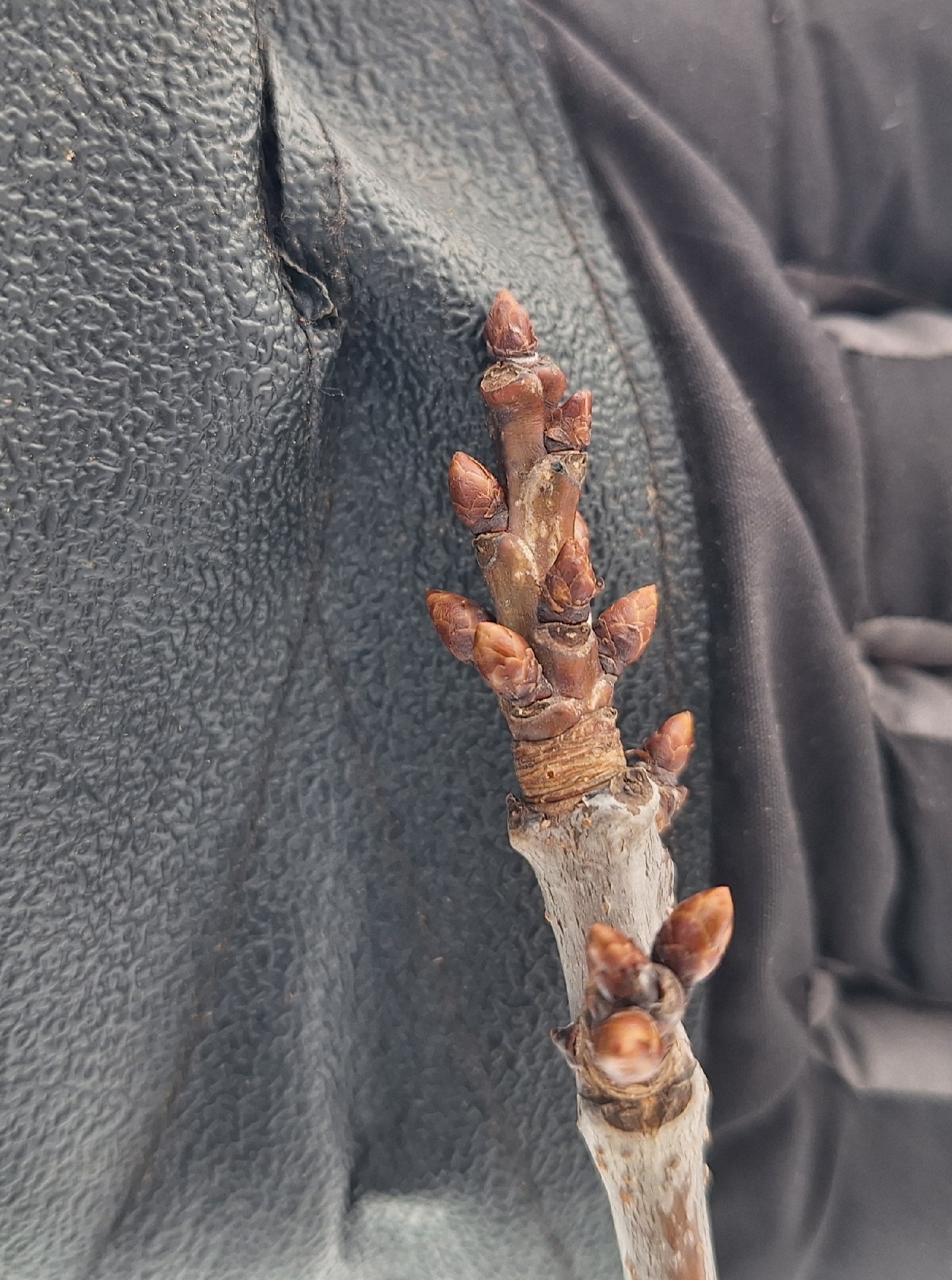
During the winter months, the tree is completely dormant and loses all its leaves. The buds are dark, pointed, and pressed closely against the twigs. This dormancy period is the ideal time for structural assessments, though any actual cutting should wait until the sap is flowing in summer to prevent disease entry.
Traditional Uses and Wildlife Value
The fruit of the bird cherry is edible but very astringent, often requiring significant amounts of sugar to be palatable. Historically, the berries were used in jellies, wines, and to flavour spirits like gin or vodka. The bark was traditionally used to create a reddish-brown dye and was occasionally used in folk medicine as a sedative or tonic.
Ecologically, the tree is a vital resource for early-season pollinators, including honeybees and solitary bees. The leaves provide food for the larvae of several moth species, including the brimstone moth (Opisthograptis luteolata). Because the fruit is high in energy, it is a primary food source for birds preparing for autumn migration.
Year-Round Care for Bird Cherry
| Spring | Monitor for bird cherry-oat aphids as leaves emerge. Apply a mulch of well-rotted manure or compost around the base to retain moisture. |
|---|---|
| Summer | Prune for shape and health in July. Water young trees deeply during dry spells and check for ermine moth webbing. |
| Autumn | Harvest ripe black berries in August or September for recipes. Clear fallen leaves if the tree has suffered from fungal spots. |
| Winter | Plant new bare-root trees between November and March. Check stakes and ties on young specimens to prevent wind damage. |
Bird Cherry Tree Problems Explained
| What you see | Likely cause | What to do |
|---|---|---|
| White silk webbing covering branches | Bird cherry ermine moth | Wait for the tree to recover naturally; it will produce new leaves within weeks. |
| Leaves turning silver or metallic | Silver leaf fungus | Prune out affected branches immediately and burn them to prevent spread. |
| Curled, sticky leaves with green insects | Bird cherry-oat aphid | Blast with a strong stream of water or encourage ladybirds into the garden. |
| Oozing sap from bark wounds | Bacterial canker | Prune back to healthy wood during the summer and sterilize tools between cuts. |
Popular Bird Cherry Cultivars
- ‘Watereri’ – produces exceptionally long flower racemes up to 20 cm.
- ‘Colorata’ – features purple-tinted foliage and pink flowers.
- ‘Albertii’ – a compact, upright variety that flowers profusely.
- ‘Pandora’ – a smaller cultivar suitable for more restricted spaces.
Frequently Asked Questions
Is bird cherry poisonous to dogs?
Yes, all parts of the tree except the flesh of the fruit contain cyanide-producing compounds that are toxic to dogs if chewed. Symptoms include dilated pupils, difficulty breathing, and bright red gums.
Can you eat bird cherry fruit?
The fruit is edible but extremely bitter and astringent when raw. It is best used in cooked recipes like jams or infused into alcohols where sugar can counteract the bitterness.
How do you tell the difference between bird cherry and wild cherry?
Bird cherry (Prunus padus) has flowers in long spikes (racemes), whereas wild cherry (Prunus avium) has flowers in small, rounded clusters (umbels).
Why is my bird cherry tree covered in white webs?
This is caused by the bird cherry ermine moth caterpillars, which create silk tents for protection while they eat the leaves. The tree usually survives this and grows new foliage later in the season.
How fast does a bird cherry tree grow?
It has a moderate growth rate, typically increasing by 40–60 cm (16–24 in) per year in its youth. It reaches its full height of 15 m (50 ft) in approximately 25 to 30 years.
Information about traditional or historical uses is provided for educational interest only and is not medical advice. Do not use any plant to treat a condition without speaking to a qualified professional.
Sources & Verification
Taxonomy and distribution are checked against the databases below. Care guidance is written for cultivated species only and reviewed by our editor. How We Build Plant Profiles →
More in Prunus
European Plum
Prunus domestica
☀️ Full Sun 💧 Moderate
Sour Cherry
Prunus cerasus
☀️ Full Sun 💧 Moderate

Gray’s Bird Cherry
Prunus grayana
☀️ Full Sun 💧 High

Apricot
Prunus armeniaca
☀️ Full Sun 💧 Moderate

Dwarf Russian Almond
Prunus tenella
☀️ Full Sun 💧 Low

Almond
Prunus amygdalus
☀️ Full Sun 💧 Moderate