

Sargent’s Cherry (Prunus sargentii) is a deciduous flowering tree native to Japan, Korea, Sakhalin, and northeastern China. It produces single pink flowers in early spring before leaves emerge, followed by mahogany bark and orange autumn leaves.
This species requires full sun and cool summer weather to thrive in USDA hardiness zones 4 through 7. Plant it in moist, well-drained soil away from heavy street pavement to support its 10 m (33 ft) root system.
Key Facts
- Light: Full sun (minimum 6 hours daily)
- Height: 8–12 m (26–40 ft)
- Hardiness: USDA zones 4 to 7
- Soil pH: 6.0–7.5 (acidic to neutral)
- Bloom Time: Early spring (April)
Growing Sargent’s Cherry: Is It Right for Your Garden?
Sargent’s Cherry is a medium-sized specimen tree best suited for medium to large suburban yards, public parks, and wide lawn spaces in cold-winter regions. It thrives in locations with cold winters and mild summer temperatures, performing well across northern North America and the UK.
If you live in USDA zones 8 or warmer, high summer humidity and prolonged heat stress will weaken the canopy. Choose this species if you want rapid spring color and reliable autumn foliage without intensive annual maintenance.
- Best Climate: USDA zones 4 to 7
- Space Required: Minimum 8 m (26 ft) clearance from buildings
- Maintenance Level: Low once established
How to Identify North Japanese Hill Cherry
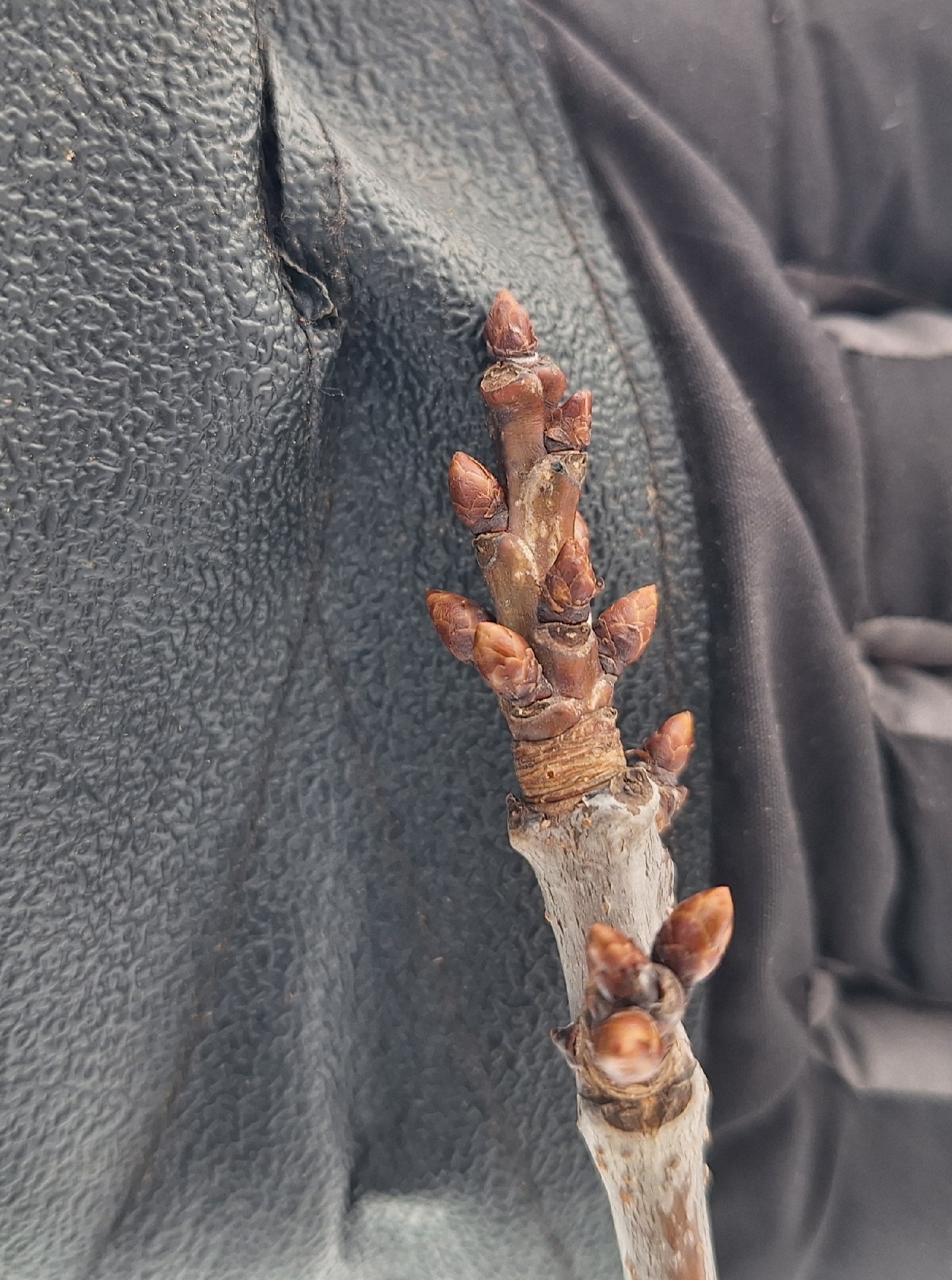
Sargent’s Cherry is recognized by its smooth, coppery-brown bark with horizontal lenticels and pink 5-petaled spring flowers measuring 3–4 cm (1.2–1.6 in) across. Leaves emerge with a reddish-bronze tint before turning dark green in summer.
The alternate leaves are obovate with finely serrated margins, reaching 8–15 cm (3–6 in) in length. In midsummer, small dark purple-black drupes measuring 1 cm (0.4 in) appear, though birds usually eat them quickly.
- Bark: Glossy chestnut brown with prominent lenticels
- Flowers: Single deep pink, in clusters of 2–4
- Autumn Foliage: Brilliant orange to bronze-red
- Fruit: Small black cherries eaten by birds
Sargent Cherry Height, Spread, and Growth Rate
A mature Sargent’s Cherry reaches 8 to 12 m (26 to 40 ft) in height with an equal vase-shaped canopy spread of 6 to 10 m (20 to 33 ft). It grows at a rate of 30 to 45 cm (12 to 18 in) per year under favorable soil conditions.
Young trees exhibit an upright, rigid branch structure that gradually rounds out into a spreading canopy after 15 to 20 years. Narrow cultivars like ‘Rancho’ stay much slimmer, spreading only 3–4 m (10–13 ft) wide at maturity.
Sun, Soil, and Planting Site Requirements
Plant Sargent’s Cherry in a location that receives at least 6 hours of direct sunlight daily. Soil should be rich, loamy, and moisture-retentive with a pH between 6.0 and 7.5.
Although it tolerates mild clay soils better than Japanese flowering cherry (Prunus serrulata), poor drainage causes root rot. Avoid planting near salted roadways or tight urban sidewalk cutouts where soil compaction limits oxygen.
- Sun Exposure: Full sun
- Soil Type: Sandy loam, clay loam, or silt
- Drainage: High priority; never waterlogged
How and When to Plant Prunus sargentii
Plant Sargent’s Cherry in late autumn or early spring while the tree is fully dormant. Dig a hole twice as wide as the root ball and equal in depth to ensure the root collar sits flush with the soil line.
Backfill the hole with original soil, settle it with water to eliminate air pockets, and spread a layer of organic mulch across the root zone. Keep mulch 10 cm (4 in) clear of the trunk bark to prevent stem fungal rot.
- Digging Width: 2x wider than root ball
- Mulch Depth: 5–8 cm (2–3 in) shredded bark
- Staking: Only required in high-wind sites during year 1
Watering and Feeding Sargent’s Cherry
Newly planted trees require 20 to 30 liters (5 to 8 gallons) of water once per week during their first two growing seasons. Established trees rely on rainfall except during droughts lasting longer than 3 weeks.
Apply a slow-release 10-10-10 granular fertilizer in early spring around the drip line at a rate of 50 g per square meter (1.5 oz per square yard). Avoid high-nitrogen lawn fertilizers, which cause excessive leaf growth and lower flower production.
Pruning Prunus sargentii Trees Safely
Prune Sargent’s Cherry exclusively in mid-summer (July or August) when sap flow has slowed and fungal spores are minimal. Avoid winter or early spring pruning, which opens wounds to silver leaf disease and bacterial canker.
Focus pruning on removing dead, rubbing, or damaged branches to maintain airflow through the center of the crown. Clean pruning tools with 70% isopropyl alcohol between cuts to prevent spreading bacterial pathogens.
- Best Pruning Window: July to August
- Target Branches: Dead wood, water sprouts, suckers
- Sanitizer: Rubbing alcohol or 10% bleach solution
Common Prunus sargentii Pests and Diseases
The primary health threats to Sargent’s Cherry are bacterial canker (Pseudomonas syringae) and cherry leaf spot (Blumeriella jaapii). Proper air circulation and dry foliage reduce infection risks dramatically.
Monitor leaves for small purple spots that drop out to leave shot-holes in midsummer. Inspect branches for dark sunken cankers oozing amber resin, which should be pruned out immediately during dry weather.
- Cherry Leaf Spot: Purple spots forming holes; clean up autumn leaves
- Bacterial Canker: Oozing resin; cut infected limbs 15 cm (6 in) below damage
- Eastern Tent Caterpillar: Webbing in branch crotches; remove by hand in morning
- Aphids: Curling leaf tips; spray off with water hose
Winter Care and Cold Hardiness for Sargent’s Cherry
Sargent’s Cherry tolerates winter temperatures down to -34 °C (-30 °F) without requiring winter insulation or wind screens. Its native habitat in Sakhalin and North Japan conditions it for severe winter freezes.
Protect young stems from sunscald and frost cracking by wrapping the lower trunk with commercial white tree guards from November through March. Snow accumulation acts as natural insulation over the root zone.
Landscape Uses and Benefits of Sargent’s Cherry
Sargent’s Cherry functions as an accent lawn specimen, street shade tree, or parkway planting. Its early bloom provides nectar for honeybees (Apis mellifera) before most other trees flower.
This tree provides multi-season visual interest through early pink blooms, summer shade, crimson fall foliage, and reflective reddish winter bark. Plant it alongside sweetbox (Sarcococca hookeriana) or daffodil (Narcissus pseudonarcissus) for a spring display.
Frequently Asked Questions
How fast does North Japanese hill cherry grow?
Sargent's Cherry grows at a moderate rate of 30 to 45 cm (12 to 18 in) per year. It reaches a mature height of 8 to 12 m (26 to 40 ft) in 20 to 25 years.
Is Prunus sargentii toxic to dogs and cats?
Yes, the leaves, stems, and fruit pits of Prunus sargentii contain cyanogenic glycosides that are toxic to dogs, cats, and horses if ingested in large quantities.
What is the difference between Prunus sargentii and Prunus serrulata?
Sargent's Cherry (Prunus sargentii) is cold-hardy to zone 4, blooms earlier with single pink flowers, and offers brighter orange fall foliage than Japanese flowering cherry (Prunus serrulata).
Why are my Sargent cherry leaves turning yellow and dropping in summer?
Early leaf drop in summer is typically caused by cherry leaf spot fungus or prolonged drought stress. Rake up fallen leaves to prevent fungal spores from overwintering.
How long does a Sargent's cherry tree live?
A healthy Sargent's Cherry tree typically lives for 40 to 60 years when grown in full sun and well-drained soil.
Sources & Verification
Taxonomy and distribution are checked against the databases below. Care guidance is written for cultivated species only and reviewed by our editor. How We Build Plant Profiles →
More in Prunus

Peach
Prunus persica
☀️ Full Sun 💧 Moderate

Chokecherry
Prunus virginiana
☀️ Full Sun 💧 Moderate

Higan Cherry
Prunus itosakura
☀️ Full Sun 💧 Moderate

Nanking Cherry
Prunus tomentosa
☀️ Full Sun 💧 Moderate
Sour Cherry
Prunus cerasus
☀️ Full Sun 💧 Moderate

Portugal Laurel
Prunus lusitanica
☀️ Full Sun 💧 Moderate