

Cherry plum (Prunus cerasifera) is a deciduous small tree native to southeastern Europe and western Asia, recognised for its masses of pale early blossoms and cherry-sized stone fruit. It is one of the wild ancestral parents of the domestic European plum.
Trees bloom up to a month earlier than sweet cherries, making early crops vulnerable to late frosts. It demands full sun and annual summer thinning to control heavy suckering.
Key Facts
- Hardiness: USDA zones 5 to 9
- Height: 5 to 8 m (16 to 26 ft)
- Bloom time: Late winter to early spring (February to April)
- Harvest: Midsummer (July to August)
- Soil: Well-drained loams, neutral to alkaline pH 6.0–7.5
- Sun: Full sun for fruit and dark foliage
Is Cherry Plum Right for Your Garden?
Cherry plum suits open gardens seeking early spring colour and edible summer fruit without complex spray schedules. It establishes rapidly, producing dense branch structures within three seasons.
The tree thrives across diverse climates in USDA zones 5 through 9, tolerating urban pollution and moderately heavy clay soils. However, gardeners with manicured lawns should note that standard rootstocks produce aggressive root suckers that require frequent removal.
- Demands an open canopy space of at least 5 m (16 ft) wide.
- Produces large fruit drops that require cleanup over lawns and paths.
- Survives drought well once roots penetrate below 45 cm (18 in).
How to Identify Cherry Plum
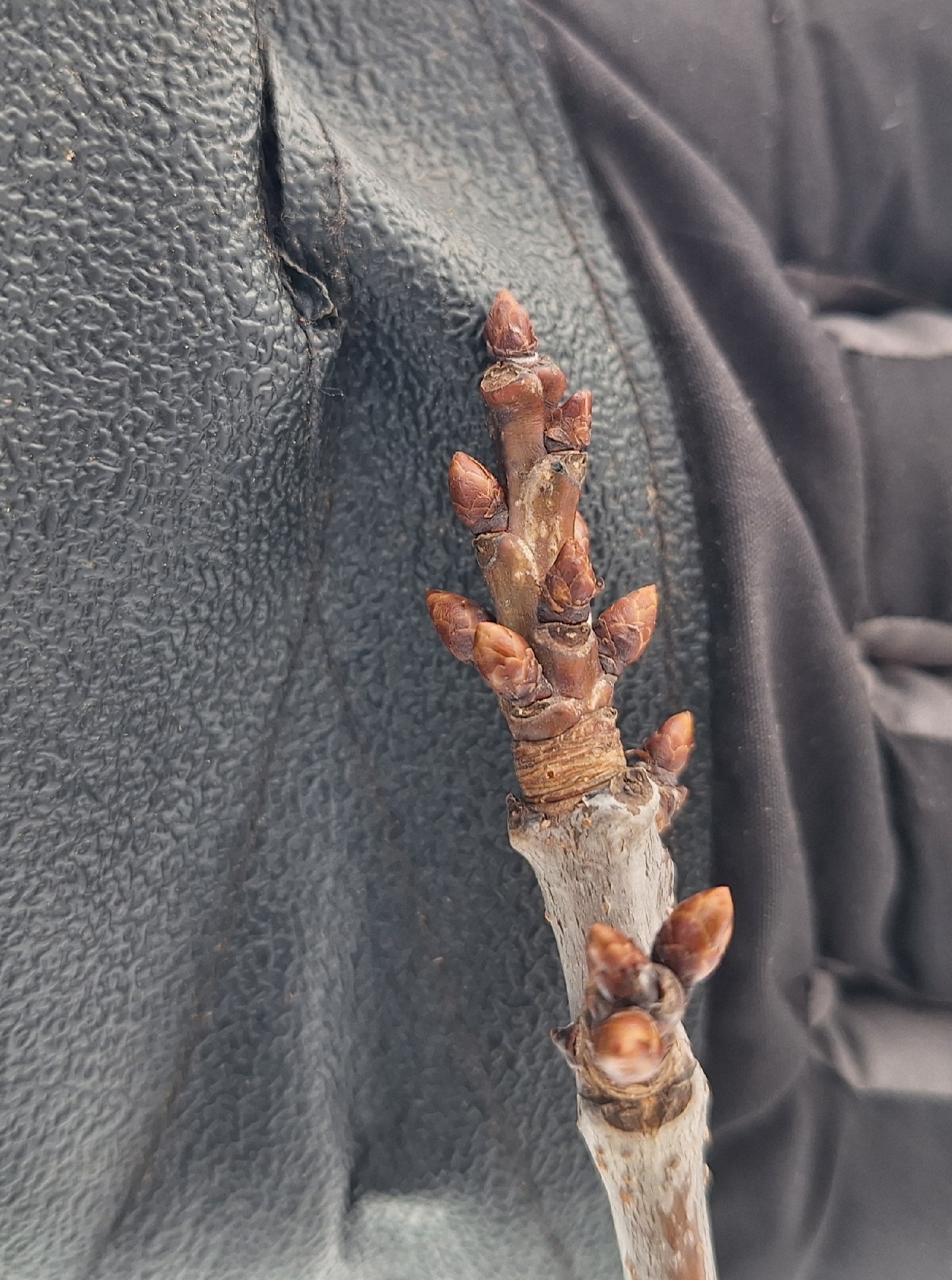
Cherry plum is identified by its smooth, dark reddish-brown bark, slender twiggy crown, and solitary five-petaled blossoms that emerge before or alongside the leaves. The wild form displays elliptic green leaves, while widely planted ornamental cultivars bear intense deep-purple to bronze foliage.
Leaves measure 4 to 7 cm (1.5 to 2.8 in) in length with finely serrated margins. The flowers are 1.5 to 2.5 cm (0.6 to 1 in) wide, pure white to pale blush pink, held on short pedicels. They appear weeks before those of the common plum (Prunus domestica) and blackthorn (Prunus spinosa), which displays sharp stem thorns that cherry plum lacks.
Fruit matures in July and August into spherical drupes 2 to 3 cm (0.8 to 1.2 in) across. Depending on the specimen, fruits range in skin colour from bright yellow and orange to scarlet and dark purple-black, each enclosing a clingstone seed.
Mature Size and Growth Rate
A healthy cherry plum reaches a mature height of 5 to 8 m (16 to 26 ft) with an equal spread, adding 40 to 60 cm (16 to 24 in) of vertical growth per year in its first decade. Cultivars grafted onto dwarfing rootstocks remain smaller, typically topping out around 3 to 4 m (10 to 13 ft).
The tree develops a rounded, vase-like crown with numerous upright leaders if left unpruned. After 15 to 20 years, growth slows noticeably as the canopy becomes dense and fruit production peaks.
- Crown spread: 4 to 7 m (13 to 23 ft) at maturity.
- Trunk diameter: 20 to 35 cm (8 to 14 in) on mature free-standing specimens.
- Productive lifespan: 30 to 45 years, shorter than domestic sweet cherries.
Site and Soil Requirements
Plant cherry plum in full sun with at least six to eight hours of direct light daily to ensure abundant flowering, fruit sweetness, and rich leaf pigmentation in purple cultivars. Specimens positioned in partial shade develop leggy branches and greenish, dull foliage.
The species tolerates sandy, loamy, and well-drained clay soils with a soil pH between 6.0 and 7.5. Avoid low-lying frost pockets where cold air settles in spring, as unseasonable freezes kill early flower buds and destroy the seasonal fruit crop.
- Soil drainage: Must drain within 24 hours following heavy rainfall.
- Wind tolerance: Moderate, but sheltered sites protect delicate spring petals.
- Root depth: Feeder roots concentrate in the top 30 to 60 cm (12 to 24 in) of soil.
Planting a Cherry Plum Tree
The best time to plant cherry plum is during dormancy between late autumn and early spring, provided the ground is not frozen. Container-grown specimens can be planted in late spring if supplemental watering is maintained through the heat of summer.
Dig a planting hole twice the diameter of the root system and equal to its depth. Position the tree so the graft union, if present, sits 5 to 7.5 cm (2 to 3 in) above the finished grade to prevent the rootstock from sending up rival shoots.
- Loosen circled exterior roots by hand to encourage lateral spread into native soil.
- Backfill the hole using native excavated soil without heavy peat or manure amendments.
- Firm the soil gently and apply 20 to 30 litres (5 to 8 gal) of water to settle air pockets.
- Spread a 7 cm (3 in) layer of coarse bark mulch, keeping it 10 cm (4 in) clear of the trunk.
Watering and Feeding Routine
Water young trees with 15 to 20 litres (4 to 5 gal) per week during their first two growing seasons whenever rainfall totals drop below 2.5 cm (1 in). Established trees require supplemental irrigation only during prolonged summer droughts or while fruit is swelling.
Avoid excessive nitrogen fertilizers, which trigger weak, sappy growth prone to aphid infestations and fire blight. A top-dressing of well-rotted compost applied in early spring supplies adequate slow-release nutrition.
- Young trees (years 1–2): Water every 7 to 10 days from May to September.
- Established trees: Water deeply once every 3 weeks during summer dry spells.
- Fertilizer: Apply a balanced 10-10-10 granular feed only if annual extension growth drops below 20 cm (8 in).
Pruning Cherry Plum Safely
Prune cherry plum exclusively in mid-summer (June to August), never in winter or damp spring, to prevent fatal silver leaf fungus and bacterial canker infections. Dry, warm summer days allow wounds to callous rapidly before fungal spores circulate.
Focus cuts on removing dead, crossed, or diseased branches to open the interior crown to sunlight and airflow. Strip away water sprouts and root suckers cleanly at their point of origin on the trunk base or root flare as soon as they appear.
- Timing window: Mid-June through early August only.
- Canopy thinning: Remove no more than 20 percent of living canopy volume in a single season.
- Hygiene: Disinfect bypass shears with 70 percent isopropyl alcohol between cuts.
Common Pests and Tree Problems
The primary health threats to cherry plum are fungal cankers, bacterial gummosis, and aphid infestations on young terminal shoots. Monitoring the canopy from early bud break helps catch problems before they compromise tree structure.
Watch for amber-coloured gum oozing from bark lesions, which indicates bacterial canker caused by Pseudomonas species. Prune infected wood at least 15 cm (6 in) below the damaged zone into healthy tissue. Silver leaf (caused by Chondrostereum purpureum) produces a distinctive lead-grey sheen on leaves; infected branches must be cut out and burned immediately.
- Aphids: Cause curled terminal leaves in May; wash off using sharp water jets or horticultural soap.
- Plum rust: Brown pustules on undersides of foliage by late summer; rake and discard autumn leaves.
- Pocket gall: Swollen, deformed fruit caused by Taphrina pruni; strip infected fruits before spores release.
Winter Care and Cold Hardiness
Mature cherry plum trees tolerate temperatures down to -28 °C (-20 °F) without winter protection, falling securely within USDA hardiness zones 5 through 9. Dormant wood withstands deep frost, but sudden late-winter warm spells can cause premature bud burst.
Young trunks are susceptible to southwest winter injury, where rapid temperature fluctuations between sunny afternoons and freezing nights crack the bark. Protect thin bark on trees under four years old by applying white spiral plastic tree guards or painting trunks with diluted white latex paint in late autumn.
Culinary, Landscape, and Rootstock Uses
Cherry plum serves three distinct roles in cultivation: fruit production, landscape ornament, and fruit tree grafting. The fruit provides tart flesh prized across eastern Europe and the Caucasus for traditional culinary applications.
In Georgian cuisine, unripe and ripe cherry plums are boiled and seasoned with coriander, garlic, and hot peppers to make tkemali, a classic sour sauce served with meats. Fully ripened sweet plums are eaten raw, baked into tarts, or stewed into jams with an equal weight of sugar to balance their high malic acid levels. 100 grams of fresh cherry plums contains approximately 46 calories.
Horticulturally, the vigorous seedling form, known as Myrobalan rootstock, is the industry standard for grafting commercial European plums, apricots, and peaches due to its high soil adaptability and nematode resistance. Purple-leaved ornamental selections provide long-season garden focal points alongside flowering companions such as Japanese apricot (Prunus mume) and sweet cherry (Prunus avium).
Seasonal Tasks for Cherry Plum
| Spring | Apply a 5 cm (2 in) layer of compost around the drip line before bud break. Monitor new blossoms for frost injury and check leafing shoots for early black aphid colonies. |
|---|---|
| Summer | Prune out dead wood, water sprouts, and crowded branches on dry days between late June and August. Harvest ripe plums as they soften and maintain watering during fruit enlargement. |
| Autumn | Rake up and destroy fallen fruit and diseased leaves to break plum rust and fungal lifecycles. Plant bare-root specimens once dormancy arrives in late October or November. |
| Winter | Inspect trunks for rodent chew or frost cracks; install trunk wraps on specimens under 4 years old. Keep pruning tools put away until summer to prevent fungal spore infection. |
Diagnosing Common Cherry Plum Problems
| What you see | Likely cause | What to do |
|---|---|---|
| Amber gum oozing from trunk wounds | Bacterial canker (Pseudomonas) or mechanical wound reaction | Prune affected limbs 15 cm (6 in) below the lesion in dry summer weather and burn the clippings. |
| Silvery or metallic sheen on foliage | Silver leaf fungal infection (Chondrostereum purpureum) | Cut affected branches back to healthy unstained wood immediately and disinfect pruning tools. |
| Curled, sticky young foliage in spring | Aphid infestation feeding on sap | Spray leaves thoroughly with horticultural soap or direct a strong water jet at the undersides. |
| Premature fruit drop before ripening | Drought stress or plum sawfly damage | Soak root zone with 25 litres (6.5 gal) of water weekly during dry spells and clear dropped fruit. |
| Vigorous green shoots rising from trunk base | Rootstock suckering | Tear or cut suckers flush with the root collar as soon as they appear in spring. |
Cultivars of Cherry Plum
- Pissardii – pale pink flowers, deep purple foliage
- Nigra – dark blackish-purple leaves, bright pink flowers
- Trailblazer – larger edible red fruit, bronze leaves
- Hessei – shrubby habit, creamy-white variegated margins
- Hollywood – pink blooms, heavy red fruit production
Frequently Asked Questions
Can you eat cherry plums raw?
Yes, ripe cherry plums are safe and delicious to eat raw straight from the tree. Discard the hard inner stone, as the pit contains amygdalin, which breaks down into toxic cyanide if chewed or swallowed in quantity.
What is the cherry plum fruit season?
Cherry plum fruit ripens between mid-July and late August depending on your local climate and cultivar. Fruits soften and develop yellow, red, or dark purple skins when fully ready for harvest.
How many calories are in cherry plums?
Fresh cherry plums contain approximately 46 calories per 100 grams (3.5 oz). They consist mostly of water and natural fruit sugars with trace amounts of vitamin C and dietary fibre.
Can you grow a cherry plum tree from seed?
Yes, but cherry plum seeds require 90 to 120 days of cold moist stratification at 1 to 4 °C (34 to 40 °F) before they will germinate. Seedling trees will produce edible fruit in 3 to 5 years, but purple-leaf cultivars will not breed true from seed.
What are the traditional benefits of cherry plum?
Cherry plum fruit was traditionally used in folk remedies to aid sluggish digestion and provide dietary organic acids. In flower essence traditions, cherry plum essence was historically used by Edward Bach with the aim of promoting emotional composure.
Information about traditional or historical uses is provided for educational interest only and is not medical advice. Do not use any plant to treat a condition without speaking to a qualified professional.
Sources & Verification
Taxonomy and distribution are checked against the databases below. Care guidance is written for cultivated species only and reviewed by our editor. How We Build Plant Profiles →
More in Prunus

Wild Himalayan Cherry
Prunus cerasoides
☀️ Full Sun 💧 Moderate

Japanese Cherry
Prunus serrulata
☀️ Full Sun 💧 Moderate

Hollyleaf Cherry
Prunus ilicifolia
☀️ Full Sun 💧 Low

Chokecherry
Prunus virginiana
☀️ Full Sun 💧 Moderate

Higan Cherry
Prunus itosakura
☀️ Full Sun 💧 Moderate
Sour Cherry
Prunus cerasus
☀️ Full Sun 💧 Moderate