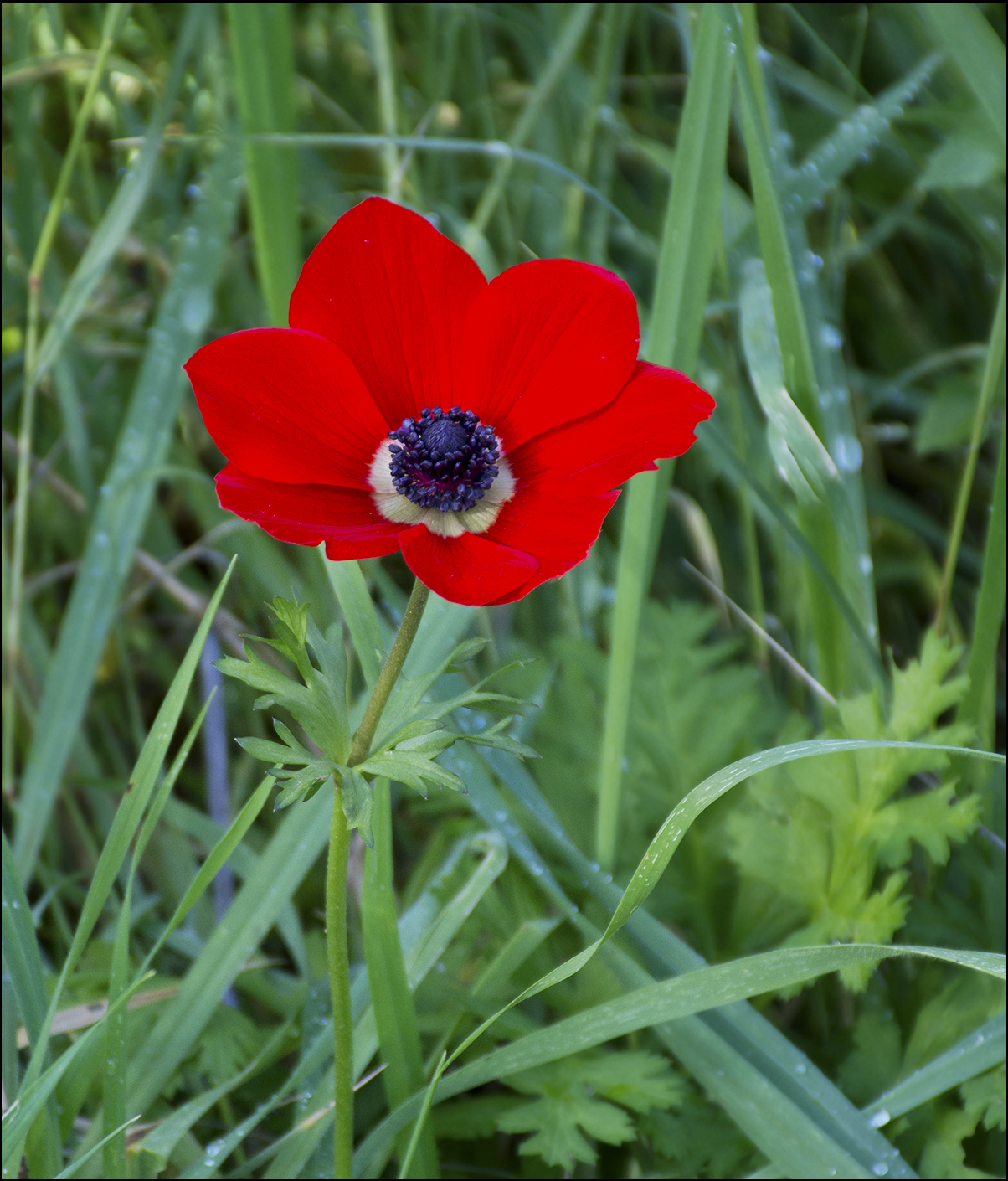
Wood anemone (Anemone nemorosa) is an early spring perennial wildflower native to European deciduous woodlands and ancient forests. It carpets woodland floors with white, star-shaped flowers before overhead tree canopies leaf out.
This ephemeral species grows rapidly from underground rhizomes in March and April, then enters dormancy by mid-summer as shade deepens.
Key Facts
- Type: Herbaceous perennial wildflower
- Height: 5-15 cm (2-6 in)
- Bloom Time: Early spring (March to May)
- Native Range: Europe
- Toxicity: Toxic to humans and pets
Where Wood Anemone Fits in the Woodland
Wood anemone suits shaded garden settings, woodland edges, and naturalized wild areas where soils remain undisturbed. It requires a cool, moisture-retentive woodland floor to thrive naturally.
Because it dies back completely by July, plant it alongside later-emerging ferns or hostas to prevent bare patches in summer borders. Avoid hot, dry sites or areas with heavy foot traffic, as the delicate underground rhizomes damage easily under compact soil.
How to Identify Wood Anemone
Wood anemone is easily recognised by its single white flower held 5-15 cm (2-6 in) above a whorl of three deeply lobed, palmately divided leaves. Each flower measures 2-3 cm (0.8-1.2 in) across and usually features six white sepals, often tinged with purple or pink on the underside.
- Leaves: Divided into three segments with jagged, toothed margins.
- Stems: Slender, unbranched green or reddish stalks rising directly from creeping rhizomes.
- Blooms: Appear from March to May, tracking the sun across the woodland floor.
- Seed heads: Small, hairy achenes clustered tightly on a short stalk.
Natural Habitat and Distribution
Wood anemone grows natively across temperate Europe, stretching from Britain eastward into Russia and parts of western Asia. It acts as a classic indicator species for ancient woodlands, often pointing to undisturbed forest soils that are hundreds of years old.
You will find colonies thriving beneath deciduous trees such as oak (Quercus robur) and beech (Fagus sylvatica). The plants rely on the winter sunlight that reaches the forest floor before trees leaf out, allowing them to complete their yearly life cycle in just a few weeks.
Wood Anemone Ecology and Pollinators
Wood anemone provides a critical early nectar and pollen source for bees, flies, and other emerging spring insects. Because it lacks nectar, it attracts pollinators primarily through generous supplies of pollen and its open, highly reflective white saucers.
The seeds feature small oily appendages called elaiosomes, which attract ants. Ants carry the seeds back to their nests, eat the oily attachment, and discard the undamaged seed underground, helping the plant spread slowly across the forest floor.
Conservation Status and Wild Populations
Wood anemone maintains a secure global population and is classified as Least Concern by the IUCN. However, local populations face decline when ancient woodlands are cleared or fragmented by modern development.
Because wood anemone spreads very slowly via rhizomes—often less than 1.5 cm (0.6 in) per year—colonies take centuries to establish. Digging up wild specimens damages fragile local ecosystems and usually results in plant failure due to root shock.
Traditional Uses and Toxicity
Wood anemone was traditionally used in European herbal medicine to treat rheumatism, skin conditions, and headaches. All parts of the plant contain protoanemonin, a toxic chemical compound that causes severe blistering on contact with skin and painful internal irritation if swallowed.
- Skin contact: Sap causes redness, itching, and temporary blistering.
- Ingestion: Leads to severe burning in the mouth, vomiting, and bloody diarrhea.
- Livestock: Grazing animals typically avoid the plant due to its acrid, burning taste.
Popular Wood Anemone Cultivars
- Anemone nemorosa ‘Vestal’ – double white button-like flowers, slow spreading
- Anemone nemorosa ‘Royal Blue’ – deep violet-blue outer petals, pale centers
- Anemone nemorosa ‘Robinsoniana’ – soft lavender-blue cup-shaped flowers
- Anemone nemorosa ‘Blue Eyes’ – white flowers featuring a distinct blue center
Similar Species to Wood Anemone
Wood anemone can be confused with yellow anemone (Anemone ranunculoides), which features bright yellow flowers, or rue-anemone (Thalictrum thalictroides), which produces clusters of pink or white blooms. Checking the flower color and leaf division pattern helps separate these closely related woodland species.
- Yellow anemone: Displays distinct yellow flowers and slightly broader leaf lobes.
- Wood sorrel (Oxalis acetosella): Features white, purple-veined flowers but possesses clover-like, heart-shaped leaflets instead of lobed leaves.
- Star of Bethlehem (Ornithogalum umbellatum): Bears similar white star-shaped flowers but grows from a true bulb with grass-like, linear leaves featuring a white central stripe.
Frequently Asked Questions
Where can I buy anemone nemorosa bulbs?
You can purchase wood anemone tubers or dormant rhizomes from specialist alpine nurseries and native plant specialists, usually supplied in autumn or as green plants in spring.
What is the meaning of wood anemone?
Wood anemone symbolizes anticipation, fading hope, and protection against evil in traditional folklore, earning the historical name windflower because petals drop quickly in strong spring gales.
Can I grow wood anemone in New Zealand?
Yes, wood anemone grows successfully in cooler regions of New Zealand such as Otago and Southland, provided it receives moist soil and deep summer shade.
How deep should you plant wood anemone rhizomes?
Plant wood anemone rhizomes 5 cm (2 in) deep in humus-rich soil, laying them horizontally with the small growth buds facing upward.
Information about traditional or historical uses is provided for educational interest only and is not medical advice. Do not use any plant to treat a condition without speaking to a qualified professional.
Sources & Verification
Taxonomy and distribution are checked against the databases below. Care guidance is written for cultivated species only and reviewed by our editor. How We Build Plant Profiles →