
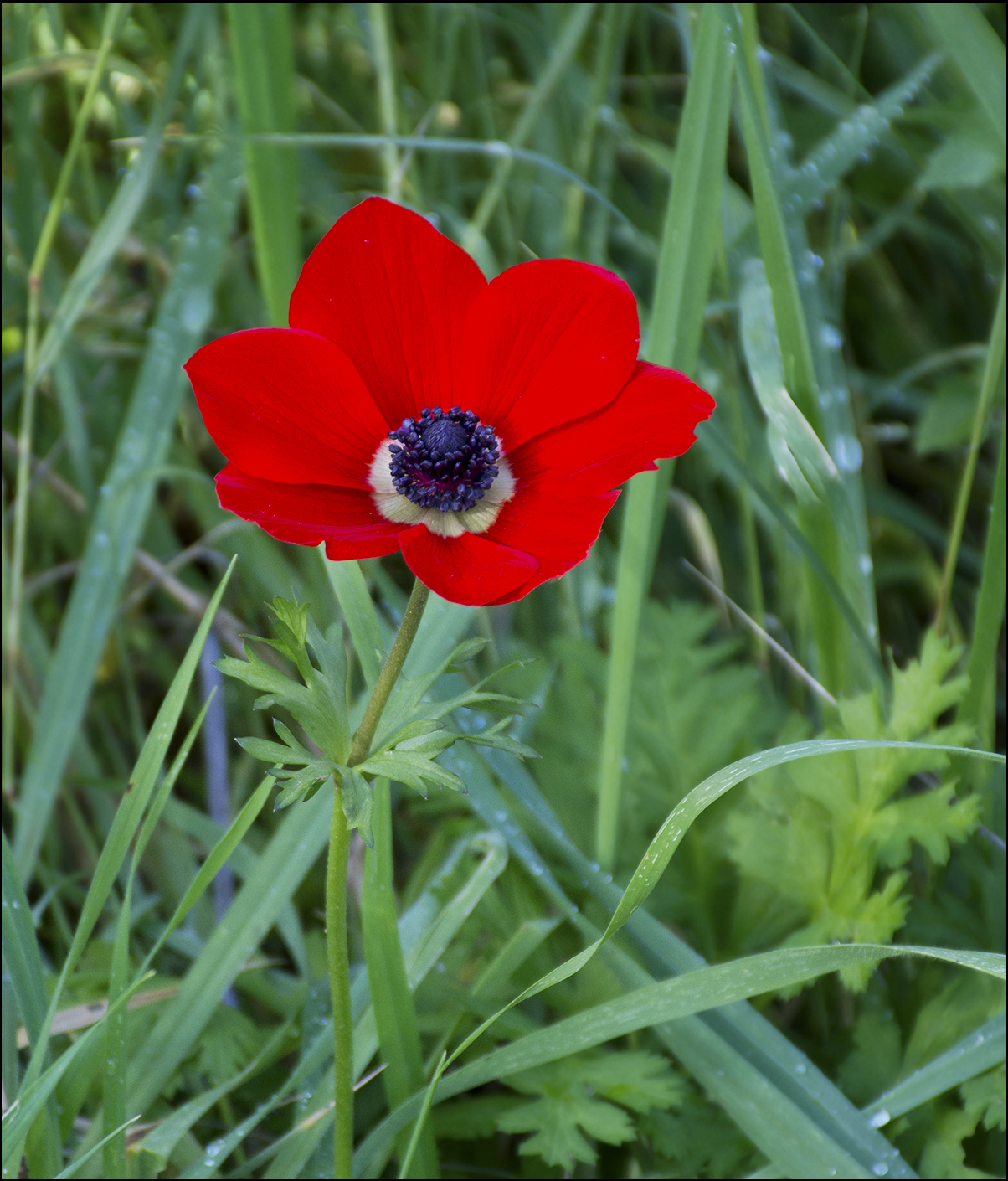
The poppy anemone (Anemone coronaria) is a tuberous perennial native to the Mediterranean region, prized for cup-shaped flowers with dark, contrasting centers. Reaching heights of 20-40 cm (8-16 in), it blooms intensely in spring with papery petals in shades of red, purple, white, and pink.
Success with this plant relies heavily on well-drained soil and proper tuber preparation before planting. Without adequate drainage, tubers rot quickly during winter wetness.
Key Facts
- Light: Full sun to partial sun
- Water: Moderate during growth, dry in summer dormancy
- Soil: Well-drained, sandy or loamy
- Height: 20-40 cm (8-16 in)
- Toxicity: Toxic to pets and humans
What It Is Like to Grow Poppy Anemone
Growing poppy anemones suits gardeners who enjoy vibrant, cup-shaped spring flowers in cutting gardens and borders. You get a striking display of saucer-shaped blooms on wiry stems that stand up well to spring weather. The main thing to get right is the summer dormancy period, where tubers need to stay relatively dry once the foliage dies back in summer.
These plants work well in rock gardens, front-of-border positions, and containers where drainage is easiest to control. Because they go dormant after flowering, plan companion plants nearby to fill the gaps left by fading foliage. The tubers resemble little claws, which can surprise beginners if planted upside down.
- Plant in groups of 10 or more for a dense, colorful carpet of blooms.
- Keep foliage intact after flowering until it yellows naturally to feed the tuber.
- Lift tubers in colder zones if winter temperatures drop below -12 °C (10 °F).
What Does Poppy Anemone Look Like
Poppy anemones feature deeply divided, fern-like basal leaves and solitary, bowl-shaped flowers measuring 5-8 cm (2-3 in) across. Each bloom displays a prominent central cushion of dark stamens surrounded by 5 to 8 vibrant petals. The flowers sit atop upright stems rising above a low mound of foliage.
Underground, the plant forms gnarled, tuberous root structures that store energy during dormancy. Flower colors range from deep blues and purples to scarlet reds, stark whites, and bicolors with contrasting white or dark rings. The textured, papery petals close at night and reopen in morning sunlight.
- Basal foliage emerges finely cut, resembling parsley or wild carrot leaves.
- Stems grow straight and hairless, reaching 20-40 cm (8-16 in) tall.
- The central black or dark blue eye gives the flower a distinctive poppy-like appearance.
Best Site Selection for Poppy Anemone
Choose a planting site that receives at least 6 hours of direct sunlight daily and has exceptionally well-drained soil. Without full sun, flower production drops significantly and stems stretch weakly toward the light. Standing water in winter is the fastest way to kill the tubers.
Improve heavy clay soils by working in coarse sand and organic compost before planting. Raised beds and sloped borders provide the ideal natural runoff needed to keep these Mediterranean natives healthy. Avoid planting them in low spots where frost pockets form.
- Ensure the soil pH sits between 6.0 and 7.5 for optimal nutrient uptake.
- Protect planting sites from harsh, drying winter winds that can damage emerging shoots.
- Test soil drainage by digging a 30 cm (12 in) hole and filling it with water; it should drain within a few hours.
How to Plant Poppy Anemone Tubers
Soak the hard, dry tubers in lukewarm water for 3 to 4 hours before planting to jumpstart germination. Plant them 5 cm (2 in) deep and about 10 cm (4 in) apart in autumn or early spring. Finding the top of the tuber can be tricky, so plant them on their side or with the pointed, claw-like end pointing downwards if visible.
In mild winter regions (USDA zones 8-10), plant in autumn for an early spring floral display. In colder climates (zones 7 and below), plant in early spring after the danger of severe freezing has passed, or start them indoors in pots. Water the bed thoroughly after planting to settle the soil around the tubers.
- Soaking transforms shriveled tubers into plump, firm roots ready for growth.
- Space groups tightly together to create a lush, saturated color block in the landscape.
- Mark the planting spot clearly so you do not disturb dormant tubers later in the season.
Water and Feed Requirements
Water poppy anemones moderately while actively growing in spring, keeping the soil moist but never soggy. Once flowering finishes and the foliage turns yellow in summer, stop watering entirely to allow the tubers to enter their natural dry dormancy. Fertilizer is rarely necessary if planted in rich garden loam.
If your soil is poor, apply a balanced, low-nitrogen liquid fertilizer once when spring growth first appears. Excess nitrogen results in lush, weak foliage at the expense of flower buds. Container-grown plants require more attentive watering than garden beds, but still demand excellent drainage.
- Allow the top 3 cm (1.2 in) of soil to dry out between watering sessions in spring.
- Cease all irrigation by mid-summer as leaves brown and wither away.
- Resume light watering only when autumn temperatures cool and new shoots emerge in warm climates.
How to Prune and Deadhead Poppy Anemone
Prune away spent flower stems at the base once petals drop to encourage tidy growth, but leave all green foliage intact. Cutting back leaves prematurely starves the tuber of the energy it needs for next year’s bloom. Wait until the entire foliage clump turns yellow and crisp before removing it.
Deadheading regular blooms prevents the plant from expending energy on seed production, though you can leave a few flowers if you want to harvest seeds. Clear away all dead debris at the end of the season to prevent fungal spores from overwintering near the soil surface.
- Snip spent flower stems close to the base using clean, sharp secateurs.
- Never braid, tie, or cut green leaves while the plant is still gathering sunlight.
- Clear away completely dried foliage by mid-summer to keep the garden bed tidy.
How to Propagate Poppy Anemone
Propagate poppy anemones by dividing mature tubers in autumn or by sowing seeds fresh in spring. Division is best done when plants are dormant and you can easily see natural offsets clustered around the main tuber. Carefully snap or cut the offsets apart, ensuring each piece has at least one visible growing eye.
Growing from seed requires patience, as seedlings take up to six months to germinate and two years to produce flowers. Sow seeds in flat trays filled with a sterile, sandy seed-starting mix and keep them cool and moist. Transplant young seedlings into individual pots once they develop true leaves.
- Separate offsets gently with your hands to avoid bruising the flesh.
- Dust cut tuber surfaces with sulfur powder to prevent fungal rot before replanting.
- Press seeds lightly into the soil surface, as they need light to germinate properly.
Troubleshooting Poppy Anemone Problems
Root rot caused by waterlogged soil is the single most common reason poppy anemones fail to thrive. If leaves yellow prematurely during spring, check the soil moisture and ensure water isn’t pooling around the tubers. Pests and diseases can also occasionally impact your display if conditions drift away from their preferences.
Fungal leaf spots may appear during wet, humid springs, while aphids sometimes target tender new flower buds. Protect young shoots from slugs and snails in early spring when foliage first breaks the soil surface. Remove and destroy heavily infected plants immediately to stop disease spread.
- Symptom: Mushy stems and collapsing plants. Cause: Overwatering or poor drainage. Fix: Improve soil drainage or move tubers to a raised bed.
- Symptom: Chewed leaves and missing shoots. Cause: Slugs or snails. Fix: Apply organic iron phosphate bait around emerging stems.
- Symptom: Stunted growth and distorted buds. Cause: Aphid infestation. Fix: Spray colonies directly with insecticidal soap or a strong stream of water.
Winter Care and Dormancy
Protect poppy anemones in winter by applying a 5 cm (2 in) layer of straw or leaf mulch in USDA zones 7-8. In freezing climates below zone 7, dig up the tubers after foliage dies back in summer and store them indoors. Store dry tubers in a cool, dark, frost-free spot packed in peat moss or dry sand until spring planting time.
Leave tubers in the ground year-round only in regions where winter soil stays relatively dry and temperatures rarely drop below -10 °C (14 °F). Wet, freezing soil is fatal to dormant tubers, causing them to turn to mush before spring arrives. Check stored tubers monthly and discard any that feel soft or show mold.
- Apply mulch only after the ground freezes lightly to prevent mice from nesting in it.
- Store lifted tubers in paper bags or mesh crates to ensure adequate air circulation.
- Replant stored tubers outdoors as soon as the danger of hard spring frost passes.
When Poppy Anemone Blooms
Poppy anemones bloom primarily from mid-spring to early summer, lasting for 4 to 6 weeks in cool weather. Flowering begins roughly 90 to 100 days after planting autumn-soaked tubers, or slightly later for spring-planted crops. High heat shortens the blooming window significantly, causing petals to drop faster.
Staggering your planting times in spring allows you to extend the total harvest window for cut flowers. Each tuber produces multiple successive flower stems over several weeks, maximizing your garden color. Hot summer temperatures signal the end of the bloom cycle as the plant transitions into dormancy.
- Provide afternoon shade in warmer regions to prolong the spring flower display.
- Harvest cut flowers when buds show color but before petals fully open for longest vase life.
- Expect flowers to last up to 10 days in a vase with fresh water changed daily.
Poppy Anemone Through the Seasons
| Spring | Water moderately as shoots emerge and enjoy the heavy flush of blooms. Cut back spent flower stems to encourage continuous flowering. |
|---|---|
| Summer | Cease all watering as foliage yellows and dies back to allow tubers to enter dormancy. Lift tubers in cold regions once leaves are dry. |
| Autumn | Soak and plant new tubers in mild regions for an early spring display. Apply a light protective mulch layer if freezing temperatures approach. |
| Winter | Keep outdoor beds as dry as possible to prevent tuber rot. Inspect stored indoor tubers monthly to ensure they remain firm and mold-free. |
Poppy Anemone Problem Diagnosis
| What you see | Likely cause | What to do |
|---|---|---|
| Yellow lower leaves in spring | Overwatering or poor soil drainage | Reduce watering frequency and ensure the surrounding soil sheds excess moisture quickly. |
| Failure to bloom | Insufficient sunlight or planted too deep | Relocate tubers to a spot receiving at least 6 hours of direct sun with a planting depth of 5 cm (2 in). |
| Rotting tubers in winter | Wet, freezing soil conditions | Lift tubers in autumn for indoor storage or amend soil with coarse sand for better drainage. |
Popular Poppy Anemone Cultivars
- ‘De Caen’ – single-flowered strains in vivid reds, blues, and whites
- ‘St. Brigid’ – semi-double ruffled flowers with striking dark centers
- ‘Governor’ – brilliant scarlet red blooms with contrasting dark eyes
- ‘Lord Lieutenant’ – deep violet-blue double flowers on sturdy stems
- ‘Mount Everest’ – pure white flowers with dark central cushions
Companion Plants for Poppy Anemone
Pair poppy anemones with early spring bulbs and low perennials like grape hyacinth (Muscari armeniacum), sweet alyssum (Lobularia maritima), and daffodils (Narcissus spp.). These companions share similar sun and drainage requirements while providing complementary textures. Low-growing groundcovers help fill in the bare spots left when anemones go dormant in summer.
Select plants that emerge late or maintain a compact footprint so they do not crowd out the delicate anemone foliage. Perennials with fine foliage, such as blue fescue (Festuca glauca), contrast nicely against the broad, colorful anemone cups. Avoid aggressive spreaders that might compete with the tubers underground.
- Plant alongside tulips (Tulipa spp.) for overlapping spring color bursts in formal beds.
- Use evergreen perennials to mask the empty patches left during summer dormancy.
- Choose plants requiring similar low-summer water to avoid rotting the dormant anemone tubers.
Frequently Asked Questions
Are poppy anemones perennial?
Yes, poppy anemones are perennial plants grown from underground tubers that return each year in USDA zones 7-10. In colder climates, they are often treated as annuals unless tubers are lifted and stored indoors over winter.
When is the best time for planting poppy anemone bulbs?
Plant poppy anemone tubers in autumn in mild-winter regions for spring blooms, or in early spring in colder climates after the last hard frost. Always soak the dry tubers in lukewarm water for 3 to 4 hours before planting.
How do you deadhead poppy anemone?
Snip spent flower stems back to the base of the plant using sharp shears once the petals drop. Leave all green foliage intact until it yellows naturally so the tuber can store energy for the next growing season.
What is the meaning and symbolism of the poppy anemone?
Poppy anemones symbolize anticipation, protection against evil, and forsaken love in traditional flower symbolism. Their bright blooms are also commonly associated with sincerity and the arrival of spring.
Are poppy anemones toxic to pets?
Yes, poppy anemones are toxic to cats, dogs, and humans due to protoanemonin irritants present in the sap. Ingestion causes drooling, mouth irritation, and digestive upset, so keep them away from grazing pets.
Sources & Verification
Taxonomy and distribution are checked against the databases below. Care guidance is written for cultivated species only and reviewed by our editor. How We Build Plant Profiles →

