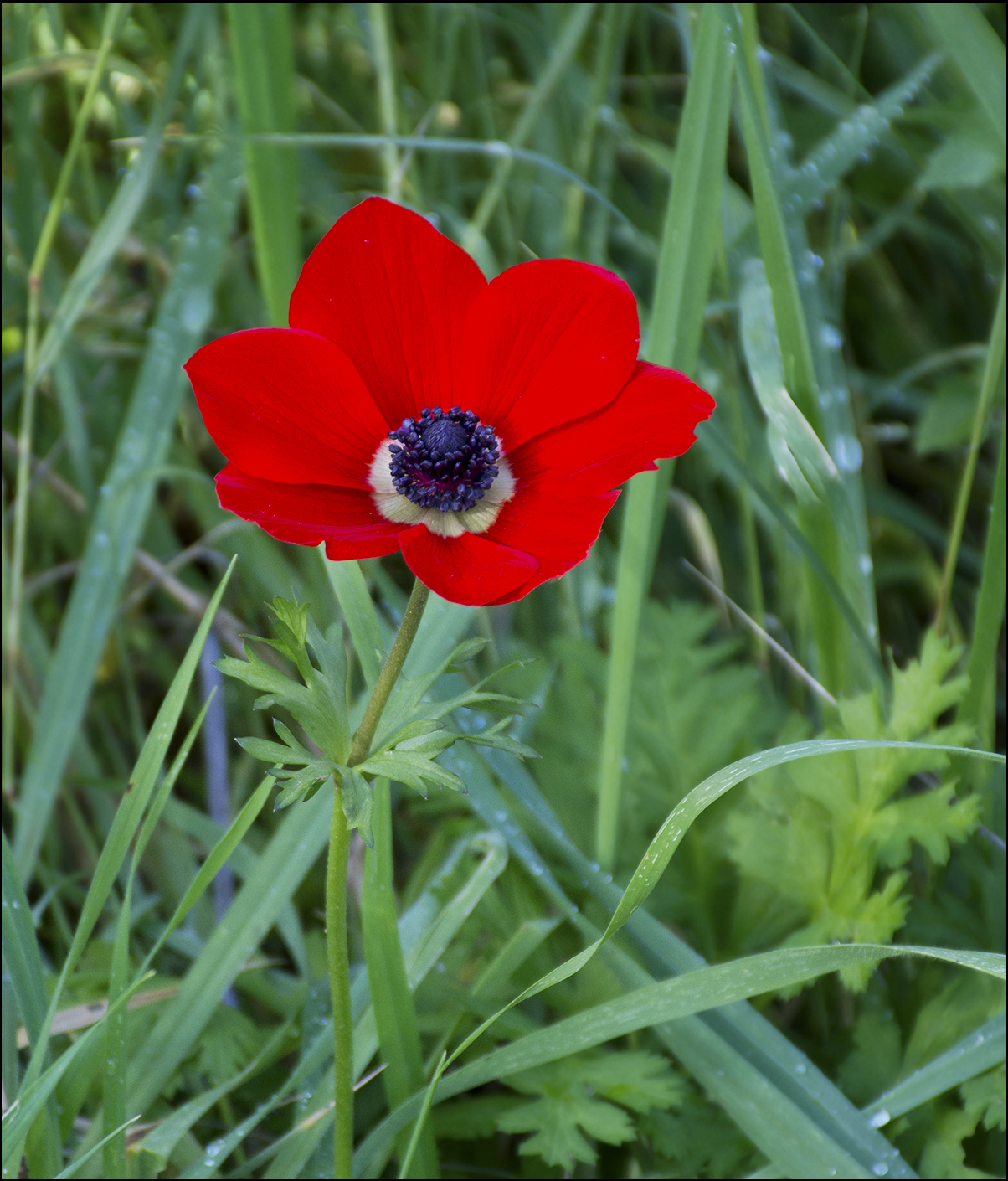
Yellow Anemone is a rhizomatous perennial native to deciduous forests across Europe and Western Asia, belonging to the buttercup family. It is recognized by its bright yellow, cup-shaped flowers that appear in early spring before the forest canopy closes, often forming dense carpets. Anemone ranunculoides is a spring ephemeral, meaning it completes its life cycle and goes dormant by midsummer.
This species thrives in the dappled shade of deciduous trees and requires moist, humus-rich soil to establish successfully. Because the plant disappears entirely after flowering, you should mark its location in the garden to avoid accidental damage during summer maintenance. It is frequently confused with the white-flowered wood anemone (Anemone nemorosa) but is distinguished by its yellow sepals and multiple flowers per stem.
Key Facts
- Light: Dappled shade or partial sun
- Water: Keep moist during spring growth
- Soil: Humus-rich, well-drained, acidic to neutral
- Bloom Time: March to May
- Hardiness: USDA zones 4-8
- Toxicity: Toxic to humans and pets if ingested
Fitting Yellow Anemone into Your Garden
Yellow Anemone is best suited for woodland-style gardens or shaded borders under deciduous trees where it can naturalize undisturbed. It provides early spring groundcover before most other perennials emerge, filling the gap between winter aconites (Eranthis hyemalis) and summer-flowering plants. Because it disappears entirely by July, it works well when interplanted with later-emerging species like hostas (Hosta) or ferns that will cover the bare ground.
This plant is ideal for gardeners who want a low-maintenance, cold-hardy species that spreads slowly via underground rhizomes. It is not suitable for dry, sunny rock gardens or areas with heavy summer foot traffic, as the dormant rhizomes are brittle and sit near the soil surface. In its native European range, it is often found in ancient woodlands, indicating its preference for stable, undisturbed environments.
Identifying Anemone ranunculoides
This species grows to a height of 5-15 cm (2-6 in) with a creeping rhizomatous habit that forms a low mat. The leaves are deeply divided into three lobes and appear in a single whorl on the stem just below the flower. Unlike many other anemones, this species often produces two or three flowers on a single stem rather than just one.
- Flowers: Bright yellow, 1.5-2.5 cm (0.6-1 in) wide, usually with 5-8 petal-like sepals.
- Stems: Slender, reddish-green, supporting the flower whorl.
- Leaves: Dark green, palmately lobed, appearing in early spring and dying back by summer.
- Roots: Horizontal, brittle brown rhizomes that spread slowly just beneath the surface.
Best Lighting and Soil Conditions
Yellow woodland anemone requires dappled shade to mimic its native forest floor environment. It needs full light in early spring before trees leaf out to fuel its rapid growth and flowering, followed by cooling shade during the summer months. Avoid planting it in deep, permanent shade, as this will reduce flower production and lead to leggy stems.
The soil must be rich in organic matter and consistently moist but well-drained. Aim for a pH between 6.0 and 7.5. You can improve garden soil by incorporating leaf mold or well-rotted compost before planting. Heavy clay soils should be amended with grit to prevent the rhizomes from rotting during wet winters.
How to Plant Yellow Anemone Rhizomes
Plant the rhizomes in autumn at a depth of 2-5 cm (1-2 in) to ensure they do not dry out or freeze. Space the rhizomes approximately 10-15 cm (4-6 in) apart to allow for natural spreading over several seasons. If the rhizomes appear shriveled upon arrival, soak them in lukewarm water for 2-4 hours before planting to rehydrate the tissues.
- Orientation: Lay rhizomes horizontally in the planting hole.
- Mulching: Apply a 3 cm (1 in) layer of leaf mold immediately after planting.
- Watering: Water thoroughly once to settle the soil around the roots.
- Marking: Use a small stake to mark the spot, as no growth will appear until spring.
Watering and Fertilizing Requirements
Keep the soil consistently moist from the moment the first shoots appear in late winter until the foliage dies back in summer. If the spring is particularly dry, provide supplemental watering to ensure the flowers do not wilt prematurely. Once the plant enters summer dormancy, the soil can be allowed to dry out slightly, but it should never become parched.
Yellow Anemone does not require heavy fertilization and can be damaged by high-nitrogen synthetic fertilizers. Instead, apply a top-dressing of organic leaf mold or composted bark every autumn. This provides a slow release of nutrients and maintains the soil structure that these forest plants prefer. Avoid using fresh manure, which can burn the delicate rhizomes.
Pruning and Maintenance
You should never cut back the foliage until it has turned completely yellow and withered naturally. The plant uses this period after flowering to photosynthesize and store energy in its rhizomes for the following year’s growth. Removing green leaves prematurely will weaken the plant and may prevent flowering in the next season.
Once the leaves have died back in early summer, you can gently clear the brown debris to keep the garden tidy. Avoid digging or hoeing in the area during the summer dormancy to prevent damaging the brittle roots. If you must plant summer annuals nearby, do so carefully to avoid disturbing the anemone’s root zone.
Propagating by Division
The most effective way to propagate Yellow Anemone is by dividing the rhizomes during their dormant period in late summer or early autumn. Dig up a small clump and carefully snap the rhizomes into sections, ensuring each piece has at least one growth bud or “eye.” Replant these sections immediately at the same depth they were previously growing.
While the plant can be grown from seed, this method is significantly slower and requires a period of cold stratification. Seeds must be sown while fresh, as they lose viability quickly once dried. Plants grown from seed may take 3-5 years to reach flowering size, whereas divided rhizomes often bloom the following spring.
Winter Care and Dormancy
Yellow wood anemone is hardy down to -30 °C (-22 °F), making it suitable for cold climates in USDA zones 4 through 8. It spends the winter as a dormant rhizome beneath the soil surface, protected from the air. In regions with very wet winters, ensure the site has excellent drainage to prevent the rhizomes from succumb to fungal rot.
A layer of leaf mulch 5 cm (2 in) thick applied in autumn protects the rhizomes from extreme temperature fluctuations and frost heaving. This mulch also mimics the natural leaf litter of its native European forests, providing the organic matter the plant needs. No additional winter protection, such as fleece or cloches, is required for this species.
Spring Bloom and Flower Characteristics
The flowering period typically lasts for 3-4 weeks between March and May, depending on local temperatures. Unlike the white wood anemone (Anemone nemorosa), which usually has one flower per stem, the yellow anemone often produces two or three. The flowers are technically composed of sepals rather than true petals, which is a common trait in the Ranunculaceae family.
The flowers respond to light and temperature, closing their sepals at night or during rainy weather to protect the pollen. On sunny days, they open wide to attract early pollinators such as bees and hoverflies. The bright yellow color is highly visible on the forest floor before the surrounding vegetation turns green.
Year-Round Care for Yellow Anemone
| Spring | Monitor soil moisture and water if the spring is dry. Enjoy the blooms from March to May and leave foliage intact after flowering. |
|---|---|
| Summer | Allow foliage to die back completely before clearing. Mark the location of the dormant rhizomes to avoid digging them up. |
| Autumn | Divide overgrown clumps every 3-4 years. Apply a 5 cm (2 in) layer of leaf mold or compost over the planting site. |
| Winter | Ensure the area remains undisturbed. No watering or feeding is required while the plant is dormant. |
Yellow Anemone Problems and Solutions
| What you see | Likely cause | What to do |
|---|---|---|
| Yellowing leaves in June | Natural dormancy | Do nothing; the plant is entering its normal summer rest period. |
| Lack of flowers | Too much shade or overcrowding | Thin out the canopy above or divide the rhizomes in autumn. |
| Rhizomes feel mushy | Waterlogged soil | Improve drainage by adding grit or move the plants to a higher spot. |
| Orange spots on leaves | Anemone rust (fungus) | Remove infected leaves and avoid overhead watering. |
Popular Anemone ranunculoides Cultivars
- ‘Pleniflora’ – double-flowered form with extra rows of yellow sepals.
- ‘Golden Dream’ – features larger, deeper golden-yellow flowers.
- ‘Frank Waley’ – a robust selection with notably large blooms.
- ‘Little Star’ – a compact variety ideal for smaller garden spaces.
Companion Plants for Woodland Settings
Pair this species with other early-flowering woodlanders that share its preference for humus-rich soil and dappled light. It naturally grows alongside the white-flowered wood anemone (Anemone nemorosa) in many parts of Europe, creating a mixed carpet of color. Because it goes dormant early, choose companions that will fill the space in late summer.
- Wood Anemone: Anemone nemorosa provides a classic white-and-yellow contrast.
- Lenten Rose: Helleborus orientalis offers taller structure and complementary colors.
- Sweet Woodruff: Galium odoratum acts as a summer groundcover after the anemone fades.
- Common Dog-violet: Viola riviniana adds purple tones to the spring display.
- Ferns: Polystichum setiferum uncurls its fronds just as the anemone goes dormant.
Frequently Asked Questions
What is the meaning of the yellow anemone flower?
In the traditional language of flowers, the yellow anemone often symbolizes anticipation or protection. Historically, some cultures believed the first spring flowers offered a sign of better days to come.
Is there a yellow anemone dahlia?
Yes, but it is a different plant entirely; 'Anemone-flowered' is a classification of Dahlias (Dahlia pinnata) that have a central pincushion of tubular florets, some of which are yellow.
What is a yellow sea anemone?
In a marine context, this refers to predatory animals like the Yellow Colonial Anemone (Parazoanthus axinellae) or anemonefish, which are unrelated to the woodland perennial Anemone ranunculoides.
How can I tell Yellow Anemone apart from a Buttercup?
Yellow Anemone (Anemone ranunculoides) has a whorl of three leaves directly below the flower, whereas Buttercups (Ranunculus) have leaves arranged alternately along the stem and possess true petals with nectaries.
Is the yellow anemone toxic to cats?
Yes, like all members of the Ranunculaceae family, it contains protoanemonin which is toxic to cats, dogs, and horses if ingested, causing drooling and vomiting.
Sources & Verification
Taxonomy and distribution are checked against the databases below. Care guidance is written for cultivated species only and reviewed by our editor. How We Build Plant Profiles →