

Japanese honeysuckle (Lonicera japonica) is a twining woody vine native to East Asia, recognised by paired tubular flowers that open pure white and mature to butter-yellow. Stems regularly climb between 4 and 10 m (13 and 33 ft) across fences, trellises, or native tree canopies.
Its vigorous growth rate and aggressive spread by stolons have led to severe invasive classifications across much of North America, Australia, and New Zealand. Where legal to grow, it requires strict mechanical boundaries to prevent underground creep.
Key Facts
- Hardiness: USDA Zones 4 through 9
- Light: Full sun to partial shade
- Mature height: 4 to 10 m (13 to 33 ft)
- Water: Low to moderate once established
- Bloom period: Late spring into midsummer
- Toxicity: Berries are mildly toxic to humans and pets
Is Japanese Honeysuckle Right for Your Garden?
Japanese honeysuckle suits only enclosed garden sites where you can commit to at least two heavy pruning sessions every single year. The vine roots at every node that touches bare ground, quickly jumping borders into adjacent turf or woodland understory.
Before planting, check municipal regulations; several states in the eastern United States prohibit deliberate cultivation of this species. In permitted regions, it functions effectively as dense screening on galvanized wire boundary fences where few other vines tolerate poor soil or road salt exposure.
Japanese Honeysuckle Vine Identification and Habit
Identify Japanese honeysuckle by its opposite, simple oval leaves that measure 3 to 8 cm (1.2 to 3.1 in) in length and have smooth margins. Young spring stems display fine, reddish hairs that wear smooth as the outer bark matures into tan, peeling strips.
The pairs of tubular, two-lipped flowers reach 3 to 5 cm (1.2 to 2.0 in) long, each showing five prominent stamens. Following pollination, flowers develop into globose, fleshy black berries measuring 5 to 8 mm (0.2 to 0.3 in) in diameter, each holding two to three flat brown seeds.
Where to Site Japanese Honeysuckle
Select a location with at least 6 hours of direct sun per day to generate maximum flower quantity and dense foliage coverage. While plants tolerate heavy shade beneath mature forest canopies, shaded stems grow thin, leggy, and produce sparse blooms.
Keep plantings situated well away from wooden walls and natural waterways:
- Position at least 3 m (10 ft) from foundation drain tiles to avoid root intrusion.
- Install over heavy metal wire, chain-link, or brick masonry rather than soft wood siding.
- Avoid sites within 30 m (100 ft) of native woodland edges or riparian ravines where birds can distribute seed.
Planting Japanese Honeysuckle on Fences
Dig a planting hole twice as wide as the nursery container and settle the crown flush with the existing soil line. Space individual specimens 1.5 to 2.5 m (5 to 8 ft) apart along fence lines to establish a solid boundary screen within two growing seasons.
Backfill with native soil, as amending individual planting holes discourages lateral root development into heavier surrounding earth. Water the soil thoroughly with 15 L (4 gal) of water immediately after planting to collapse air pockets around the root ball.
Watering and Feeding Schedules
Supply supplemental irrigation only during the first growing season with 25 mm (1 inch) of water weekly during dry intervals. Once established, plants withstand several weeks of severe summer drought without supplemental moisture.
Avoid nitrogen fertilizer entirely, as excessive nutrients trigger uncontrollable stem elongation at the expense of blossom density. If planted in degraded, compacted soil, top-dress the base with a 5 cm (2 in) layer of shredded leaf mulch every second spring.
Japanese Honeysuckle Scent and Bloom Cycle
Individual blossoms release a sweet, heavy perfume that peaks between dusk and midnight to lure nocturnal hawkmoths. Floral display starts in late May and peaks in June, continuing intermittently through August on new wood.
Because the floral fragrance compounds are volatile and distinct, perfume and candle manufacturers frequently synthesize the signature scent notes of nerol, jasmine, and vanilla. In traditional Chinese medicine, the unopened flower buds, named jin yin hua, were traditionally dried and decocted to address heat ailments and fever symptoms.
Japanese Honeysuckle Pruning Time and Method
Cut vines back severely in late winter or early spring before new buds break on the canes. Because flowers develop on current-season shoot growth, vigorous pruning does not reduce summer flower numbers.
Follow these specific steps to keep growth in bounds:
- Sever any low-running ground stems that have rooted into nearby lawn or soil.
- Shear main fence stems back to within 30 to 45 cm (12 to 18 in) of the main structural framework.
- Thin out dead wood and tangled interior clumps to improve light penetration and airflow.
- Dispose of pruned green material in municipal garbage rather than backyard compost heaps to avoid root rerouting.
Winter Care Across Growing Zones
Japanese honeysuckle requires no protective wrapping or insulating layers, as dormant roots survive temperatures down to -30 °C (-22 °F) in USDA Zone 4. In USDA Zones 7 through 9, foliage acts as semi-evergreen, staying green through mild winter months.
In northern climates with repeated freeze-thaw cycles, examine the base of young vines each spring for root heaving. Press uplifted root crowns firmly back into the mud and add a light top-dressing of soil to protect exposed feeder roots.
How to Propagate Japanese Honeysuckle
Propagate selected cultivars by taking 10 to 15 cm (4 to 6 in) semi-ripe cuttings from healthy lateral shoots in July or August. Remove leaves from the lower two nodes, leaving four leaves at the growing tip.
Insert cuttings 5 cm (2 in) deep into a mix of 50% peat moss and 50% coarse perlite:
- Maintain ambient air temperatures between 20 and 23 °C (68 and 73 °F).
- Mist foliage twice daily to maintain elevated humidity without waterlogging the substrate.
- Expect roots to develop across the nodes within 14 to 21 days.
- Pot rooted slips individually into 10 cm (4 in) nursery containers for their first winter.
Controlling Invasiveness and Garden Pests
Powdery mildew (Erysiphe spp.) is the primary foliar problem, showing as a chalky white coating on foliage during humid, still midsummer conditions. Thin out congested vine interiors to promote rapid drying of morning dew.
Black aphids (Aphis spp.) occasionally gather on succulent spring shoot tips, causing distorted leaves and sticky honeydew deposits. Spray colonies off using a high-pressure garden hose nozzle early in the morning, avoiding broad-spectrum chemical sprays that kill predatory ladybird beetles.
Seasonal Tasks for Japanese Honeysuckle
| Spring | Cut vines back hard in late winter or very early spring before bud break. Remove creeping lateral runners from the surrounding turf and inspect the ground for rooting nodes. |
|---|---|
| Summer | Shear back errant branches that reach past your support trellis once main flowering ends in July. Water newly planted vines during dry periods with 25 mm (1 in) of water weekly. |
| Autumn | Pull down wandering runners climbing into nearby trees or under building eaves before stems harden. Rake and bag dropped black berries if you wish to prevent local bird dispersal. |
| Winter | Inspect support posts and chain-link fences under the weight of mature dormant vines. In cold regions, firm any frost-heaved young plants back down into the soil bed. |
Diagnosing Common Japanese Honeysuckle Problems
| What you see | Likely cause | What to do |
|---|---|---|
| White powdery patches covering leaf surfaces | Powdery mildew infection driven by poor airflow and high summer humidity | Thin out the vine interior by one third and avoid overhead evening watering. |
| Distorted, curled leaves at shoot tips | Aphid feeding clusters sucking sap from tender new growth | Dislodge aphids with a sharp, high-pressure jet of water from a garden hose. |
| Aggressive, spreading shoots emerging in lawn | Low stems rooting at contact nodes to form ground runners | Sever runners at ground level using a sharp spade and mulch the border edge. |
| Sparse flowers with excessive green foliage | Too much shade or high soil nitrogen levels | Prune overhanging canopy branches to increase sunlight and cease all fertilizer use. |
Named Cultivars of Japanese Honeysuckle
- ‘Halliana’ (Hall’s Honeysuckle) – robust climbing habit with pure white flowers aging yellow
- ‘Aureoreticulata’ – green leaves with prominent gold and cream vein netting
- ‘Purpurea’ – purplish dark foliage with copper-tinted young growth in spring
- ‘Dart’s World’ – compact dwarf form showing pinkish-tinted white flower buds
Non-Invasive Companion Vines and Shrubs
Combine Japanese honeysuckle only with deep-rooted, structural shrubs such as common boxwood (Buxus sempervirens) that resist aggressive mechanical entanglement. Delicate annuals and shallow-rooted perennials will be smothered within a single summer.
Where non-aggressive native climbing alternatives are preferred, gardeners install trumpet honeysuckle (Lonicera sempervirens), crossvine (Bignonia capreolata), or virgin’s bower (Clematis virginiana) alongside American wisteria (Wisteria frutescens) to produce nectar-rich vertical displays without ecological risk.
Frequently Asked Questions
Are Japanese honeysuckle berries edible?
No, the glossy black berries are mildly toxic and contain saponins that cause nausea, vomiting, and diarrhea. While children often sip nectar from the base of the tubular flowers, the berries and foliage must not be ingested.
Why is Japanese honeysuckle considered invasive?
It spreads rapidly through bird-dispersed seeds and vegetative stolons that root at every node, outcompeting native flora. In many regions outside East Asia, the vine forms dense blankets that smother native shrubs and topple young trees.
Can Japanese honeysuckle grow on a chain-link fence?
Yes, its twining stems wrap easily around chain-link metal mesh to create a dense visual privacy screen within two years. You must prune the top and base twice annually to keep it from escaping into the surrounding grass.
What makes Japanese honeysuckle scented candles and diffusers so common?
The flowers naturally emit a sweet blend of floral and honey fragrance notes that peak at dusk to attract pollinators. Home fragrance products replicate these aromatic volatile oils to produce a recognizable, sweet home scent.
What is the difference between Japanese honeysuckle and trumpet honeysuckle?
Japanese honeysuckle (Lonicera japonica) has white-to-yellow fragrant flowers and black berries, while native trumpet honeysuckle (Lonicera sempervirens) has scentless scarlet trumpet flowers and bright red berries.
Information about traditional or historical uses is provided for educational interest only and is not medical advice. Do not use any plant to treat a condition without speaking to a qualified professional.
Sources & Verification
Taxonomy and distribution are checked against the databases below. Care guidance is written for cultivated species only and reviewed by our editor. How We Build Plant Profiles →
- Kew Plants of the World OnlineTaxonomic baseline, distribution, and native status verification.
- Missouri Botanical GardenCultivation characteristics, hardiness, and ornamental growth metrics.
- USDA Forest Service Weed of the WeekInvasive biology, ecological impact, and mechanical control methods.
- NC State Extension Plant ToolboxIdentification morphology, toxicity notes, and landscape profile.
- GBIF — Global Biodiversity Information Facilitytaxonomy, synonyms, occurrence records
- Wikipediageneral reference
More in Lonicera
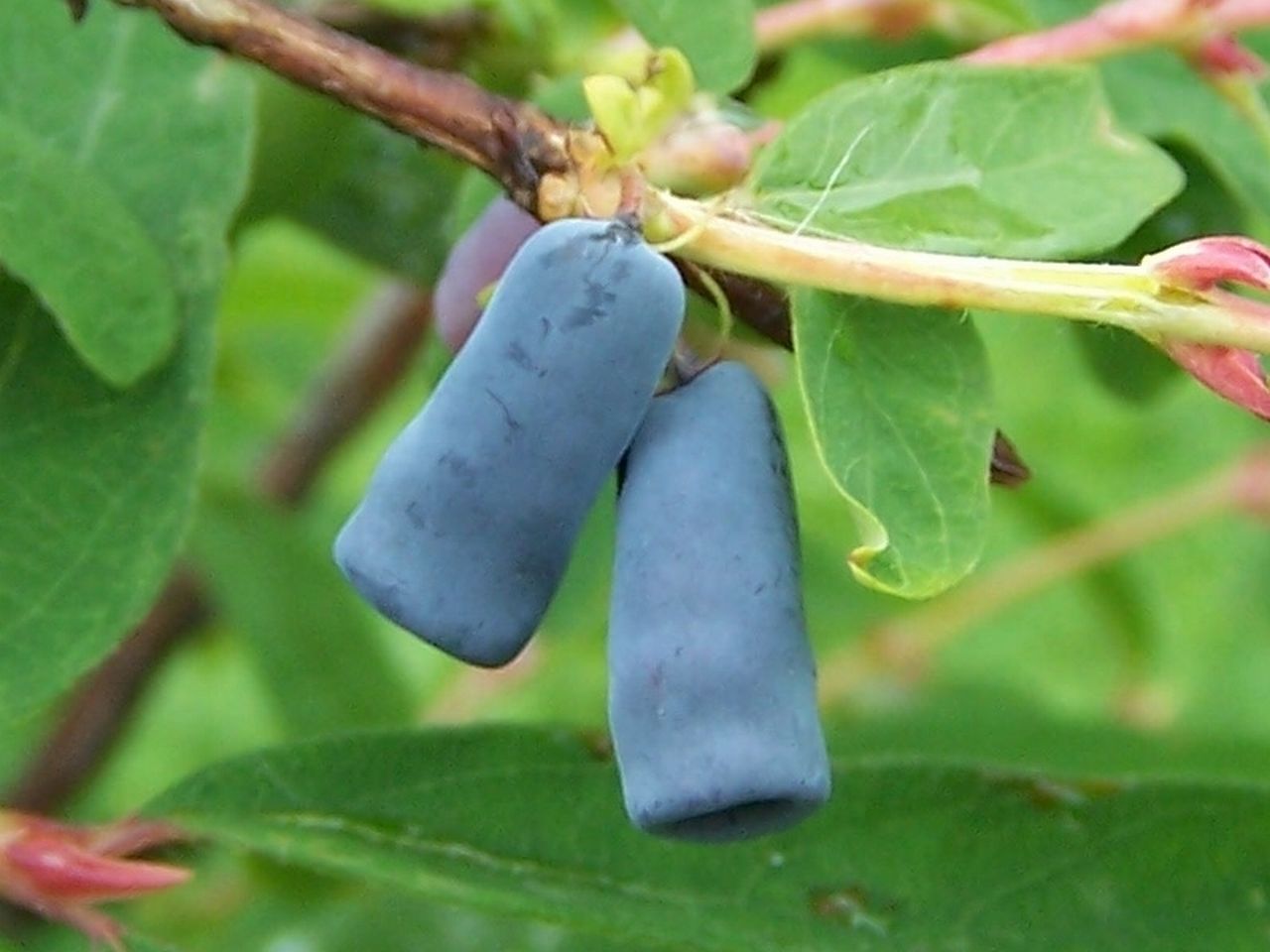
Honeyberry
Lonicera caerulea
☀️ Full Sun 💧 Moderate

Morrow’s Honeysuckle
Lonicera morrowii
☀️ Partial Sun 💧 Moderate

Box Honeysuckle
Lonicera pileata
☀️ Partial Sun 💧 Moderate

Winter Honeysuckle
Lonicera fragrantissima
☀️ Partial Sun 💧 Moderate

Common Honeysuckle
Lonicera periclymenum
☀️ Partial Sun 💧 Moderate