
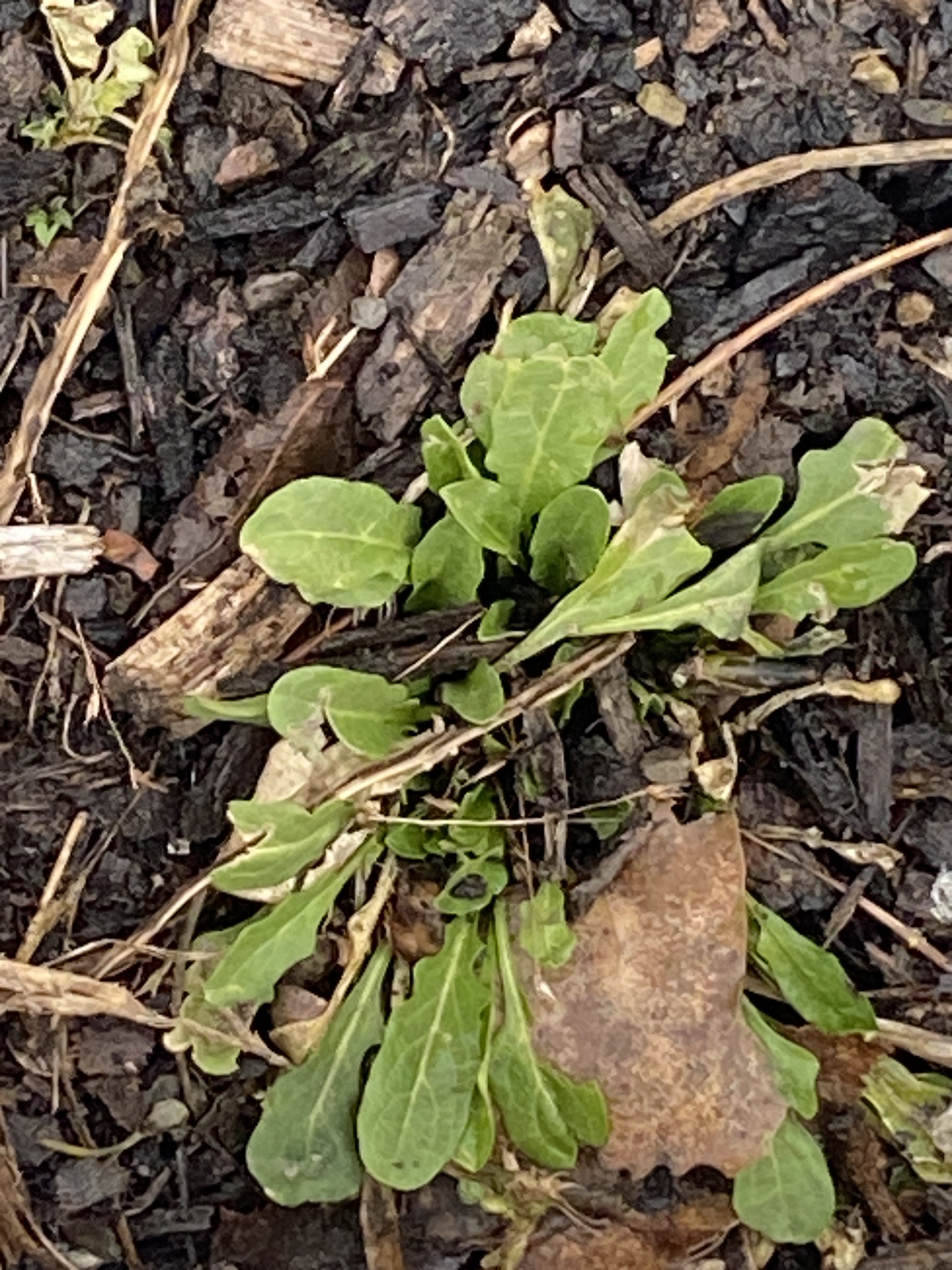
Field pennycress (Thlaspi arvense) is an annual flowering herb in the cabbage family Brassicaceae native to temperate Eurasia.
It colonises disturbed agricultural soils across North America and Europe, completing its life cycle in as little as forty days under optimal spring conditions.
Key Facts
- Plant Family: Brassicaceae (cabbage family)
- Life Cycle: Annual or winter annual
- Height: 15-80 cm (6-31 in) tall
- Seed Pods: Flat, winged discs 1-2 cm (0.4-0.8 in) wide
- Native Range: Eurasia
- Seed Production: Up to 20,000 seeds per plant
Field Pennycress as an Agricultural Weed and Wild Herb
Field pennycress grows as an opportunistic annual weed in crop fields, pastures, and disturbed roadsides across temperate zones.
Agricultural producers frequently encounter field pennycress in fallow winter fields and autumn-sown cereal crops. The plant emerges in early spring or autumn, competing with young crops for light and nitrogen before setting thousands of seeds.
How to Identify Field Pennycress Seedlings and Mature Plants
Field pennycress reaches a height of 15 to 80 cm (6 to 31 in) and produces hairless, bright green stems with alternate leaves.
The basal rosette features stalked, oblanceolate leaves 2 to 7 cm (0.8 to 2.8 in) long with smooth or wavy margins. Upper stem leaves lack petioles, clasping the stem directly with pointed, arrow-shaped bases. In spring, white flowers with 4 petals measuring 3 mm (0.12 in) across bloom in terminal racemes. The defining feature is the seed pod: a flattened, broad disc measuring 1 to 2 cm (0.4 to 0.8 in) across with a deep notched top containing 4 to 16 ridged, reddish-brown seeds.
- Seedlings: Smooth, oval cotyledons with a distinctive crushed-garlic or mustard smell.
- Stems: Unbranched or branched near the top, hairless and erect.
- Pods: Flat, circular silicles turn pale yellow-green to light tan when ripe.
Where Field Pennycress Grows
Field pennycress colonises open soils with high nitrogen levels at elevations from sea level to 3,000 m (9,800 ft).
It establishes rapidly in tilled cropland, garden beds, railway embankments, and waste sites. The plant thrives in full sun and tolerates a soil pH range of 6.0 to 7.5, growing in gravelly loam, clay, and sandy ground.
Life Cycle and Seed Persistence of Thlaspi arvense
A single field pennycress plant can yield up to 20,000 seeds per season, which remain viable in soil for over 20 years.
It acts as a winter annual or summer annual depending on germination timing. Autumn-germinated seedlings overwinter as flat rosettes beneath snow, flowering early in April, while spring-germinated seeds bloom by midsummer. Honeybees and small dipteran flies pollinate the white blossoms, though self-pollination occurs readily.
- Germination: Occurs at soil temperatures between 2 and 25 °C (36 and 77 °F).
- Dormancy: Buried seeds enter secondary dormancy, persisting through decades of tillage.
- Foliage Odor: Crushed stems release allyl isothiocyanate, deterring many generalist herbivores.
Impact of Stinkweed and Agricultural Control
Field pennycress acts as an aggressive weed that taints livestock milk when grazed in quantity, earning names like stinkweed and Frenchweed.
Dairy cattle consuming fresh field pennycress produce milk with an off-flavor mustard taint caused by glucosinolates. In crop farming, dense populations reduce wheat and canola yields by competing for surface moisture and soil nitrates. Management relies on early spring cultivation before seed set or targeted pre-emergence herbicides applied in late autumn.
Is Field Pennycress Edible and What Are Its Uses?
Young basal leaves of field pennycress are edible raw or cooked, offering a sharp mustard-garlic flavor when gathered in early spring before flowering.
As the stem develops, glucosinolate concentration increases, rendering mature foliage unpleasantly bitter and tough. Foragers gather young leaves for salads or potherbs, while dried seeds were historically ground into a pungent mustard substitute known as mithridate mustard. In traditional folk medicine, seed preparations were used for their diuretic and anti-inflammatory properties, though modern clinical validation is lacking. Agronomic researchers study field pennycress as a winter cover crop and biofuel feedstock due to its seed oil content of approximately 30 to 35 percent.
Field Pennycress Look-Alikes and Similar Species
Field pennycress is distinguished from related brassicas by its large, flat, circular seed pods with broad winged margins and deep apex notches.
Several common Brassicaceae weeds share similar white four-petaled flowers or rosette foliage during early growth stages.
- Shepherd’s purse (Capsella bursa-pastoris) has triangular, heart-shaped seed pods rather than circular winged discs.
- Field pepperweed (Lepidium campestre) has smaller, downy-haired pods and hairy stems, unlike hairless field pennycress.
- Alpine pennycress (Noccaea caerulescens) is a smaller perennial species with pods measuring under 7 mm (0.28 in).
- Garlic mustard (Alliaria petiolata) features broad, heart-shaped leaves with coarse teeth and long, slender seed pods (siliques) rather than flat discs.
Frequently Asked Questions
Is field pennycress edible?
Young leaves gathered in early spring before flowering are edible with a sharp mustard-garlic flavor. Mature foliage becomes unpleasantly bitter due to rising glucosinolate levels.
What is the scientific family of Thlaspi arvense?
Thlaspi arvense belongs to the Brassicaceae family, commonly known as the cabbage or mustard family.
What are the benefits of Thlaspi arvense?
Field pennycress serves as a winter cover crop that reduces soil erosion, suppresses weeds, and yields seed oil suitable for biofuel production. Historically, young leaves were eaten as greens and seeds used as a mustard spice.
How do you identify a Thlaspi arvense seedling?
Field pennycress seedlings have smooth, oval cotyledons and hairless young leaves that release a distinct crushed-garlic or mustard smell when bruised.
Why is Thlaspi arvense called stinkweed?
It is called stinkweed because crushed foliage and roots release pungent allyl isothiocyanate sulfur compounds that give off a strong mustard odor.
Information about traditional or historical uses is provided for educational interest only and is not medical advice. Do not use any plant to treat a condition without speaking to a qualified professional.
Sources & Verification
Taxonomy and distribution are checked against the databases below. Care guidance is written for cultivated species only and reviewed by our editor. How We Build Plant Profiles →