Plants in the Brassicaceae Family: Guide and Care
48 plant profiles · Explore the Brassicaceae mustard family, including cabbages, root crops, and ornamentals. Learn key traits, growing conditions, and plant choices.
Members of the mustard family, Brassicaceae, share distinct four-petaled flowers shaped like a cross and produce sharp sulfur compounds called glucosinolates. This family contains 29 profiled species ranging from agricultural crops to compact rock garden plants. Most species require at least 6 hours of direct sunlight daily and thrive in well-draining soil with a pH between 6.0 and 7.5.
When selecting plants from this family, decide whether your primary focus is leaf harvesting, root production, or ornamental ground cover. For food production, leafy vegetables like cabbage (Brassica oleracea) and salad greens like rocket (Eruca sativa) perform best in cool weather between 10–20 °C (50–68 °F). Root crops such as turnip (Brassica rapa) and horseradish (Armoracia rusticana) require deep, loose soil free of stones to expand properly.
For garden borders and rockeries, low-growing species supply persistent floral displays. Sweet alyssum (Lobularia maritima) forms mats under 15 cm (6 in) tall, while wallflower (Erysimum cheiri) produces upright blooms reaching 30–60 cm (12–24 in). Spring-blooming evergreen candytuft (Iberis sempervirens) provides perennial ground coverage across USDA hardiness zones 3 through 9.
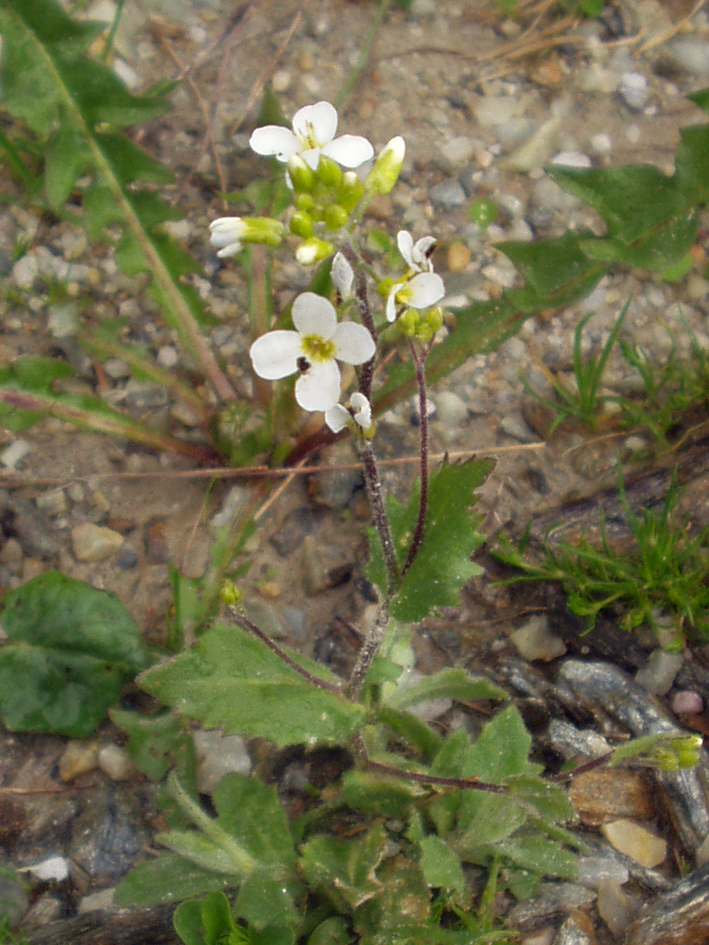
Alpine Rock-Cress
Arabis alpina
☀️ Full Sun 💧 Low
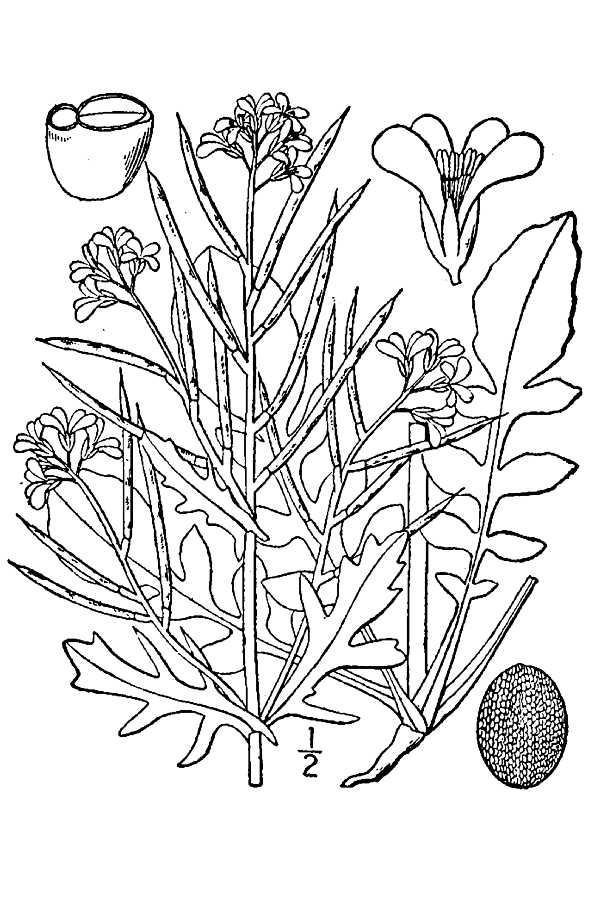
American Cress
Barbarea verna
☀️ Partial Shade 💧 Moderate

Arugula
Eruca vesicaria
☀️ Full Sun 💧 Moderate

Aubrieta
Aubrieta deltoidea
☀️ Full Sun 💧 Low
Basket of Gold
Aurinia saxatilis
☀️ Full Sun 💧 Low
Black Mustard
Brassica nigra
☀️ Full Sun 💧 Moderate

Bog Yellowcress
Rorippa palustris
☀️ Full Sun 💧 High

Cabbage
Brassica oleracea
☀️ Full Sun 💧 Moderate

Chamois Cress
Hornungia alpina
☀️ Full Sun 💧 Low
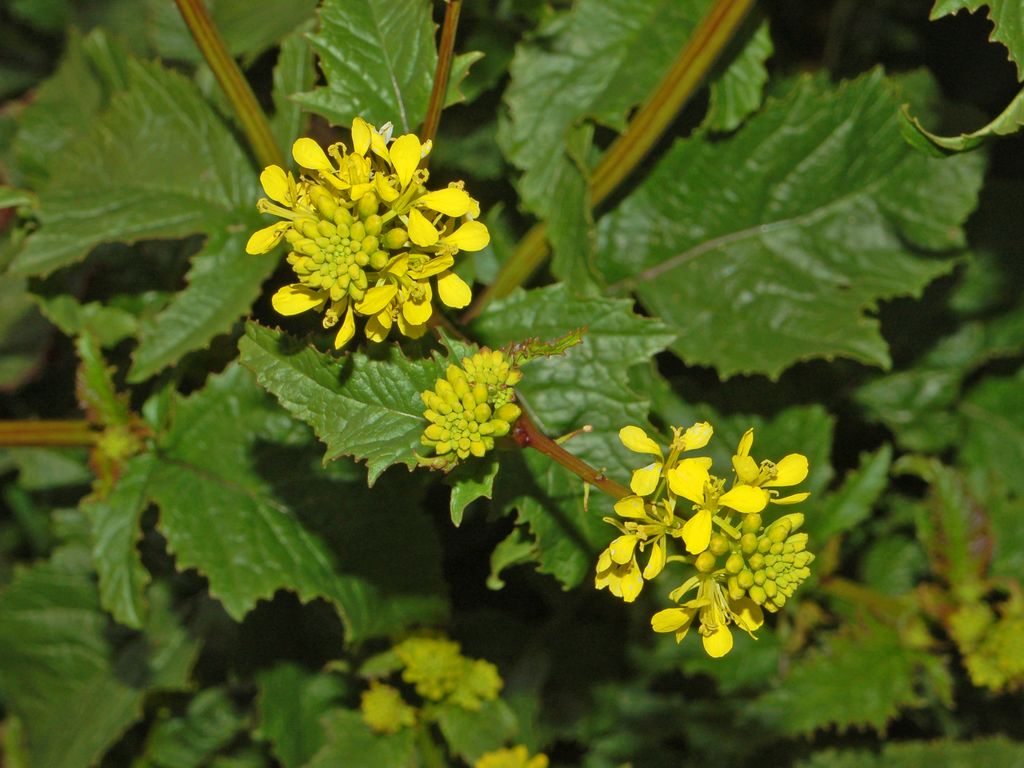
Charlock
Sinapis arvensis
☀️ Full Sun 💧 Moderate

Creeping Yellow Field Cress
Rorippa sylvestris
☀️ Full Sun 💧 High

Dame’s Rocket
Hesperis matronalis
☀️ Partial Sun 💧 Moderate

Ethiopian Mustard
Brassica carinata
☀️ Full Sun 💧 Moderate

Evergreen Candytuft
Iberis sempervirens
☀️ Full Sun 💧 Low

Field Mustard
Brassica campestris
☀️ Full Sun 💧 Moderate

Field Pepperwort
Lepidium campestre

Flixweed
Descurainia sophia
☀️ Full Sun 💧 Low
Garden Cress
Lepidium sativum
☀️ Partial Sun 💧 High
Garlic Mustard
Alliaria petiolata

Great Yellow-Cress
Rorippa amphibia

Hoary Alison
Berteroa incana
☀️ Full Sun 💧 Low

Honesty
Lunaria annua
☀️ Partial Shade 💧 Moderate

Horseradish
Armoracia rusticana
☀️ Full Sun 💧 Moderate

Littlepod False Flax
Camelina microcarpa
☀️ Full Sun 💧 Low
Common Questions
What key features identify plants in the Brassicaceae family?
Plants in Brassicaceae are identified by four cross-shaped flower petals, six stamens, and dry seed pods called siliques. They also synthesize glucosinolate compounds that create a characteristic pungent or peppery taste when plant tissues are crushed.
Do Brassicaceae crops prefer cool or hot weather?
Most edible Brassicaceae crops grow best in cool temperatures between 10 °C and 20 °C (50 °F to 68 °F). Temperatures exceeding 25 °C (77 °F) cause crops to bolt, which triggers early flowering and turns foliage bitter.
How often should you rotate Brassicaceae crops in garden beds?
Rotate Brassicaceae crops to a new planting location every 3 to 4 years to control soil-borne diseases. Pathogens such as clubroot can persist in untreated garden soil for up to 20 years if host brassicas are planted continuously.
How quickly do Brassicaceae seeds germinate?
Brassicaceae seeds typically germinate within 4 to 10 days when kept in moist soil at 15–21 °C (60–70 °F). Direct sow seeds at a depth of 0.6–1.2 cm (0.25–0.5 in) in prepared beds.