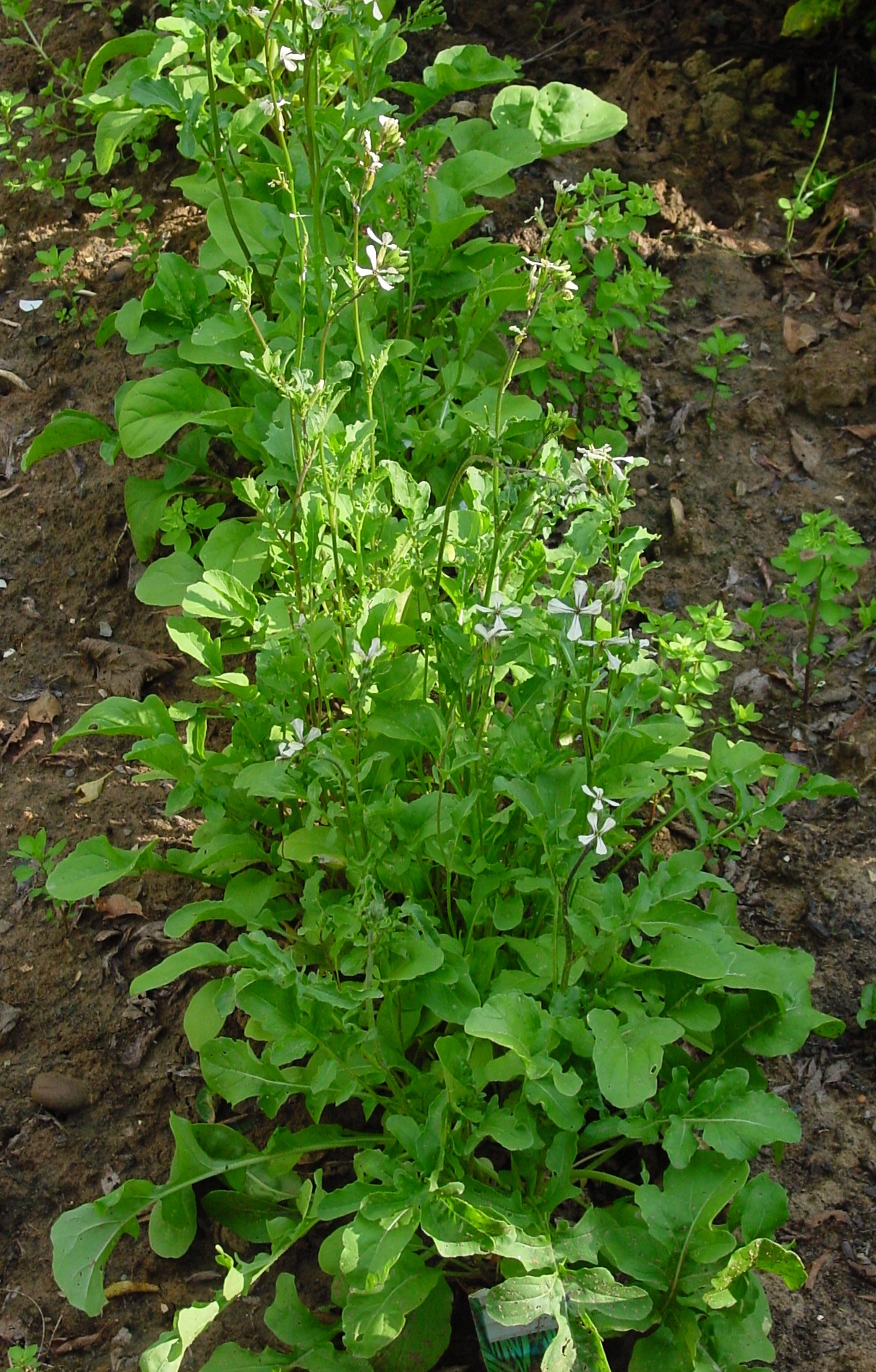
Arugula (Eruca vesicaria) is an annual brassica native to the Mediterranean basin, grown worldwide for its deeply lobed, pungent salad leaves. It develops a low basal rosette before sending up branched flower stalks.
This crop matures in just 20 to 40 days from sowing, but high temperatures above 25 °C (77 °F) trigger immediate flowering and make the leaves tough and unpalatably bitter.
Key Facts
- Maturity: 20–25 days for baby leaves, 40 days mature
- Light: Full sun in spring; afternoon shade in summer
- Water: Keep soil evenly moist; never allow complete drying
- Soil: Fertile, well-draining loam with pH 6.0–7.0
- Temperature: Optimum germination and growth at 10–18 °C (50–65 °F)
Growing Arugula in the Garden
Arugula is one of the fastest cool-season crops you can grow, filling shallow garden beds and balcony containers within three weeks. It suits small gardens and raised planters because its root system rarely extends past 15–20 cm (6–8 in) deep.
Because it tolerates frost down to -4 °C (25 °F), you can begin growing in early spring weeks before planting out warm-season nightshades like tomato (Solanum lycopersicum). The main difficulty with the crop is premature bolting during sudden early-summer warm spells.
What Does the Arugula Plant Look Like?
An arugula plant forms a low, spreading rosette of deeply pinnatifid green leaves measuring 7–20 cm (3–8 in) long before producing an upright flowering stem. Leaves are smooth or sparsely hairy with undulating lobes that narrow toward the base.
When the plant matures and bolts, it sends up a central flower spike reaching 50–80 cm (20–31 in) high. The flowers feature four cross-shaped petals of cream or pale yellow, distinctively netted with dark violet or purplish-brown veins. Following pollination, it sets erect, beaked seed pods (siliques) containing small, spherical seeds.
Does Arugula Like Sun or Shade?
Arugula produces its best growth in full sun during cool weather and partial afternoon shade during warm periods. In temperatures between 10–18 °C (50–65 °F), give the plants 6 hours of direct sunlight daily to encourage thick, sturdy leaf growth.
As seasonal temperatures climb above 22 °C (72 °F), intense midday sun triggers rapid flower induction. Providing shade reduces heat stress and extends leaf harvests:
- Position containers under the filtered canopy of taller crops like runner bean (Phaseolus coccineus).
- Install a 30% to 40% shade cloth over garden rows once daily highs exceed 24 °C (75 °F).
- Choose an east-facing bed that receives morning sun and afternoon shade in late spring.
How to Sow and Germinate Arugula Seeds
Sow arugula seeds 6 mm (0.25 in) deep and 2.5 cm (1 in) apart directly into prepared garden soil or seed trays. Seeds germinate quickly, emerging in 3 to 7 days when soil temperatures stay between 7–20 °C (45–68 °F).
To maintain an uninterrupted supply of tender greens, follow these sowing practices:
- Sow succession batches every 10 to 14 days from late winter through mid-spring.
- Thin emerging seedlings to a spacing of 10–15 cm (4–6 in) apart once they develop their first true leaves.
- Resume sowing in late summer, roughly 4 to 6 weeks before your first expected autumn frost.
- Keep the top 1 cm (0.4 in) of soil consistently damp until sprouts emerge.
Arugula Plant Care and Maintenance
Water arugula consistently to keep the root zone evenly moist, supplying roughly 2.5 cm (1 in) of water per week in the absence of rain. Inconsistent watering or allowing the soil to dry completely causes intense pungency, bitterness, and immediate flower stalk emergence.
Top-dress beds with 2 cm (0.8 in) of finished compost prior to planting rather than using concentrated mineral feeds. High-nitrogen artificial fertilizers cause rapid, sappy foliage that attracts brassica pests. A thin layer of straw mulch preserves soil moisture and keeps dirt off low-lying leaves during irrigation.
How Do You Prune Arugula to Prevent Bolting?
You cannot prune an arugula plant once it begins flowering, but you can cut the central flower bud the moment it forms to prolong leaf production by roughly 7 to 10 days. Once day length exceeds 14 hours and daytime heat sets in, the hormonal shift toward seed production is irreversible.
Pinching out flower buds delays complete plant decline slightly, but the leaves rapidly develop a harsh, bitter resin. When flower stems elongate and flower clusters open, pull the plants and sow a fresh batch in late summer, or leave the flowers to feed solitary bees and hoverflies.
How to Harvest Arugula
Harvest arugula by snipping the outer leaves 2.5 cm (1 in) above the soil using clean garden shears, leaving the central growing tip intact for future flushes. This cut-and-come-again technique yields up to three rounds of fresh foliage from a single planting.
Harvest in the early morning while the leaves remain firm and turgid from overnight hydration:
- Pick baby greens when leaves reach 5–8 cm (2–3 in) in length for a mild, nutty taste.
- Pick mature leaves when they reach 10–15 cm (4–6 in) for a sharper, peppery profile.
- Avoid harvesting once the central stalk bolts and leaves become tough and leathery.
- Rinse leaves gently in cold water immediately after cutting to remove soil residue.
How to Cook and Prepare Arugula
You can serve fresh arugula raw in salads dressed with lemon and olive oil, or wilt it briefly into warm pasta and grain dishes. Its mustard-like peppery flavor comes from glucosinolates, which soften noticeably when exposed to gentle heat.
Culinary uses include:
- Arugula pesto: blend raw leaves with garlic, toasted walnuts or pine nuts, parmesan, and olive oil.
- Pizza topping: scatter crisp leaves over baked flatbreads alongside prosciutto and shaved parmesan.
- Stir-ins: fold whole leaves into hot risottos, soups, or scrambled eggs during the final 30 seconds of cooking.
- Sautéed greens: cook lightly with olive oil and minced garlic as you would spinach (Spinacia oleracea).
Washing, Cyclospora Safety, and Leaf Storage
Store fresh arugula by wrapping unwashed leaves in a dry paper towel inside an airtight container in the refrigerator crisper drawer at 1–4 °C (34–40 °F) for up to 7 days. Excess moisture causes rapid leaf collapse, slimy yellowing, and mold formation.
Like other field-grown leafy greens, raw arugula can carry foodborne pathogens such as Cyclospora cayetanensis or Escherichia coli if contaminated by agricultural runoff or irrigation water. Always wash leaves thoroughly under cold running drinking water just before eating. A salad spinner removes surface water effectively, preserving texture and dressing adhesion.
Frequently Asked Questions
What nutritional benefits does arugula provide?
Arugula is low in calories while providing dietary fiber, vitamin K, vitamin A, vitamin C, calcium, and folate. It also contains glucosinolates, sulfur-rich compounds that produce its signature peppery flavor.
What is the risk of Cyclospora in arugula?
Cyclospora cayetanensis is a microscopic parasite that causes gastrointestinal illness when contaminated fresh produce is eaten raw. Prevent exposure by washing store-bought and garden greens under clean, running water, and avoid using untreated surface water for vegetable garden irrigation.
What is the difference between arugula and wild rocket?
Cultivated arugula (Eruca vesicaria) has broader, rounded leaf lobes, cream-colored flowers with dark veins, and a milder flavor. Wild rocket (Diplotaxis tenuifolia) is a perennial with slender, deeply incised leaves, bright yellow flowers, and a sharper, more pungent taste.
Can you grow arugula in containers indoors?
Yes, arugula grows readily on sunny indoor windowsills or under LED grow lights in containers at least 15 cm (6 in) deep. Ensure the room stays below 20 °C (68 °F) to prevent early bolting.
Are arugula flowers edible?
Yes, the cream and purple-veined flowers are edible and carry a mild, sweet, peppery flavor. You can scatter whole blossoms over salads, cold pasta, or vegetable soups as a garnish.
Sources & Verification
Taxonomy and distribution are checked against the databases below. Care guidance is written for cultivated species only and reviewed by our editor. How We Build Plant Profiles →
- Plants of the World Online (Kew)Taxonomic status and native distribution of Eruca vesicaria.
- Royal Horticultural SocietyCultivation, sowing intervals, and harvest guidelines.
- NC State ExtensionPlant attributes, soil conditions, and culinary profiles.
- Centers for Disease Control and PreventionCyclospora transmission and fresh produce handling guidelines.
- GBIF — Global Biodiversity Information Facilitytaxonomy, synonyms, occurrence records
- Wikipediageneral reference