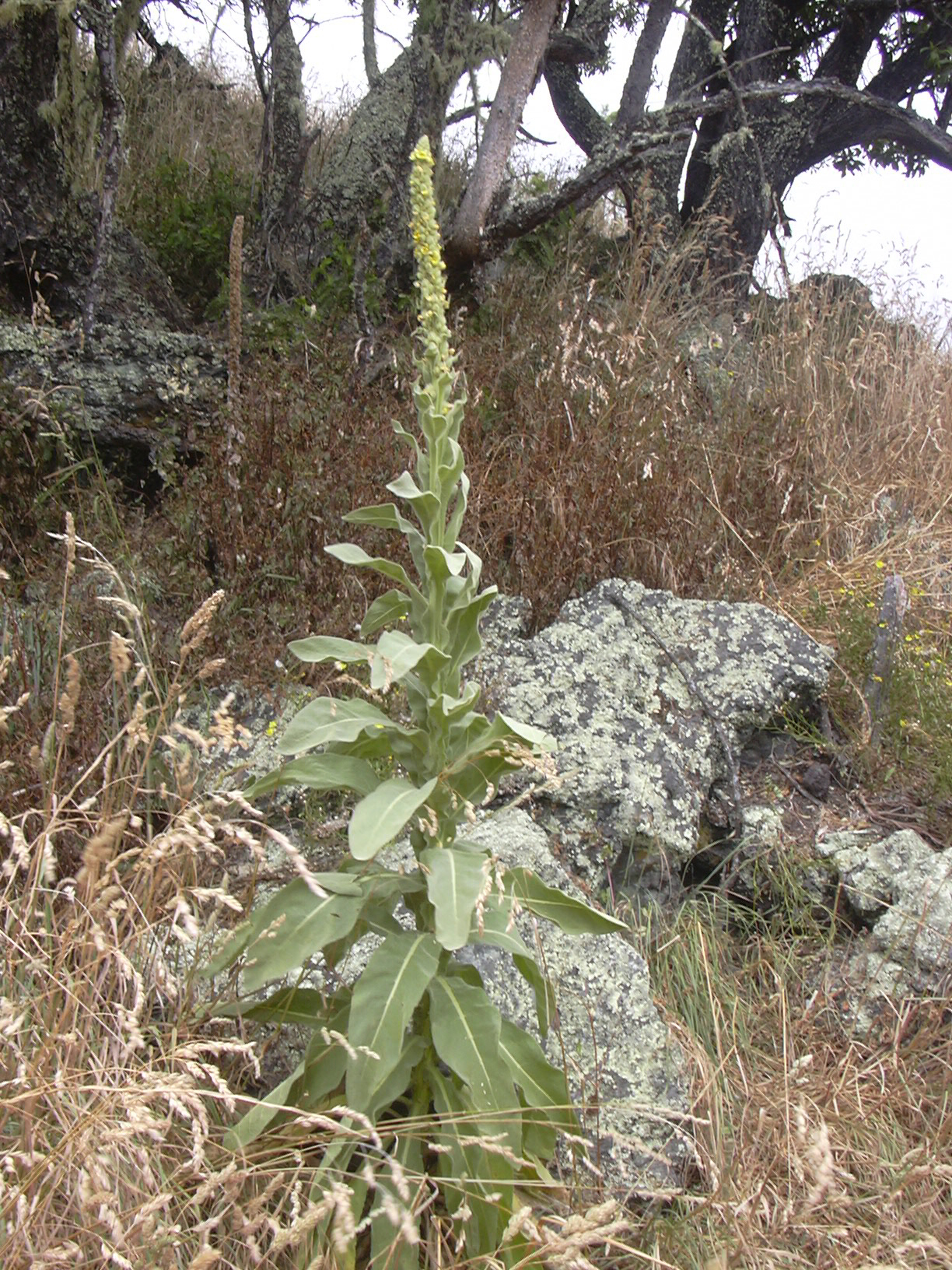
Orange Mullein (Verbascum phlomoides) is a biennial herb in the Scrophulariaceae family, native to Europe and Asia Minor. It is widely recognised by its tall, unbranched flowering spikes and soft, woolly foliage.
You will typically find this plant in open, disturbed ground where it can reach heights of up to 1.5 m (5 ft). It is a valuable species for supporting local pollinator populations in its native range.
Key Facts
- Type: Biennial herb
- Height: Up to 1.5 m (5 ft)
- Flower Colour: Yellow
- Native Range: Europe and Asia Minor
- Pollinators: Attracts bees and butterflies
What Is Orange Mullein Like to Find
You will encounter Orange Mullein as a striking, upright plant that dominates open spaces during its second year of growth. It is a plant for those who appreciate wild, architectural forms in the landscape.
In its first year, the plant forms a low-lying rosette of leaves that stays close to the ground. By the second year, it sends up a tall, singular stalk that can make it stand out against shorter grasses and meadow plants.
How to Identify Orange Mullein
You can identify Orange Mullein by its large, felt-like leaves that clasp the stem, which is a key feature distinguishing it from other species. The plant typically grows to a height of 1.5 m (5 ft) when in full flower.
- Leaves are covered in dense, woolly hairs.
- Flowers are yellow, often with a darker orange or reddish centre.
- The inflorescence is a dense, elongated spike.
- Stems are sturdy and remain upright throughout the summer.
Where Does Orange Mullein Grow
Orange Mullein thrives in open, sunny habitats with well-drained, often rocky or sandy soils. It is frequently found in disturbed areas where it can establish itself without competition from dense vegetation.
You will see it colonising roadside verges, waste ground, and open meadows across its native range. It requires significant light to reach its full height and produce its characteristic flowering spike.
Orange Mullein Ecology and Pollinators
Orange Mullein provides a significant nectar source for a variety of insects, particularly during the mid-summer months. It is considered a beneficial species for supporting local pollinator diversity.
- Bees are frequent visitors to the open, yellow flowers.
- Butterflies use the tall stalks as vantage points.
- The dense foliage provides shelter for small ground-dwelling insects.
- Seed heads provide food for birds in the late autumn.
Orange Mullein Medicinal Uses
Orange Mullein has been traditionally used in herbal practices to address specific respiratory concerns. Historically, it was prepared as an infusion for its properties relating to catarrh and as a diuretic.
While these uses are documented in historical texts, they do not constitute medical advice. You should always consult with a qualified professional before considering the use of wild plants for health purposes.
Orange Mullein vs Common Mullein
You can tell Orange Mullein (Verbascum phlomoides) apart from Common Mullein (Verbascum thapsus) by observing the leaf attachment and flower structure. Clasping leaves are the primary indicator for Verbascum phlomoides.
- Verbascum phlomoides leaves clasp the stem, whereas Verbascum thapsus leaves are decurrent, meaning they run down the stem.
- The flowers of Orange Mullein are often larger and more distinctly orange-centred.
- Common Mullein typically has a more densely woolly, greyish appearance overall.
Frequently Asked Questions
What are the benefits of Orange Mullein?
The primary benefit of Orange Mullein is its role in supporting pollinator populations, such as bees and butterflies. Traditionally, it was used for respiratory catarrh and as a diuretic, though these uses are historical.
Is Orange Mullein the same as Common Mullein?
No, they are different species. Orange Mullein (Verbascum phlomoides) has leaves that clasp the stem, while Common Mullein (Verbascum thapsus) features leaves that run down the stem.
How tall does Orange Mullein grow?
Orange Mullein typically grows to a height of 1.5 m (5 ft) during its second year of growth. Its size can vary depending on the quality of the soil and the amount of available sunlight.
What does Orange Mullein look like?
It is a biennial plant with a rosette of woolly leaves in the first year and a tall, unbranched spike of yellow flowers in the second year. The leaves are distinctively hairy and clasp the stem.
Information about traditional or historical uses is provided for educational interest only and is not medical advice. Do not use any plant to treat a condition without speaking to a qualified professional.
Sources & Verification
Taxonomy and distribution are checked against the databases below. Care guidance is written for cultivated species only and reviewed by our editor. How We Build Plant Profiles →