Plants Native to Tropical Africa
26 plant profiles · Learn about plants native to tropical Africa, including indoor foliage species, arid succulents, and landscape trees, with key growth requirements.
Plants native to tropical Africa originate from diverse ecosystems ranging from lowland rainforests to arid scrublands across sub-Saharan regions. Selecting the right species requires matching your space to the plant's native habitat and moisture requirements. Low-maintenance indoor foliage species like spider plant (Chlorophytum comosum) and corn plant (Dracaena fragrans) adapt to standard home humidity and temperatures between 18–24 °C (65–75 °F).
Arid specialists require different care than rainforest understory species. Desert rose (Adenium obesum) stores water in a thick caudex stem and requires full sun with gravelly soil, surviving winter temperatures down to 10 °C (50 °F). Conversely, semi-aquatic and riverbank species like water spinach (Ipomoea aquatica) and broom cluster fig (Ficus sur) demand constantly moist soil to maintain foliage.
Landscape trees and climbing vines from tropical Africa provide fast growth in warm outdoor climates. African tulip tree (Spathodea campanulata) reaches mature heights of 7–25 m (23–82 ft) in USDA zones 10 through 11. Vine species like air potato (Dioscorea bulbifera) form heavy bulbils along climbing stems, while woody shrubs like bitter leaf (Gymnanthemum amygdalinum) grow in full sun with neutral soil.

African Gladiolus
Gladiolus dalenii
☀️ Full Sun 💧 Moderate

African Tulip Tree
Spathodea campanulata
☀️ Full Sun 💧 Moderate

Air Potato
Dioscorea bulbifera
☀️ Full Sun 💧 Moderate

Bitter Leaf
Gymnanthemum amygdalinum
☀️ Full Sun 💧 Moderate

Broom Cluster Fig
Ficus sur
☀️ Full Sun 💧 High

Chinese Potato
Coleus rotundifolius
☀️ Full Sun 💧 Moderate

Chinese Water Chestnut
Eleocharis dulcis
☀️ Full Sun 💧 Aquatic
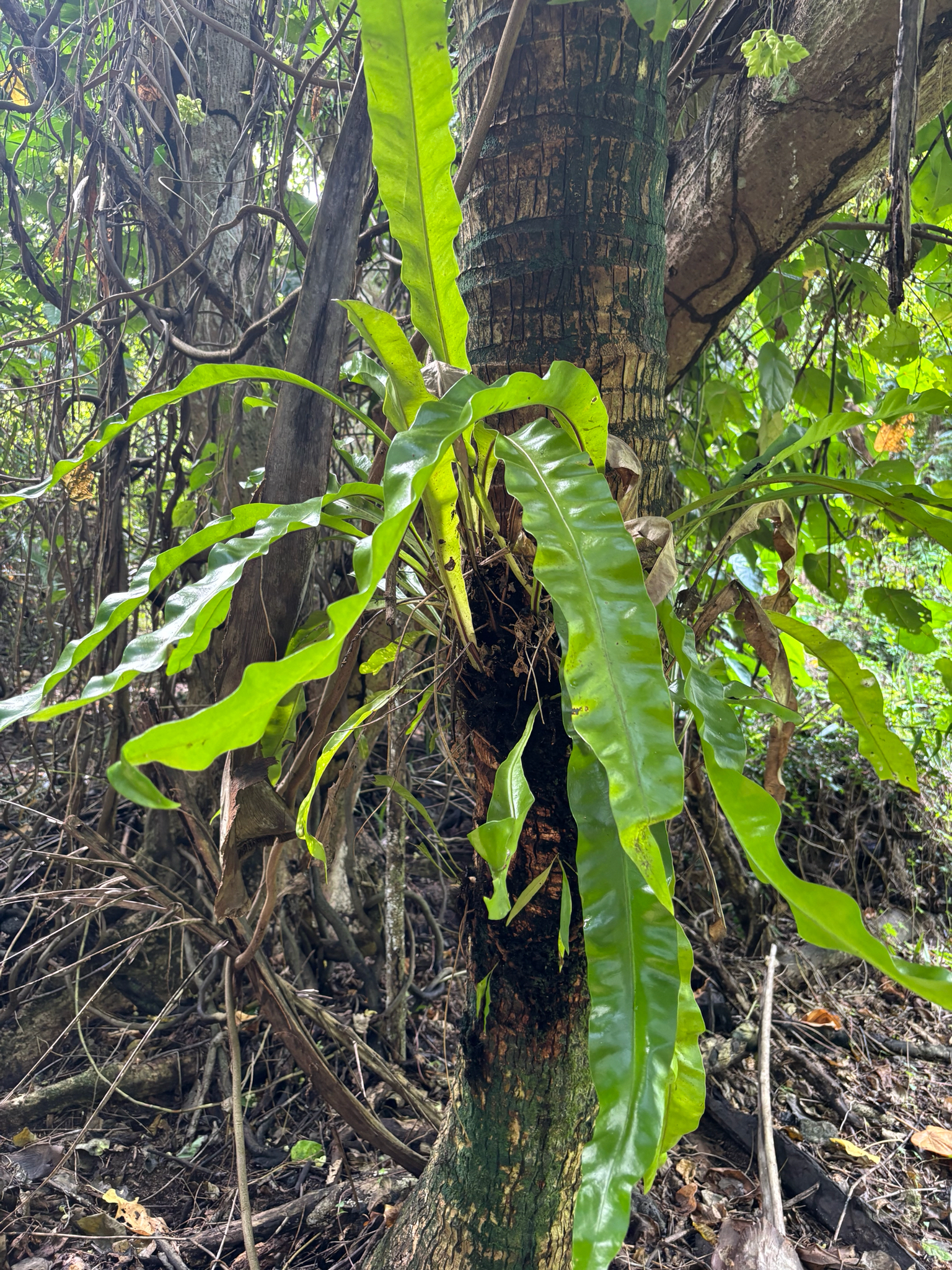
Climbing Bird’s Nest Fern
Microsorum punctatum
☀️ Bright Indirect 💧 Moderate

Desert Rose
Adenium obesum
☀️ Full Sun 💧 Low

Ebolo
Crassocephalum crepidioides
☀️ Full Sun 💧 Moderate

Egyptian Riverhemp
Sesbania sesban
☀️ Full Sun 💧 High

Egyptian Star Cluster
Pentas lanceolata
☀️ Full Sun 💧 Moderate

Elephant Grass
Cenchrus purpureus
☀️ Full Sun 💧 Moderate

Indian Charcoal Tree
Trema orientale
☀️ Full Sun 💧 Moderate

Ivy Gourd
Coccinia grandis
☀️ Full Sun 💧 Moderate

Kokilaksha
Hygrophila auriculata
☀️ Full Sun 💧 Aquatic

Mistletoe Cactus
Rhipsalis baccifera
☀️ Bright Indirect 💧 Moderate

Polynesian Arrowroot
Tacca leontopetaloides
☀️ Partial Shade 💧 Moderate
Shalparni
Desmodium gangeticum
☀️ Partial Shade 💧 Moderate

Spider Plant
Chlorophytum comosum
☀️ Bright Indirect 💧 Moderate

Tamarind
Tamarindus indica
☀️ Full Sun 💧 Low

Thunberg’s Amaranth
Amaranthus thunbergii
☀️ Full Sun 💧 Moderate

Velvet Bean
Mucuna pruriens
☀️ Full Sun 💧 Moderate

Water Spinach
Ipomoea aquatica
☀️ Full Sun 💧 Aquatic
Common Questions
What indoor houseplants are native to tropical Africa?
Spider plant and corn plant are common houseplants native to tropical Africa, growing best in temperatures of 18–24 °C (65–75 °F). Both species tolerate indoor humidity levels above 40%.
Can plants native to tropical Africa survive frost?
Most plants native to tropical Africa suffer foliage damage or death below 0 °C (32 °F). Succulents like desert rose must be brought indoors before temperatures drop below 10 °C (50 °F).
How much sunlight do tropical African houseplants need?
Indoor plants from tropical Africa require 6–8 hours of bright, indirect sunlight near an east- or west-facing window daily. Direct sun through glass will scorch leaves of rainforest species.
What potting soil is best for tropical African plants?
Most tropical African houseplants need a well-draining substrate with a pH of 6.0–6.5 containing equal parts peat moss and perlite. Succulent species require a mineral mix containing 50% pumice.