
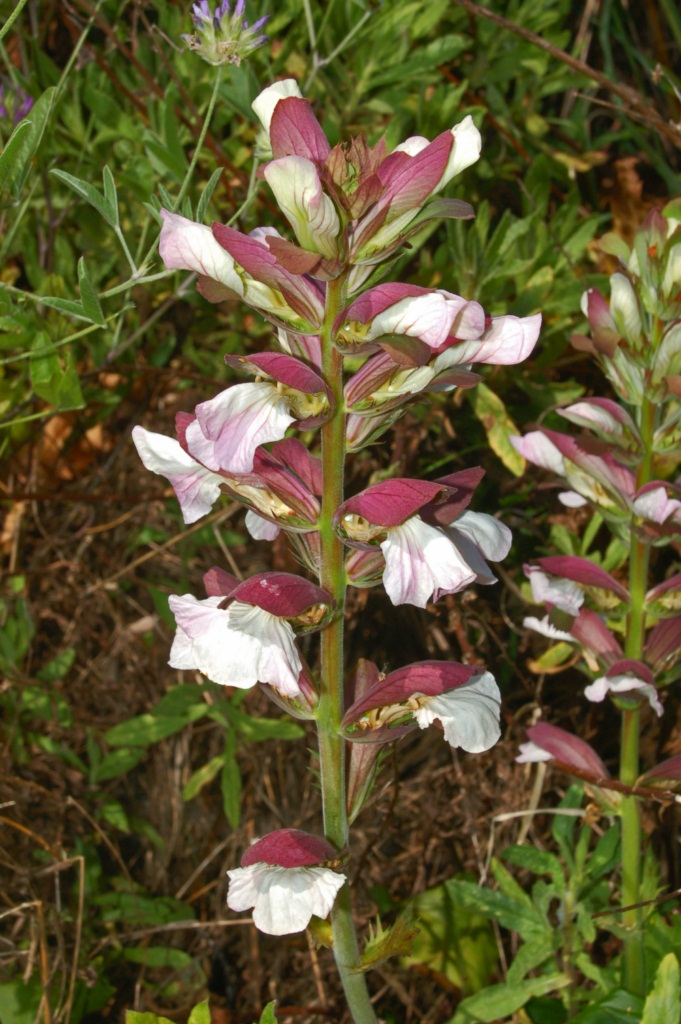
Bear’s breeches (Acanthus mollis) is a large, clump-forming perennial herb originating from the Mediterranean region. It is most easily recognized by its bold rosette of dark green, deeply lobed leaves and towering summer flower spikes.
This plant suits large perennial borders where its architectural foliage can dominate a corner. Give it plenty of space, because established clumps can be difficult to shift once their thick, fleshy roots settle deep into the soil.
Key Facts
- Light: Full sun to partial shade
- Soil: Well-drained, fertile loam
- Water: Moderate moisture once established
- Hardiness: USDA Zones 7 to 10
- Height: Up to 1.5 m (5 ft) in flower
Is Bear’s Breeches Right for Your Garden
Bear’s breeches suits gardeners looking for bold, structural foliage and long-lasting summer vertical interest. It makes a dramatic statement at the back of a border or beside stone paths where its sculptural leaves soften hard edges.
You need to allocate at least 1 m (3 ft) of ground space for a mature clump to spread without crowding neighbors. Avoid placing it in narrow walkways or tiny urban plots, as the physical presence of the plant can overwhelm small spaces.
What Bear’s Breeches Looks Like
The glossy, deeply cut leaves can reach up to 60 cm (24 in) in length, forming a dense, sprawling basal rosette. In early summer, rigid flowering stems shoot upward, carrying two-lipped tubular flowers wrapped in spiny, purplish bracts.
- Foliage: Deeply divided, dark green, hairless leaves with shiny surfaces.
- Flowers: Hooded white or pale pink blossoms embraced by dark purple bracts.
- Habit: Clump-forming perennial with thick, tuberous roots that plunge deep into the earth.
- Height: Spikes reach 1.2 m to 1.5 m (4 to 5 ft) tall at peak bloom.
Where to Plant Bear’s Breeches
Plant bear’s breeches in a spot with partial shade and consistently fertile, well-draining soil. While it tolerates full sun in cooler climates, scorching afternoon sun in hot regions can scorch the glossy leaves.
- Sunlight: 4 to 6 hours of sun daily, or dappled shade under open tree canopies.
- Soil texture: Rich loam or sandy clay amended with well-rotted garden compost.
- Drainage: Essential; standing winter water will rot the fleshy root system.
- Wind protection: Taller flower spikes benefit from slight shelter against strong summer gales.
How to Plant Acanthus mollis
Dig a planting hole twice as wide and just as deep as the nursery container, positioning the crown level with the soil surface. Spring or early autumn is the ideal time to establish new container-grown specimens.
- Spacing: Place plants 90 cm (3 ft) apart to accommodate future leaf spread.
- Root handling: Tease out any circling roots gently before setting the root ball in place.
- Initial watering: Soak the soil thoroughly after planting to settle air pockets around the roots.
- Mulching: Apply a 5 cm (2 in) layer of leaf mold around the base to retain moisture without burying the crown.
Watering and Feeding Acanthus mollis
Water newly planted specimens weekly during their first growing season, reducing frequency once established to only dry spells. Mature plants possess deep roots that grant moderate drought tolerance.
- Watering rule: Provide 2.5 cm (1 in) of water every 10 days during prolonged summer dry spells.
- Fertilizing: Apply a balanced granular fertilizer or organic compost mulch around the base in early spring.
- Container plants: Potted specimens dry out rapidly and need weekly liquid feeding through the active summer growth phase.
When and How to Prune Bear’s Breeches
Cut spent flower stalks down to the ground in late autumn after the blooms fade and seed heads dry out. This keeps the garden tidy and encourages fresh basal foliage production.
- Foliage cleanup: Snip away tattered or frost-damaged outer leaves in early spring using clean shears.
- Tool hygiene: Wipe blades with rubbing alcohol before cutting to prevent fungal spore transfer.
- Safety gear: Wear thick gloves, as some cultivars feature subtle prickles on the leaf margins.
How to Propagate Bear’s Breeches
Propagate established clumps by root cuttings taken in winter or by careful division in early spring. Seed propagation is also possible, though named cultivars may not come true from seed.
- Root cuttings: Dig up pencil-thick roots in January, cut into 10 cm (4 in) segments, and plant vertically in seed compost.
- Division: Lift mature clumps every 4 to 5 years, slicing the woody root mass into vigorous sections with a sharp spade.
- Sowing seeds: Press fresh seeds into moist seed-starting mix at 15 °C (59 °F) in spring; germination takes 21 to 30 days.
Common Bear’s Breeches Problems
Powdery mildew and slug damage are the most frequent issues affecting garden-grown bear’s breeches. Inspect foliage regularly during humid weather to catch fungal outbreaks early.
- Symptom: White, powdery coating on leaf surfaces during humid mid-summer weeks.
- Cause: Poor air circulation or overhead watering in shady spots.
- Fix: Thin surrounding plants to boost airflow and apply a copper-based fungicide if severe.
- Pests: Slugs and snails chew ragged holes in young spring leaves; manage with organic iron phosphate baits.
Winter Care for Bear’s Breeches
Protect crowns in USDA Zone 7 by applying a thick straw or bark mulch layer after the first hard autumn frost. Foliage may die back completely in colder regions, but fresh shoots will emerge from the roots in spring.
- Container protection: Move potted acanthus into an unheated garage or greenhouse if winter temperatures drop below -10 °C (14 °F).
- Moisture control: Keep potted soil barely damp through winter to prevent root rot while dormant.
- Crown safety: Avoid letting wet autumn leaves mat heavily over the center of the plant, as this traps moisture and rots new buds.
When Does Bear’s Breeches Bloom
Bear’s breeches blooms from June through August, producing striking vertical spikes that last for several weeks. The flowers open sequentially from the bottom of the spike toward the top.
- Color profile: Hooded white petals backed by deep purple or maroon bracts.
- Pollinators: Visited frequently by bumblebees and other long-tongued insects strong enough to force open the blossoms.
- Cut flowers: Harvest stems when the lower third of the blossoms are open for a long-lasting architectural vase display.
Bear’s Breeches Through the Seasons
| Spring | Clear away dead winter foliage and apply a fresh 5 cm (2 in) layer of organic compost mulch around the crown. Divide overgrown clumps or plant new container-grown specimens before summer heat arrives. |
|---|---|
| Summer | Water established plants during prolonged dry spells and stake tall flower spikes if exposed to heavy winds. Cut faded flower stalks back to ground level once the bloom display finishes. |
| Autumn | Clear away any remaining garden debris around the base to deter overwintering slugs. Apply a protective bark mulch layer if you live near the colder limits of its hardiness range. |
| Winter | Ensure container-grown plants are kept in frost-free, sheltered positions with minimal watering. Inspect outdoor crowns periodically to ensure standing water has not accumulated around the roots. |
Bear’s Breeches Leaf and Plant Problems Explained
| What you see | Likely cause | What to do |
|---|---|---|
| White powder on leaves | Powdery mildew fungus | Improve air circulation around the clump and spray with a bio-fungicide. |
| Ragged holes in leaves | Slugs and snails | Apply iron phosphate bait around the base of the rosette in early spring. |
| Yellow, rotting leaf bases | Waterlogged soil or crown rot | Improve garden drainage and remove affected rotting leaves immediately. |
Popular Bear’s Breeches Cultivars Compared
- ‘Whitewater’ – deeply cut leaves splashed heavily with creamy white margins
- ‘Rue Ledan’ – compact habit with deeply indented, architectural dark green foliage
- ‘Latifolius’ – robust form featuring extra-large, glossy leaves and taller flower spikes
Best Companion Plants for Acanthus mollis
Pair bear’s breeches with plants that offer contrasting fine textures or vibrant flower colors. Good companions include ornamental grasses like feather reed grass (Calamagrostis acutiflora), flowering perennials like purple coneflower (Echinacea purpurea), and low-growing groundcovers such as creeping Jenny (Lysimachia nummularia) that weave around its base.
Shady woodland borders also accommodate companions like hostas (Hosta spp.) and ferns, though you must ensure adequate spacing so the massive leaves of the acanthus do not smother smaller shade-loving neighbors.
Frequently Asked Questions
Is acanthus mollis invasive?
Bear's breeches can become invasive in certain mild climates where dropped seeds or root fragments left behind during weeding sprout into new plants. Dig out unwanted seedlings promptly and dispose of root pieces carefully.
How do you grow acanthus mollis in pots?
Grow bear's breeches in a large container of at least 40 litres (10 gallons) filled with a rich, well-draining loam-based compost. Potted plants require regular weekly watering during summer and frost protection during harsh winter freezes.
Can you grow acanthus mollis from seeds?
You can grow bear's breeches from seeds by sowing them in pots of moist compost during spring at a temperature of 15 °C (59 °F). Germination typically occurs within three to four weeks, though seedlings take two to three years to flower.
What USDA zone does acanthus mollis grow in?
Bear's breeches thrives in USDA hardiness zones 7 through 10. Gardeners in colder zones can overwinter plants by storing pots indoors or applying heavy protective mulch over outdoor crowns.
Sources & Verification
Taxonomy and distribution are checked against the databases below. Care guidance is written for cultivated species only and reviewed by our editor. How We Build Plant Profiles →