
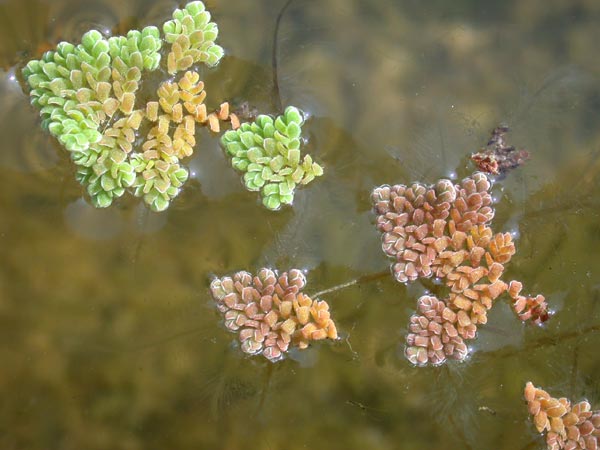
Mosquito fern (Azolla pinnata) is a tiny floating aquatic fern native to freshwater habitats across Africa, Asia, and parts of Australia. It forms dense carpets on the surface of slow-moving water bodies by multiplying its biomass at an exceptional speed.
This fern relies on a symbiotic relationship with cyanobacteria to fix atmospheric nitrogen, allowing it to thrive in nutrient-poor waters. In warm conditions, populations can double in size within just 1.9 days.
Key Facts
- Plant Type: Aquatic fern
- Native Range: Africa, Asia, Australia
- Water: Floating aquatic
- Growth Rate: Extremely fast
- Temperature: Warm climates
What Is Mosquito Fern and How Does It Grow
Mosquito fern is a miniature floating plant that rarely grows taller than 1 cm (0.4 in) above the water surface. Individual plants feature delicate, overlapping triangular leaves that create a velvety green or reddish carpet on quiet ponds. The root system dangles freely in the water column without anchoring into the bottom sediment. Because swift currents and waves break up the fronds, colonies only establish successfully in sheltered water bodies like marshes, ditches, and rice paddies.
How to Identify Feathered Mosquito Fern
You can identify mosquito fern by its feathery, branching stems and tiny overlapping leaves that change color depending on light exposure. Green fronds turn deep red or brown under intense summer sun or nutrient stress. Each leaf is divided into two lobes, with the upper lobe housing colonies of the nitrogen-fixing cyanobacterium Anabaena azollae. The plant spreads primarily through vegetative fragmentation, where small pieces break off and quickly develop into independent colonies.
Natural Habitat and Native Range of Azolla pinnata
This species occurs naturally across tropical and subtropical regions of Africa, tropical Asia, and eastern Australia. It inhabits static or very slow-moving freshwater habitats, including oxbow lakes, swamps, and shallow agricultural canals. Optimal water temperatures for growth range between 20 °C and 30 °C (68-86 °F). Freezing winter temperatures cause the plants to die back, though resting spores known as sporocarps often survive in the sediment until spring.
Ecology and Nitrogen Fixation in Aquatic Ecosystems
Mosquito fern plays a significant ecological role through its partnership with photosynthetic bacteria that convert atmospheric nitrogen into usable nutrients. This biological nitrogen fixation allows the fern to supply organic fertilizer to flooded rice fields in traditional Asian agriculture. Dense surface mats also reduce sunlight penetration into the water column, which effectively suppresses submerged weed growth but can deplete dissolved oxygen levels if populations crash.
Conservation Status and Invasive Potential
Populations remain widespread and secure across their native range, leading to a stable ecological presence in natural wetlands. However, when introduced to new regions outside its native range, Azolla pinnata frequently behaves as an aggressive invasive species. Unchecked colonies can cover entire water surfaces within weeks, clogging irrigation pumps and disrupting aquatic wildlife habitats. Manual removal and biological controls are standard management practices in regions where the fern overtakes local waterways.
Traditional Uses and Agricultural Benefits
Farmers in parts of Asia have traditionally used mosquito fern as a green manure crop in paddy fields to enrich nitrogen-depleted soils naturally. After the ferns multiply across the flooded paddies, the fields are drained and the plant matter is plowed into the mud before planting rice. Additionally, traditional systems sometimes utilize the floating biomass as high-protein livestock feed for ducks and fish.
Similar Aquatic Ferns and Look-Alikes
Several other floating plants share habitats with mosquito fern and can cause identification confusion in the field. Giant mosquito fern (Azolla filiculoides) is larger and features more rigid stems, while water spangles (Salvinia minima) display larger, hairy leaves without the triangular branching pattern of azolla. Duckweed species (Lemna minor) lack true leaves or stems entirely, appearing instead as simple flat green discs on the water.
Frequently Asked Questions
Does mosquito fern repel mosquitoes?
Mosquito fern does not actively repel mosquitoes, despite its common name. The name originated from the historical belief that dense surface mats prevented mosquito larvae from breaking the water surface to breathe, though female mosquitoes still readily lay eggs near or on the floating vegetation.
Is mosquito fern edible for humans?
Mosquito fern is not typically consumed by humans due to its fibrous texture and lack of culinary tradition. While non-toxic, it is primarily valued for agricultural green manure and animal forage rather than human consumption.
Can you grow mosquito fern in an aquarium?
You can grow mosquito fern in open indoor aquariums or ponds provided it receives intense light and still water. The filter current in most indoor tanks will submerge and destroy the delicate fronds, so a calm partition or specialized breeding box is required.
How do you get rid of mosquito fern when it overtakes a pond?
You can control unwanted mosquito fern by manually skimming the surface mats with a fine net or introducing herbivorous fish like grass carp. Chemical control with aquatic herbicides is also used in agricultural settings, though physical removal prevents sudden oxygen depletion caused by decaying biomass.
Is mosquito fern invasive outside its native range?
Mosquito fern is classified as invasive in various regions outside Africa, Asia, and Australia where it has escaped into natural waterways. Its ability to double its biomass in less than 2 days allows it to outcompete native aquatic plants and choke out open water surfaces.
Sources & Verification
Taxonomy and distribution are checked against the databases below. Care guidance is written for cultivated species only and reviewed by our editor. How We Build Plant Profiles →
