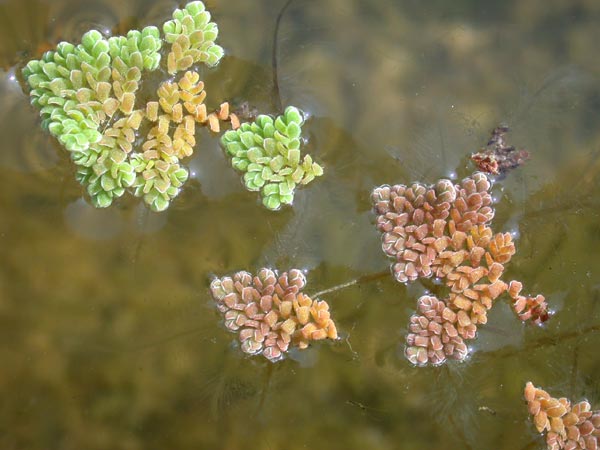
Water fern is a tiny, floating aquatic species native to the Americas that forms dense, velvet-like mats on the surface of still water. Scientifically known as Azolla filiculoides, it is frequently identified by its scale-like leaves that transition from lime green to a distinct reddish-purple during autumn or under intense sunlight.
While this fern provides excellent shade for fish and suppresses algae, it is a fast-growing species that can double its biomass in 2 to 5 days. It is classified as an invasive weed in many regions, including the UK, where its release into the wild is strictly prohibited.
Key Facts
- Light: Full sun to partial shade
- Growth Rate: Extremely fast; doubles mass in 48-72 hours
- Temperature: Thrives between 15-28 °C (59-82 °F)
- Hardiness: USDA zones 7 to 11
- Special Trait: Fixes nitrogen through symbiotic cyanobacteria
Is Water Fern Right for Your Pond
Water fern is best suited for enclosed garden ponds or indoor aquariums where its rapid growth can be strictly managed by the gardener. Because it can double its mass in as little as 2 days under ideal conditions, it requires a commitment to regular skimming to prevent it from choking out oxygen for fish. In the UK and parts of Europe, it is classified as an invasive species, so it must never be allowed to escape into local natural waterways or streams.
This plant provides excellent shade for aquatic life and helps suppress algae by blocking sunlight and consuming excess phosphorus. It is particularly useful in newly established ponds that need a quick nutrient sponge to clear the water. However, it is not a set-and-forget plant; without intervention, a single handful can cover a medium-sized pond within a few weeks of summer weather.
How to Identify Water Fern
Water fern consists of small, branched stems with overlapping, scale-like leaves that rarely exceed 2.5 cm (1 in) in total plant length. Each individual leaf is roughly 1-2 mm long and features a velvety surface of tiny hairs that repel water and keep the plant buoyant even in rain. The roots are simple, translucent, and hang 2-5 cm (0.8-2 in) deep into the water column without anchoring to any substrate.
- Leaves turn deep burgundy red in autumn or under intense sun
- Upper leaf lobes contain symbiotic cyanobacteria for nitrogen fixation
- Plant mats can reach a thickness of 10 cm (4 in) in crowded ponds
- Velvety hairs on leaves prevent the plant from sinking when splashed
- Roots are unbranched and trail directly below the floating foliage
- Growth habit is prostrate and floating, forming dense, carpet-like mats
The Best Site for Growing Azolla
Water fern requires still or very slow-moving water with a minimum temperature of 10 °C (50 °F) for active growth. It thrives in full sun, which triggers the production of anthocyanins that turn the foliage from lime green to a distinct burgundy red. While it can tolerate partial shade, the growth will be significantly slower and the foliage will remain a consistent pale green year-round.
Because it is a floating plant, it is highly susceptible to being pushed by wind or water currents. It should be kept away from fountains, waterfalls, or strong filter outlets that might submerge the leaves or push the colony into a single corner. In aquariums, it prefers a stable surface with minimal agitation and a gap between the water and the lid for air circulation.
How to Plant Water Fern
To plant water fern, simply place a small handful of the floating stems onto the surface of a pond or aquarium. There is no need to anchor the plant or provide soil, as it draws all necessary minerals directly from the water through its hanging roots. If you are introducing it to an aquarium, ensure there is sufficient space between the water surface and the lid to allow for air circulation and gas exchange.
- Start with 5-10 small plants for a medium-sized garden pond
- Introduce during late spring when water temperatures are consistently warm
- Rinse plants thoroughly to remove potential hitchhikers like snails or duckweed
- Keep away from filter intakes to prevent the small plants from clogging the system
- Ensure the surface is not entirely covered immediately to allow for light penetration
Feeding and Water Needs
Water fern rarely requires supplemental feeding because it hosts Anabaena azollae, a cyanobacterium that fixes atmospheric nitrogen. This unique symbiosis allows the plant to thrive in nutrient-poor waters where other floating plants like duckweed (Lemna minor) might struggle. If growth appears stunted or leaves turn yellow in a closed aquarium system, a tiny dose of liquid phosphorus or iron may be beneficial to restore health.
Nitrogen-heavy fertilizers should be avoided as they are unnecessary for this species and often encourage the growth of nuisance algae. Maintain water temperatures between 15-28 °C (59-82 °F) for the most robust growth. In outdoor ponds, evaporated water should be topped up regularly to maintain a consistent depth, though the plant can survive on damp mud for short periods if the pond dries out slightly.
How to Manage and Control Azolla
Managing water fern involves regular skimming with a fine-mesh net to remove at least 50% of the surface cover every week during the summer. Because the plant can rapidly deplete dissolved oxygen if it covers the entire surface, maintaining open water areas is vital for the health of fish and submerged plants. In the UK, the North American weevil Stenopelmus rufinasus is sometimes used as a biological control agent to manage large-scale infestations.
- Skim the surface when coverage exceeds 30% of the pond area
- Compost the removed plants as a nitrogen-rich fertilizer for the garden
- Ensure no tiny fragments remain if you wish to clear a specific patch
- Check pond filters daily for trapped fern debris during peak growth
- Dispose of waste carefully by drying it out to prevent spread to wild habitats
Water Fern Propagation Methods
Water fern propagates itself naturally through vegetative fragmentation, where the stems break apart to form new independent plants. In a garden setting, you can simply break a larger mat into smaller sections and move them to new containers or water bodies. The plant also produces microscopic spores in sporocarps during late summer, which can survive the winter in the bottom sediment even if the parent plant dies.
Fragmenting the stems by hand or with a net is the fastest way to increase your stock. Each small piece with at least one leaf can grow into a full colony within weeks. Sexual reproduction occurs via male and female sporocarps, which are typically produced when the plant is stressed by overcrowding or seasonal changes in light and temperature.
Common Problems and Pests
The most common problem with Azolla is its tendency to become a blanket weed, blocking light to submerged species and causing oxygen crashes. When the mat becomes too thick, the lower layers die and rot, which can release foul-smelling gases and kill pond fish. In aquariums, the plant may get sucked into power filters or grow so fast that it shades out delicate bottom-dwelling plants like Cryptocoryne species.
- Yellowing leaves indicate a lack of phosphorus or iron in the water
- Brown, mushy patches suggest poor air circulation or high humidity rot
- Stunted growth can occur if water temperatures drop below 10 °C (50 °F)
- Snail infestations can quickly strip the small leaves in an aquarium
- Rapid death in summer may be due to extreme heat over 35 °C (95 °F)
Overwintering Water Fern
In temperate climates, water fern typically dies back during the first hard frost, but it leaves behind spores that will germinate the following spring. In USDA zones 7 to 11, the plant may survive as a living mat if the water does not freeze solid. To ensure you have a fresh start in cold regions, you can keep a small container of the fern indoors on a sunny windowsill during the winter months.
- Bring a small sample indoors before the first autumn frost
- Clean away dead surface mats in late autumn to prevent rot
- Spores sink to the bottom and remain dormant in the mud
- Indoor plants need at least 6 hours of bright light to stay green
- Avoid fertilizing during the dormant winter period to prevent leggy growth
Year-Round Management of Water Fern
| Spring | Introduce new plants to the pond when water temperatures reach 10 °C (50 °F). Monitor for the first signs of spore germination in the bottom mud. |
|---|---|
| Summer | Skim the pond surface weekly to maintain 50% open water. Monitor for phosphorus deficiencies if growth slows down during heatwaves. |
| Autumn | Observe the color transition to red. Remove excess dying foliage before it sinks to the bottom to prevent nutrient spikes and rot. |
| Winter | Move a small colony indoors to a sunny windowsill in cold climates. Ensure the indoor container stays above 10 °C (50 °F) with bright light. |
Common Water Fern Growth Issues
| What you see | Likely cause | What to do |
|---|---|---|
| Entire pond surface covered in a thick red mat | Overgrowth due to high nutrients and lack of skimming | Manually skim 70% of the mat and compost the waste away from water. |
| Leaves turning pale yellow or white | Nutrient deficiency, usually phosphorus or iron | Add a small dose of aquatic-safe liquid fertilizer to the water. |
| Plant disappearing or sinking in the pond | Strong water currents or fish eating the roots | Move plants to a still area or use a floating ring to contain them. |
Common Species of Azolla
- Azolla filiculoides – The standard species, known for deep red autumn color.
- Azolla pinnata – Features a more triangular, feather-like leaf structure.
- Azolla caroliniana – Often confused with filiculoides but generally smaller.
Best Companion Plants for Ponds
Water fern pairs well with deep-water plants like Water Lilies (Nymphaea) which provide structural contrast to the tiny floating mats. It can also be grown alongside Hornwort (Ceratophyllum demersum) or Water Soldier (Stratiotes aloides) to create a diverse aquatic ecosystem. These plants compete for nutrients, which can help naturally regulate the growth rate of the fern and prevent it from becoming a monoculture.
- Water Lilies offer large pads for visual balance against tiny ferns
- Hornwort helps oxygenate the water from below the floating mat
- Water Soldier provides a spikey, architectural contrast to the velvet fern
- Avoid mixing with Duckweed (Lemna minor) as they compete aggressively
- Marsh Marigold (Caltha palustris) works well on the pond edges for color
Frequently Asked Questions
What is a water fern cake?
It refers to Azolla that has been harvested and compressed into nutrient-rich cakes for use as high-protein livestock fodder or organic green manure.
Is water fern invasive in the UK?
Yes, Azolla filiculoides is a prohibited invasive species in the UK and it is illegal to release it into the wild under the Wildlife and Countryside Act 1981.
Why is my water fern turning red?
The red color is a natural response to high light intensity or cold temperatures, caused by the production of protective anthocyanin pigments.
Can I use water fern in an aquarium?
Yes, it is a popular floating plant for aquariums, providing cover for fish fry and absorbing nitrates, though it requires weekly thinning to allow light to reach lower plants.
Is the water fern from Summoners War real?
While the name is used for an item in the game, the real Azolla filiculoides is a botanical aquatic fern known for its unique nitrogen-fixing symbiosis.
Information about traditional or historical uses is provided for educational interest only and is not medical advice. Do not use any plant to treat a condition without speaking to a qualified professional.
Sources & Verification
Taxonomy and distribution are checked against the databases below. Care guidance is written for cultivated species only and reviewed by our editor. How We Build Plant Profiles →